
Related Products
Explore similar items
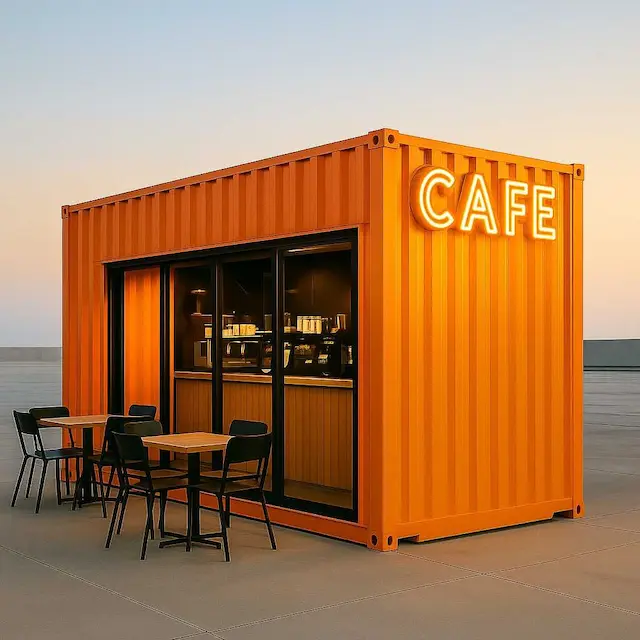
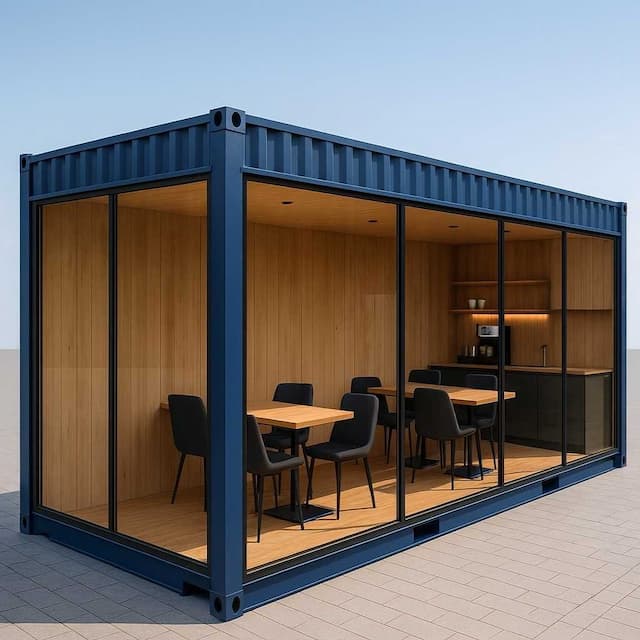
Portable Cafe Container
Inclusive of all taxes
Quantity
Product Information
Product Details
Comprehensive information about Portable Cafe Container
Product Overview
Detailed information about Portable Cafe Container
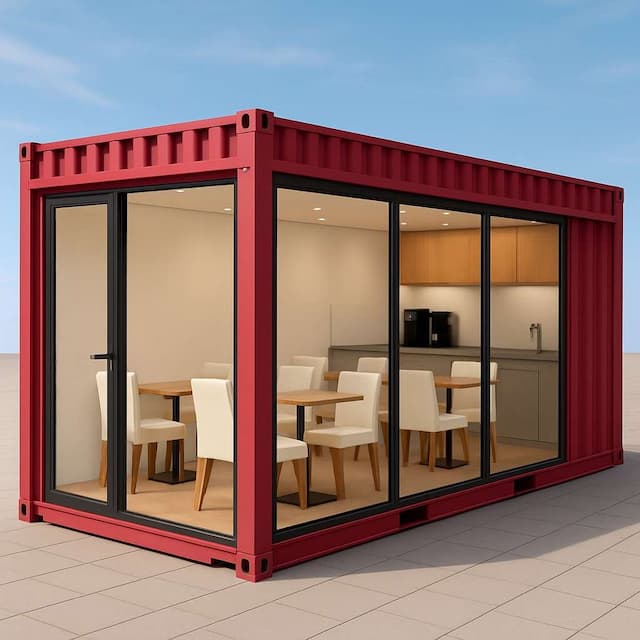
A portable cafe container is the factory-built cafe SAMAN delivers for operators who want a flagship-scale single-unit space — 30×20×10 ft, around 600 sq ft of cafe floor on one level, at ₹32,55,000 (sale price; regular ₹35,66,000). It is built for an established brand opening a tier-1 location, not for a coffee window and not for a stacked two-storey configuration. If your concept needs active site rotation between leased plots, the 10×10 cafe built to move between sites is the right pick instead.
The 30×20 Portable Cafe Container at Flagship Scale — Single Unit, One Floor, 600 Square Feet
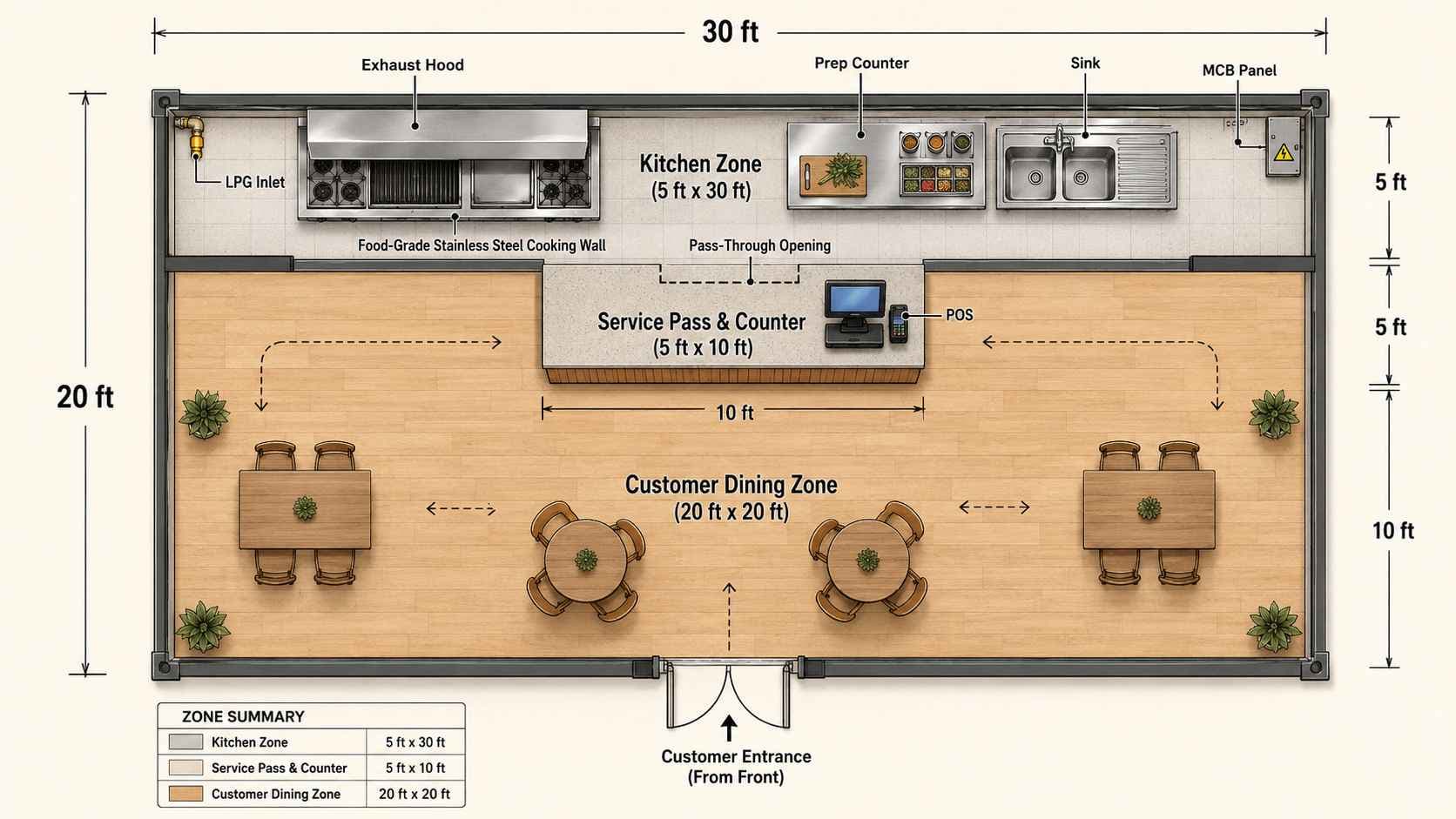
How 600 sq ft splits across one floor: a 5×30 kitchen back wall, a service pass counter, and a 20×20 customer dining zone.
Most container cafe pages in India sell something in the 10×10 to 10×15 ft range — kiosk-format units for a coffee window or single-product brand. This page is for a different operator. The SAMAN 30×20×10 ft build (SKU SP-CC-40-2024) is the largest single-unit single-floor cafe in our published cluster — bigger than the 40-ft sit-down dining build, bigger than the 10×10 mobile-friendly build, and built on one rectangular floor instead of two stacked levels.
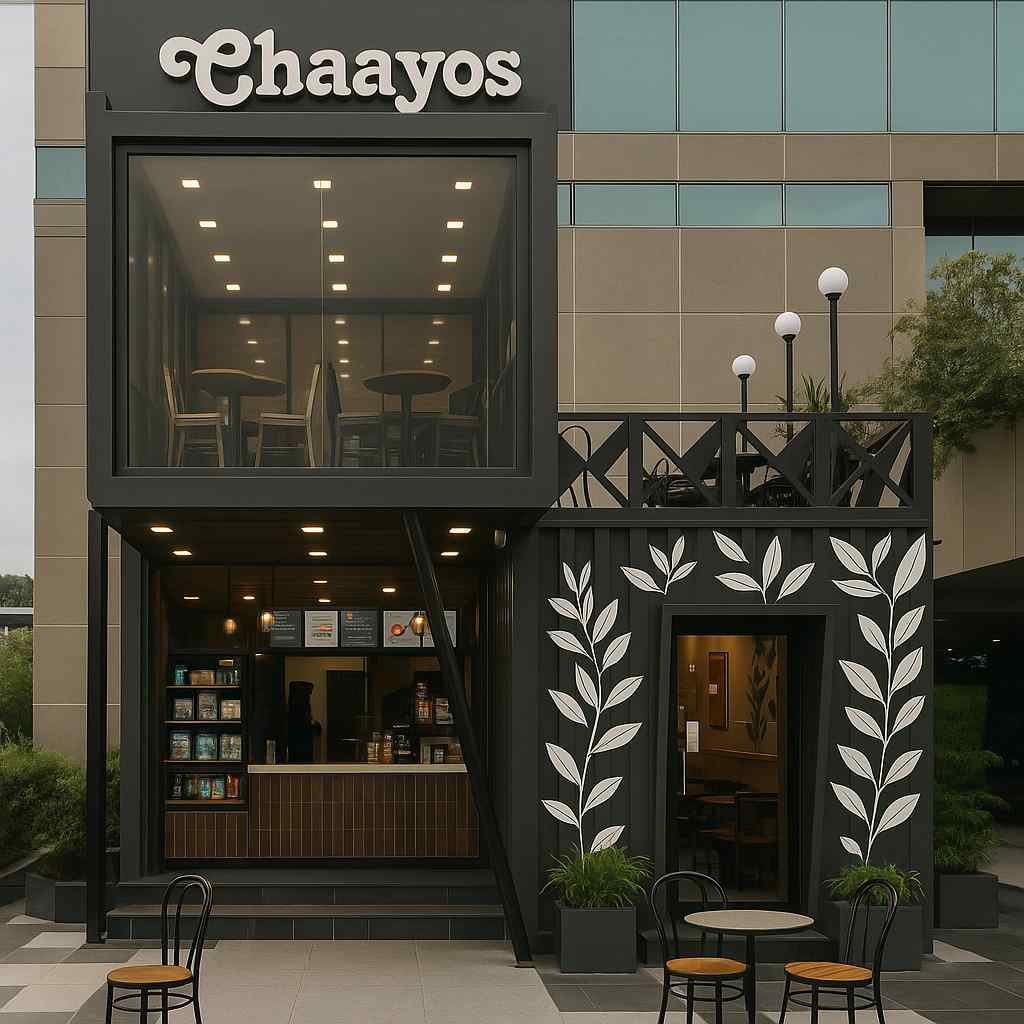
Real deployed examples at this scale, drawn from the SAMAN floor: the Chaayos installations in Bangalore (Whitefield glass-facade, Marathahalli interior, Indiranagar artwork unit), Delhi (Dwarka leaf-art unit), and the Gurgaon rooftop unit. These are brand-flagship builds in operating locations — not concept renders.
What "Portable" Means for a 600 Sq Ft Cafe — A Build Category, Not a Behaviour
At kiosk scale (10×10, ₹2.35L), "portable" usually means the operator is actively planning to move the cafe — crane it onto a flatbed, drive it to the next leased plot, set it back down. At 30×20 and ₹32,55,000, that is not a realistic plan, and we are not going to pretend it is.
At this size, "portable" is a build category, not a behaviour. Three things define it: the unit is factory-built, not site-fabricated. It sits on a removable PCC pad, not a buried foundation. And it is classified as moveable infrastructure, not a permanent structure. That classification matters for plot-lease terms, asset depreciation accounting, and clearing the site at the end of the lease without demolition cost. The unit can be relocated as a movable cafe unit if a future situation calls for it — every SAMAN cafe has reinforced corner lift points — but the page is written for operators who pick a tier-1 site and stay.
If your model is moving the cafe between 2–4 sites every 12–36 months, the SAMAN 10×10 mobile build is engineered for that pattern. This page is for the operator who builds the brand flagship and lets it earn.
A 30×20 Single-Unit Layout — Three Zones on One Floor for 600 Square Feet
Six hundred square feet on one level breaks into three working zones along the 30-ft length.
Kitchen zone (~150 sq ft, the 5×30 back wall)
The kitchen runs along one of the two long walls — typically the back, opposite the customer entrance. Exhaust hood position, LPG inlet, food-grade stainless steel lining on the cooking wall, a prep counter, a sink, and a commercial-rated MCB panel are all factory-fitted along this wall before dispatch. The kitchen sits about 5 ft deep into the unit, leaving 25 ft of length and 15 ft of width clear for the service-and-dining zone in front.
Service pass and counter (~50 sq ft)
A counter framed parallel to the kitchen wall separates back-of-house from the customer zone. The pass-through carries plate handoff and POS placement. From here forward, the customer is on the dining side; the staff stays on the kitchen side.
Customer dining zone (~400 sq ft)
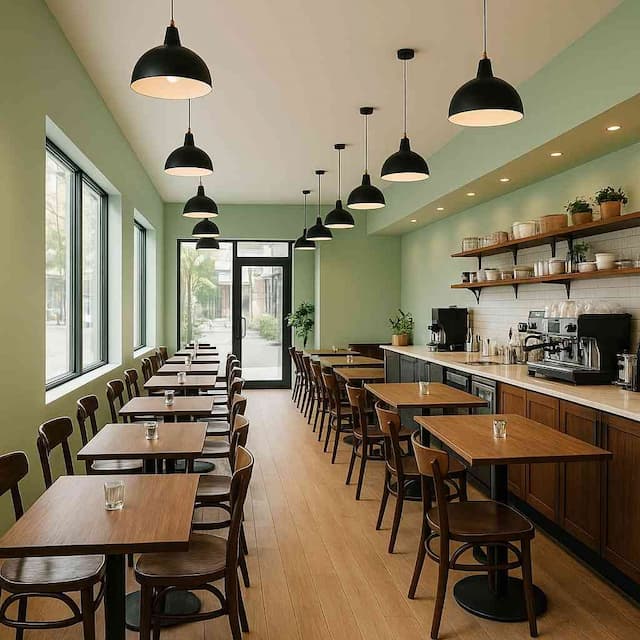
The remaining floor — roughly 20 ft × 20 ft of dining-and-circulation space depending on counter placement — carries the customer experience: tables, walking aisles, the customer-facing wall finish, and the entrance from the longer face of the unit. The 400 sq ft of dining floor is what gives this build its cover-count headroom.
28 to 40 Customer Seats — What a 30×20 Cafe Floor Fits Across Table Mix Options
Cover capacity on a 30×20 cafe floor — with the kitchen taking 150 sq ft along the back — runs from 28 customer seats at fine-dining spacing to 40 seats at fast-casual spacing.
The honest table-mix math for 400 sq ft of dining floor:
- 7 × four-tops = 28 covers, slow-tempo cafe-dining service with generous walking space
- 5 × four-tops + 4 × two-tops = 28 covers, with a couples-friendly layout along one wall
- 6 × four-tops + 4 × two-tops = 32 covers, balanced cafe-restaurant tempo
- 8 × four-tops + 4 × two-tops = 40 covers, denser fast-casual tempo, tighter aisles
The table-turn × ticket-size math is the operator's to work out per menu and concept. What this build does at 30×20 is unlock the 28–40 cover band that a single 40-ft narrow-rectangle dining build cannot reach — that one tops out at 24 covers because it splits 400 sq ft along the length instead of opening it across a 30×20 square.
Single-Floor 30×20 or Stacked 25×20 — When Each Footprint Wins
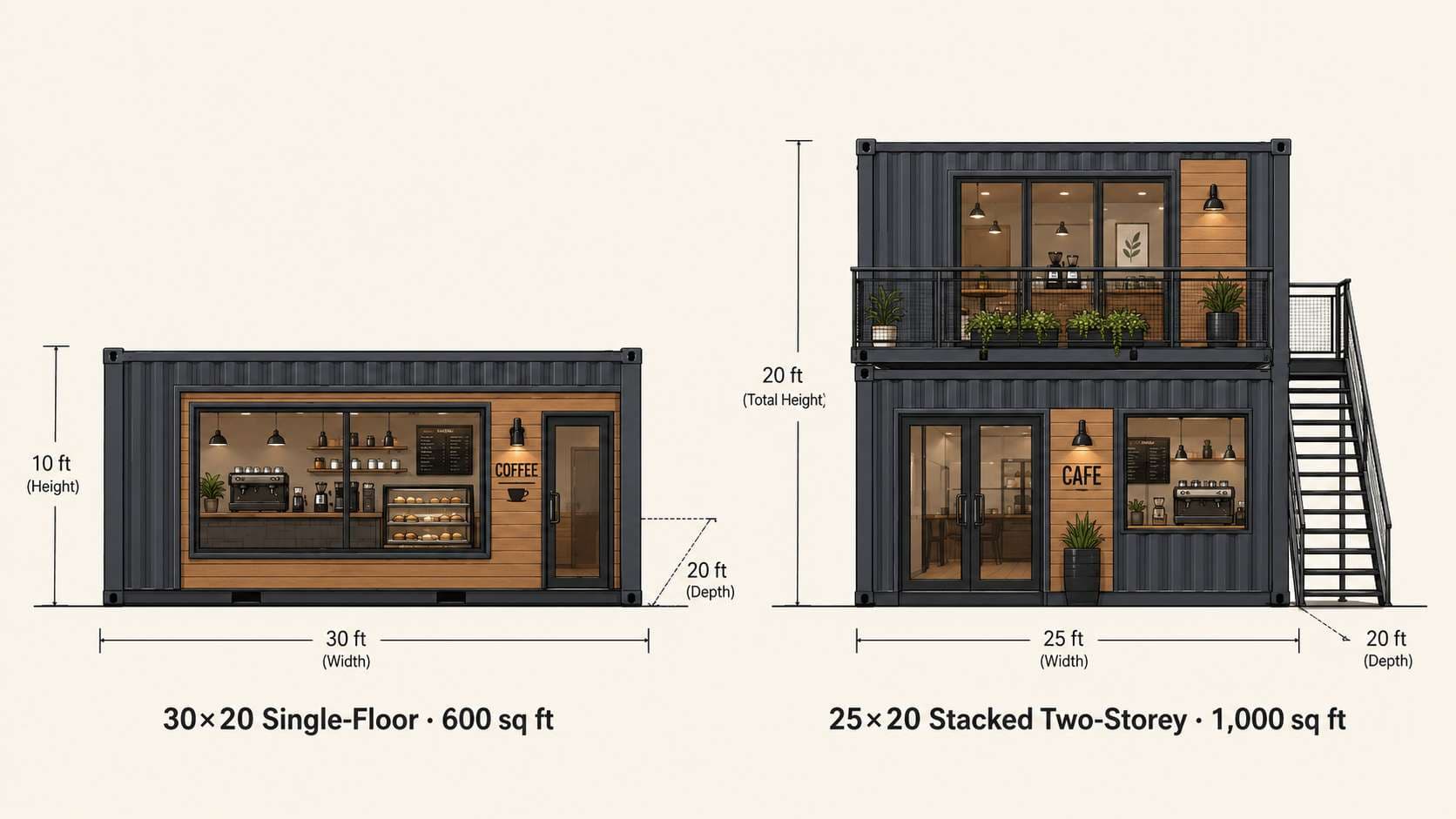
The footprint decision: a 30×20 single-floor cafe spreads 600 sq ft across the ground; a 25×20 stacked build puts 1,000 sq ft on 500 sq ft of ground.
At nearly the same price band — ₹32,55,000 here vs ₹33,25,000 for the 25×20 two-storey stacked starter — the question buyers ask is which footprint wins for their plot.
The 30×20 single-floor build wins when ground space is available and every customer needs to be on one level. No staircase to design around, no upper-level service problem, no two-floor HVAC zoning, no extra structural cost from stacking. A customer with a pram, a wheelchair, or a tray uses the same floor as everyone else. Brand flagships in resort properties, highway-corridor locations, and large campus plots almost always pick this one.
The 25×20 two-storey stacked starter wins when ground is tight or premium — a city high-street plot, a rooftop terrace, a mall pad-site. A 1,000 sq ft cafe on 500 sq ft of ground means more floor area in a smaller footprint, accepting an external staircase as the trade-off. The stacked build is also the entry-point into staged-expansion modular formats — if your plan is to add a third connected unit next year, the stacked starter is built for that.
Pick this 30×20 single-floor build when ground is open and dining flow matters more than footprint compression. Pick stacked when ground is the binding constraint.
The Steel-and-Wood Exterior — Where Customers Read "Cafe" in the First Four Seconds
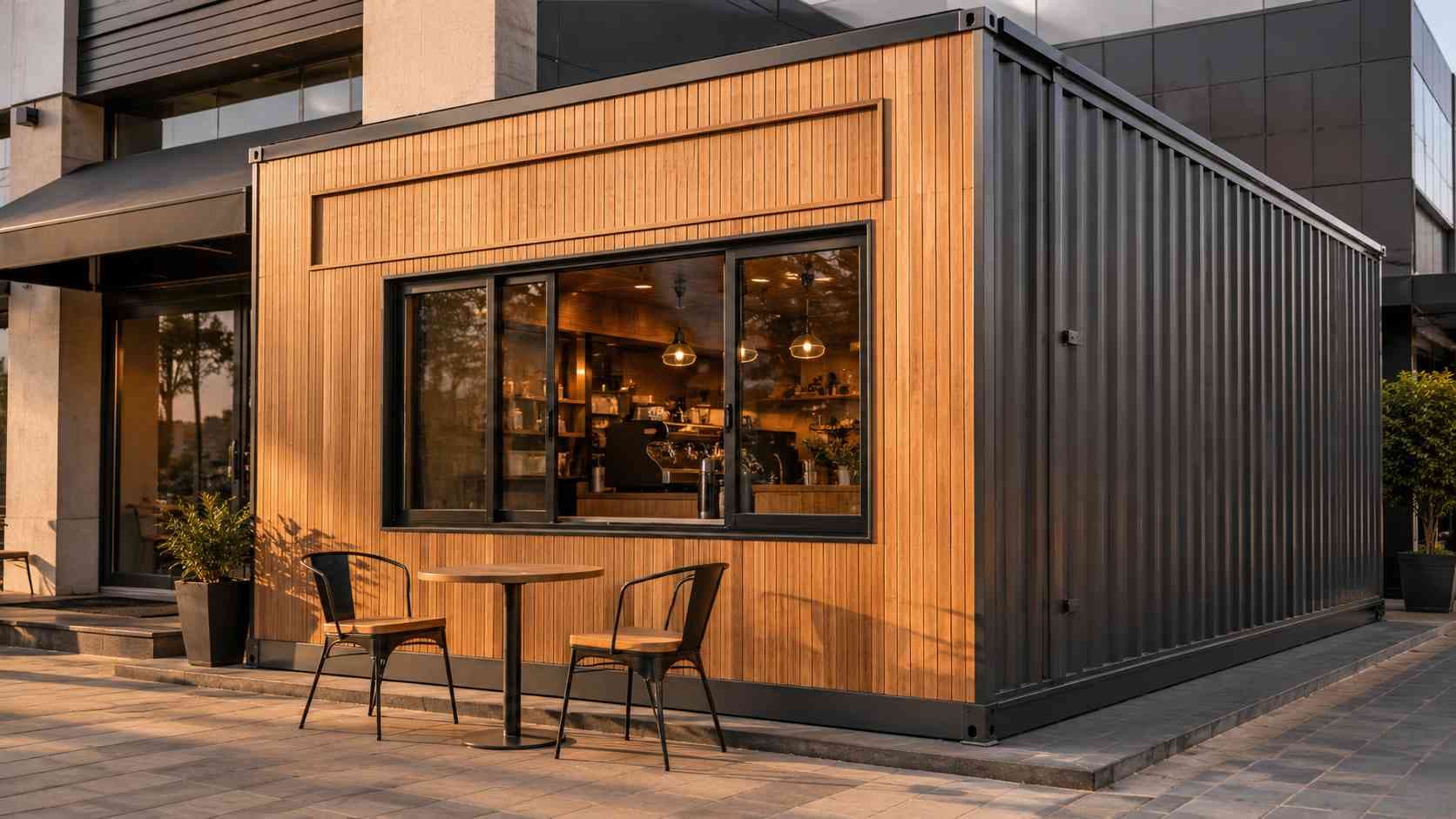
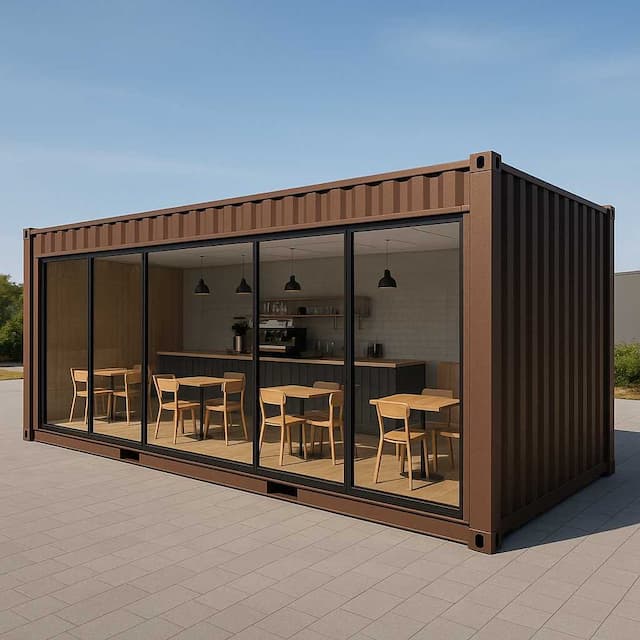
The Steel-and-Wood finish detail — wood cladding around the framed glass-facade, paint on the side panels, signage zone cut clean for the operator's brand.
The material spec on this SKU is Steel and Wood. The steel is the structural envelope — frame, roof, side walls — built with 50mm PUF insulation through the panel sandwich. The wood is the customer-facing finish: cladding panels on the entrance face and around the glass-facade frame, where the customer walks up.
This split matters because a customer walking up to a cafe spends about four seconds reading "is this a place I want to go in" before they commit. Painted steel reads as utility. Wood cladding reads as cafe. The Steel-and-Wood build keeps the engineering benefits of a factory-built shell — precision, speed, lift points for future moves — and lets the customer-facing surface read like a designed cafe instead of a converted container.
The wood finish accepts brand-colour staining, signage zone cutouts, and a framed glass-facade as planned cladding elements. The Chaayos Bangalore Whitefield image on this page shows that pattern in operating use.
Pad Foundation, Low-Bed Trailer, Crane Day — What a 30×20 Install Actually Needs
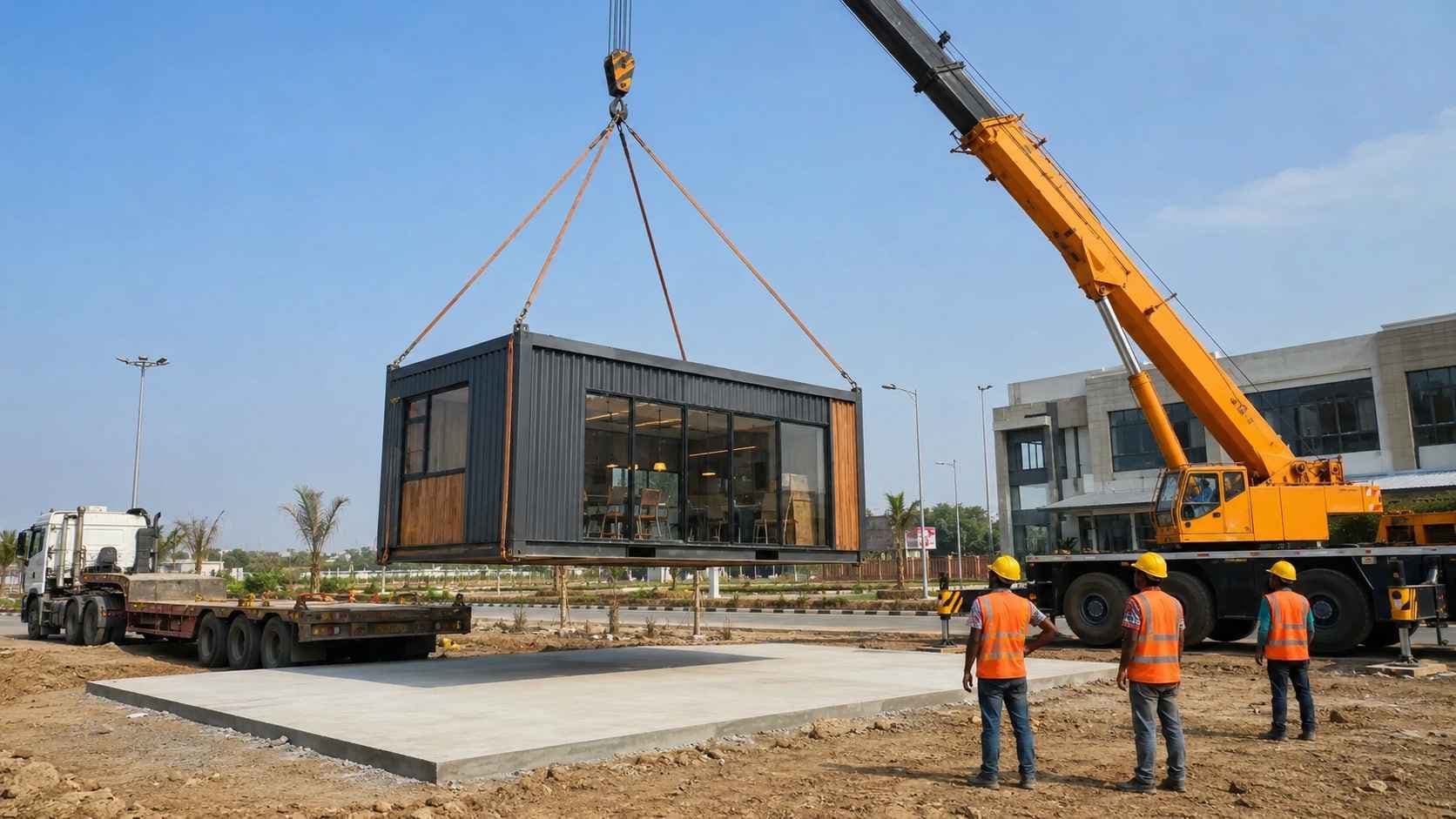
Crane day on a 30×20 install — a 25-tonne hydra lifts the unit off the low-bed trailer and sets it on the prepared PCC pad in a single hook-up.
A 30×20 single-unit cafe needs three things at the install site, in order: a level pad, a road that takes a low-bed trailer, and a crane window on installation day.
Pad foundation — 4–6 inch reinforced PCC at the unit footprint
The unit sits on a reinforced PCC (plain cement concrete) pad sized to the 30×20 footprint with a 1-ft setback on all four sides, at 4–6 inch thickness in M20 grade concrete with a single-mat reinforcement grid. The pad is the buyer's civil scope — local mason rates apply — and needs 7 days to cure before unit placement. We send the anchor-bolt drawing within 5 working days of PO so the civil work runs in parallel with our factory fabrication.
Trailer access — a low-bed truck for the 30-ft length
The unit ships on a low-bed trailer. The site access road needs a minimum 4-metre clear lane with no overhead obstruction below 5 metres along the route from the highway to the install pad. Tight overhead conditions (low cables, dense tree cover, narrow gates) need to be flagged at quote stage so we can plan transport differently.
Crane day — single hydra lift onto the pad
On installation day, a 25-tonne hydra crane lifts the unit off the trailer and sets it on the pad in one motion. The reinforced corner lift points carry the loaded weight at this size. The crane needs a 6-metre setback from the pad to swing freely. Total crane window is about half a day if pad and access are ready when we arrive.
₹32,55,000 — What's Inside the Price and What's the Operator's Scope
The ₹32,55,000 sale price (regular ₹35,66,000) covers SAMAN's manufacturing and delivery scope.
Inside the price:
- The 30×20×10 ft Steel-and-Wood unit with 50mm PUF insulation in walls and roof
- Kitchen zone factory-fit: exhaust hood opening, LPG inlet provision, food-grade stainless steel cooking wall, prep counter rough-in, sink mounting, commercial-rated MCB panel sized for kitchen + dining loads
- Customer-facing exterior: wood cladding on the entrance face, glass-facade frame, exterior paint in your brand colour
- Interior finish: cement particle board flooring with vinyl or wood-look laminate, dining-zone wall finishes, ceiling
- Pan-India delivery from the closer-located factory and single-lift crane installation onto the prepared pad
Operator's own scope (not in the price):
- Kitchen equipment (commercial burners, refrigeration, coffee or espresso machinery, POS system)
- Furniture and seating
- Signage application after installation
- FSSAI license filing
- Any local civic permits
We do not strip the spec down to chase a lower price tag at this SKU. If the budget headroom is tighter than this band, the right-pick section below routes you to a SAMAN build that fits the smaller budget without compromising the unit's design quality at the kiosk scale.
When the Portable Cafe Container is the Right Pick (and When Another SAMAN Build Is)
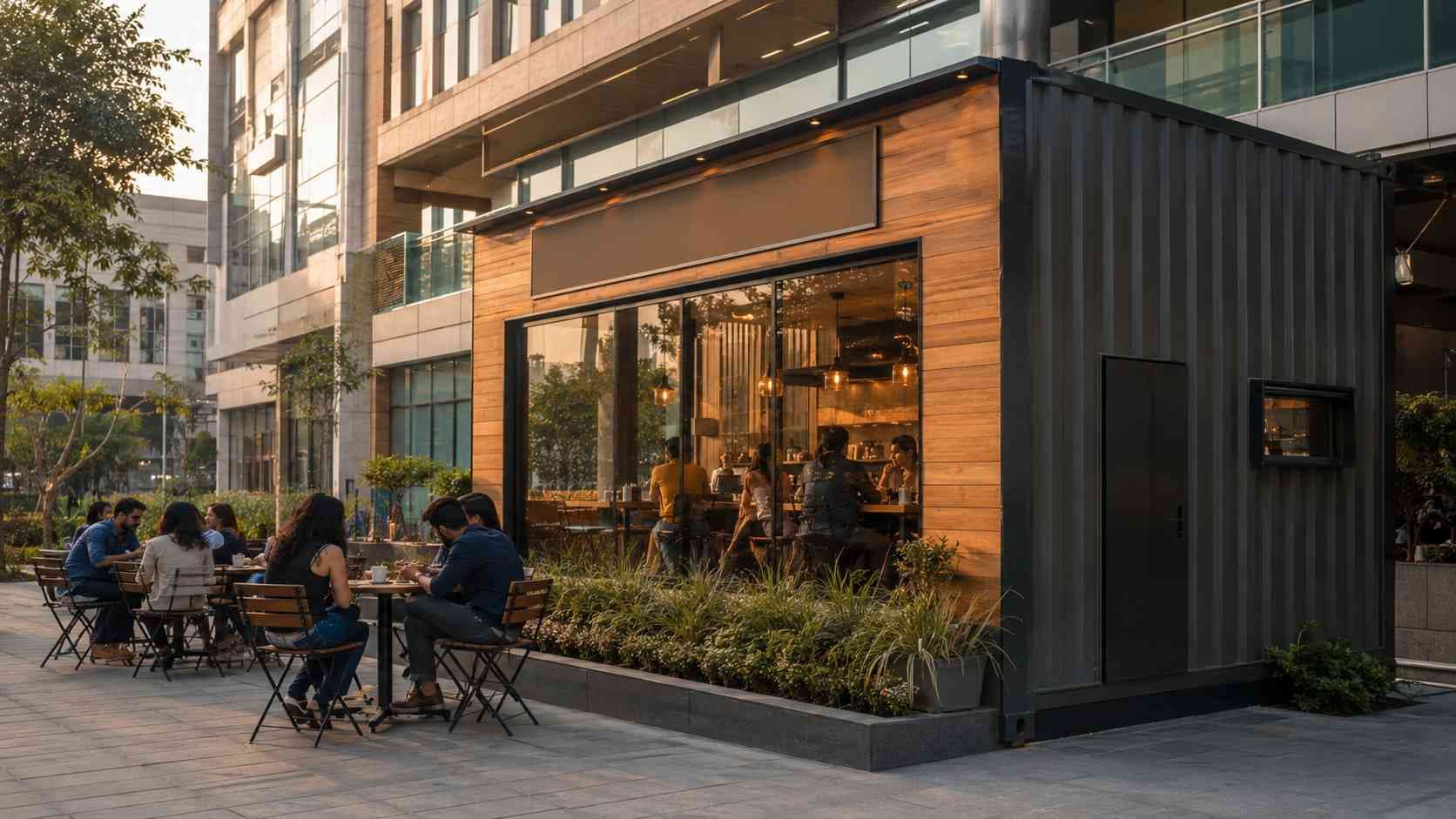
The 30×20 single-floor portable cafe container in flagship deployment — a tier-1 commercial plaza, glass-facade interior, outdoor seating, brand signage in place.
The 30×20 single-floor flagship is a specific buyer profile. Get clear about whether you are that buyer before signing the order.
Pick this 30×20 single-floor build when…
- You're an established brand opening a flagship at a tier-1 location, and the customer's first impression has to read "designed cafe", not "kiosk"
- Your plot has ground space, and single-floor customer circulation matters more than footprint compression
- You expect to stay at one site for 5+ years and value "portable" as a regulatory + asset-removability classification, not as active relocation
- You want one operator running the full 600 sq ft as one concept, with room for an outdoor cafe design extension — a wooden deck, paved area, or shade structure — alongside the unit if the site allows
- You have budget headroom in the ₹32–36L band and want one delivery, one installation, one design conversation
Pick a different SAMAN cafe build when…
- You'll move the unit every 12–36 months → the 10×10 cafe built to move between sites is engineered for that pattern
- You want to start now and add Unit 2 next year → the staged-expansion stacked build is built for that
- Your concept is sit-down full-menu dining in a narrow rectangle, not a square cafe floor → the 40-ft sit-down dining build is laid out for that
- You're opening a coffee-only or single-product brand at kiosk scale → the 10-ft coffee-only espresso unit fits a coffee window operator
- You want the iconic corrugated ISO silhouette as the cafe's design language → the ISO shipping-container silhouette format is the corten-look build
- You're earlier in the decision and want to compare every cafe format we make → the full container cafe range covers everything from kiosk to multi-unit to hospitality
Lead Time, Brand-Finish Customisation, and Pan-India Delivery
Standard fabrication runs 21–35 working days from confirmed order at the dispatching facility. The closer-located factory ships your unit: Bangalore (Gopasandra) serves South India; Greater Noida (Jalpura) serves North, Central, and East India. Brand-finish customisation happens at the design conversation — choose the exterior paint colour, the wood cladding profile, the signage zone placement, the glass-facade dimensions, the entrance position, and the interior wall and floor finish. After PO confirmation, we send the anchor-bolt drawing for your pad foundation within 5 working days, so your civil work and our factory work run in parallel.
Frequently Asked Questions
Why is this called "portable" if I'm buying 600 sq ft and probably never moving it?
At 30×20 and ₹32,55,000, "portable" is a build category, not a behaviour. The unit is factory-built, not site-fabricated. It sits on a removable PCC pad, not a buried foundation. It has reinforced corner lift points so a future operator can move it if circumstances change. That keeps it classified as moveable infrastructure for plot-lease and asset-accounting purposes, even if you never actually relocate it. Buyers who plan to move every year or two should pick the 10×10 mobile build instead — that unit is sized for repeat moves; this one is sized for staying.
Does a 30×20 single-floor cafe sit on a tighter plot than a 25×20 stacked configuration?
No — the opposite. The 30×20 footprint occupies 600 sq ft of ground; the 25×20 stacked configuration occupies 500 sq ft of ground for 1,000 sq ft of total floor area, because the second unit sits on top. If your plot is tight, the stacked configuration uses less ground. If your plot is open and you want all customer circulation on one level, the 30×20 wins on dining flow and removes the staircase trade-off.
Where does the kitchen sit in a 30×20 single-floor layout — back wall or end cap?
Back wall is the default. The kitchen runs along one of the two 30-ft long walls — typically the back, opposite the customer entrance. This gives the kitchen 30 ft of length to lay out exhaust position, LPG inlet, prep counter, sink, and the MCB panel without crowding. The end-cap configuration (kitchen at one short end) is possible on request and trades 5 ft of dining length for a more contained kitchen zone — which works for concepts wanting a visible kitchen-show effect at the entrance.
What does the Steel-and-Wood finish actually deliver on the customer-facing side?
A wood-clad entrance face and glass-facade frame instead of painted steel. That's the difference between a customer reading "container" and reading "cafe" as they walk up. The Chaayos Bangalore Whitefield reference image on this page shows the pattern: wood cladding around a framed glass-facade entry, paint colour applied to the steel side panels, signage zone cut into the wood. The wood-look laminate flooring carries the same brand-warmth into the dining zone. Steel handles the structural envelope; wood handles what your customers see.
Can a single 30×20 portable cafe container be split between two F&B brands sharing the shell?
Yes, with planning at the design stage. SAMAN can run a 100mm PUF insulated dividing wall across the 20-ft width at the 15-ft mid-line, splitting the unit into two 15×20 zones each with its own entrance, exhaust position, electrical sub-panel, and brand finish on the exterior. This works for two cuisines sharing a customer plot, two coffee brands operating side-by-side, or a cafe-plus-bakery concept. FSSAI applications are filed separately by each operating entity since the two businesses are distinct licensees.
What ground access and crane reach does the install site need for a 30×20 unit?
The unit ships on a low-bed trailer that needs a 4-metre clear lane from the highway to the install pad and overhead clearance of 5 metres along the route. On installation day, a 25-tonne hydra crane lifts the unit off the trailer onto the pad in a single hook-up. The crane needs a 6-metre setback from the pad to swing freely. If your site has tight overhead conditions (low cables, dense tree cover) or a constrained ground approach, share photos at quote stage so we can plan transport differently — sometimes a smaller unit-split fabrication route makes more sense than forcing the standard build through a tight site.
Is the ₹32,55,000 price negotiable down with a lighter fit-out, or is it a fixed package?
The price reflects the factory-fit scope at this size — Steel-and-Wood envelope, 50mm PUF insulation, kitchen wall pre-fitted with stainless steel and exhaust and LPG, electrical panel, brand-paint exterior, wood cladding, flooring. Removing items from the fit-out is technically possible (skip the wood cladding, skip the kitchen pre-fit), but for this SKU at this size, buyers who want to go lighter usually find that their actual need is a different SAMAN build at a lower price band. We won't strip the spec down to chase a smaller number when a smaller unit serves the buyer better.
If I do need to relocate this 30×20 cafe later, how does that compare to moving a 10×10 unit?
Mechanically the same — crane, low-bed trailer, re-pad at the new site. Cost-wise, the 30×20 move runs roughly 3× the cost of a 10×10 move because of the larger crane (25-tonne vs 10-tonne), the low-bed trailer in place of a standard truck, and the per-km loaded-haulage charge on a heavier unit. The corner lift points hold the load at scale. We quote relocation as a separate service per move based on origin, destination, and route. For multi-site rotation as a business model, the 10×10 mobile build's per-move economics are dramatically better.
Ready to Plan Your Portable Cafe Container?
Share four things and we come back within 24–48 hours with a layout drawing for the 30×20 single-floor configuration, an itemised quote, and a delivery and crane schedule:
- Your site location (city and plot if confirmed)
- Your brand concept and customer-flow preferences (counter-led, table-led, or split)
- Brand-finish preferences (wood cladding profile, exterior paint colour, glass-facade size, signage placement)
- Your target opening date
Manufactured at SAMAN's Bangalore (Gopasandra) and Greater Noida (Jalpura) facilities. Delivered and installed Pan India.
Call or WhatsApp: +91 97089 89937 (Greater Noida) · +91 80886 85440 (Bangalore)
Customer Reviews
0 reviews
No reviews yet. Be the first to review this product.
Write a Review for Portable Cafe Container
Need Custom Requirements?
Get in touch with our experts for customized solutions and bulk orders. We're here to help you find the perfect solution.