
Bangalore & South Zone
Delhi NCR & North Zone
Food Truck Containers: Six Road-Ready Sizes
Choose size
20x10 ft Food Truck Container
₹3,20,000 + GST₹3,77,600 incl. 18% GST
Base specification price - customisations quoted separately.
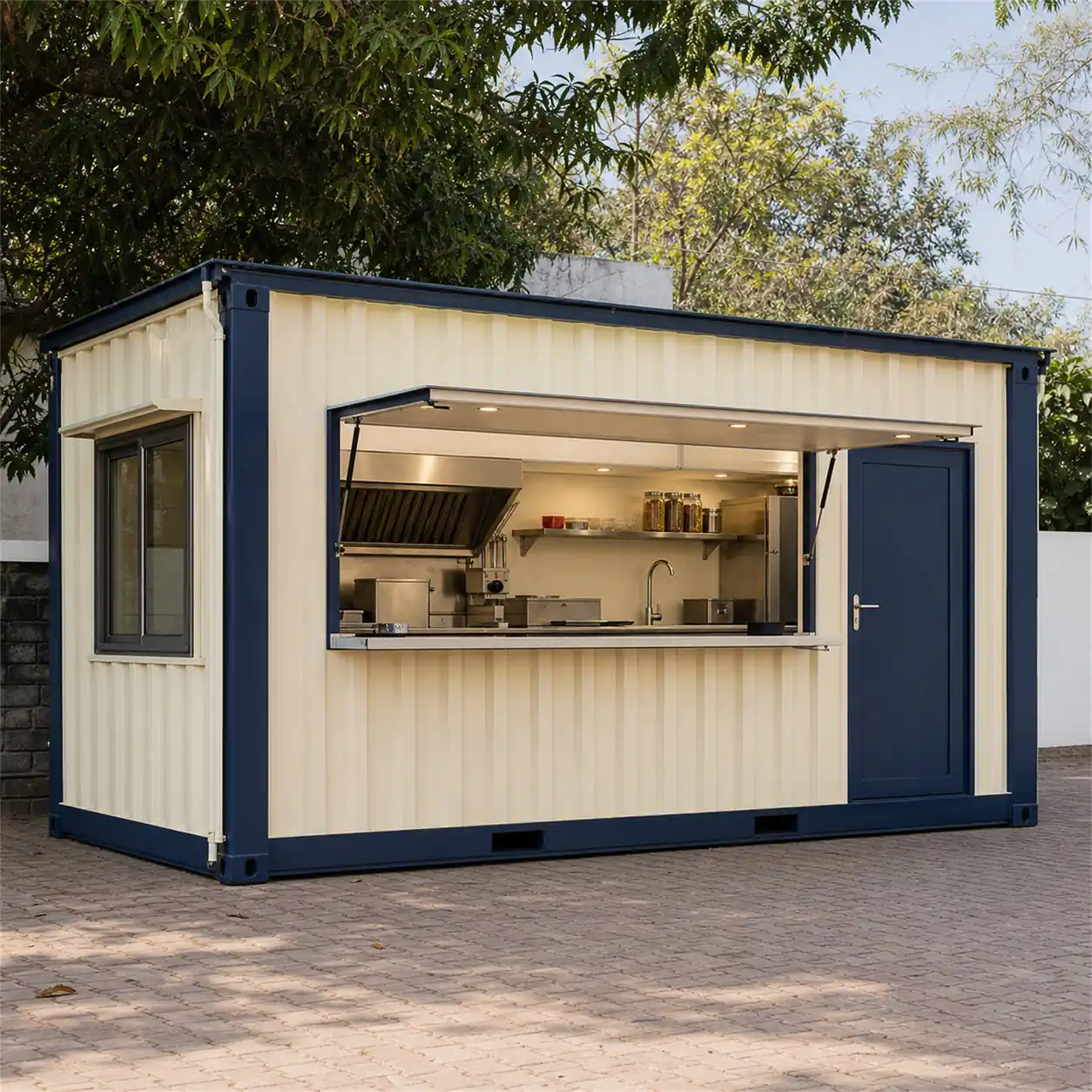
A SAMAN food truck container is a road-transportable counter-service unit fabricated new on a reinforced 150×75×5 mm MS base with corner gussets, extra lifting support in the top frame and transport locking on every opening, so it moves between pitches without rebuild work. Six sizes cover 100 to 400 sq ft, priced from ₹1,76,000 ex-factory, ex-GST at base specification. It is not a converted used shipping container and not a motorised vehicle: it travels by truck or trailer, places by hydra or crane, and opens for service the same day with plug-in connections.
Custom sizes available · 500+ projects delivered · Factory-tested before dispatch
Product Information
- Category
- Container Cafe
GST registered · ISO 9001:2015 certified manufacturer · 5-year structural and 1-year finishing warranty · Pan-India delivery
Why choose the SAMAN Food Truck Container
The food truck container is the relocation specialist of the container cafe range, built to earn at one pitch and move to the next. Against the static units it adds corner gussets on a 150×75×5 mm base, additional lifting support in the top frame and transport locking across all loose items and openings. Pick it for seasonal or roaming trade; for one fixed location the dine-in container restaurant build seats far more.
Not planning to relocate? See the static cafe sizes and prices, or the dine-in restaurant floors, before you commit.
Food truck container sizes: six road-ready floors to 400 sq ft
20x10x8.5 ft flagship food truck floor at ₹3,20,000
The 20x10 ft floor is where the food truck rate drops to ₹1,600 per sq ft and the layout gains a genuine prep line behind the counter. 200 sq ft carries a 17-cover service front on seven floor panels, wired with 5 LED points, 4 sockets and 2 fans against a 1.4 kW estimate. At about 1,100 kg it stays a one-truck, one-hydra move with hook-up the same day. This is the size that competes head-on with a TATA Ace class vehicle-mount truck on price while giving nearly four times the working floor, and it is the volume seller of the six for that reason.
- City food park anchor
- Vehicle-truck alternative
- Multi-brand cloud counter
- IT park lunch service
20x10 ft Food Truck Container
₹3,20,000 + GST


PRICE IT YOURSELF
Your Food Truck Container from ₹1,76,000
Set the size, choose the finish, watch the price move as you go.
Start your designFixed-price quote within 48 hours. Built in our own works.
Enter a length and width between 4 and 60 ft. For larger buildings, request a quotation and we will size it with you.
Please add your name and mobile number so our sales team can send your fixed quotation.
Enter a 10-digit Indian mobile number.
Please add your email so we can send your quotation PDF.
Design saved on this device.
Your saved design has been restored. Start over to begin fresh.
Link copied. Anyone who opens it sees this exact configuration.
Configuration received. Our sales team will send your fixed, itemised quotation within 48 hours.
We could not submit right now. Please try again, or WhatsApp us at +91 88616 22859 and we will take it from there.
Your saved design has been restored. Start over to begin fresh.
Customized cabin
Food Truck Container
20×10 ft · 200 sq ft
Estimated total
₹2,10,980₹2,48,956 incl. GST
Published cabin price tables
All primary prices are ex-GST. Including-GST figures apply 18 percent GST.
Container Cafe price table
| Size | Area | Price ex-GST | Including 18% GST |
|---|---|---|---|
| 10x10 ft | 100 sq ft | ₹1,76,000 | ₹2,07,680 |
| 20x8 ft | 160 sq ft | ₹2,81,600 | ₹3,32,288 |
| 20x10 ft | 200 sq ft | ₹3,20,000 | ₹3,77,600 |
| 20x12 ft | 240 sq ft | ₹3,68,640 | ₹4,34,995 |
| 30x10 ft | 300 sq ft | ₹4,60,800 | ₹5,43,744 |
| 40x10 ft | 400 sq ft | ₹6,01,600 | ₹7,09,888 |
Product Details
Comprehensive information about Food Truck Container
Product Overview
Detailed information about Food Truck Container
ABOUT THE SAMAN FOOD TRUCK CONTAINER
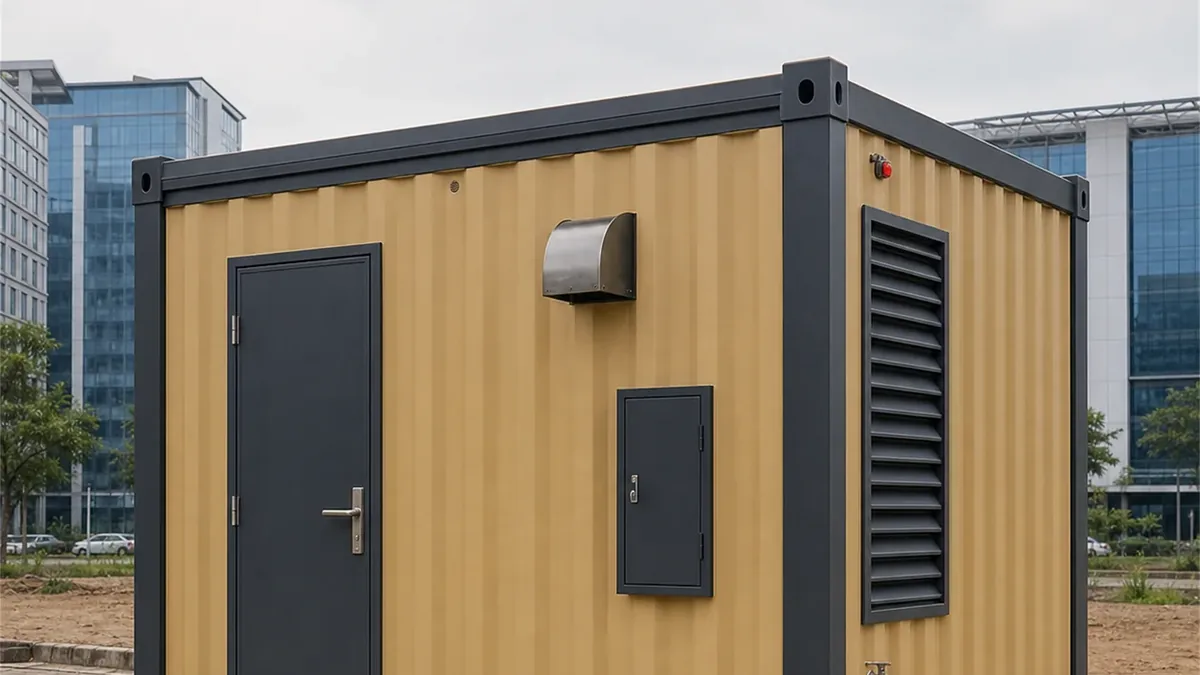
A food truck container earns its living by moving, and everything unusual about this build exists for that reason. The base is heavier than a static cafe needs, the top frame carries extra lifting support, and every opening, fitting and loose item locks for transport, so the unit that finishes a season at one venue is craned onto a flatbed and opens at the next one without a repair bill in between.
WHAT YOUR MONEY COVERS
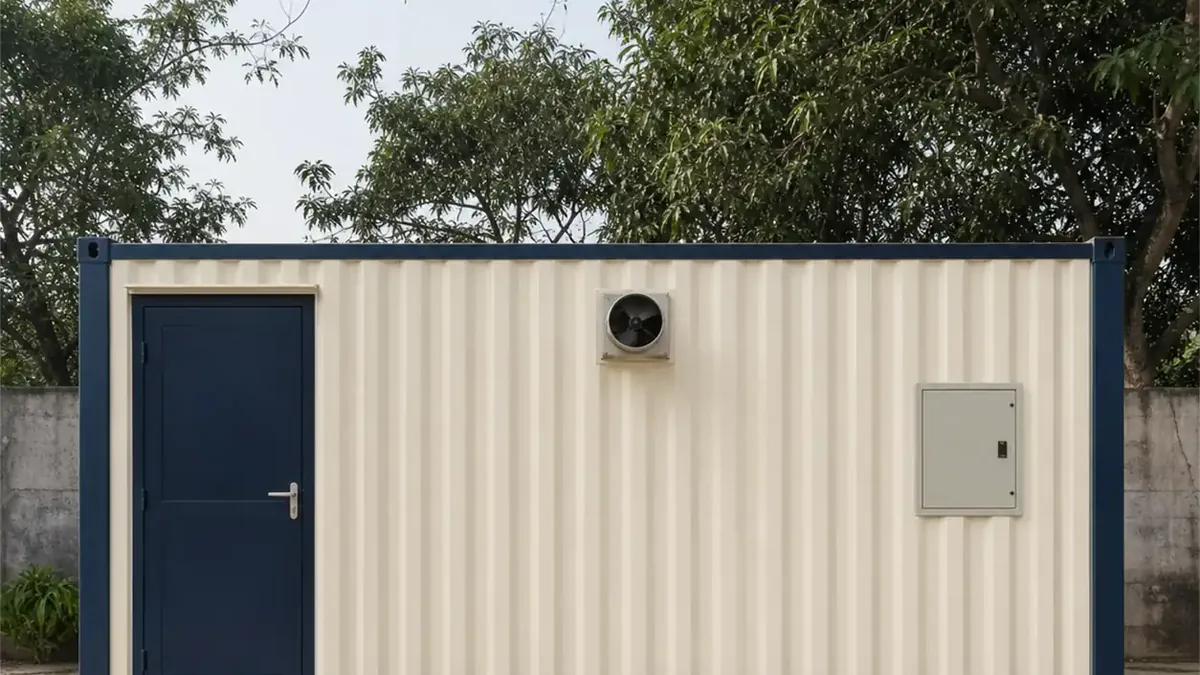
Base specification includes the reinforced MS structure with corner gussets, insulation, interior lining, finished flooring, the glazed and lockable service counter, and the complete electrical package on a protected distribution board. The volume seller is the 200 sq ft floor at ₹3,20,000 ex-factory, ex-GST, with the ladder running from ₹1,76,000 at 10x10 to ₹6,01,600 at the 40x10 maximum. GST at 18 percent is displayed with every figure. Cooking equipment, branding wrap, freight and craneage are quoted separately, line by line.
WHAT IT IS AND WHAT IT IS NOT
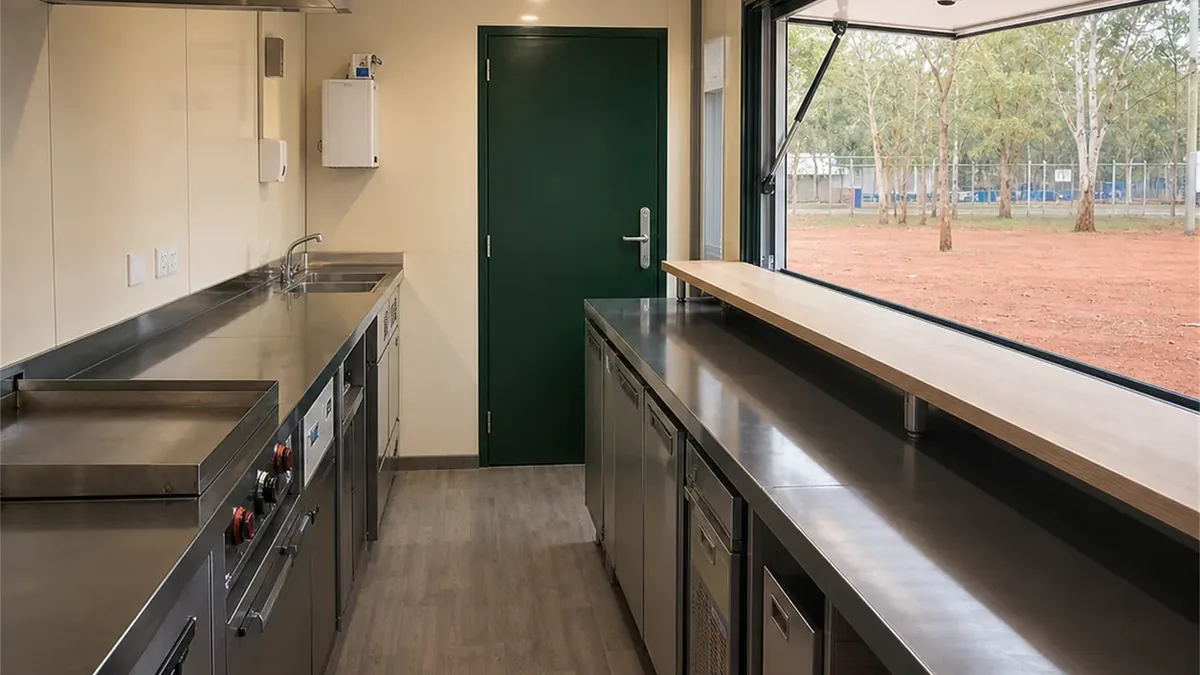
This is not a motorised vehicle and needs no registration, road tax or driver. It rides as ordinary freight, is set down by hydra or crane, and trades from a fixed pitch. Against a vehicle-mount truck of similar money it gives several times the working floor and none of the drivetrain maintenance; what it gives up is the ability to drive itself between pitches, which is why the two formats serve different operators.
MATCHING THE FLOOR TO THE CIRCUIT
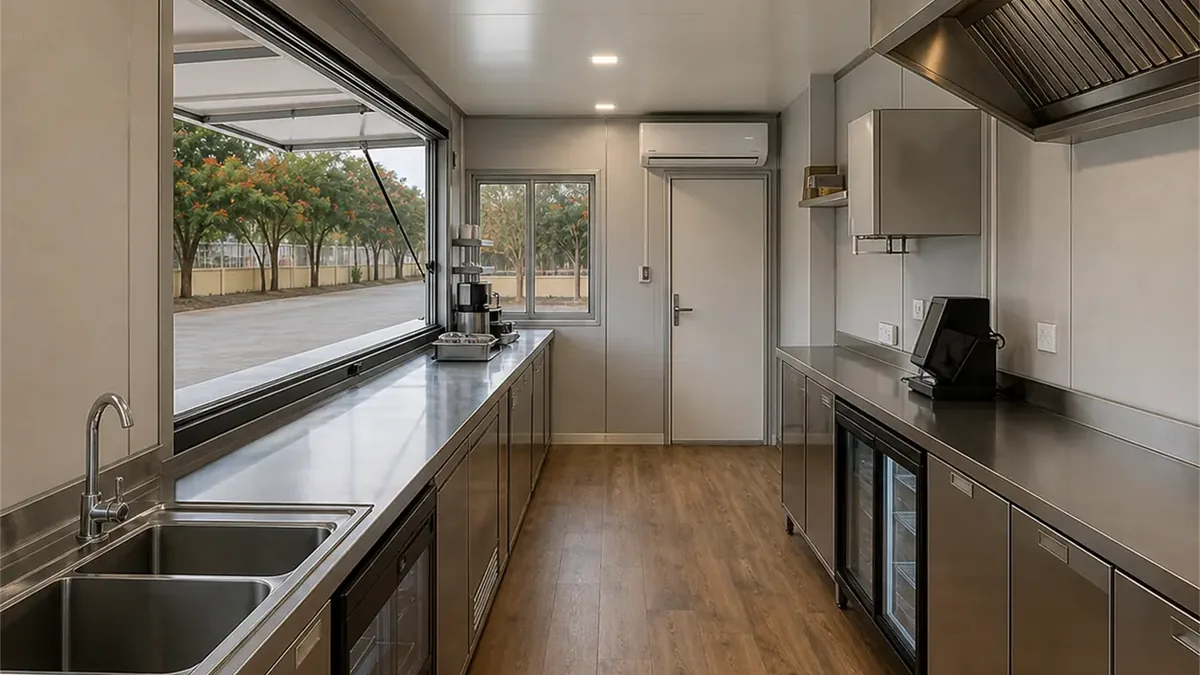
Operators who move weekly stay in the 20 ft bodies, where relocation is a morning's work at ordinary freight rates. The 30 and 40 ft floors carry full catering lines for wedding seasons, exhibitions and stadium concessions, where the unit anchors a venue for months and the move is a planned operation. Each tab above states the weight, clearance and transport route for its size.
ORDERING
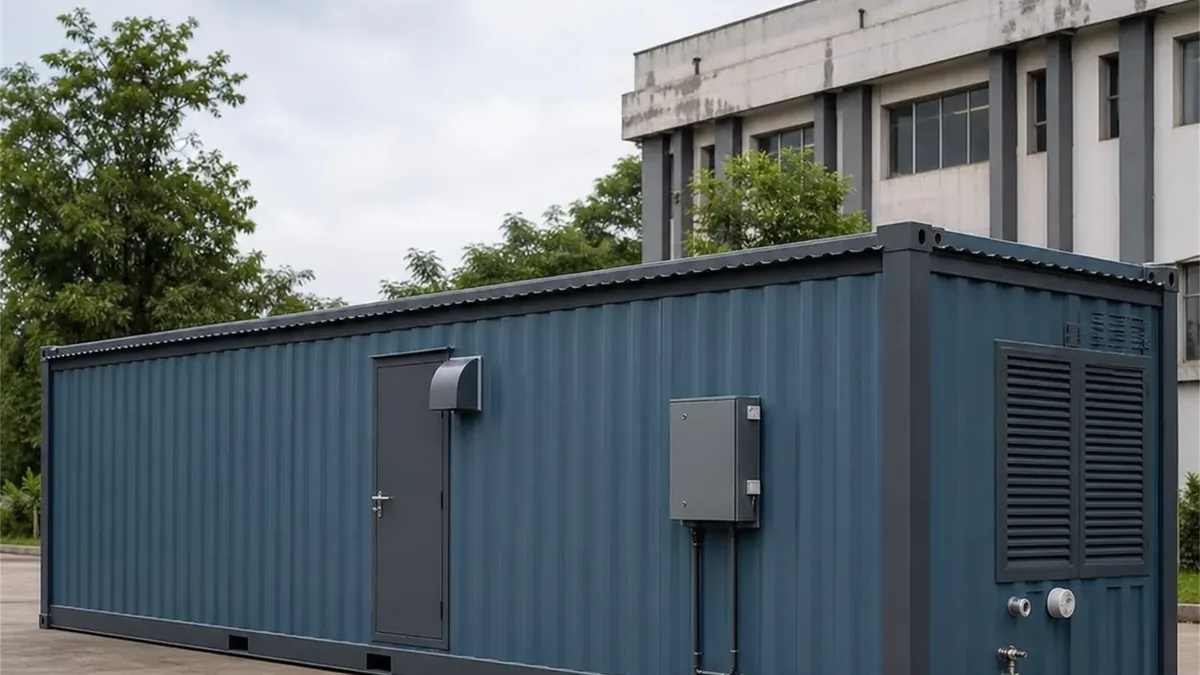
Send the enquiry with your circuit or venue plan and a fixed-price quotation follows within 48 hours. Delivery runs 7 to 21 working days from confirmation. Counter height, hatch positions, canopy and finish are set from your drawing where the standard arrangement does not fit.
5-year structural warranty and 1-year finishing warranty as standard; finishing warranty extendable to 2 years on request, confirmed at quotation. Service life is 20 to 25 years under proper use and maintenance, and that is a service life, not a warranty period. SAMAN POS India Private Limited manufactures every unit at its own Bengaluru and Greater Noida plants: ISO 9001:2015, ISO 14001:2015 and ISO 45001:2018 certified, NSIC and Udyam registered, 500+ projects across 15+ states.
THE ECONOMICS OF A BUILDING THAT EARNS IN MORE THAN ONE PLACE
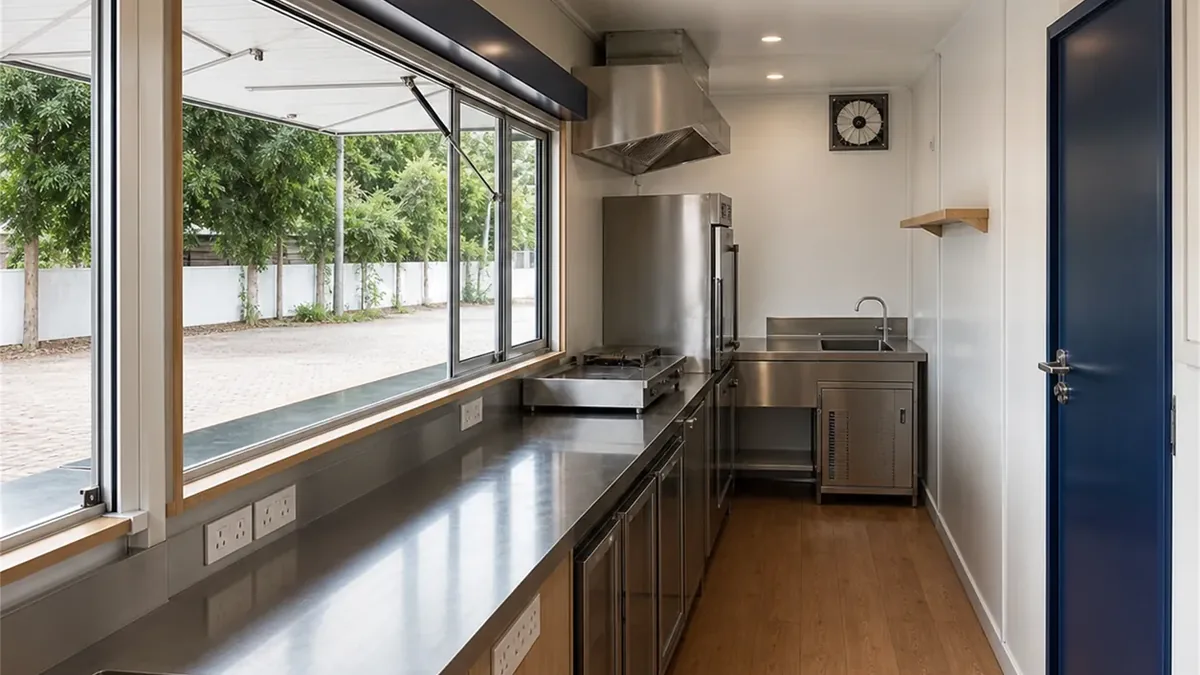
A static outlet is a bet on one location; this unit spreads the bet. The circuit operator who works a weekend market, a weekday office cluster and a festival season out of the same asset is running three businesses on one purchase, and the arithmetic that matters is earnings per pitch minus the move cost between them. With relocation running a hydra hire and short-haul freight for the 20 ft bodies, a pitch that stops paying is abandoned in a morning instead of endured for a lease term. Operators coming from vehicle-mount trucks also notice what disappears: no registration renewals, no fitness certificates, no driver on the payroll, no engine eating margin while parked.
PITCHES, PERMISSIONS AND THE EVENT CALENDAR
The unit's paperwork profile is part of its usefulness. At private venues, malls, campuses, factory gates and event grounds, permission is the landlord's to give, and a clean factory-built unit with proper electricals is an easy yes for an estate manager who has seen improvised stalls fail audits. For public land and municipal markets, rules vary by city and stay the operator's responsibility, though the unit helps there too: it presents as equipment placed on a pitch, not construction on it. Event organisers increasingly specify exactly this format because it arrives finished, plugs into venue power, and leaves the ground clean.
THE MOVE, AS A PLAYBOOK
A relocation runs to a pattern worth knowing before the first one. Openings are locked and loose items stowed against the transport-locking points. The service counter shutter comes down and locks. Utilities disconnect at their couplings, the same fittings every time. The hydra takes the unit from its lifting lugs onto the flatbed, lashings go to the marked points, and the load travels as standard freight for the 20 ft bodies. At the destination the sequence reverses, and a practised crew has the counter open the same day. Keep the lifting drawing with the unit; it is the document every new crane crew asks for first.
WHY THE STRUCTURE IS OVERBUILT ON PURPOSE
Every relocation is a structural event, and the specification treats it that way. The heavier base with corner gussets exists because lifting stresses concentrate at corners; the reinforced top frame exists because a sling pull is a different load than a roof ever sees; the transport locking exists because washboard roads shake fittings loose that city streets never would. A static building carries these costs as waste; a touring one collects the dividend every time it moves without cracking a lining joint. This is also the honest difference from the static units on the container cafe range, which spend that steel elsewhere.
BRANDING A UNIT THAT KEEPS APPEARING IN NEW PLACES
A touring outlet is seen fresh in every location, which doubles the value of its face. The lightweight facade takes full-height vinyl branding, the canopy line carries the name where queue photographs frame it, and signage circuits are wired for illuminated fascia from the base build. Operators who rebrand between seasons, one franchise in summer, another for the wedding circuit, spec the facade for wrap changes rather than paint, a drawing-stage note that costs nothing.
WEIGHT, ROADS AND THE ROUTES NOBODY PLANS FOR
The light bodies open geography that heavier formats write off. Hill markets reached over narrow bends, island venues fed by barge, farm festivals at the end of unpaved approaches: a unit near a tonne travels where multi-tonne loads cannot, and the hydra that places it is available in every district town. Operators planning unusual routes send us the route once; the transport note that comes back has saved more than one season from a bridge with a limit sign.
POWER WHERE THERE IS NO POWER
Venue supply is the default: the unit lands, plugs into the organiser's distribution, and serves. Where a pitch offers nothing, a portable generator sized to the connected load on your tab runs the unit from beside it, cabled to the inlet like any site supply. The wiring architecture does not care which; the distribution board treats venue power and generator power identically, which is why remote-ground festivals are this format's home fixture.
FROM ONE UNIT TO A FLEET
The operators who scale repeat a pattern: prove a menu on one 20 ft unit, then multiply the identical unit across a territory rather than upsizing a single pitch. Identical builds mean interchangeable staff, one spare-parts shelf, and pitch swaps between units when a booking clashes. The ladder's larger floors then join the fleet as anchors for season-long venues while the small bodies keep touring. When a route settles into a permanent pitch, some fleets convert the position to a static unit from the main cafe line and release the touring body back to the road, which is the sibling decision the dine-in container restaurant page covers from the other side.
CHOOSING THE FIRST PITCH, AND READING IT HONESTLY
New operators over-weight footfall and under-weight repeatability. A festival pours thousands past the counter for three days and then vanishes; an office cluster walks two hundred of the same people past it every working morning. The second pitch builds a business; the first builds a story. The buying advice that follows from this is unglamorous: put the unit where the same customers pass daily, learn the menu that pitch actually buys, and use the mobility for seasonal raids rather than as a lifestyle. The operators who fail with mobile formats are almost never let down by the unit; they are let down by treating movement as the product instead of as insurance.
Reading a pitch before committing costs one morning. Count the passing trade at your service hours, not at noon. Look for the anchor that guarantees repetition, a gate, a stop, an office door. Check where the queue would physically stand without blocking anything, because a queue that obstructs gets the pitch cancelled. And ask what the ground is: the unit needs its level footprint, and the answer decides whether the pitch costs a plinth.
KEEPING A TOURING UNIT SERVICEABLE
Movement adds one maintenance discipline that static units never need: the post-move check. After each placement, a ten-minute walk covers levelling, door and shutter action, a glance along the sealing lines and a test of each circuit group. Between moves the regime is ordinary: wipe-down surfaces, hose the floor to its drain, keep the lifting points painted and the locking hardware oiled. The steel exterior takes pressure washing after muddy grounds, and the facade wrap, where fitted, is the sacrificial layer that keeps the paint underneath pristine for the next rebrand. Units in continuous circuit service for years show their age in the wrap, not the shell, which is the correct order of things.
COSTING A SEASON ON PAPER BEFORE LIVING IT
The formats reward operators who budget a season the way a tour manager budgets a tour. Fixed lines: the unit's financing or depreciation, insurance, staff. Per-pitch lines: ground rent, the two lifts, freight at distance, consumables hauled in. Revenue lines: expected cups or plates per service hour at each pitch, times the hours the pitch actually gives you. Run three pitches through that sheet and the season's shape appears before a wheel turns, including the pitch that should be dropped, which is usually the glamorous one. Buyers who arrive with that sheet also order the right size the first time, because the sheet, not ambition, chooses the floor.
THE HANDOVER WINDOW, THE MOST VALUABLE SQUARE FOOT ON BOARD
Every design decision in a takeaway format converges on one opening: where money and food change hands. Its height is set for a standing customer, its shelf holds two orders without crowding, and its shutter closes the whole business with one motion at night. Menu lighting sits above it, the payment scanner beside it, and the queue's approach angles toward it by the placement of the canopy posts. Operators moving up from stalls describe the difference in one word, dignity: the transaction happens at a designed station rather than over a folding table, and customers price that difference into what they will pay without ever naming it.
MATCHING MENU TO FLOOR, THE DECISION THAT SIZES THE UNIT
Menus size mobile kitchens more than covers do. A beverage and snacks card runs happily in the smallest bodies, because its equipment is countertop and its prep is assembly. A fry-led card needs the exhaust run and working clearance of the mid floors. A full catering card, biryani vessels, tandoor, holding cabinets, wants the wide or long bodies where parallel prep is physically possible. The mistake to avoid is buying floor for a menu you might someday serve; buy for the card you will sell this season, because the fleet pattern above makes the bigger floor an addition later rather than a wrong first purchase now.
WHAT ORGANISERS AND INSPECTORS ACTUALLY CHECK
Event organisers run their own gate before any public authority does, and the unit is built to walk through it. They check electrical safety first, and find a protected distribution board with earthing rather than a tangle of extension leads. They check fire risk, and find steel construction, a fire-point position and gas lines run to the open air. They check waste, and find contained lines rather than a pipe to the grass. Food-safety inspection, where the pitch triggers it, sees washable surfaces, a hand-wash point and covered storage, the same fundamentals as any registered kitchen. Operators keep the unit's document folder on board, and most gate checks end at the folder.
QUESTIONS TOURING OPERATORS ASK
How often can it move? As often as the calendar demands. The structure is engineered for repeat lifting, and units in circuit service move monthly or more without structural attention. What wears is scheduling, not steel.
Does it need a foundation at each pitch? No. Firm level ground takes it directly; a season-long pitch benefits from a simple plinth for drainage height. The site note in the ordering section above applies at every stop.
What does a typical move cost? A short-haul move for a 20 ft body is a hydra at each end plus road freight for the distance, with the bands in the freight section below giving the range. Budget the pair of lifts as the fixed part and distance as the variable.
Can two units serve one large pitch? Yes, and festival operators do exactly that, a service unit and a prep unit side by side. Order them together and the drawings place the service faces and cable runs as one layout.
Insurance and ownership papers? The unit sells on a GST invoice as manufactured equipment with its serial and drawings; insurers class it as movable plant. Most operators cover it under a floating assets policy that follows it between pitches.
Wind and weather at exposed grounds? The unit's weight and low profile handle exposed pitches, and tie-down points are part of the base frame for grounds that demand anchoring. Close the shutter, lock the openings, and monsoon squalls pass over a sealed steel box.
HANDING THE UNIT TO A NEW OPERATOR
Because the asset outlives any single venture, a sale between operators is a normal event in this format's life, and it goes smoothly when the documents travel. The lifting drawing, electrical layout, test record and invoice transfer with the unit; the new owner re-brands the wrap, re-equips the counter to a new card, and the building neither knows nor cares. Units on their second and third operators are common in the touring trade, and the resale conversation is materially simpler than selling any fixed premises, because the buyer inspects the entire asset in an hour and takes it away on a trailer. For a first-time buyer weighing the purchase, that liquid exit is worth pricing into the decision at the start.
THE MANUFACTURER BEHIND THE FLEET
SAMAN POS India Private Limited has built portable structures since 2009, incorporated 2019, at its own Bengaluru and Greater Noida plants: 500+ projects, 3,000+ happy customers, 200+ team members, 15+ states. ISO 9001:2015, ISO 14001:2015 and ISO 45001:2018 certified, NSIC and Udyam registered, ZED Bronze, DPIIT recognised. Manufacturer, not reseller. Standard products carry a 7-day non-defective return, new and unused; custom builds are not eligible for non-defective return, defects raised within 3 days, refunds within 7 days of approved inspection. The freight ladder below prices the road; the warranty above stands as written.
FREIGHT AND DELIVERY CHARGES
Freight is quoted as its own line so the unit price stays comparable across suppliers. The ladders below are tentative bands for an open trailer from our nearer plant, North or South zone alike; the exact figure is confirmed with your quotation once the delivery location and order are confirmed, and may move slightly with the route and return-vehicle availability. ODC charges, where a size needs over-dimension clearance, depend on the state and are confirmed the same way.
Delivery is free within Bengaluru city, and free across Delhi NCR: Ghaziabad, Gurugram, Faridabad, Noida and Greater Noida.
Units up to 20 ft in length travel on a 20 ft open trailer. Longer bodies travel on a 40 ft open trailer.
20 ft open trailer:
| Distance | Freight band |
|---|---|
| 100-150 km | ₹25,000-30,000 |
| 150-200 km | ₹30,000-35,000 |
| 200-250 km | ₹35,000-40,000 |
| 250-300 km | ₹40,000-45,000 |
| 300-350 km | ₹45,000-50,000 |
| 350-400 km | ₹50,000-55,000 |
| 400-450 km | ₹55,000-60,000 |
| 450-500 km | ₹60,000-65,000 |
| 500-550 km | ₹65,000-70,000 |
| 550-600 km | ₹70,000-75,000 |
| 600-650 km | ₹75,000-80,000 |
| 650-700 km | ₹80,000-85,000 |
| 700-750 km | ₹85,000-90,000 |
| 750-800 km | ₹90,000-95,000 |
| 800-850 km | ₹95,000-1,00,000 |
| 850-900 km | ₹1,00,000-1,05,000 |
| 900-950 km | ₹1,05,000-1,10,000 |
| 950-1000 km | ₹1,10,000-1,15,000 |
40 ft open trailer:
| Distance | Freight band |
|---|---|
| 100-150 km | ₹30,000-35,000 |
| 150-200 km | ₹35,000-40,000 |
| 200-250 km | ₹40,000-45,000 |
| 250-300 km | ₹45,000-50,000 |
| 300-350 km | ₹50,000-55,000 |
| 350-400 km | ₹55,000-60,000 |
| 400-450 km | ₹60,000-65,000 |
| 450-500 km | ₹65,000-70,000 |
| 500-550 km | ₹70,000-75,000 |
| 550-600 km | ₹75,000-80,000 |
| 600-650 km | ₹80,000-85,000 |
| 650-700 km | ₹85,000-90,000 |
| 700-750 km | ₹90,000-95,000 |
| 750-800 km | ₹95,000-1,00,000 |
| 800-850 km | ₹1,00,000-1,05,000 |
| 850-900 km | ₹1,10,000-1,15,000 |
| 900-950 km | ₹1,15,000-1,20,000 |
| 950-1000 km | ₹1,20,000-1,25,000 |
Technical Specifications
Detailed technical information and features
Steel Structure
| Component | Detail |
|---|---|
| Bottom frame | 150×75×5 mm MS C-channel with reinforced lifting and relocation zones |
| Bottom stiffeners | 100×50×4 mm channels, 80×40×3 mm tubes and additional corner gussets |
| Floor frame | 100×50×3 mm primary floor members |
| Top frame | 80×40×3 mm MS top perimeter with additional lifting support |
| Roof stiffeners | 60×40×2.5 mm roof members |
| Corner posts / walls | 60×60×3 mm corner posts and 50×50×3 mm wall posts |
| Lifting / handling | Designed MS lifting hooks or lugs matched to the completed unit weight; handle only by the approved lifting and support-point drawing. |
| Welding & fabrication | Welded MS fabrication with cleaned joints, safe edges, dimensional inspection and coating touch-up before panel closure and dispatch. |
Walls, Roof, Floor & Insulation
| Component | Detail |
|---|---|
| Exterior walls | 1.25–1.6 mm corrugated MS sheet |
| Roof | 1.6 mm corrugated MS sheet |
| Interior walls | 8 mm pre-laminated plywood or fibre-cement board |
| Ceiling | 8 mm pre-laminated or fibre-cement ceiling |
| Floor base | 18–24 mm cement board |
| Floor finish | 2 mm commercial vinyl or anti-skid finish |
| Wall insulation | 50 mm mineral wool |
| Roof insulation | 75 mm mineral wool |
| Decorative / external finish | Lightweight ACP/HPL decorative façade with transport-safe signage and removable canopy. |
| Fasteners & sealing | Security grill, insect mesh, guard, louver or protection selected only where the approved use and opening schedule requires it. |
Doors, Windows, Electrical & Services
| Component | Detail |
|---|---|
| Main door / service door | Staff/customer door plus lockable service counter or shutter. |
| Windows / service opening | Large aluminium service glazing with lockable counter opening. |
| Grills / mosquito mesh | Security grill, insect mesh, guard, louver or protection selected only where the approved use and opening schedule requires it. |
| Electrical wiring | Concealed PVC-insulated copper wiring, typically 1.5 sq.mm lighting, 2.5 sq.mm sockets and 4 sq.mm higher-load or AC circuits, subject to the final load schedule. |
| Electrical protection | Distribution board with MCB/RCCB protection, earthing and segregation of lighting, socket, wet-area and AC circuits according to the approved electrical drawing. |
| Electrical fittings | LED lighting, signage supply, multiple 6A/16A appliance sockets, dedicated equipment circuits and DB/MCB protection. |
| Ventilation / AC | Exhaust-hood/duct provision, fresh-air opening and optional AC for the customer zone. |
| Plumbing / sanitary | Sink/handwash, CPVC water supply, UPVC waste and equipment connection points according to layout. |
| Layout / configuration | Front service counter with separate staff preparation and storage zones. All loose items and openings require transport locking. |
| Painting / coating | One red-oxide primer coat followed by two compatible anti-rust enamel coats on prepared MS surfaces; project exposure may require an upgraded coating system. |
| Quality checks | Pre-dispatch checks cover dimensions, member and sheet identification, welds, coating, roof drainage, weather sealing, doors, windows, electrical continuity and functional operation. |
| Warranty | 5-year structural warranty and 1-year finishing warranty as standard; finishing warranty extendable to 2 years on request, confirmed at quotation. Relocation damage, misuse, site services and unapproved alterations remain outside the agreed scope unless stated otherwise. |
Customer Reviews
0 reviews
No reviews yet. Be the first to review this product.
Write a Review for Food Truck Container
Built by a verified manufacturer: ISO 9001:2015 certified, Udyam registered, NSIC-enlisted, GST registered.
View manufacturer credentials