
Bangalore & South Zone
Delhi NCR & North Zone
Container Coffee Shop: Barista Fit-Out on the Cafe Shell
Choose size
20x10 ft Container Coffee Shop
₹3,70,000 + GST₹4,36,600 incl. 18% GST
Base specification price - customisations quoted separately.
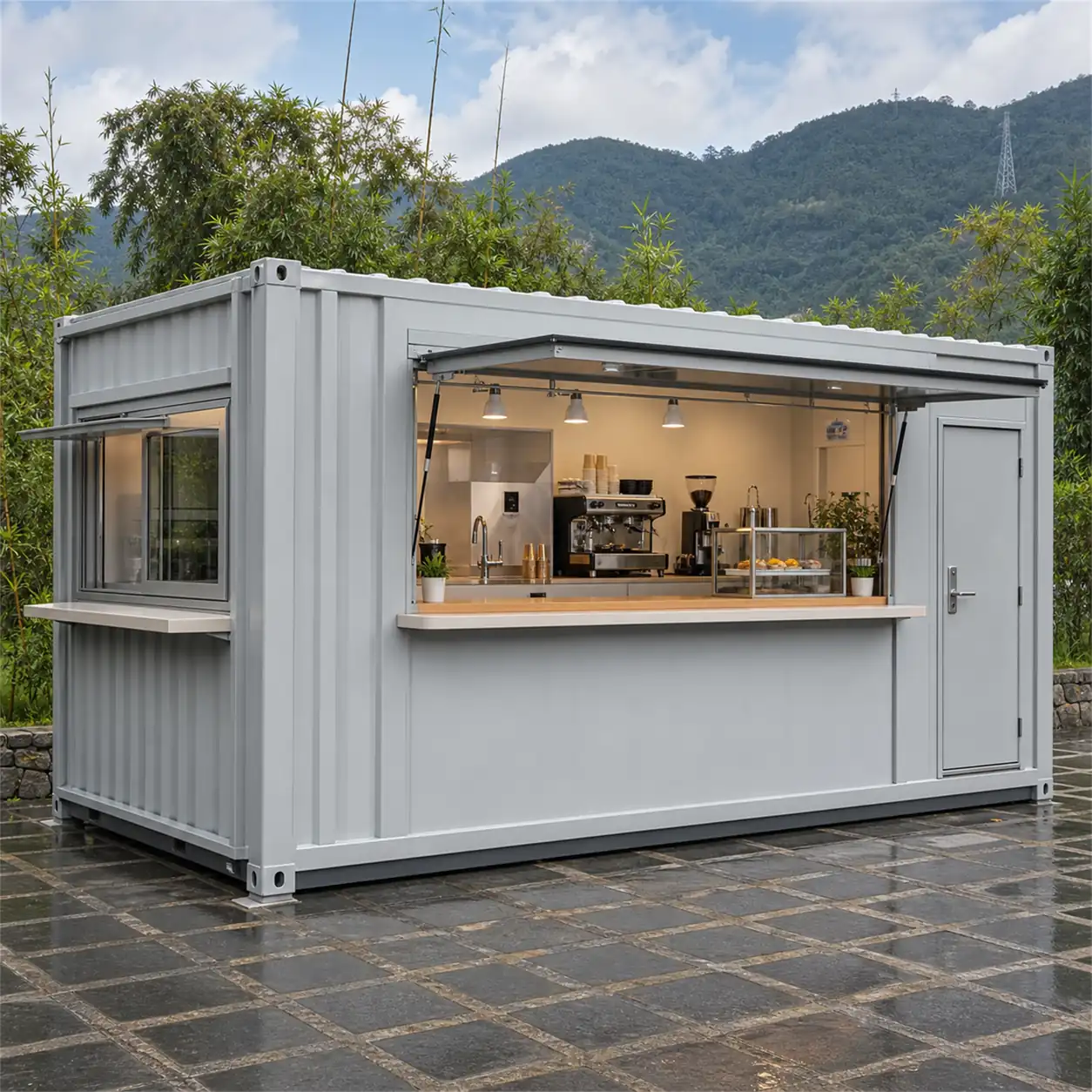
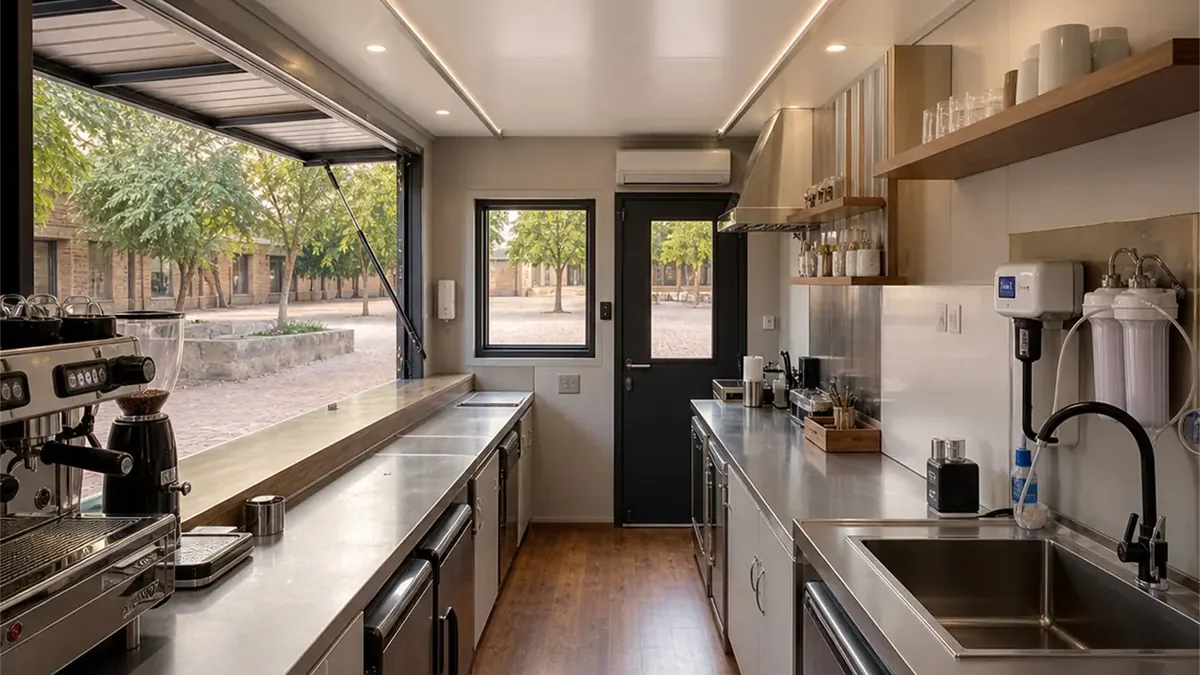
A SAMAN container coffee shop is the standard container cafe shell fitted out for coffee: dedicated espresso and grinder circuits, a treated water point feeding the machine, under-counter waste, display glazing at the counter face and a branded frontage planned around pickup speed. The shell, the steel and the insulation are the same as the container cafe range, and the price ladder is the same, from ₹2,03,500 ex-factory, ex-GST. What differs is everything a barista touches, which is why this page covers the fit-out and workflow rather than repeating the structural specification.
Custom sizes available · 500+ projects delivered · Factory-tested before dispatch
Product Information
- Category
- Container Cafe
GST registered · ISO 9001:2015 certified manufacturer · 5-year structural and 1-year finishing warranty · Pan-India delivery
Why the Container Coffee Shop is its own page
The coffee shop is not a different building from the container cafe; it is the same shell with a fit-out planned around one workflow. Its electrical schedule carries dedicated espresso and grinder circuits, its plumbing adds a treated water feed and under-counter waste, and its counter face is glazed for display and set for pickup. Read this page for the fit-out; read the container cafe range for the shell specification.
Serving more than coffee? The container cafe range covers the same shell fitted for general food service and full menus.
Coffee shop sizes and what the barista fit-out adds at each
20x10x8.5 ft standard shop with seated corner
Two hundred square feet is the reference footprint, and the first size where a small seated corner fits behind the working bar rather than competing with it. Display glazing across the counter face carries the pastry and merchandise line that lifts average ticket beyond the cup. Under-counter waste keeps the bin out of the customer view, which matters once people are sitting rather than passing. Most independent coffee brands price this size first, because it is the smallest unit that supports both a takeaway queue and a reason to stay.
- Independent brand flagship
- Takeaway plus seating
- Pastry display line
- Neighbourhood coffee bar
20x10 ft Container Coffee Shop
₹3,70,000 + GST


PRICE IT YOURSELF
Your Container Coffee Shop from ₹2,03,500
Set the size, choose the finish, watch the price move as you go.
Start your designFixed-price quote within 48 hours. Built in our own works.
Enter a length and width between 4 and 60 ft. For larger buildings, request a quotation and we will size it with you.
Please add your name and mobile number so our sales team can send your fixed quotation.
Enter a 10-digit Indian mobile number.
Please add your email so we can send your quotation PDF.
Design saved on this device.
Your saved design has been restored. Start over to begin fresh.
Link copied. Anyone who opens it sees this exact configuration.
Configuration received. Our sales team will send your fixed, itemised quotation within 48 hours.
We could not submit right now. Please try again, or WhatsApp us at +91 88616 22859 and we will take it from there.
Your saved design has been restored. Start over to begin fresh.
Customized cabin
Container Coffee Shop
20×10 ft · 200 sq ft
Estimated total
₹2,10,980₹2,48,956 incl. GST
Published cabin price tables
All primary prices are ex-GST. Including-GST figures apply 18 percent GST.
Container Cafe price table
| Size | Area | Price ex-GST | Including 18% GST |
|---|---|---|---|
| 10x10 ft | 100 sq ft | ₹2,03,500 | ₹2,40,130 |
| 20x8 ft | 160 sq ft | ₹3,25,600 | ₹3,84,208 |
| 20x10 ft | 200 sq ft | ₹3,70,000 | ₹4,36,600 |
| 20x12 ft | 240 sq ft | ₹4,26,240 | ₹5,02,963 |
| 30x10 ft | 300 sq ft | ₹5,32,800 | ₹6,28,704 |
| 40x10 ft | 400 sq ft | ₹6,95,600 | ₹8,20,808 |
Product Details
Comprehensive information about Container Coffee Shop
Product Overview
Detailed information about Container Coffee Shop
ABOUT THE SAMAN CONTAINER COFFEE SHOP
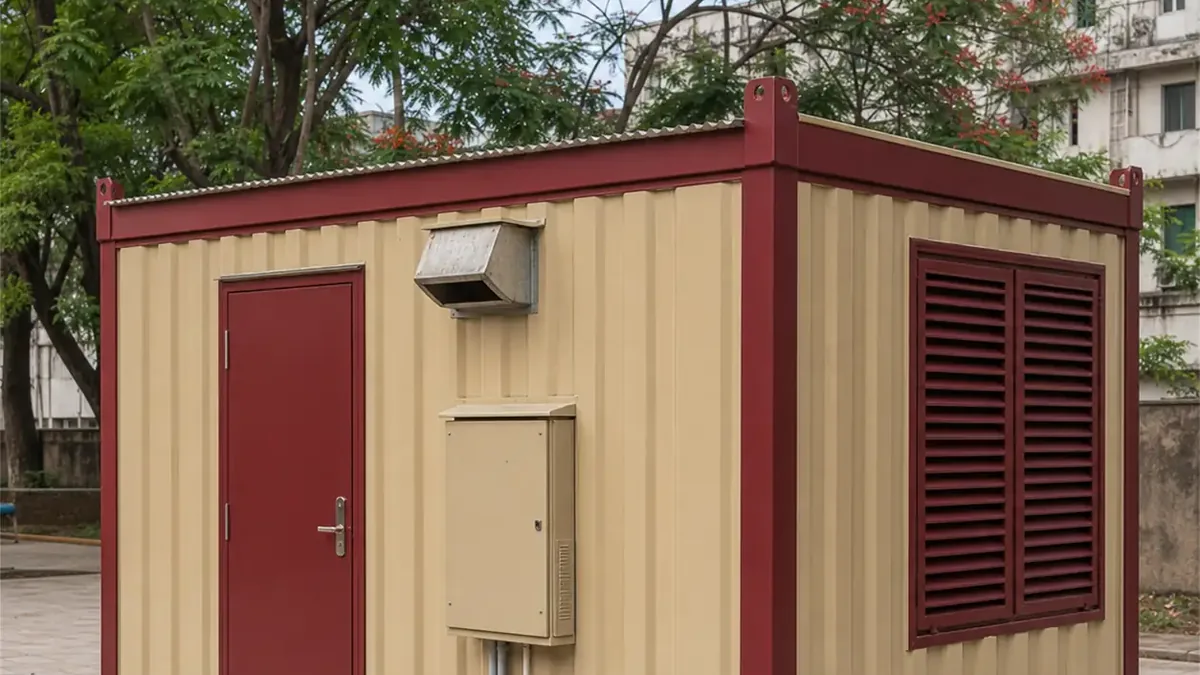
Coffee is a workflow business, and this page sells the workflow. The building is the proven container cafe shell; what you are specifying here is everything a barista touches between order and handover: machine position, grinder circuit, water quality, waste path, display and queue. Get those right and one operator serves a rush; get them wrong and no amount of floor area saves the morning.
WHAT THE PRICE COVERS
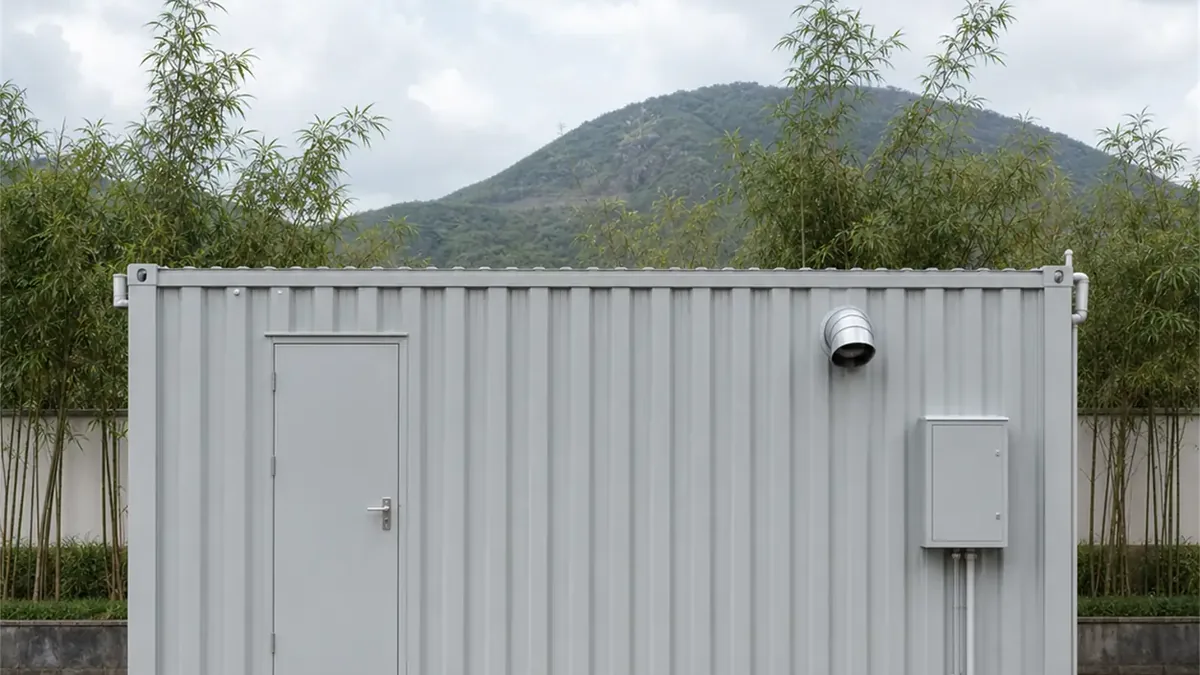
Base specification carries the standard cafe shell plus the coffee fit-out layer: dedicated espresso and grinder circuits on the distribution board, a treated water point plumbed for the machine, under-counter waste routing, glazed display at the counter face and the branded frontage framing. The 200 sq ft shop is ₹3,70,000 ex-GST ex-factory, sharing the cafe range ladder from ₹2,03,500 through ₹6,95,600. Machines, grinders and smallwares stay your purchase; the building arrives ready to receive them.
WHY THE WATER POINT IS LISTED BEFORE THE MACHINE
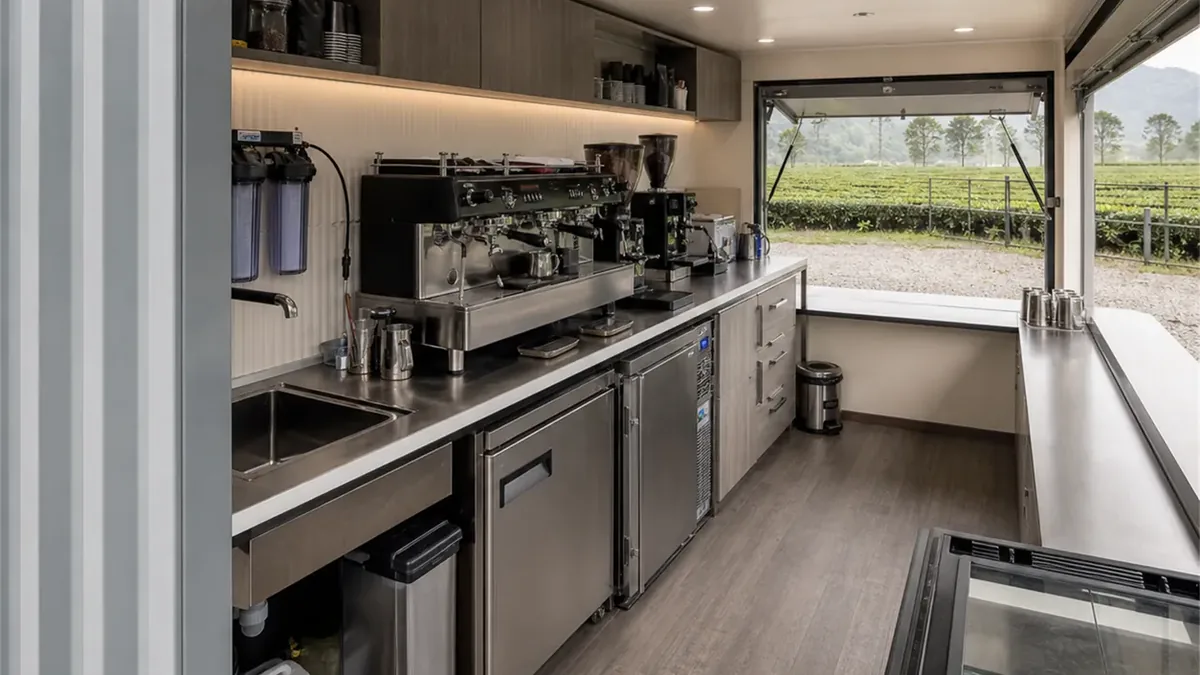
Espresso equipment fails on scale before it fails on anything else, and a compact bar has no space for a spare. Plumbing treatment into the build, rather than retrofitting a filter under a finished counter, is the cheapest insurance a coffee business can buy, so it ships as part of the base fit-out on every size.
FROM WINDOW TO DESTINATION
The six sizes trace a growth path: pickup-window bars where footfall passes, split order-and-collect counters for commuter peaks, seated rooms where the brand wants guests to stay, and the 400 sq ft flagship with a retail wall. The explorer above carries the working detail per size; the full structural specification lives on the container cafe hub, linked above, because the shell is common and this page owns what is not.
ORDERING
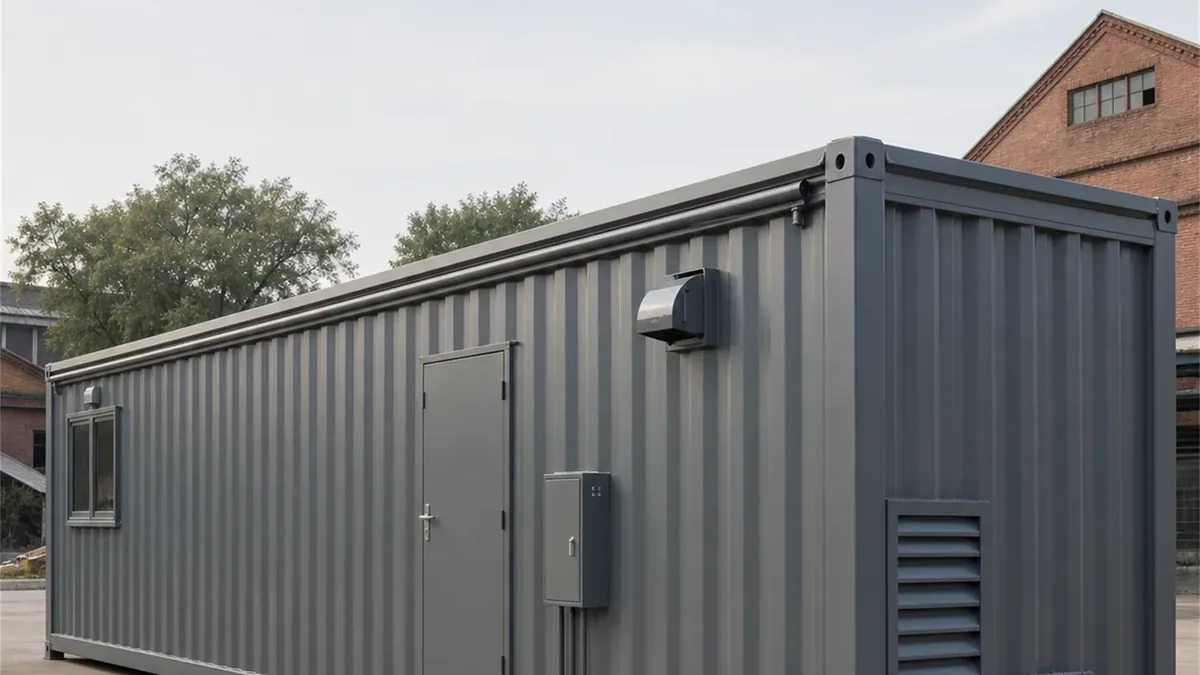
Send the enquiry with your daily cup target and pitch details and a fixed-price quotation follows within 48 hours. Delivery runs 7 to 21 working days from confirmation. Counter length, hatch side, display extent and branding panels follow your drawing.
5-year structural warranty and 1-year finishing warranty as standard; finishing warranty extendable to 2 years on request, confirmed at quotation. Service life is 20 to 25 years under proper use and maintenance, and that is a service life, not a warranty period. Manufactured by SAMAN POS India Private Limited: ISO 9001:2015, ISO 14001:2015 and ISO 45001:2018 certified, NSIC and Udyam registered, 3,000+ happy customers.
THE CUP ECONOMICS THIS BUILDING SERVES
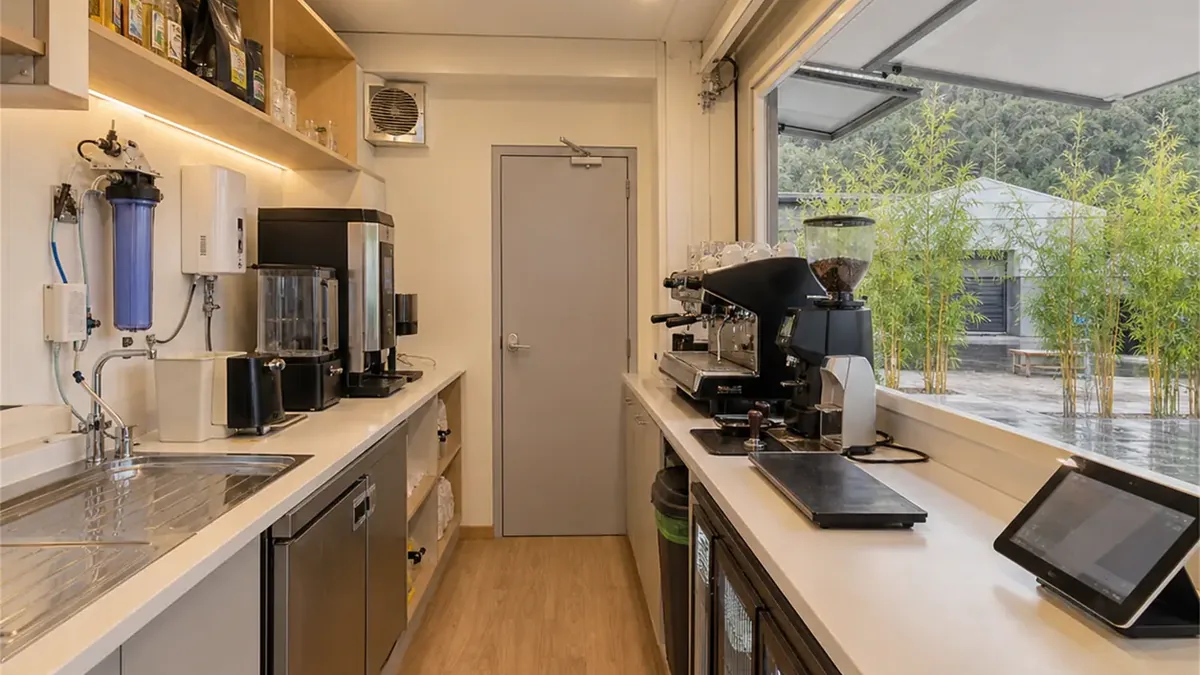
Coffee margins live in volume and repeatability: the difference between a shop that pours two hundred cups a day and one that pours eighty is rarely the machine, it is how fast one barista turns an order into a handover without error. That is a layout problem, and it is why this page talks workflow before steel. Every metre a barista walks per cup is margin spent; every crossing of paths between order-taking and milk-steaming is seconds lost at exactly the hour they cost most. The fit-out puts the espresso station, grinder, water, waste and handover in one unbroken working line, and the payoff compounds with every cup of the day.
WATER CHEMISTRY, THE UNGLAMOROUS FOUNDATION
Ask any roaster what kills cafes quietly and the answer is water. Scale chokes boilers and voids machine warranties; chlorine and off-tastes flatten an expensive bean; inconsistent water makes yesterday's recipe wrong today. Building the treated feed into the counter, sized and positioned for the machine, means the shop opens with its water solved and stays solved through every service. The under-counter waste line is the same philosophy applied downstream: knock-box grounds and rinse water disappear below the counter instead of crossing the customer's sightline in a bucket.
DESIGNING THE QUEUE BEFORE THE QUEUE EXISTS
A coffee queue is a designed object. The order point sits where arriving customers naturally stop; the handover sits far enough along that waiting customers stand clear of ordering ones; the display glazing works the queue's waiting seconds, which is where pastry and merchandise sales actually happen. The six sizes on this page are six queue designs as much as six floors: the window formats process a moving line, the split-counter formats hold a commuter surge, and the seated formats separate the takeaway lane from the room so neither trade poisons the other. Bring your expected morning peak to the enquiry and the drawing designs for that number.
MILK, COLD CHAIN AND THE UNDER-COUNTER MAP
After water, milk runs the shop. The under-counter refrigeration position sits inside the barista's pivot, sized for a full day's dairy plus alternatives, with the day's reserve in the back-counter unit where restocking never crosses the working line. The cold chain discipline the layout enforces, delivery to reserve to working fridge in marked positions, is what keeps wastage near zero and health checks boring. Syrups rack within reach of the machine hand, cup stacks nest above the pass shelf where a reach never becomes a step, and the whole under-counter map is drawn with you before fabrication so the shop opens already knowing where everything lives.
ROLLING OUT A COFFEE BRAND, SHOP BY SHOP
Chains and aspiring chains get a specific advantage here: the shop itself becomes a repeatable product. One approved drawing, one equipment schedule, one branded facade specification, then every new site is a purchase order rather than a design project, opening weeks after the lease signs. Site variation collapses to ground preparation while the customer experience stays identical, which is the entire operational secret of coffee chains. Franchise operators use the same mechanism contractually: the franchisee buys the standard unit, and brand consistency arrives factory-sealed rather than audited after the fact.
THE RETAIL WALL AND THE SECOND MARGIN
From the mid sizes upward, the layout supports what specialty operators call the second margin: beans, brewing kit and branded goods sold from a display wall. Retail stock earns from floor area that seating could never justify at coffee's dwell times, and it converts the shop's regulars into home customers between visits. The display and lighting provisions are drawing-stage choices; operators who plan the wall from day one report it carrying a meaningful share of revenue within months.
A DAY IN THE SHOP, AS THE BUILDING SEES IT
Open: lights and machine circuits come up on their own breakers, water at temperature by the first customer. Peak: the line works the counter's single direction, the queue reads the display, the handover clears without collisions. Lull: the seated corner earns its rent from laptops and meetings while the barista preps. Close: surfaces wipe down, the floor hoses to its drain point, the shutter locks over the glazing, and the building needs nothing more from anyone until morning. A shop that ends its day that easily keeps staff, and keeping trained baristas is a margin line no spreadsheet prints.
PRICING THE CUP WHEN THE PREMISES ARE THIS PREDICTABLE
Menu pricing in coffee is usually built on guessed premises costs; here the premises side is a known number from day one. The building's cost is fixed at purchase, its running load is stated on the drawing, and there is no landlord fit-out amortisation hiding in every cup. Operators price from bean cost, labour and a premises figure they can actually compute, which is why margins in this format hold steady while high-street cafes wobble with every rent review. The discipline the format rewards is simple: know your cost per cup to the rupee, because for once the building lets you.
WHERE THE FORMAT WINS ITS PITCHES
Office and tech-park forecourts, where the morning surge decides everything and the split counter earns its keep. Campus gates and libraries, transit approaches, hospital forecourts, anywhere a walking population passes at fixed hours. Highway plots beside the dining formats of the container cafe range, where a coffee window intercepts the traffic the restaurant seats. And increasingly, residential high-street corners, where a neighbourhood shop at the seated sizes becomes the third place its postcode was missing. Operators moving between seasonal pitches should read the road-mobile food truck format instead; this page's formats are built to stand.
OPENING WEEK, HOUR BY HOUR
The distance between delivery and first sale is measured in days here, and the week has a shape. Day one places the unit and connects services; the machine and grinder install into their named circuits the same afternoon. Day two is water: the treated line flushed, the machine filled, boiler chemistry checked against the roaster's specification. Days three and four belong to dialling in, grind, dose and recipes fixed on the actual water in the actual machine, while the display stocks and the signage lights. A soft opening on day five sells to friends and passers-by at working pace, surfacing the small frictions while they are free to fix. The public opening follows with a shop already running smoothly, which is a first impression no amount of later marketing can buy back if it is fumbled.
STAFFING THE COUNTER THROUGH THE DAY
The formats are designed to flex headcount with the clock. The morning surge wants the full crew: one on orders and handover, one on the machine, in the split formats each on their own counter end. Midday runs on one barista in the window formats and two in the seated ones. The afternoon lull is a single-hand shift that preps for the next morning, and the seated formats keep earning through it from the room while the counter breathes. Because the working line is compact, training time is short and cover between staff is real; any trained hand can run any station, which is what makes leave and turnover survivable for a small operator.
THE SHOP THROUGH THE SEASONS
Coffee trade moves with weather, and the building is specified for the swings. Summer service leans on the insulation and conditioning to keep the room, and the machine's heat, from defeating the afternoon; the queue design keeps the takeaway line outside the conditioned space. Monsoon moves the queue under the canopy line and proves the sealing, and it is the season when indoor seating earns hardest. Winter mornings in the North are the espresso trade's gift, and the sealed shell warms quickly on its ordinary circuits. Operators planning around exam seasons, tourist waves or office calendars can flex hours cheaply, because opening and closing this shop is a switch-and-shutter routine, not a premises ritual.
SIZING THE SHOP BY DAILY CUPS, NOT BY AMBITION
Cups per day is the sizing metric that never lies. Up to about a hundred and fifty cups, the window formats process the trade with one barista and the smallest floors carry the business. From there to the mid hundreds, the split counter earns its keep at the surge hours and the mid floors fit. Beyond that, the machine wants its second group, the crew wants its back lane, and the seated floors are the right home. Estimate honestly from the pitch's walking population rather than from hope, and remember the fleet logic of this range: the right small shop now plus a second unit later beats one oversized shop bleeding rent while the trade grows into it.
THE COUNTER, WALKED END TO END
Since the counter is the machine the operator is really buying, walk it on paper. Order end: the till position with the display case at the customer's elbow, because the pastry sells while the card is out. Centre: the espresso station, machine forward, grinder at the working hand, knock and rinse below, treated water arriving behind the machine where service access stays clear. Handover end: the pass shelf at customer height with lids, sleeves and sugar off the working line. Underneath, refrigeration where the milk hand reaches without a step, and the waste run leaving every scrap motion downward instead of sideways. That geography, repeated hundreds of times a day, is where this fit-out either pays for itself or never stops costing, and it is the part of the drawing worth the most argument before fabrication.
THE SHOP AS CONTENT, A MODERN FOOTNOTE THAT PAYS
One more revenue line deserves its paragraph because it costs nothing and most operators discover it late. A distinctive small building photographs, and coffee trade runs on photographs. The branded frontage, the glazing line and the compact interior frame themselves for the phone shots customers take unprompted, and operators who design the facade with one photogenic angle in mind collect a stream of location-tagged marketing they never pay for, week after week. It is a small consideration at the drawing stage and a daily working asset every day afterwards.
QUESTIONS COFFEE OPERATORS ASK
Which machines does the fit-out suit? Any commercial espresso set; the circuits are sized generously and named at the drawing stage for your machine and grinder models, with the water feed positioned to the machine's inlet side.
Can I start with a window and grow to seating? Yes, by trading up within the range; the brand, equipment and workflow transfer intact. Operators who expect to grow often buy the next size up from day one, since floor area is cheaper than a second move.
What about milk alternatives and cold brew? Refrigeration and additional under-counter positions are layout entries, stated at enquiry. Cold-brew and batch equipment mostly want power and shelf depth, both drawing-stage items.
Does the shop work without seating at all? The window formats are designed exactly so. Takeaway-only economics on high-footfall pitches are the strongest in the range, and the smaller floors exist for precisely that trade.
How is the glazing kept secure overnight? Lockable shutters over the counter face are part of the fit-out specification, and the remaining envelope is the same sealed steel as every unit in the range.
Who trains the baristas? Your roaster or trainer; the building's contribution is a workstation that makes trained habits fast. Several operators schedule training in the unit at the factory in the days before dispatch, which doubles as their pre-delivery inspection.
WHAT THE FIRST YEAR TEACHES EVERY OWNER
Owners a year in report the same discoveries. The morning peak is won or lost on preparation the night before, and the shop's easy close makes that discipline sustainable. The display case quietly becomes the margin engine, and restocking it seriously outearns any coffee discount. Water treatment, invisible when it works, proves itself the first time a neighbouring operator's machine goes down with scale in month eight. And the building itself disappears from their thinking, which is the highest compliment infrastructure earns: the owner's attention lives entirely on beans, staff and customers, because nothing about the premises demands it back.
THE MANUFACTURER BEHIND THE COUNTER
SAMAN POS India Private Limited has manufactured portable buildings since 2009, incorporated 2019, at its own plants in Bengaluru and Greater Noida: 500+ projects, 3,000+ happy customers, 200+ team members, 15+ states. ISO 9001:2015, ISO 14001:2015, ISO 45001:2018, NSIC, Udyam, ZED Bronze and DPIIT recognised. Manufacturer, not reseller. Custom builds follow the custom returns tier, defects raised within 3 days, refunds within 7 days of approved inspection. Freight prices from the ladder below; the warranty above applies as written.
FREIGHT AND DELIVERY CHARGES
Freight is quoted as its own line so the unit price stays comparable across suppliers. The ladders below are tentative bands for an open trailer from our nearer plant, North or South zone alike; the exact figure is confirmed with your quotation once the delivery location and order are confirmed, and may move slightly with the route and return-vehicle availability. ODC charges, where a size needs over-dimension clearance, depend on the state and are confirmed the same way.
Delivery is free within Bengaluru city, and free across Delhi NCR: Ghaziabad, Gurugram, Faridabad, Noida and Greater Noida.
Units up to 20 ft in length travel on a 20 ft open trailer. Longer bodies travel on a 40 ft open trailer.
20 ft open trailer:
| Distance | Freight band |
|---|---|
| 100-150 km | ₹25,000-30,000 |
| 150-200 km | ₹30,000-35,000 |
| 200-250 km | ₹35,000-40,000 |
| 250-300 km | ₹40,000-45,000 |
| 300-350 km | ₹45,000-50,000 |
| 350-400 km | ₹50,000-55,000 |
| 400-450 km | ₹55,000-60,000 |
| 450-500 km | ₹60,000-65,000 |
| 500-550 km | ₹65,000-70,000 |
| 550-600 km | ₹70,000-75,000 |
| 600-650 km | ₹75,000-80,000 |
| 650-700 km | ₹80,000-85,000 |
| 700-750 km | ₹85,000-90,000 |
| 750-800 km | ₹90,000-95,000 |
| 800-850 km | ₹95,000-1,00,000 |
| 850-900 km | ₹1,00,000-1,05,000 |
| 900-950 km | ₹1,05,000-1,10,000 |
| 950-1000 km | ₹1,10,000-1,15,000 |
40 ft open trailer:
| Distance | Freight band |
|---|---|
| 100-150 km | ₹30,000-35,000 |
| 150-200 km | ₹35,000-40,000 |
| 200-250 km | ₹40,000-45,000 |
| 250-300 km | ₹45,000-50,000 |
| 300-350 km | ₹50,000-55,000 |
| 350-400 km | ₹55,000-60,000 |
| 400-450 km | ₹60,000-65,000 |
| 450-500 km | ₹65,000-70,000 |
| 500-550 km | ₹70,000-75,000 |
| 550-600 km | ₹75,000-80,000 |
| 600-650 km | ₹80,000-85,000 |
| 650-700 km | ₹85,000-90,000 |
| 700-750 km | ₹90,000-95,000 |
| 750-800 km | ₹95,000-1,00,000 |
| 800-850 km | ₹1,00,000-1,05,000 |
| 850-900 km | ₹1,10,000-1,15,000 |
| 900-950 km | ₹1,15,000-1,20,000 |
| 950-1000 km | ₹1,20,000-1,25,000 |
Technical Specifications
Detailed technical information and features
Coffee shop fit-out
| Item | Detail |
|---|---|
| Shell and structure | Standard container cafe shell. See the full specification on the container cafe hub. |
| Espresso and grinder circuits | Dedicated equipment circuits on the approved load schedule, separate from lighting and general sockets. |
| Water treatment point | Treated water feed positioned for the machine, with isolation at the counter run. |
| Under-counter waste | Waste and drainage taken below the counter line, out of the customer view. |
| Display glazing | Glazed counter face for pastry, bean and merchandise display. |
| Warranty | 5-year structural warranty and 1-year finishing warranty as standard; finishing warranty extendable to 2 years on request, confirmed at quotation. Relocation damage, misuse, site services and unapproved alterations remain outside the agreed scope unless stated otherwise. |
This unit is built on the standard cafe shell. The full 30-row structural specification is published on the container cafe range.
Customer Reviews
0 reviews
No reviews yet. Be the first to review this product.
Write a Review for Container Coffee Shop
Built by a verified manufacturer: ISO 9001:2015 certified, Udyam registered, NSIC-enlisted, GST registered.
View manufacturer credentials