
Container Offices Price Guide 2025: Smart Costing and ROI for Indian Projects

Container Office Pricing in India: Why It Matters in 2025
Container offices price is not a single figure. In India in 2025 the cost depends on container size, condition, insulation, interiors and site access, which is why buyers see wide bands rather than one fixed number:
SAMAN does not publish one fixed price: your cost depends on size, insulation, layout, fittings and site. The indicative India bands shown lower down are for budgeting only; request a written quote for your exact requirement.
Beyond the shell, modifications such as insulation, HVAC, branded interiors and compliance documents add the most to the final cost. Each is quoted against your actual specification.
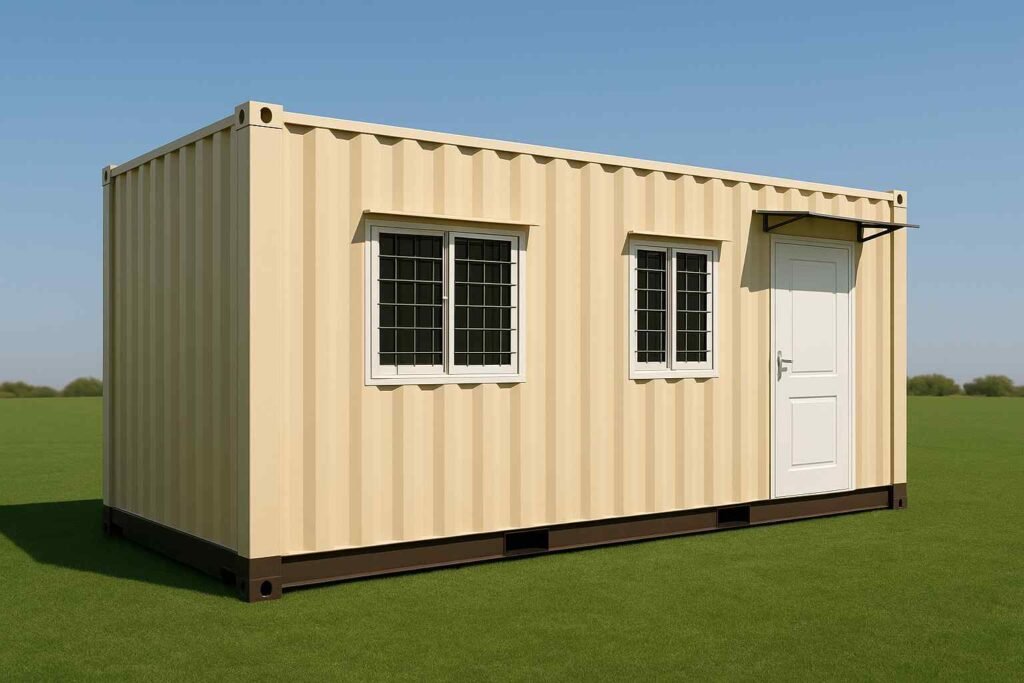
Why “Price” Alone Misleads Buyers
When buyers search online for container office price India, they often expect a single fixed number. In reality, cost depends on context, specification, and lifecycle value.
- Project scale matters: A 20 ft guard room in a Tier-II city may cost ₹2 lakh, while a 40 ft corporate sales office in Bengaluru can cross ₹10 lakh due to branding, insulation, and HVAC.
- Materials & interiors matter: Bare shells appear cheaper but deliver poor comfort. Branded interiors raise upfront cost but boost client trust and resale value.
- Supplier credibility matters: Certified suppliers include ISO/CSC plates, warranties, and documentation. Low-cost vendors skip these, leading to failed tenders and hidden expenses.
Why Smart Buyers Look Beyond the Sticker Price
Price is not just today’s outflow; it’s an investment in speed, usability, and resale recovery. A well-built cabin may serve multiple projects, retain a significant share of their value, and cut electricity bills when insulated properly.
Therefore, the question is not “How cheap is the quote?” but “How much value does this office create over its life?”
The Investment Lens: Why Price Creates Returns
Price should never be viewed as an expense alone. A container office is a revenue enabler that:
- Drives operations: Protects staff, provides functional space, and signals professionalism to clients.
- Accelerates timelines: A standard office delivered in 6 weeks can save months compared to brick builds, allowing sales or site operations to start earlier.
- Improves cash flow: Faster project launch means faster revenue cycles and stronger investor confidence.
Why Costs Vary So Sharply Across India
Container office prices are never uniform across India. Costs shift with region, materials, interiors, and lifecycle goals.
Regional Differences (India)
- Bangalore: ~₹2 lakh for a 20 ft cabin.
- Delhi NCR: ~₹2.3 lakh, driven by higher crane rentals and compliance fees.
- Mumbai: Often higher still due to scarce land and complex logistics.
- Tier-II Cities: Lower labor costs but fewer suppliers and customization options.
Materials & Durability
- Corten Steel: Best for coastal India (Kerala, Chennai) and humid zones; strong resale demand.
- Mild Steel: Cheaper upfront, but requires frequent repainting.
- FRP: Lightweight and sometimes used for mobile classrooms, but unsuitable for Indian monsoons.
Interiors & Image
- Bare cabins reduce upfront cost but hurt productivity.
- Branded interiors (glass façade, AC, partitions) raise price but add resale appeal and client trust, important for sales offices.
Lifecycle Considerations
- A two-year Indian construction project may justify a mid-range cabin with resale recovery.
- A five-year project HQ requires premium builds with insulation and certifications.
Bottom Line: Costs vary across Indian states: shaped by local labour, logistics, and compliance. Smart buyers treat container offices as long-term assets, not one-time purchases.
Breaking Down the Numbers: What Buyers Actually Pay in 2025
Indian container office costs in 2025 fall into three predictable categories, each tied to specific project needs and ROI expectations:
| Category | Size | Typical Features | Price Range (₹) | Best Use Case |
| Basic | 20 ft | Vinyl flooring, wiring, windows | 1.7–2.5 lakh | Guard cabins, compact site offices |
| Standard | 30–40 ft | Partitions, AC, restroom, workstations | 3–6 lakh | Site headquarters, mid-scale developer offices |
| Premium | 40 ft+ | Glass façade, branded interiors, HVAC, corporate fit-outs | 8–15 lakh | Sales counters, corporate-grade HQs |
How Buyers Should Read These Numbers:
- A basic unit is functional, not image-driven, useful for guard posts or temporary sites.
- A standard unit balances affordability with professionalism, offering comfort for daily operations.
- A premium unit is a front-facing business tool that enhances brand image, attracts clients, and delivers higher resale value.
The right choice depends less on budget alone, and more on how the office will be used, how long it will be needed, and whether resale recovery is a priority.
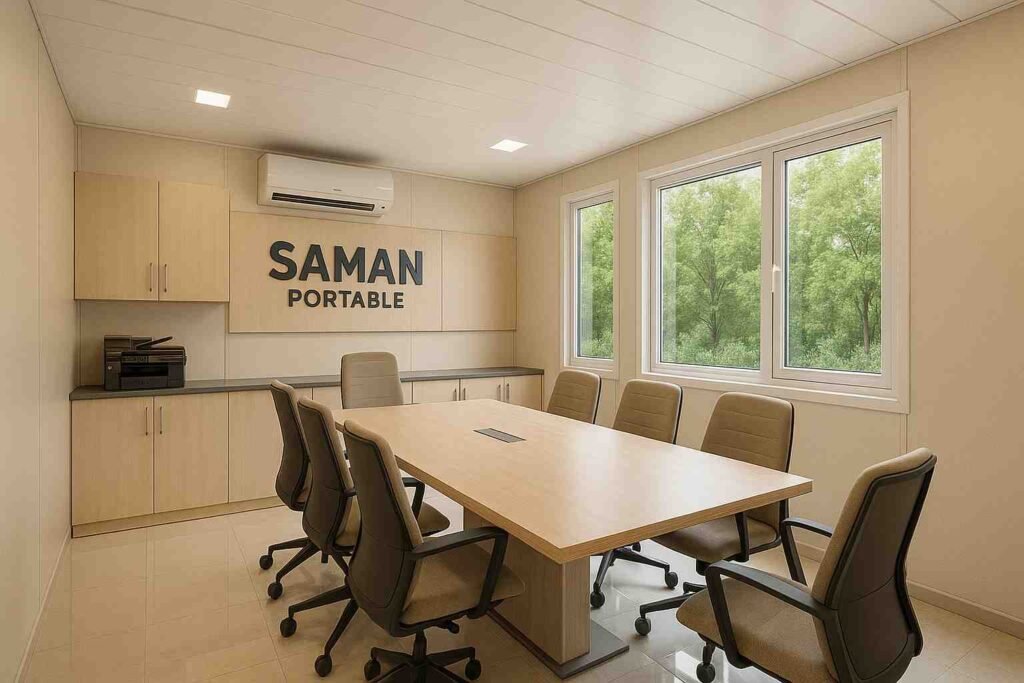
Beyond Sticker Price: The Total Cost of Ownership (TCO)
The price on a quotation is only the beginning. The real cost of a container office comes from four critical lifecycle factors:
- Energy Efficiency
- Insulation reduces HVAC load over time.
- Example: In Gujarat, rock wool cut electricity bills.
- Maintenance
- Corten Steel: repaint every 5–6 years; low cost, high durability.
- Mild Steel: frequent painting, corrosion risk; savings vanish over time.
- FRP: prone to cracks in monsoon or freezing climates.
- Downtime Avoidance
- Off-site fabrication enables parallel site preparation.
- Example: A logistics firm saved three months of lost rent by installing container offices while its main building was under construction.
- In India, faster site office delivery accelerates sales launches.
- Resale Recovery
- Properly maintained units recover a meaningful share of purchase price within 3 years.
- India: A ₹7 lakh cabin resold for ₹4 lakh → net cost = ₹3 lakh.
Key Factors Influencing Container Offices Price in India
Sever No two container office projects are ever priced the same. Costs shift depending on size, material, interiors, insulation, compliance, and location.
- Size & Capacity: Larger cabins may double the upfront cost but can fit triple the workforce, lowering cost-per-person.
- Material Selection: Corten steel, mild steel, and FRP each change durability, upkeep, and resale (see detailed table below).
- Interiors & Branding: Adding partitions, HVAC, or a glass façade raises price but increases productivity and client trust.
- Insulation & Energy Efficiency: Adds to cost but reduces long-term electricity bills.
- Location & Logistics: Prices differ between metros and Tier-II cities because of crane rentals, municipal fees, and transport.
- Compliance & Certification: Certified suppliers charge slightly more but ensure ISO/CSC plates, fire safety, and tender eligibility.
Bottom Line: The smartest buyers don’t chase the lowest quote. They choose features that protect resale value, reduce running costs, and meet compliance, turning price into long-term value.
Size Matters: 20 ft vs 40 ft Offices and Their True Costs
The Size is one of the most visible cost drivers, but its impact goes beyond just the invoice.
| Size | Typical Cost (India, 2025) | Capacity & Use | ROI Impact |
| 20 ft Cabin | price on enquiry | Guard rooms, compact teams, temporary offices | Cheaper upfront, but higher cost-per-person |
| 40 ft Cabin | ₹3.5–6 lakh | Site headquarters, mid-sized developer offices | Doubles upfront cost but supports triple workforce → better long-term value |
| 40 ft+ Premium | ₹8–15 lakh | Corporate-grade HQs, branded sales counters | Higher investment, but strong resale + brand credibility |
Why Bigger Often Means Better Value
- A 20 ft cabin saves cash initially, but space quickly becomes a limitation, raising per-head costs.
- A 40 ft cabin, while more expensive, provides efficiency, comfort, and resale recovery.
- Premium 40 ft+ builds not only house staff but also serve as brand assets, impressing clients and boosting sales.
Practical Buyer Insight:
- Tier-II city contractors may start with 20 ft basics for short projects.
- Large developers and tender-based buyers prefer 40 ft or premium units because efficiency, compliance, and resale outweigh upfront savings.
Steel, FRP, or MS? How Materials Decide Lifespan and Budget
Table: Material choices change long‑term performance and pricing in Indian climates.
| Material | Durability | Maintenance | Resale Value | Cost |
| Corten Steel | High corrosion resistance; ideal for coastal states | Low; repaint every 5–6 years | Strong resale demand | Higher initial cost |
| Mild Steel | Moderate; rust risk without upkeep | High; frequent repainting needed | Lower resale appeal | Lower upfront cost |
| FRP | Lightweight; less durable in storms | Moderate; prone to cracks | Low resale demand | Cheapest upfront |
Materials decide both price and durability. Corten steel is strongest. It resists rust, vital for coastal states like Kerala. It also reassures resale buyers. Mild steel looks cheaper initially. But constant painting and repair erode savings.
FRP (fiber reinforced plastic) has niche uses. It is light but fragile. It cannot withstand heavy monsoon winds. Therefore, for long-term use, Corten is safest. Buyers must match material with region. That choice reshapes container offices price India and ensures lifecycle reliability.
Suppliers who use uncertified materials may lower price quotes. But hidden costs later exceed savings. Choosing proper materials means fewer repairs, stronger resale, and predictable performance. Therefore, investing in quality steel ensures projects stay compliant and cost-efficient.
Customization Choices That Add Cost: and Value
Bare shells cost less. But real offices need interiors. Additions like AC, restrooms, or partitions increase cost. Yet, they also increase productivity. They improve employee comfort. They create professional image for clients.
Customization raises prices significantly. A simple ₹2 lakh office can become ₹10 lakh with features. However, these features also increase resale value. Branded interiors and glass facades resell faster. Therefore, customization is both expense and investment.
Contractors working on government tenders often add specific partitions for engineers, managers, and client representatives. Developers use branded designs for marketing value. These investments attract stronger resale demand and speed up deals.
Insulation & Climate Control: The Hidden Saver in Indian Conditions
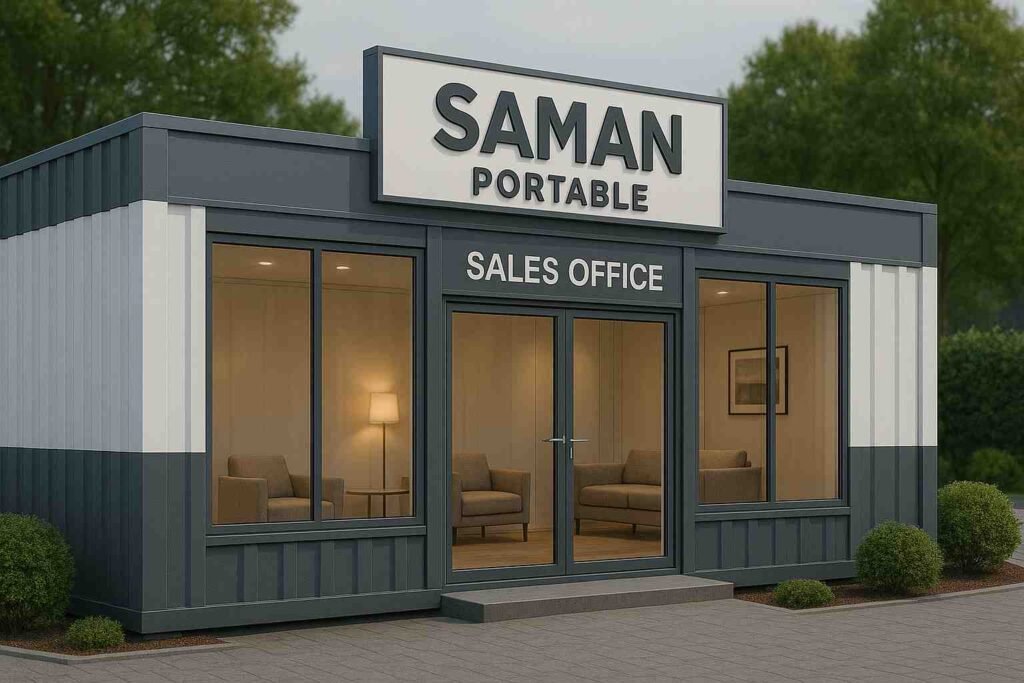
India’s summers hit 45°C. Monsoons flood sites. Insulation makes interiors usable. It adds upfront cost but reduces electricity bills long-term. Glass wool, rock wool, or PUF panels cost more but save energy.
Energy savings are significant. Over five years, that equals lakhs saved. Comfort also increases staff productivity. Therefore, insulation should be seen as smart spend. When considering container offices price India, insulation is non-negotiable.
Resale buyers also check insulation. Well-insulated cabins sell faster. They fetch better prices. Thus, insulation contributes not only to lower operating expenses but also to stronger capital protection.
Regional Price Gaps: Why Delhi or Mumbai Buyers Pay More
Location changes everything. In Delhi NCR, demand and compliance push prices higher. A 20-foot office may cost ₹2.3 lakh there. The same unit in Bangalore may cost ₹2 lakh. Transport charges add further differences.
Metro cities also face stricter permit rules. That means extra paperwork and fees. Tier-II cities enjoy cheaper labor but limited suppliers. Therefore, buyers must localize budgets. Asking for generic “all India” price is misleading.
Resale markets also differ regionally. Demand is high in metros, which supports better recovery. In Tier-II areas, resale may take longer. Buyers should factor these regional dynamics into planning.
Suppliers, Certifications, and the Real Price of Trust
Compliance is not optional; it shapes both upfront cost and project eligibility. Certified suppliers may charge a little more, but the documents they provide often decide whether a project succeeds or fails.
India Requirements
- ISO Certification (ISO 9001/14001): Confirms quality and environmental standards.
- CSC Safety Plate: Mandatory for containers used in shipping; often demanded in government tenders.
- Fire Safety NOC: Required for sales offices and project HQs with high occupancy.
- Electrical Compliance Certificates: Essential for tenders and resale.
- Structural Drawings & Layout Approvals: Needed for public-sector projects.
Without these, bids are rejected outright, no matter how attractive the price.
Why Compliance Adds Value
- Tender Eligibility: A modestly higher upfront cost secures projects worth crores.
- Resale Liquidity: Certified cabins resell faster, often within 30–60 days.
- Insurance Approval: Many insurers refuse coverage for uncertified structures.
Bottom Line: Paying slightly more for certified builds is not expense, it’s financial leverage. It protects contracts, resale, and reputation.
Delivery, Installation, and Setup: The Charges Buyers Often Forget
Quotes often ignore setup. But delivery and installation cost real money. Transport varies by distance. Cranes and leveling add more. Foundations also raise price.
Basic setup adds to the office cost. Larger projects add more. Buyers must budget honestly. Skipping this step creates overruns.
Therefore, transport and installation are vital when calculating container offices price India. Always ask for detailed itemization before confirming orders.
Branding and Custom Interiors: Spending That Pays Back
Corporate clients often demand branding. Adding company logos, colors, and glass frontages costs extra. But these features improve reputation.
They also strengthen resale demand. A well-branded office can impress clients and accelerate sales, and a well-maintained unit retains a meaningful share of its value at resale.
Therefore, branding adds both present and future value. For developers and contractors, professional image often decides contract success.
Project Duration: Why Short-Term vs Long-Term Use Alters the Price Equation
Usage duration changes cost logic. For a 6-month project, buyers may choose basic cabins. For a 5-year project, they prefer durable builds.
Longer projects justify higher initial costs. Resale also depends on usage length. A two-year-old cabin retains better value than a five-year-old one.
Therefore, project length must be factored into budget. Ignoring it risks either overspending or underspending.
Checklist for Buyers in 2025
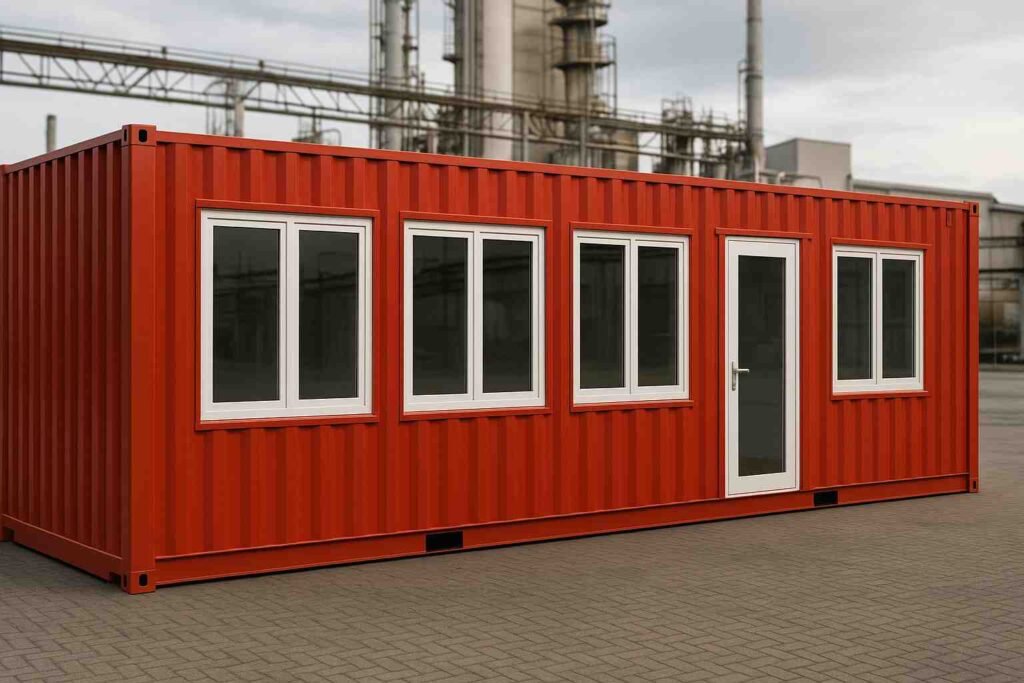
Define size based on headcount. Choose material suitable for climate. Decide interiors required for daily use. Budget insulation for savings. Confirm delivery and installation upfront. Check supplier certifications. Consider project duration and resale plans.
This checklist helps cut confusion. It converts vague quotes into real numbers. It aligns pricing with needs. Buyers who follow this approach achieve predictable ROI and smoother project delivery.
Smart procurement requires structure. Without it, mistakes multiply. With it, every rupee is justified. That discipline makes the container offices price India a reliable, strategic investment.
Price Breakdown for 2025
The container offices price India in 2025 falls into three predictable bands. Basic 20-foot units cost price on enquiry, standard 30–40-foot builds go up to ₹6 lakh, while premium corporate setups exceed ₹15 lakh.
Yet, sticker price is only half the truth. Delivery, foundations, and installation create hidden additions. Rentals seem affordable monthly, but ownership creates assets that retain meaningful resale value. A transparent breakdown helps buyers plan budgets confidently.
The Real Cost Behind Container Offices Price in India
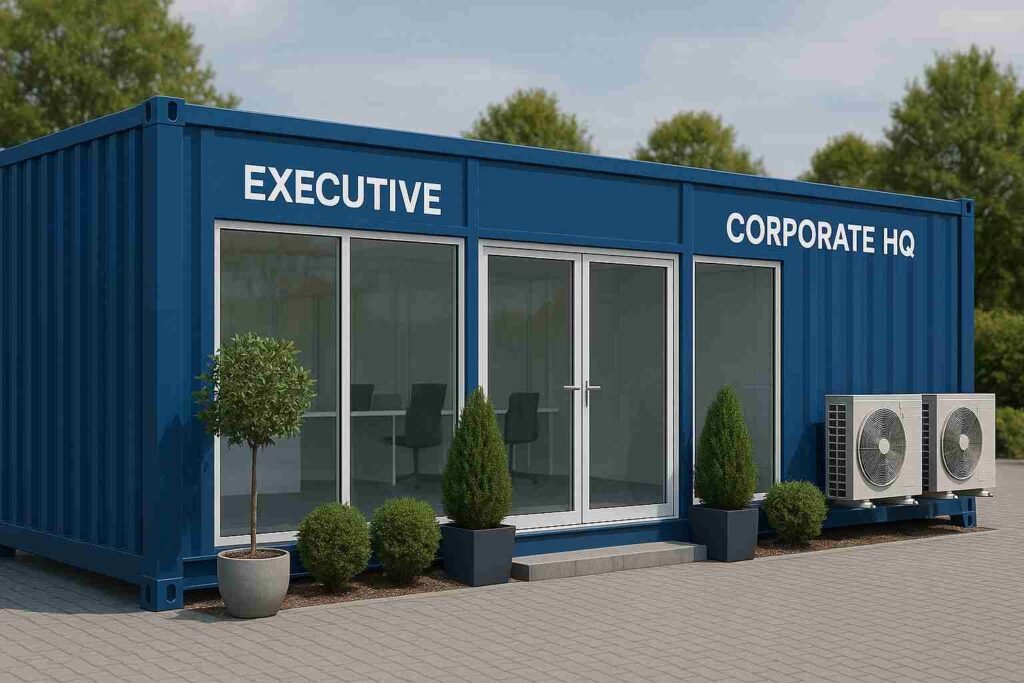
Most buyers expect a single figure when they ask for container offices price India. However, a guard room, a sales office, and a project HQ each come with very different costs. Understanding breakdowns is essential to budget realistically.
A sales office requires interiors, branding, HVAC, and partitions. A guard cabin may need only flooring, wiring, and windows. This is why prices range widely. Without context, quotes appear confusing or misleading.
Real cost also includes indirect elements like compliance, insurance, and documentation. Certified suppliers include these in their quotes. Low-cost vendors often ignore them, creating budget shocks later. Smart buyers always demand complete breakdowns with hidden costs revealed upfront.
Per Square Foot Costs: How to Compare Smarter in 2025
In 2025, container offices usually cost ₹800–1,150 per square foot. The range depends on insulation, interiors, and finishing. Bare-bones shells sit near ₹800, while premium insulated cabins sit near ₹1,150.
For comparison, brick offices in metros cost ₹2,000–2,500 per square foot. That makes container offices typically cheaper. Moreover, they deliver in weeks rather than months, which accelerates ROI.
Therefore, container offices price India should always be compared per square foot. It allows buyers to judge efficiency, capacity, and ROI against alternatives. This method highlights value beyond initial investment.
Unit Pricing: Indicative Market Bands by Size
Unit pricing gives buyers clear categories. Basic 20-foot cabins cost price on enquiry. These include vinyl flooring, wiring, and windows. They are ideal for guard cabins or compact site teams.
Standard units of 30–40 feet cost ₹3–6 lakh. These add partitions, AC, restrooms, and basic branding. They are perfect for mid-size site HQs or real estate offices.
Premium cabins reach ₹8–15 lakh. They include glass façades, branded interiors, HVAC, and executive layouts. They are designed for client-facing sales offices and corporate-grade site headquarters.
Hidden Costs That Buyers Often Miss (and How to Avoid Them)
Table: Don’t forget these add‑ons when comparing quotes.
| Cost Component | Approximate Range (₹) | Notes |
| Transport | 30,000–70,000 | Distance, permits, route complexity |
| Foundation (Gravel/RCC) | 20,000–1,00,000 | Gravel for short stays; RCC for long‑term stability |
| Cranes & Installation | 20,000–50,000 | Lifts, leveling, and anchoring |
| Utility Connections | 10,000–30,000 | Power, water, internet readiness |
Sticker prices exclude many necessary costs. Buyers often forget delivery, installation, and foundations. Ignoring these adds to the project budget.
Gravel pads may cost ₹20,000. RCC slabs cost up to ₹1 lakh. Transport for 40-foot cabins adds ₹30,000–₹70,000 depending on distance. Installation cranes and drainage add another ₹20,000–₹50,000.
Utility connections also matter. Power, internet, and water add ₹10,000–₹30,000. Therefore, container offices price India must always include these items in quotes. Without them, budgets collapse under hidden charges.
Basic vs Standard vs Premium: Which Container Office Fits Your Project?
Table: Choose the right category by matching features, price band, and usage.
| Category | Size | Features | Price Range (₹) | Best Use Case |
| Basic | 20 ft | Vinyl flooring, wiring, windows | 1.7–2.5 lakh | Guard cabins; compact site offices |
| Standard | 30–40 ft | Partitions, AC, pantry/restroom | 3–6 lakh | Site HQs; developer offices |
| Premium | 40 ft+ | Glass façade, branded interiors, HVAC | 8–15 lakh | Sales counters; executive hubs |
Each category serves a unique purpose. Basic cabins fit small-scale projects. Standard cabins provide comfort and professionalism. Premium cabins deliver polished image and corporate-grade functionality.
A ₹2 lakh basic cabin is not meant to impress clients. It is functional and temporary. A ₹5 lakh standard office balances affordability with quality. A ₹12 lakh premium unit signals professionalism in client-facing projects.
This shows why quotes vary. Buyers must match features to project goals. The container offices price India should always reflect actual needs, not generic averages.
Why Location Can Affect Your Container Office Price in India
Regional variation creates price differences. A cabin costing ₹2 lakh in Bangalore may cost ₹2.3 lakh in Delhi due to logistics and municipal compliance. Transport charges significantly influence price.
In Mumbai, land and crane rentals raise costs further. Tier-II cities offer cheaper builds but with limited customization options. Location therefore has a direct impact on container offices price India.
Resale also varies by city. Premium demand in metros ensures faster recovery. In smaller towns, resale may take longer. Buyers should localize cost and recovery calculations regionally.
Rental vs Purchase: The Payback Truth Most Contractors Ignore
Table: Ownership usually wins across a 3‑year view due to resale recovery.
| Option | 3‑Year Outflow (₹) | Resale Recovery (₹) | Effective Net Cost (₹) |
| Rental (₹20,000/month) | 7,20,000 | 0 | 7,20,000 |
| Purchase – Basic | 5,00,000 | 2,50,000 | 2,50,000 |
| Purchase – Standard | 7,00,000 | 3,50,000 | 3,50,000 |
Rentals appear cheaper monthly but drain capital long-term. A 20-foot cabin may rent for ₹20,000. Over three years, that totals ₹7.2 lakh with zero recovery value.
Purchasing at ₹5 lakh provides usage plus resale. With resale recovery, effective cost drops to ₹2–3 lakh. Ownership therefore beats rentals every time.
Contractors often regret rentals after projects. Lifecycle math shows ownership delivers better ROI. Thus, container offices price India must always be evaluated over years, not months.
Rental vs Purchase: The ROI Equation
On the surface, rentals look affordable. In practice, they drain budgets without leaving behind an asset.
| Option | 3-Year Outflow | Resale Recovery | Effective Net Cost |
| Rental (India) | ₹7.2 lakh (₹20,000/month) | ₹0 | ₹7.2 lakh |
| Purchase – Basic | ₹5 lakh | ₹2.5 lakh | ₹2.5 lakh |
| Purchase – Standard | ₹7 lakh | ₹3.5 lakh | ₹3.5 lakh |
Key Insight: In India, ownership delivers meaningful cost recovery. Rentals, by contrast, leave nothing behind.
Lesson: Smart contractors compare lifecycle math, not just monthly bills.
2025 Outlook: Pricing Trends
- India: Stable prices expected: Basic price on enquiry, Standard ₹3–6 lakh, Premium ₹8–15 lakh.
- Market Drivers:
- Demand from real estate & renewable projects will stay strong.
- Logistics costs (crane rentals, transport) may rise slightly in metros and ports.
- Certifications will play a larger role in tenders.
Takeaway: 2025 is a favorable year for procurement. Predictable pricing + strong resale markets mean buyers can lock in predictable ROI.
The Long-Term Financial Picture
The container offices price India may appear high upfront, but the financial story unfolds over years. Container offices cut energy bills, reduce downtime, and resell strongly. Their total cost of ownership makes them typically cheaper than brick buildings.
Payback cycles of 24–36 months are standard, with some projects breaking even in just 18 months. When buyers calculate lifecycle value, container offices consistently outperform rentals and traditional builds. The long-term financial picture is what sets them apart.
Total Cost of Ownership Explained
Most buyers only look at purchase price. But true cost includes energy, maintenance, downtime, and resale. This total cost of ownership (TCO) defines real financial impact. Ignoring it risks false savings and expensive mistakes.
For example, a ₹7 lakh office may seem steep compared to rentals. But when energy savings and resale are included, its effective cost falls to ₹2–3 lakh. Rentals never offer such recovery. Ownership always wins in lifecycle math.
Indian procurement teams are learning to ask for TCO models in tenders. They want numbers that include five-year operating costs, not just the day-one price. Suppliers who provide this transparency gain trust and repeat orders.
Energy Savings That Compound Over Years
Insulation may raise upfront cost. But it lowers electricity bills for years. Glass wool, rock wool, or PUF panels reduce cooling loads. Over long Indian summers, this difference saves lakhs in operating budgets.
Consider a Gujarat solar park. Rock wool insulation cut HVAC energy consumption significantly. Electricity bills dropped compared to non-insulated cabins. Over two years, energy savings alone paid for one-third of office cost.
This is why container offices price India must always include energy analysis. Buyers who ignore insulation think they saved initially. Later, they overspend heavily on monthly bills. Smart buyers calculate lifecycle energy performance.
Maintenance Costs: Low But Predictable
Container offices need minimal upkeep. Corten steel resists rust. FR cables reduce fire risk. Vinyl or laminate flooring cleans easily. Regular painting and sealing every 3–4 years keeps structures stable for decades.
Compared to brick offices that crack, leak, or require major repair, container offices are cheaper to maintain. Annual expenses remain small and predictable. This protects budgets and avoids sudden repair shocks during projects.
When procurement teams assess container offices price India, they should ask about maintenance schedules. Certified suppliers provide clear guidance. Lifecycle maintenance planning ensures stability, resale value, and project continuity.
Resale Value: Protecting Capital at Exit
Unlike rentals, container offices retain strong resale demand. Used units often recover a meaningful share of their original price after a few years. In India’s active prefab market, resale takes as little as 30–60 days.
A well-maintained sales office can be resold within weeks in an active prefab market, so the effective usage cost is far lower than the purchase price: a recovery that renting cannot match.
Therefore, resale is not an afterthought. It is a pillar of financial planning. When analyzing container offices price India, resale recovery must be added into ROI models. It changes the numbers completely.
Payback Cycles That Beat Traditional Builds
Most container office projects recover costs in 24–36 months. Intensive-use sites, like real estate sales offices, sometimes break even in 18 months. Faster revenue starts are the biggest driver of this quick ROI.
Brick buildings can take years before payback. Rentals never pay back at all. Container offices accelerate cash flow, making them the preferred choice for capital-sensitive Indian businesses.
This is why tenders increasingly include ROI models in evaluation. Procurement officers want suppliers to prove payback periods. The container offices price India gains credibility when supported by real financial math.
Why Rentals Fail in Long-Term Math
Rentals appear cheap at first glance. Monthly charges look manageable. But over time, they drain budgets. A ₹20,000 rental over three years adds up to ₹7.2 lakh with no asset value left.
By contrast, ownership at ₹5 lakh provides usage plus resale. Even with partial resale, effective cost is less than ₹3 lakh. Rentals can never match this balance of use and recovery.
Many contractors regret rentals after projects. They realize late that ownership would have protected capital. That is why serious buyers always compare rentals with ownership when studying container offices price India.
Downtime Costs: The Hidden Drain
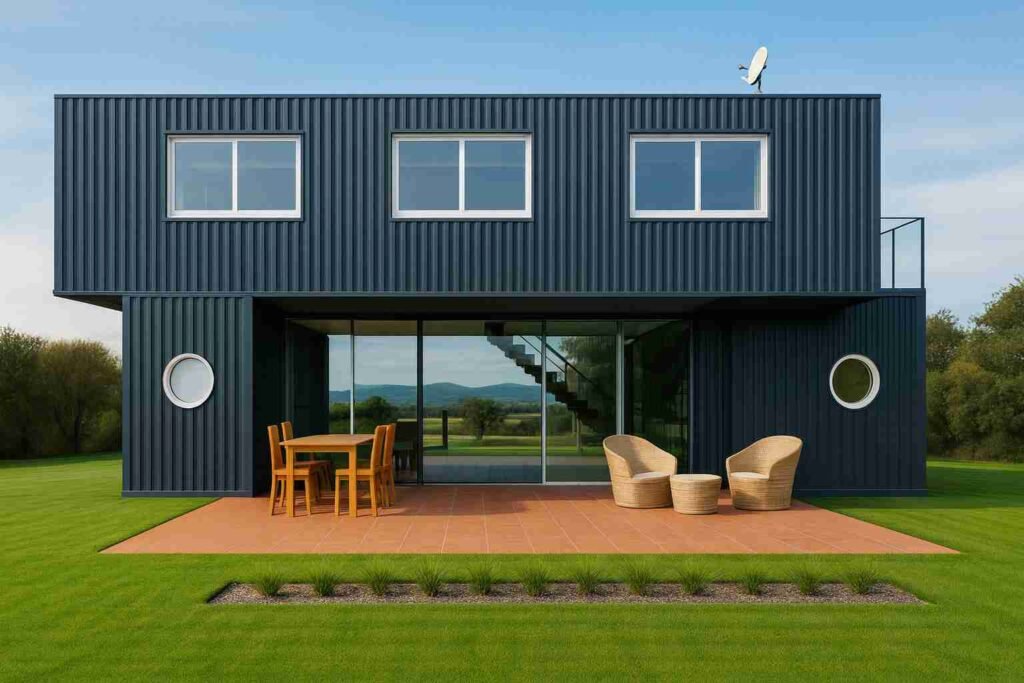
Traditional builds face frequent delays. Weather, labor strikes, or material shortages stop progress. Each month lost damages cash flow and reputation. Container offices avoid this risk with parallel off-site fabrication.
For example, while sites are being leveled, container fabrication continues in factories. This overlap saves months. Projects launch on time. Early openings create faster revenue streams.
The true container offices price India must include this advantage. Time is money. Saving months equals saving lakhs. Downtime avoided is one of the strongest financial benefits.
Compliance and Tender Eligibility as Financial Leverage
Many Indian tenders now demand compliance. ISO, CSC, and fire safety certificates are mandatory. Non-compliant offices risk rejection. That rejection means lost contracts and lost revenue.
Certified container offices cost slightly more upfront. But they ensure smooth approvals. They avoid penalties and project stoppages. This compliance advantage translates directly into financial savings.
Therefore, buyers should see compliance as part of price. The container offices price in India may rise modestly. But that small premium protects entire contracts worth crores. It is financial leverage, not expense.
Investor Confidence and Business Image
Investors and clients notice office quality. A polished container office signals professionalism. It reassures stakeholders about safety, compliance, and delivery. This reputation creates easier funding and faster client approvals.
For startups and contractors, credibility can decide survival. Cheap, uncertified cabins weaken image. Branded container offices strengthen trust. That trust leads to more contracts and better investor terms.
The financial picture is not just numbers. It includes perception. The container offices price India often buys credibility. And credibility multiplies business returns beyond the project.
The Long-Term Edge Over Traditional Buildings
Over decades, container offices outcompete brick builds. They are movable, flexible, and resale-ready. Traditional offices tie up capital permanently. Container offices keep capital fluid and mobile.
Maintenance and energy savings add compounding benefits. Predictable costs improve budgeting. Resale protects exit capital. For Indian firms facing tight timelines, these advantages make container offices unbeatable.
Therefore, the container offices price India should always be studied as a lifecycle number. When seen this way, container offices emerge as the superior financial decision every time.
Container Office Price FAQs (India)
India FAQs
Q1. What is the typical price band in 2025?
- Basic: price on enquiry (20 ft).
- Standard: ₹3–6 lakh (30–40 ft).
- Premium: ₹8–15 lakh (40 ft+).
Q2. Why do quotes vary by city?
Transport, crane rentals, and municipal compliance add costs. Bangalore ~₹2 lakh, Delhi NCR ~₹2.3 lakh, Mumbai higher due to logistics.
Q3. Is insulation worth it in India?
Yes. Saves electricity, improves comfort, boosts resale. Pays back in 2–3 years.
Q4. How fast is delivery?
Standard cabins: 4–6 weeks. Custom branding: +1–2 weeks.
Q5. Rent vs Buy in India?
- Rental: ₹20,000/month → ₹7.2 lakh in 3 years, no recovery.
- Purchase: ₹5 lakh → resale recovers ₹2.5–3.5 lakh, effective cost halved.
Q6. What documents are mandatory?
ISO/CSC plates, fire safety, electrical compliance, and structural drawings. Needed for tenders and resale.
Q7. What foundations should be planned?
- Short-term: Gravel pads (~₹20,000).
- Long-term: RCC slabs (~₹1 lakh). Drainage critical in monsoons.
Q8. How to forecast ROI?
Typical payback: 24–36 months. Real estate offices: 18 months possible.
Q9. How to judge supplier credibility?
Look for transparent line-item quotes, valid certifications, past project photos, and warranty coverage.
Next Steps
Define headcount, layout, insulation, and duration of use before requesting quotes. Always ask for full cost sheets that include delivery, installation, compliance, and documentation. This ensures apples-to-apples comparison and avoids hidden costs.
For a written, itemised quote with no obligation, call +91 88616 22859 or use the Send Enquiry form, direct from the manufacturer.
FAQs: container office price
What decides the price of a container office?
Size (20×8 ft to 40×10 ft), the number of rooms, insulation, flooring, electricals and air-conditioning, exterior finish and your site access all move the price. We quote against your exact specification.
Is a bigger container office cheaper per square foot?
Usually yes. A 40 ft unit spreads the fixed cost of the frame, doors and finishing over more floor area than a 20 ft unit, so the per-square-foot rate is often lower. The right size still depends on how many people and rooms you need.
Does the price include delivery and installation?
Delivery is quoted separately (a route-based amount confirmed at quotation default where applicable; typical transit 3–5 days). Installation needs depend on your site; we confirm both in the written quote.
How do I get an exact container office price?
Send your size, layout and site details and we return a written, itemised quote, no obligation. Call +91 88616 22859 or use the enquiry form.
About SAMAN: container office manufacturer
SAMAN POS India Pvt Ltd (POS = Portable Office Solutions) is a direct container office manufacturer, ISO 9001:2015 (Cert No. E20250218645), ISO 14001:2015 (Cert No. E20250218646) and ISO 45001:2018 (Cert No. E20250218647) certified; NSIC enlisted (Ref. NSIC/GP/BAN/2024/0055207); DPIIT-recognised startup (Ref. DIPP56005); Udyam registered (UDYAM-KR-03-0172770); GST 29ABBCS7101B1ZR (Bangalore) and 09ABBCS7101B1ZT (Noida). We build on IS 2062 steel and dispatch factory-direct from Bangalore (Gopasandra, 560099) and Greater Noida (Jalpura, 201308) with a route-based delivery charge confirmed at quotation and typical transit of 3–5 days. Call +91 88616 22859 or send an enquiry. Browse our container offices range or see our container office cabin.