
Sandwich Panel Manufacturer in India: Compare the Five Cores and Choose Right
A sandwich panel is an insulated building board made of two steel facing sheets bonded to a lightweight core, so one board gives you structure, insulation and a finished surface together. SAMAN manufactures sandwich panels in five cores, PUF, PIR, EPS, Rockwool and Glass Wool, at our Bangalore and Greater Noida factories, for walls, roofs, cabins and cold rooms across India.
Get a factory-direct sandwich panel quotation: South India +91 88616 22859 · sales@samanportable.com | North India / Delhi NCR +91 87960 39938 · ncr@samanportable.com
Most buyers do not arrive knowing which core they need. They know the problem, heat coming through a shed roof, a cold room that will not hold temperature, a fire-rating clause in a tender, a wall that has to go up fast, and they need the panel that solves it without paying for performance they will never use. This hub exists to make that choice clear, then send you to the exact material page for specifications and price.
What is a sandwich panel?
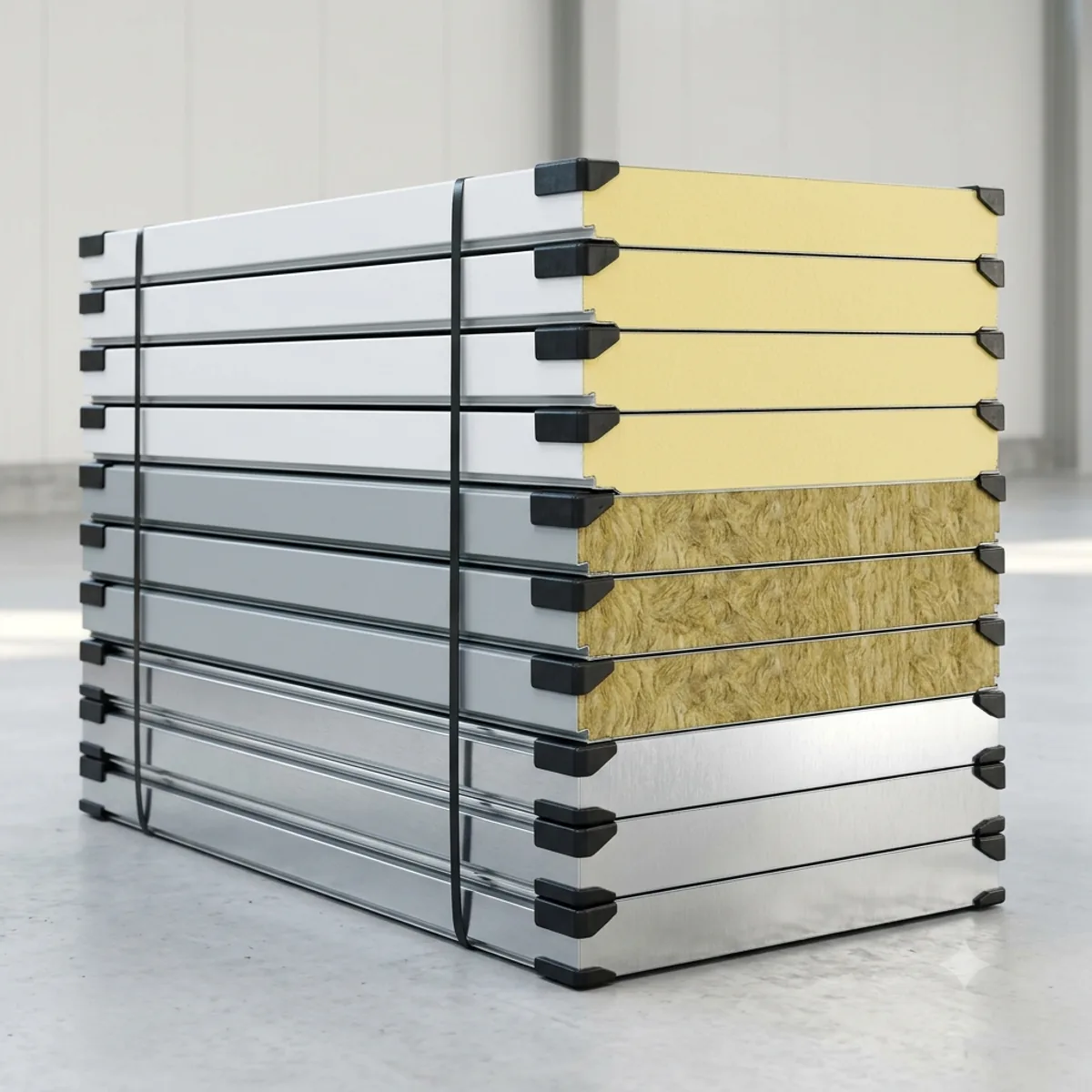
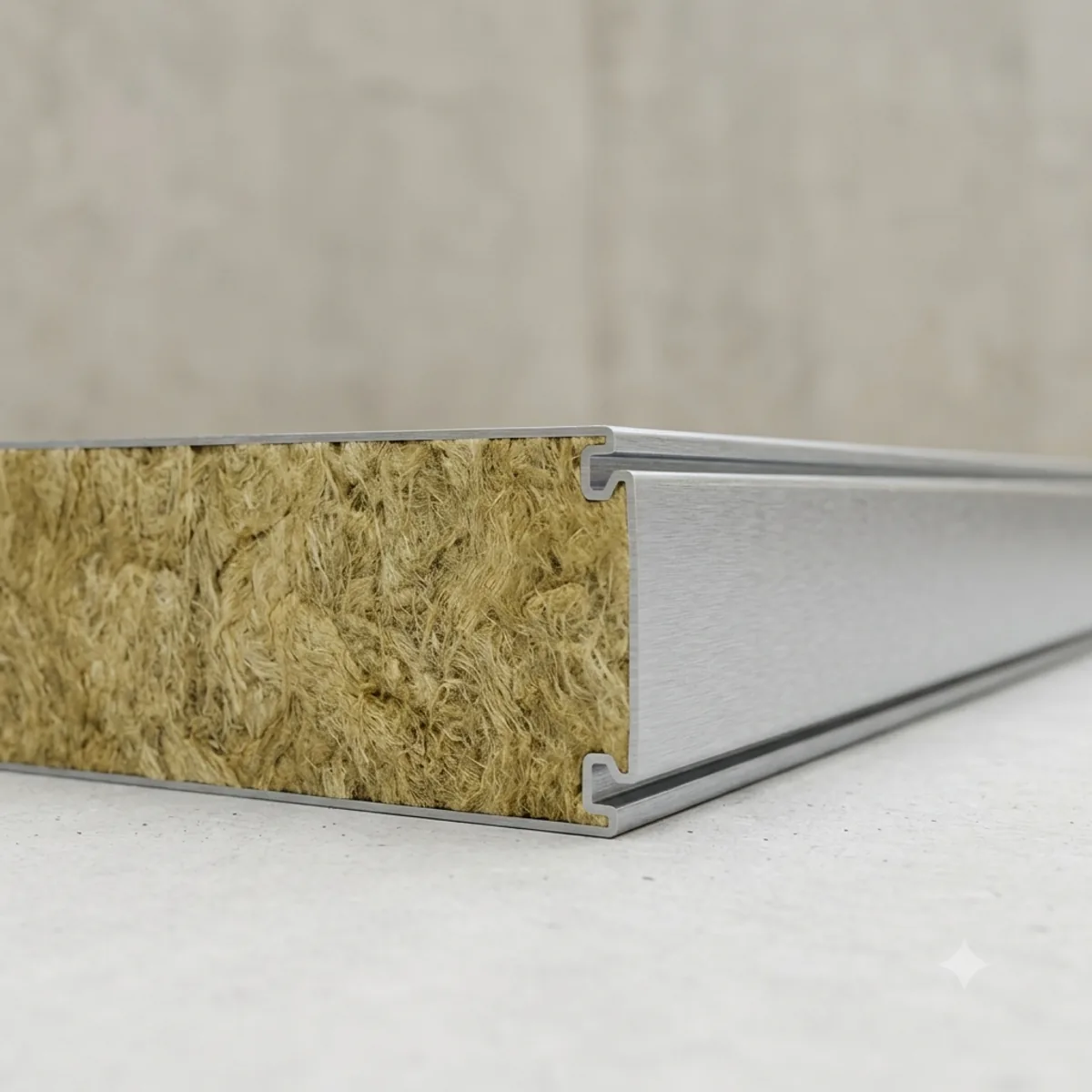
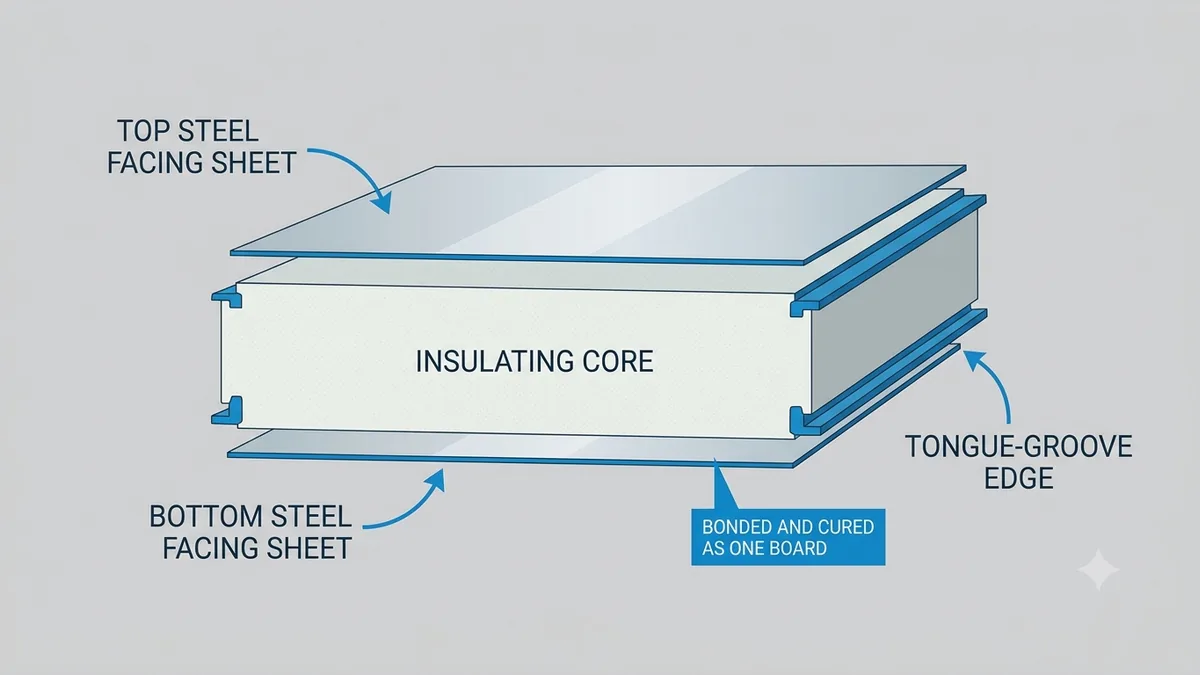
A sandwich panel, also written "sandwitch panel", and sold as an insulated panel or insulated sheet, is a three-layer board. Two thin metal facing sheets sit on the outside; a low-density insulating core sits in the middle; the core is bonded to both facings so the three layers act as one stiff, self-supporting board. That layered build is where the name comes from.
The outer facings carry the finish, the weather resistance and most of the strength. The core carries the insulation: how well the panel blocks heat, cold, fire or sound. Change the core and you change what the panel is good at, which is exactly why the same-looking board comes in five very different materials.
Because the panel arrives finished on both faces, there is no separate insulation, cladding or lining step on site. You fix the panel and the wall or roof is done, which is why sandwich panels put up buildings far faster than block-and-plaster or single-skin sheeting with loose insulation.
Types of sandwich panels: the five cores we manufacture
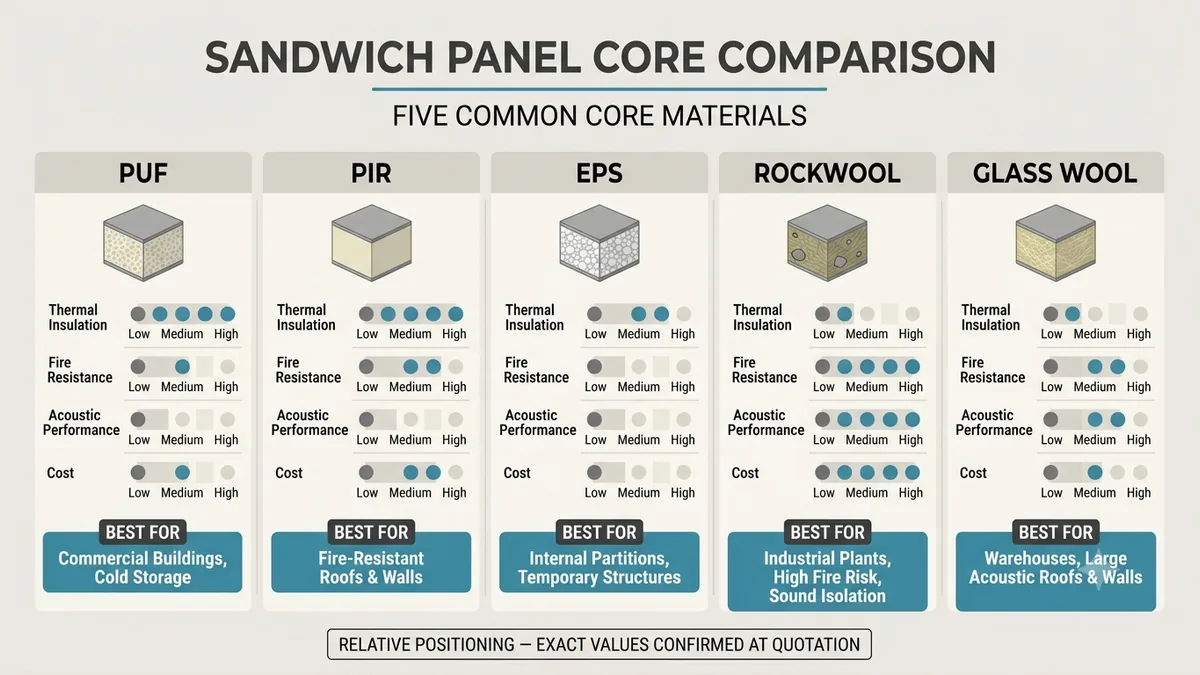
The facings barely change between products; the core is the real decision. Here is what each core is known for and where it fits. For exact density, thermal, fire and acoustic figures, and price, open the material's own page.
| Core | Known for | Typical use | Where to go next |
|---|---|---|---|
| PUF (polyurethane) | Strong thermal insulation for the cost; the all-round default | Cold rooms, cabins, cladding, roofing | Our full PUF range |
| PIR | Improved fire behaviour and higher service temperature than standard PUF; the premium thermal core | Where fire performance and heat matter together | PIR panel page |
| EPS (thermocol) | Budget, lightweight | Cost-led walls and partitions where thermal load is light | EPS panel page (routing only) |
| Rockwool (stone wool) | Fire resistance and acoustic control from a mineral core | Fire-rated walls, noisy or heat-exposed areas | Rockwool panel page (routing only) |
| Glass Wool | Acoustic and thermal control from a mineral-fibre core | Sound-sensitive and insulated partition work | Glass Wool panel page (routing only) |
Read the table as positioning, not as a spec sheet: it tells you which core to shortlist, and the material page gives you the tested numbers for your order. If you are unsure, tell us the problem, temperature, fire clause, noise, or budget, and we will point you to the right core.
For the polyurethane family specifically, start with our complete PUF panel range; if you already know you want the three-layer PUF board by its common names, PUF sheet, puff panel, insulated sheet, go straight to the PUF sandwich panel and sheet page. For a fire-and-heat brief, see the PIR insulated panel page; for fire-rated and acoustic work, see our Rockwool panel range. EPS and Glass Wool material pages route from here as each goes live.
Where sandwich panels are used
One build, several jobs, and the right core depends on the job as much as the panel itself.
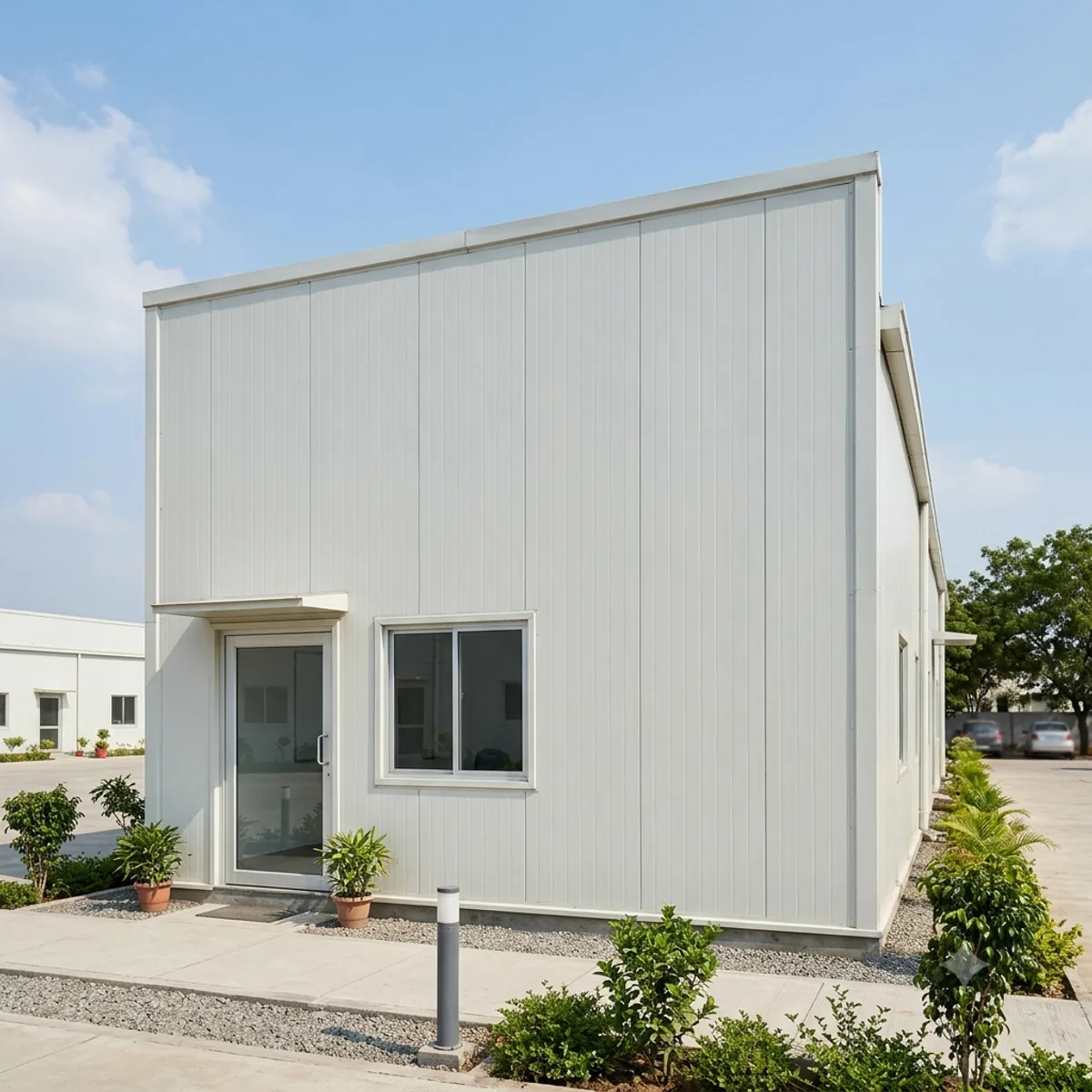
Walls. As an external wall or internal partition, a sandwich panel gives an insulated, finished surface in one board, in plain or lightly ribbed profile. It is the fastest way to close a building envelope.
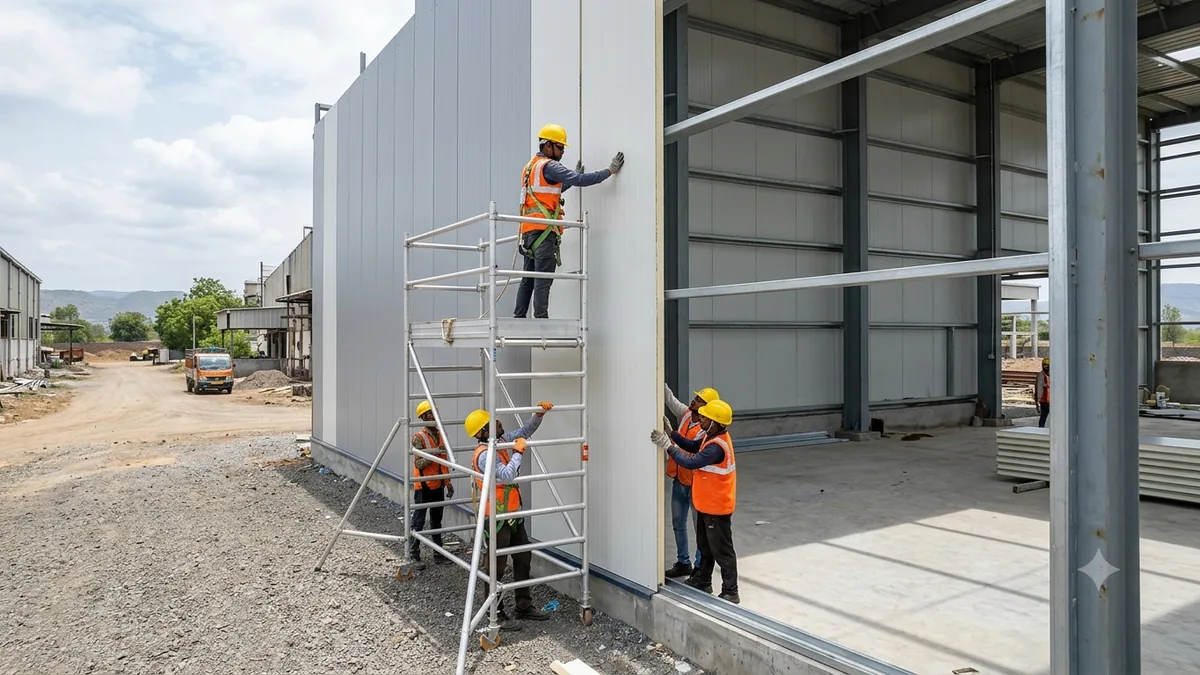
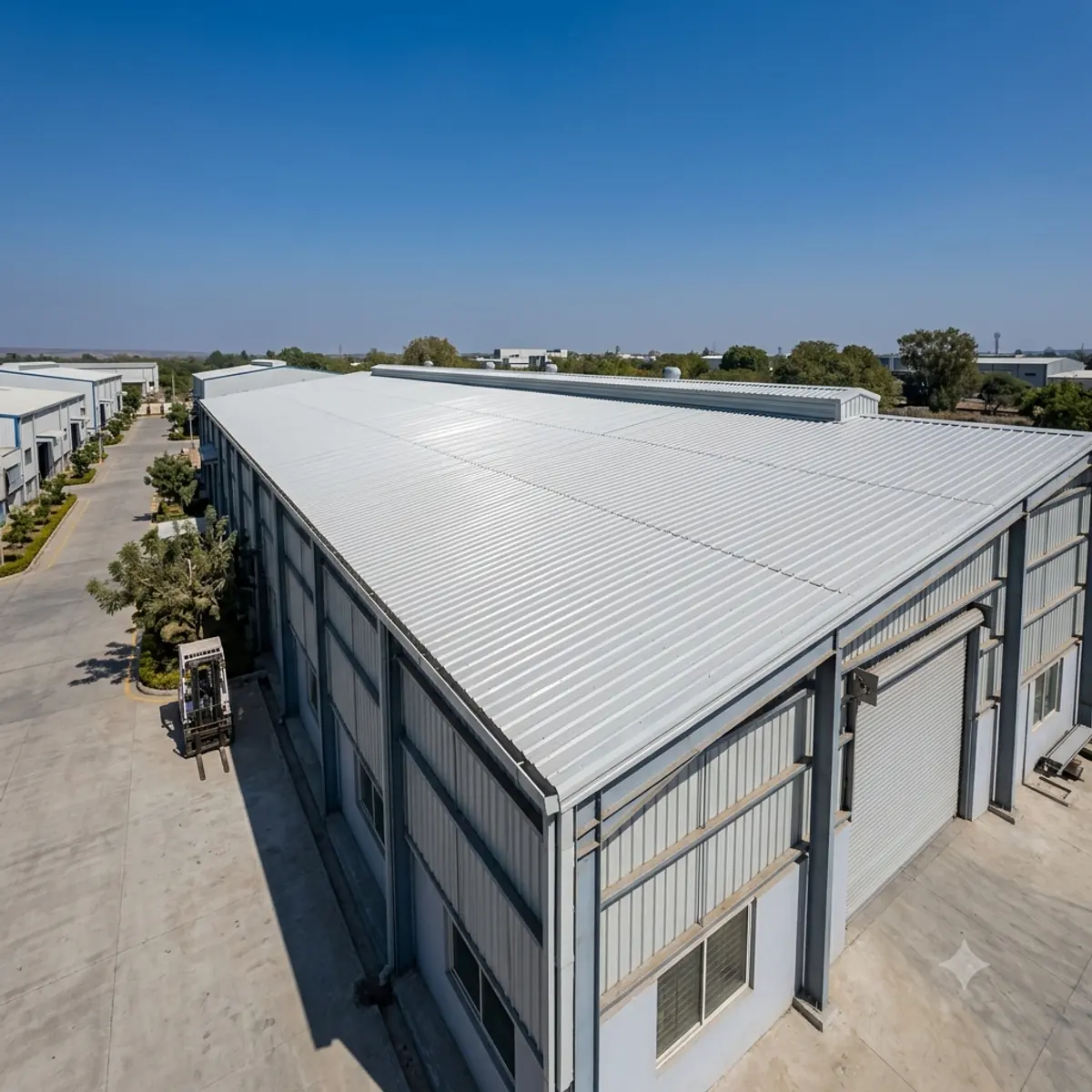
Roofs. As a roof cover, the panel keeps heat out of the space below. The single biggest reason factories, warehouses and workshops in Indian conditions choose insulated panels over bare single-skin sheeting. Roof panels use a profiled top facing and a lapped, weather-tight joint.
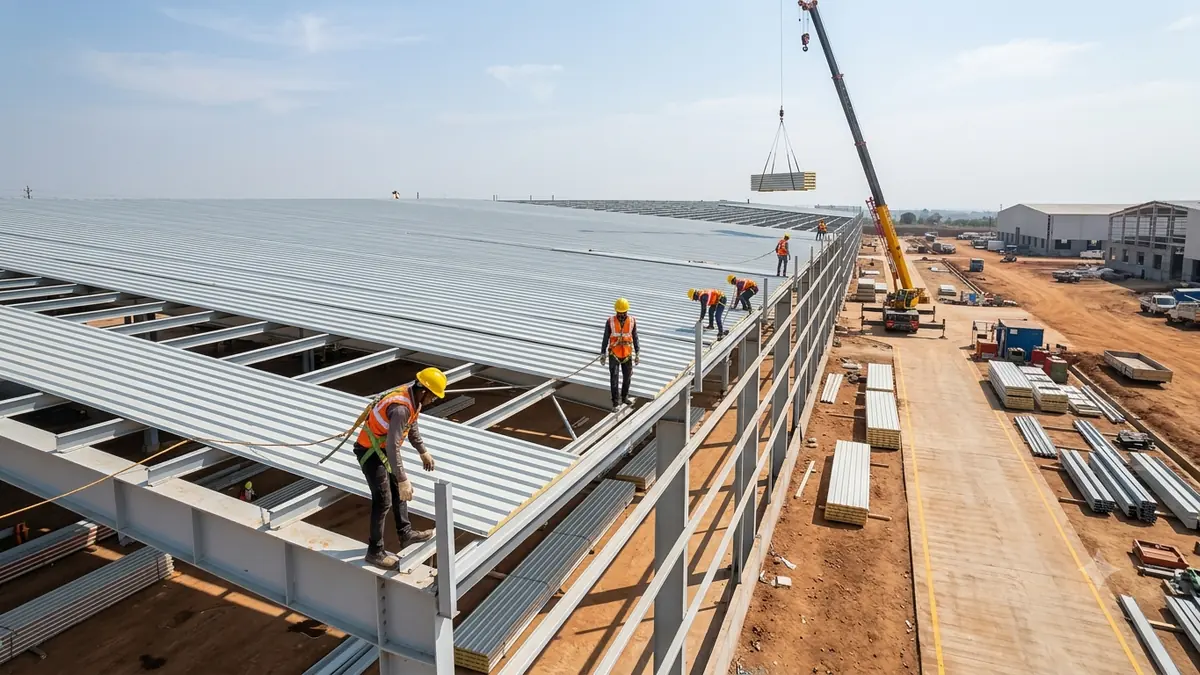
Cabins and porta units. The same board forms the walls and roof of porta cabins, site offices and security cabins, giving insulation and finish without a separate lining.
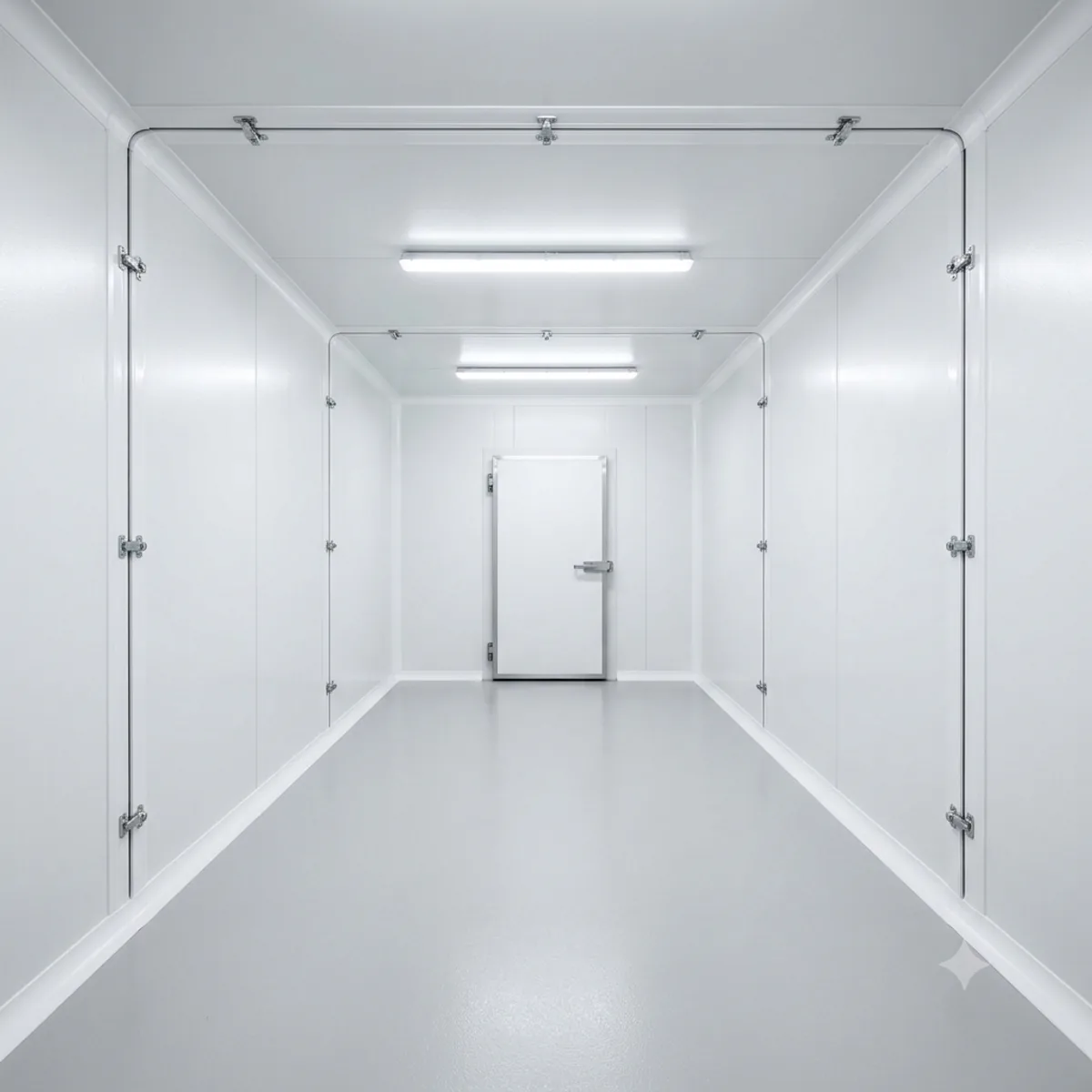
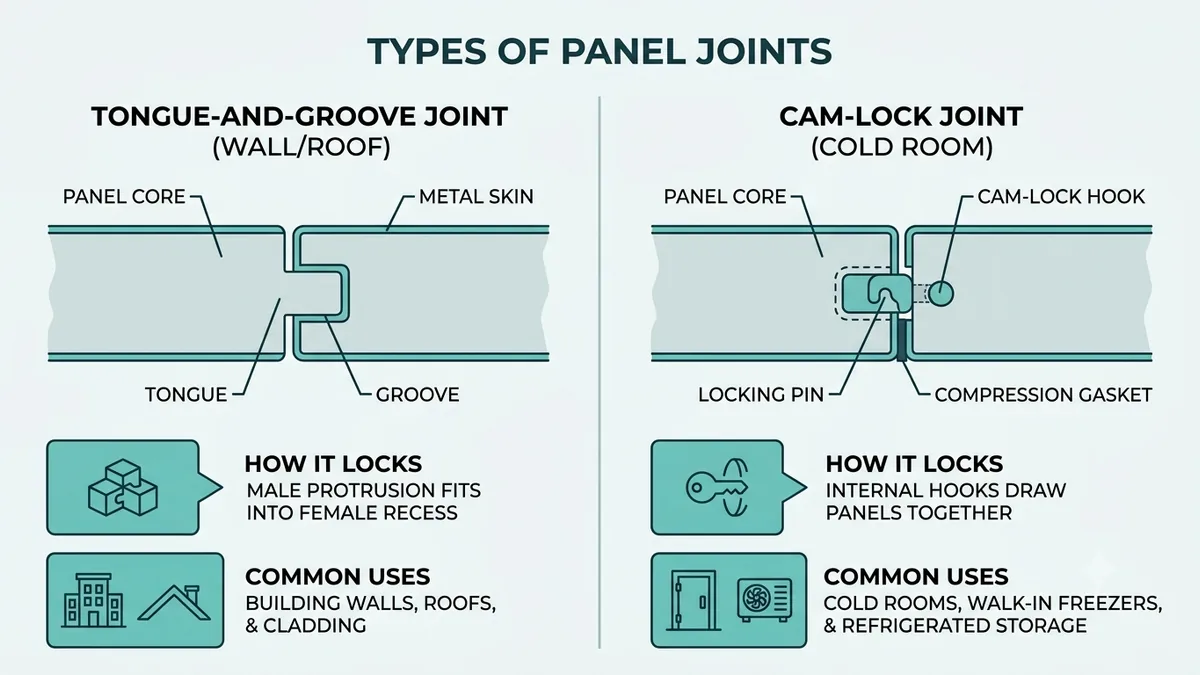
Cold rooms and freezers. For temperature-controlled stores, the panel is the thermal envelope, usually with a cam-lock joint so panels lock airtight. Core choice and thickness matter most here.
Sizes, thickness and facing options
Sandwich panels are made across a wide thickness range so the panel matches the thermal or fire duty of the job rather than a one-size board.
| Attribute | Range |
|---|---|
| Thickness (standard) | 30 / 40 / 50 / 60 / 70 / 80 / 90 / 100 / 150 mm* |
| Thickness (made to order) | 110 / 120 / 130 / 140 / 200 mm, advance payment; price and lead time confirmed at quotation |
| Covered width | 1000 mm (roof profile 1070 mm overall) |
| Facing sheets | PPGI · PPGL · BGL · stainless steel · aluminium · craft paper |
| Facing gauge | 0.35–0.80 mm |
| HSN (GST/RFQ) | 940690 |
*Standard thickness list applies to the mineral and EPS/PIR cores; the PUF range runs 30–200 mm with freezer-grade to 150 mm. Exact list per core is on the material page.
Thicker panels insulate more but cost more and weigh more, so the right thickness is a balance, not "as thick as possible". Thin panels suit partitions and cabins; mid-range suits sheds and better thermal control; the thick end suits cold rooms and freezers. Longer panels reduce joints but depend on road access and offloading space at your site, so we confirm a workable length against your delivery point. This hub gives ranges only, for rate-per-square-foot by thickness and core, use the material's price page.
How SAMAN manufactures and checks sandwich panels
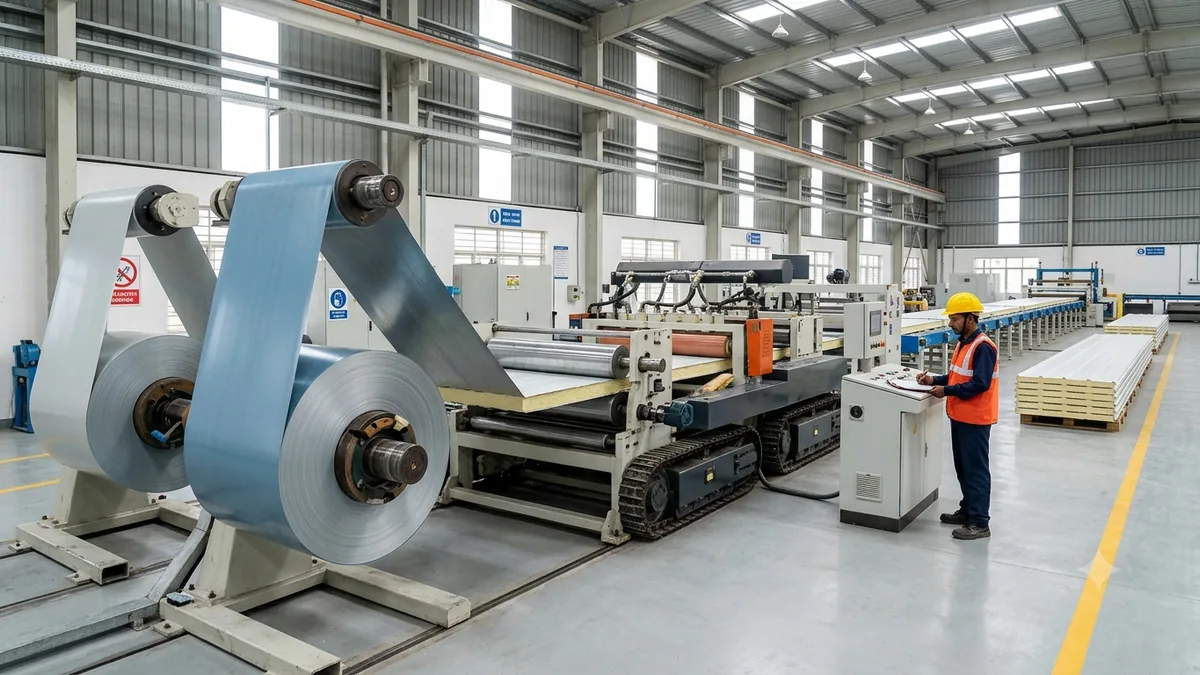
Our lines feed two facing coils through the machine, bond the core between them, and cure the panel so the core grips both facings as one continuous board, not a slab glued on afterwards. That bonded build is what lets a thin, light panel behave as a single structural board.
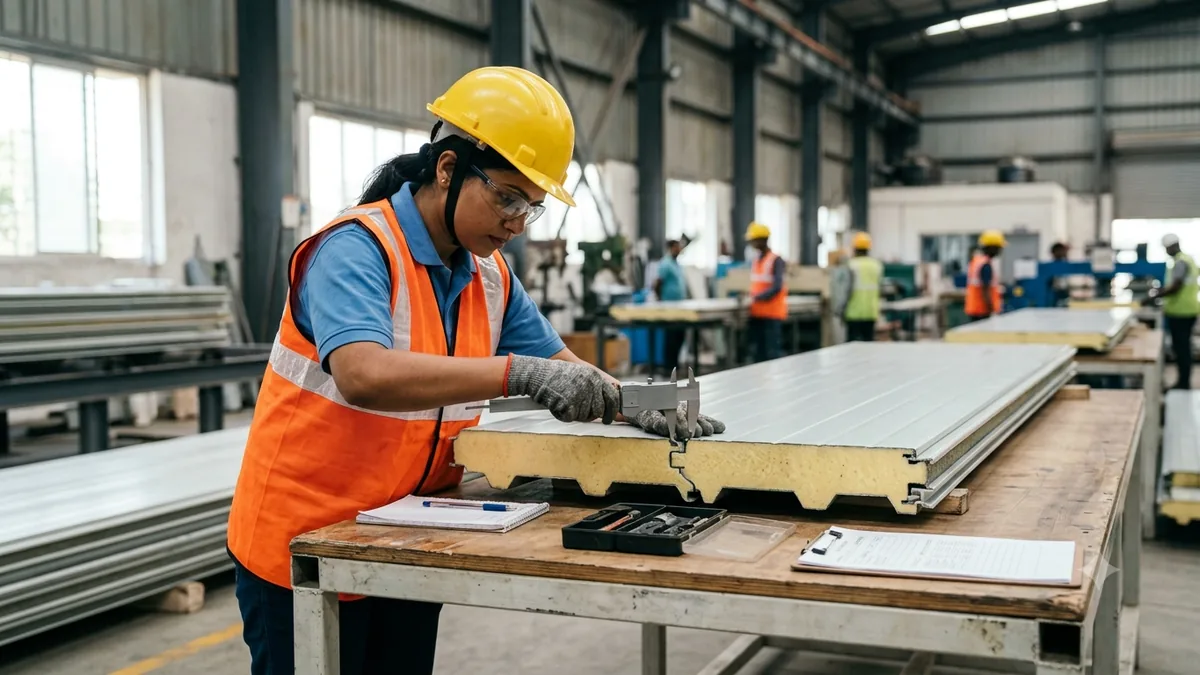
On every batch we check facing gauge, panel thickness, core rise or density, and the tongue-and-groove profile so joints close cleanly and the panel sits flat. Panels are edge-protected, stacked and bundled for dispatch from the nearer of our two factories. Making the panel ourselves, rather than buying and reselling, is why we can match core, facing, thickness and length to your job instead of offering only what is in stock.
How to choose the right sandwich panel
Work from the problem, not the product:
- Leading with cost and light thermal load? EPS is the budget core.
- Need strong thermal insulation for cabins, cladding or cold rooms? PUF is the all-round default.
- Fire performance and higher heat together? PIR is the premium thermal core; Rockwool is the mineral fire-and-acoustic core.
- Fighting noise? Rockwool or Glass Wool bring acoustic control a foam core does not.
- Roof vs wall? Same core, different facing profile and joint, tell us which face is exposed.
Then set thickness to the duty and facing to the environment (stainless or aluminium for hygienic cold rooms and food spaces; PPGI or PPGL for general wall and roof). If a tender specifies a fire class or a temperature, send it with your enquiry and we will confirm the core, thickness and any tested value at quotation.
Delivery, warranty and quotation
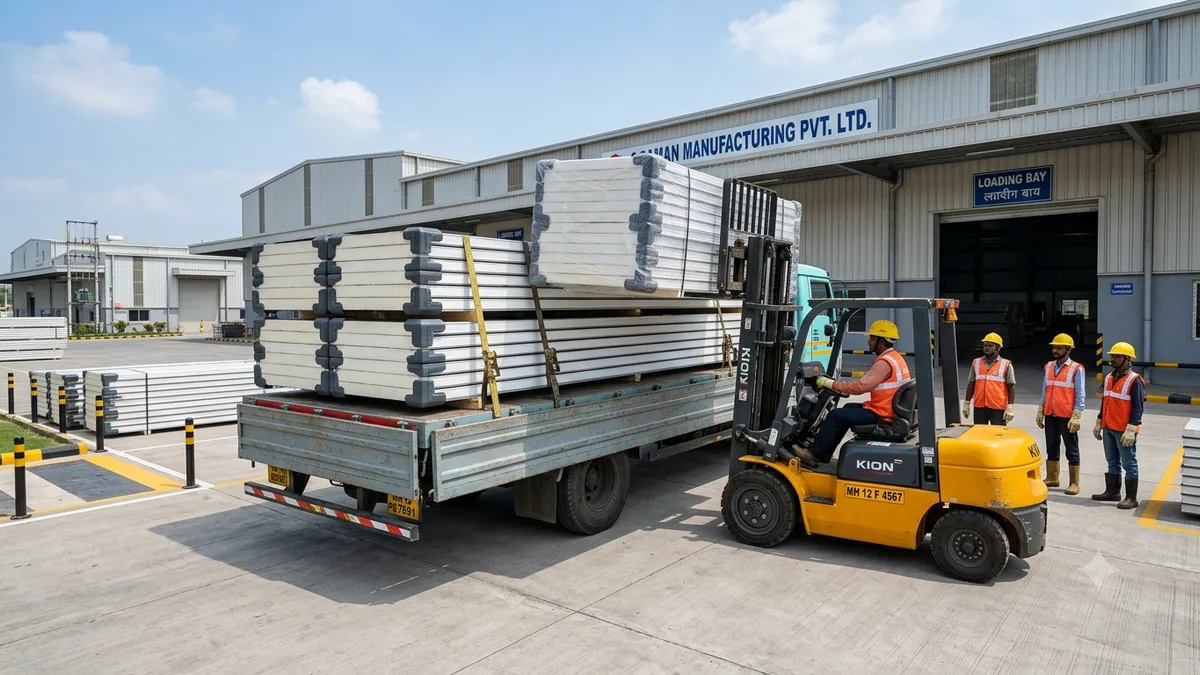
We manufacture and dispatch pan-India: Bangalore for South India, Greater Noida for North India and Delhi NCR. Default dispatch is 3–5 business days on standard products; transport is confirmed at quotation, and a 500 m² minimum billing applies to long-distance dispatch. See our Delivery Policy for the full terms.
Panel warranty is 5–10 years, confirmed at quotation. Quotes are supply-only unless stated otherwise, and any tested performance value for a specific core is confirmed at quotation rather than stated as a blanket claim. Standard products carry 7-day returns (3-day on custom), see our Refund & Return Policy. All sandwich panels fall under HSN 940690 for GST and RFQ purposes.
Why buy sandwich panels from a manufacturer, not a trader
A trader sells you whatever core and thickness is already in the warehouse and marks it up. As the manufacturer, we cut the panel to your job. Core matched to your fire, thermal, acoustic or budget need, facing matched to your environment, thickness matched to the duty, and length matched to what your site can actually receive. You get one point of accountability from quote to dispatch, real factory QC on every batch, and two dispatch origins so freight is shorter to most of the country. When a specification has to be met and proven, that direct line to the line that made the panel is the difference.
Frequently asked questions
What is a sandwich panel?
A sandwich panel is a three-layer insulated board: two steel facing sheets bonded to a lightweight insulating core. The facings give strength and finish; the core gives insulation. Because the board is finished on both faces, it forms a wall or roof in a single fixing step.
What are sandwich panels made of?
Two steel facing sheets, PPGI, PPGL, BGL, stainless steel, aluminium or craft paper, bonded to an insulating core. The core is one of five materials: PUF, PIR, EPS, Rockwool or Glass Wool, and the core is what sets the panel's thermal, fire and acoustic behaviour.
What are the types of sandwich panels?
By core, there are five: PUF (polyurethane, the all-round thermal default), PIR (premium fire-and-heat), EPS (budget and lightweight), Rockwool (mineral fire and acoustic) and Glass Wool (acoustic and thermal). SAMAN manufactures all five. The right one depends on your cost, thermal, fire and noise needs.
How do I choose the right sandwich panel core?
Start from the problem. Budget-led light-duty walls suit EPS; cabins, cladding and cold rooms suit PUF; fire clauses and high heat suit PIR or Rockwool; noise control suits Rockwool or Glass Wool. Send us your temperature, fire or acoustic requirement and we will confirm the core and thickness.
What thickness do sandwich panels come in?
Standard thicknesses run 30 to 150 mm, with 110–200 mm made to order on advance payment. Thicker panels insulate more but cost and weigh more, so thickness is matched to the job. Exact thickness lists and rates are on each material's page.
Are sandwich panels good for both roofs and walls?
Yes. The same core is made as a wall panel and a roof panel; the difference is the facing profile and the joint. Roof panels use a profiled, weather-lapped top; wall panels use a flatter profile with a tongue-and-groove joint. Cold rooms use a cam-lock joint.
Do you manufacture sandwich panels in India?
Yes. SAMAN manufactures sandwich panels at two factories, Bangalore for South India and Greater Noida for North India and Delhi NCR, and dispatches pan-India. Buying from the manufacturer means the core, facing, thickness and length are matched to your job, not to warehouse stock.
What is the difference between PUF, PIR and mineral-wool sandwich panels?
PUF and PIR are foam cores: PUF is the cost-effective thermal all-rounder, PIR adds fire performance and higher service temperature. Rockwool and Glass Wool are mineral cores that add fire resistance and acoustic control. EPS is the budget foam. Exact tested values are on each material page and confirmed at quotation.
Get a sandwich panel quotation
- South India: +91 88616 22859 · sales@samanportable.com
- North India / Delhi NCR: +91 87960 39938 · ncr@samanportable.com
- Or use the Send Enquiry form with your core, thickness, facing, area and site city.
Get a sandwich panel quotation
- South India: +91 88616 22859 · sales@samanportable.com
- North India / Delhi NCR: +91 87960 39938 · ncr@samanportable.com
- Or use the Send Enquiry form with your core, thickness, facing, area and site city.
ISO 9001:2015 (E20250218645) · ISO 14001:2015 (E20250218646) · ISO 45001:2018 (E20250218647) · NSIC (NSIC/GP/BAN/2024/0055207) · DPIIT (DIPP56005) · Udyam (UDYAM-KR-03-0172770)
GST: 29ABBCS7101B1ZR (Bangalore) / 09ABBCS7101B1ZT (Noida)