
Get Rockwool Panel Quotation
Bangalore & South Zone
Delhi NCR & North Zone
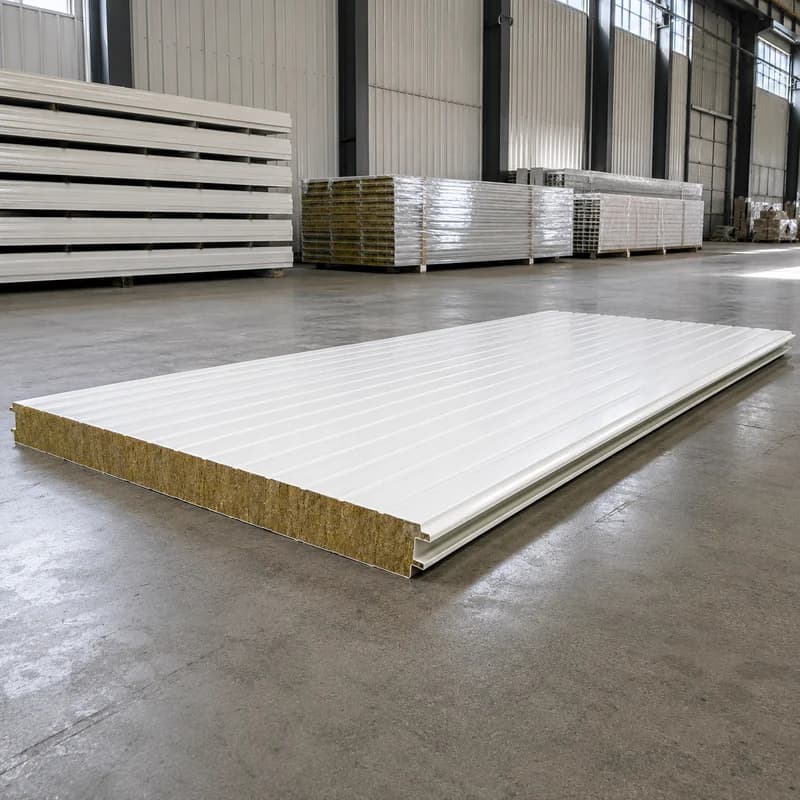
Rockwool Panel, Non-Combustible Stone Wool Sandwich Panels
From ₹1,290 / sq mt
30mm base spec · ex-GST · final price at quotation
A rockwool panel is an insulated sandwich panel with a stone wool (mineral wool) core bonded between two pre-painted steel facing sheets. Because stone wool is a non-combustible fibre material, rockwool sandwich panels are the standard choice in India for fire-safe industrial walls, PEB partitions, acoustic enclosures and plant rooms. Applications where foam-core panels are not permitted or not preferred.
- Size
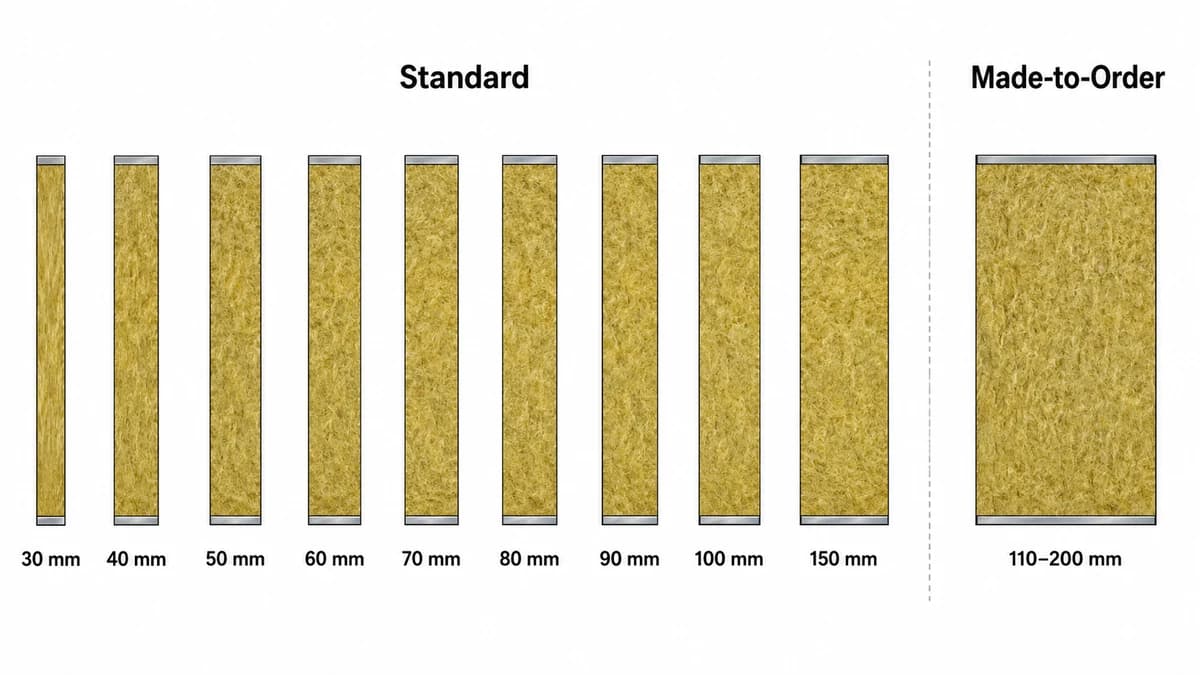
- Thickness 30–150 mm (made-to-order to 200 mm)
- Material
- Non-combustible stone wool core; PPGI / PPGL / SS / aluminium facings
- Delivery
- 3–5 day dispatch (standard thicknesses)
- Coverage
- Bangalore · Delhi NCR, pan-India
- Brand
- SAMAN Portable
- Application
- Fire-rated walls, acoustic enclosures, plant rooms
Product Information
Product Details
Comprehensive information about Rockwool Panel
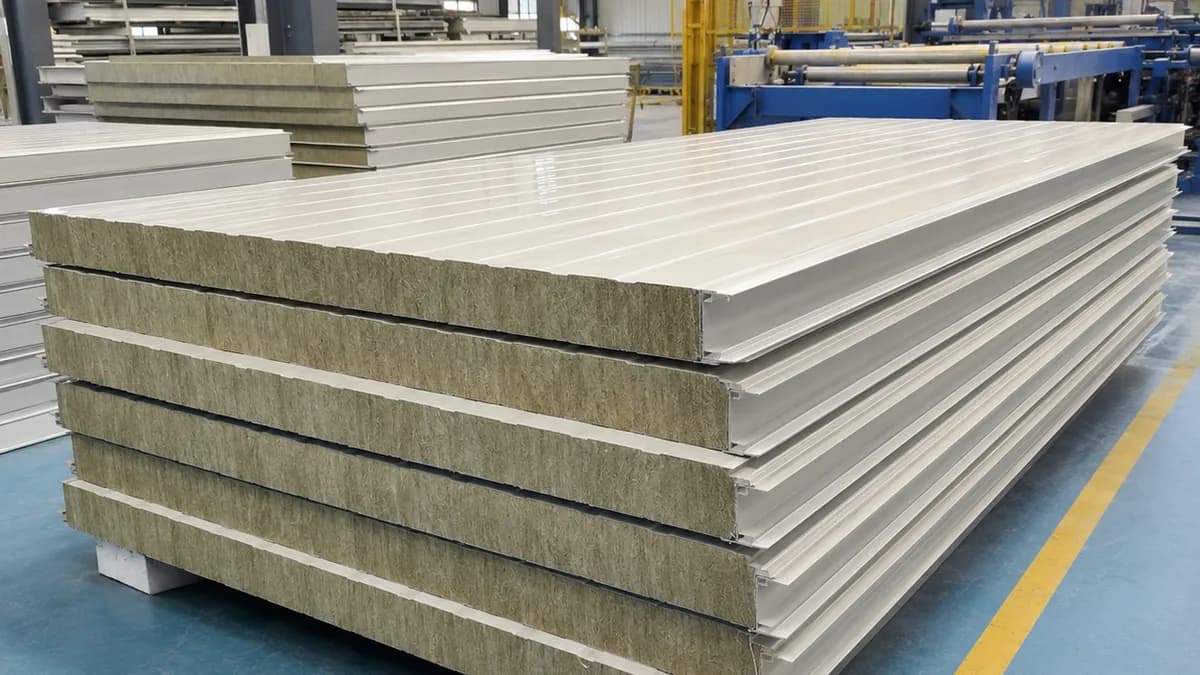
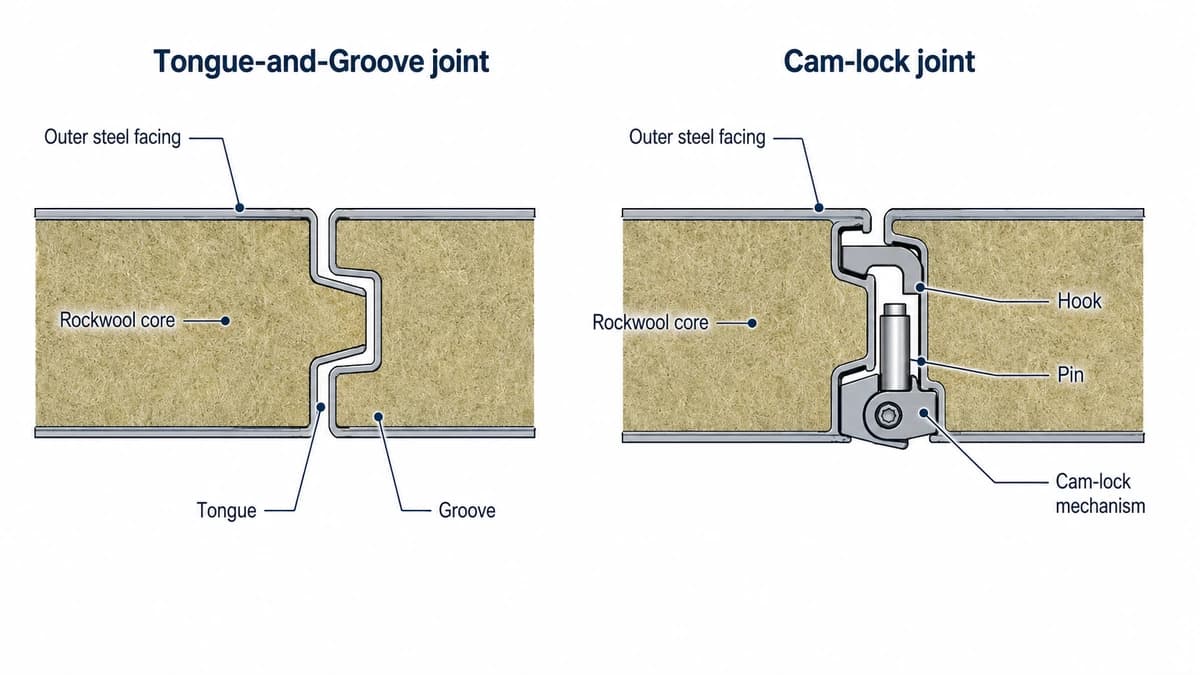
SAMAN Portable manufactures rockwool sandwich panels at both of our factories, Gopasandra, Bangalore (South India dispatch) and Greater Noida (North India dispatch), in standard thicknesses from 30mm to 150mm, with made-to-order thicknesses up to 200mm against advance payment. Panels are supplied for wall and roof applications with tongue-and-groove or cam-lock joints and a choice of facing sheets and coatings.
What Is a Rockwool Sandwich Panel?
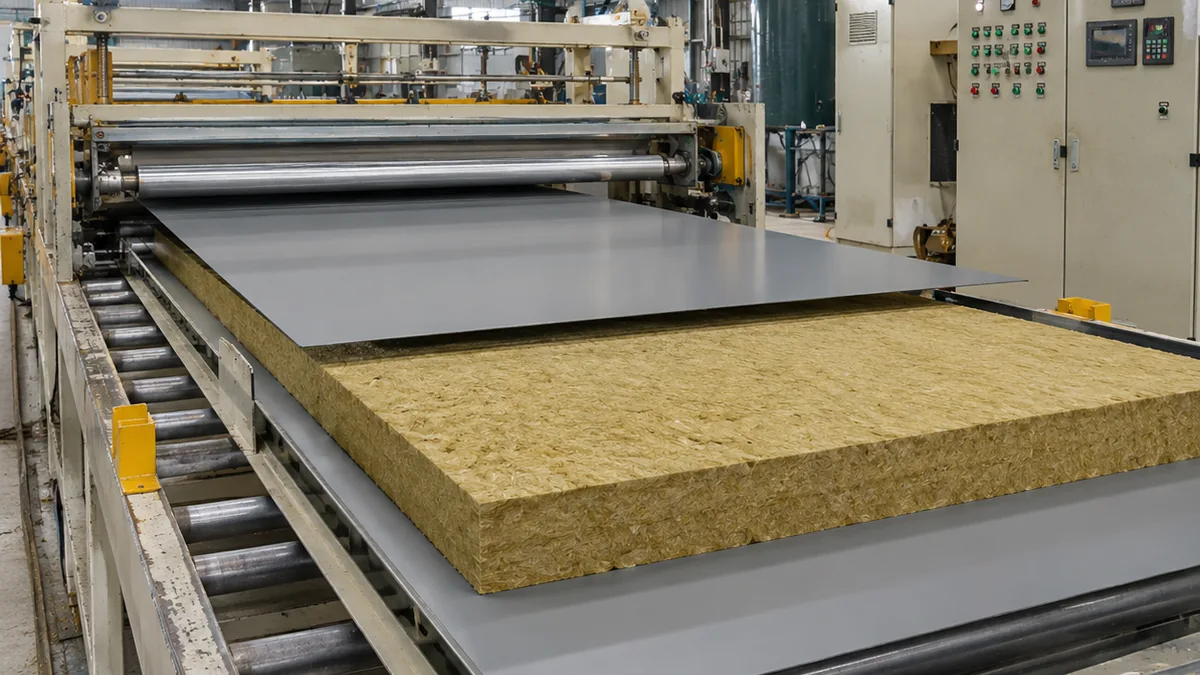
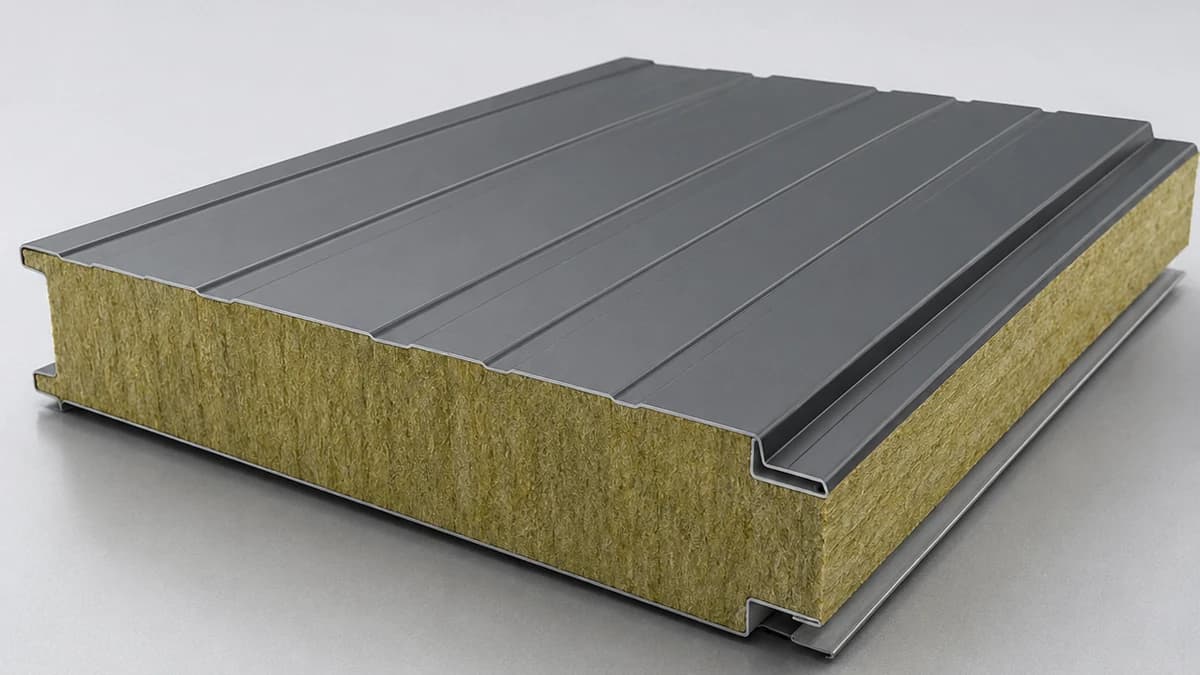
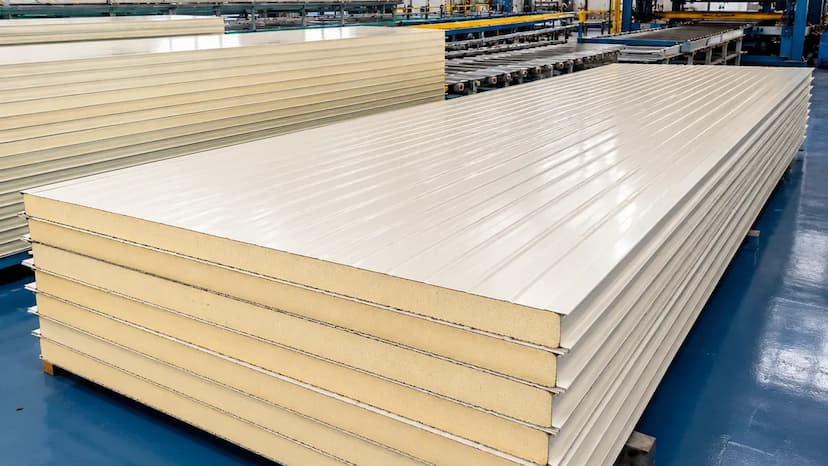
A rockwool sandwich panel, also written as rock wool panel or mineral wool panel, is a three-layer building panel. The core is stone wool: molten volcanic rock spun into dense fibres, arranged in lamella strips so the fibres run perpendicular to the panel faces. This fibre orientation gives the panel its compressive strength and keeps the core stable at high temperatures. The core is bonded under pressure between two coated steel sheets, and the panel edges are profiled into an interlocking joint.
The result is a single factory-finished component that replaces brickwork, insulation, and cladding in one installation step. Where PUF and PIR panels use foam cores optimised for thermal insulation, the rockwool core is chosen when fire safety and sound absorption lead the specification.
Why Choose Rockwool Panels?
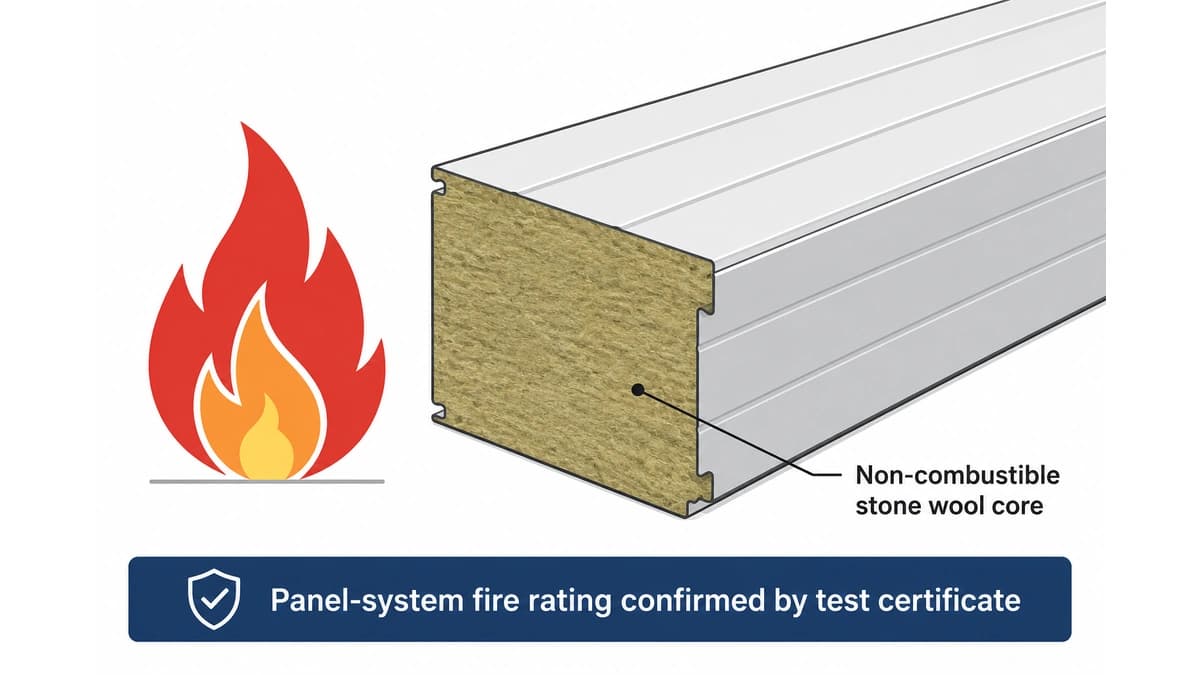
Non-combustible core. Stone wool is a mineral fibre that does not burn. For fire-conscious buyers, plant rooms, electrical rooms, industrial partitions near hot work, this is the deciding factor over foam-core panels. The fire rating of the complete panel assembly is confirmed through test certificate at the time of quotation.
Strong acoustic behaviour. The open fibre structure of stone wool absorbs sound energy instead of reflecting it, which is why rockwool panels are widely used for generator enclosures, compressor rooms and acoustic partitions. Tested acoustic values for a specific panel build are confirmed at quotation.
High-temperature stability. Stone wool retains its form at service temperatures far beyond the range of foam cores, making rockwool panels suitable for plant areas with sustained heat exposure.
Dimensional stability and durability. The dense lamella core resists sagging and maintains joint integrity over the panel's service life. SAMAN rockwool panels carry a 5–10 year warranty, confirmed at quotation.
One honest caution: rockwool panels are heavier than PUF, PIR or EPS panels of the same thickness. Purlin and girt spacing, lifting method and supporting structure must be checked before ordering. Our team verifies this with you at quotation stage.
Fire Performance of Rockwool Panels
Stone wool is made from rock melted at very high temperature and spun into fibre, the raw material itself does not burn. This is the fundamental difference between rockwool panels and foam-core panels: the fire behaviour starts at the material level, not from additives.
Two things matter when specifying fire performance, and buyers should insist on both being clear in every quotation they compare:
- Core behaviour, stone wool is non-combustible by nature.
- Panel-system fire rating. The rating of the complete assembly (core + facings + joints + sealants) is established only by a test certificate for that exact build. SAMAN confirms the applicable fire documentation through quotation, datasheet or test certificate, and a third-party/government-authorized inspection certificate is provided at time of sale.
A core-only fire claim without an assembly certificate is not a fire rating. We state this plainly because it is the single most common source of confusion in panel procurement.
Acoustic Performance: Rockwool for Sound Insulation
The same fibre structure that resists fire also absorbs sound. Rockwool's dense, non-directional fibres convert sound energy into minute amounts of heat, reducing both airborne noise transmission and reverberation. This makes rockwool sandwich panels the practical choice for generator and compressor enclosures, DG rooms and plant-room partitions where equipment noise must be contained, and for industrial walls where a quieter working environment is required.
Acoustic performance depends on panel thickness, core density and the complete wall build-up. Tested acoustic values for your specific requirement are confirmed at quotation. Describe the noise source and target environment in your enquiry and our team will recommend the appropriate panel configuration.
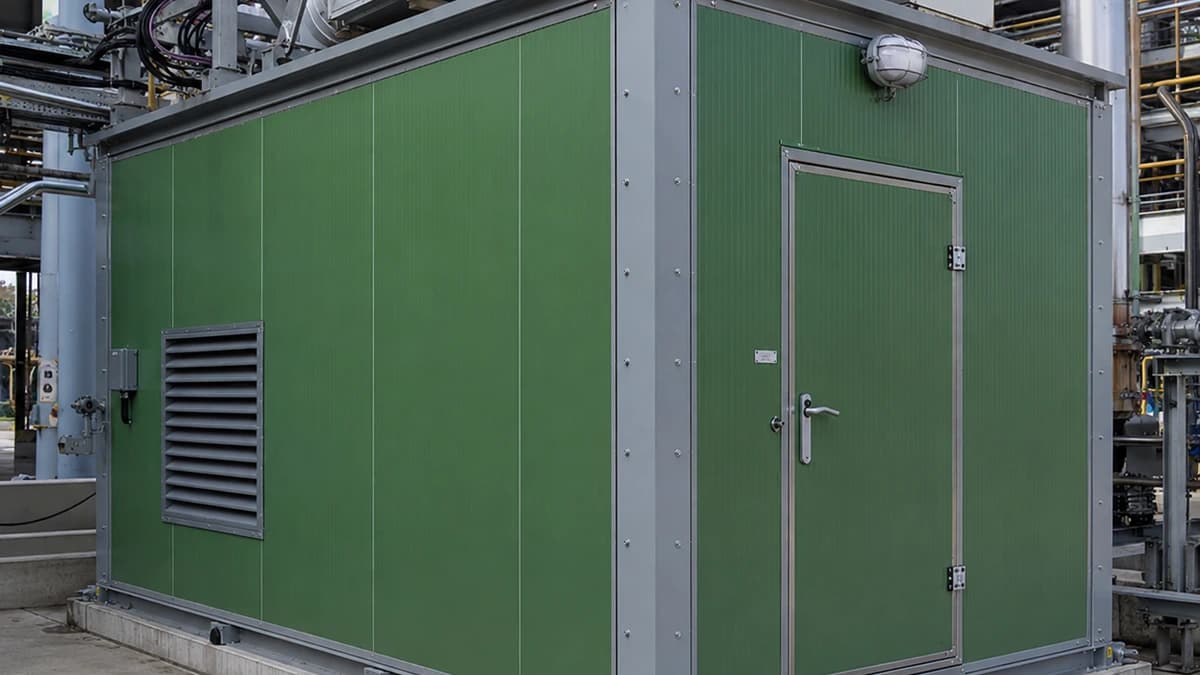
Rockwool Panel Applications
Fire-rated and fire-conscious walls. Industrial partitions, plant rooms, electrical and battery rooms, and walls near hot-work zones where a non-combustible core is mandatory or preferred.
PEB and industrial buildings. Wall cladding and internal partitions for pre-engineered buildings, warehouses and factories, SAMAN also supplies complete PEB structures, so panels and structure can be specified together.
Acoustic enclosures. Generator, compressor and HVAC plant enclosures where sound absorption leads the specification.
Industrial facades and roofs. Fire-safe insulated envelopes where panel weight and purlin spacing are engineered accordingly.
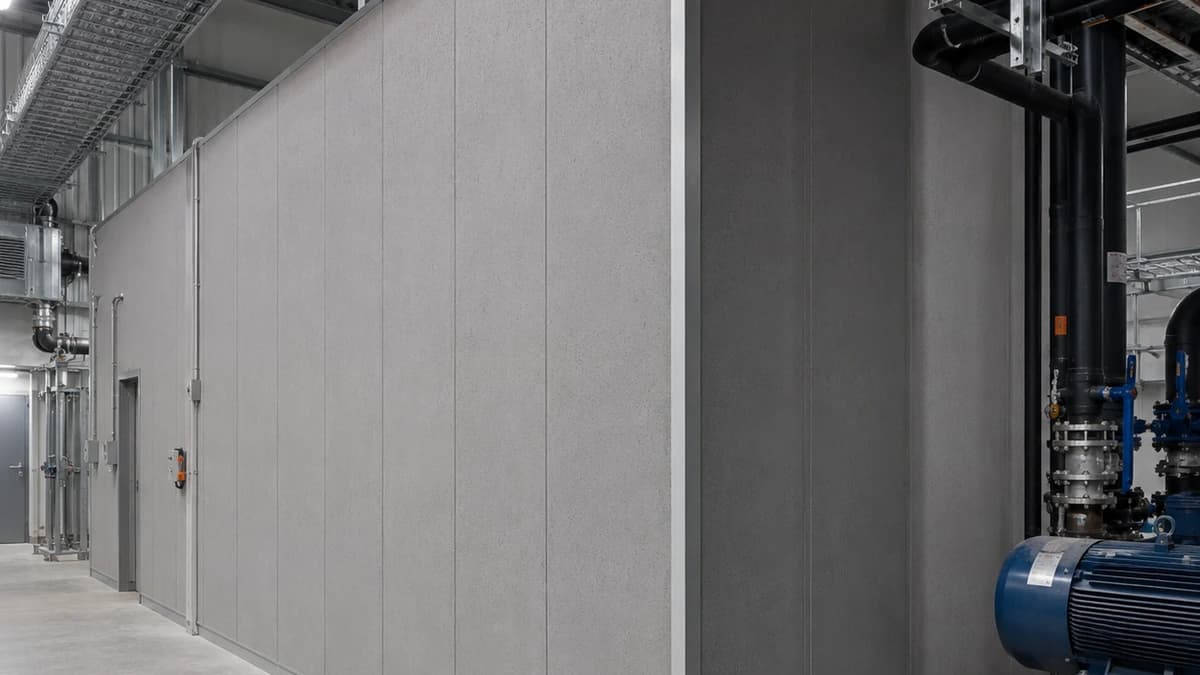
Rockwool vs PUF vs PIR: Which Panel for Which Job?
| Factor | Rockwool Panel | PUF Panel | PIR Panel |
|---|---|---|---|
| Core type | Non-combustible stone wool fibre | Rigid polyurethane foam | Fire-improved polyisocyanurate foam |
| Fire behaviour | Non-combustible core; system rating by certificate | Self-extinguishing grades available | Improved fire reaction over PUF; system-tested |
| Thermal insulation | Good | Excellent | Excellent |
| Acoustic absorption | Excellent | Moderate | Moderate |
| Weight | Heaviest | Light | Light |
| Best for | Fire-rated walls, acoustic enclosures, plant rooms | Cold rooms, cabins, insulated roofing | Cleanrooms, pharma, premium cold rooms |
Simple rule of thumb: if fire safety or acoustics leads your specification, choose rockwool. If thermal insulation leads it, a PUF panel or PIR panel is usually the better fit. Our team will confirm the right core for your project at quotation, many projects combine cores, using rockwool for fire-critical walls and foam-core panels elsewhere.
Why Buy Rockwool Panels from SAMAN Portable?
Two factories, nationwide dispatch. Rockwool panels are manufactured at both Gopasandra, Bangalore and Greater Noida. South and West India orders dispatch from Bangalore; North and East India orders dispatch from Greater Noida: shorter transit, lower freight, faster delivery. Dispatch typically begins within 3–5 business days as per our published delivery policy, with transport confirmed at quotation.
Verified manufacturer, not a trader. You buy directly from the production line, with factory visits welcome at either location. Our panels are supplied to leading developers and EPC contractors across India.
Documentation with every sale. Quotation, datasheet or test certificate confirming density, k-value, service temperature and fire rating as applicable: plus third-party/government-authorized inspection certificate at time of sale, invoice with HSN 940690, and warranty terms in writing.
Straight answers. Where a value depends on your exact panel build, we say "confirmed at quotation": and then we confirm it, in writing, before you pay.
Get Rockwool Panel Quotation
Bangalore & South Zone
Delhi NCR & North Zone
Rockwool Panel Specifications
SAMAN Rockwool Panel
Owner-verified
| Core material | Stone wool / mineral wool, lamella construction |
| Standard thickness | 30 / 40 / 50 / 60 / 70 / 80 / 90 / 100 / 150 mm |
| Made-to-order thickness | 110 / 120 / 130 / 140 / 200 mm (advance payment) |
| Core density | High-density stone wool; density confirmed through quotation, datasheet or test certificate |
| Facing sheets | PPGI (0.35–0.80 mm) · PPGL · Stainless Steel · Aluminium options |
| Coating | Polyester standard; SMP/PVDF/SS/PVC for coastal, chemical, food and pharma projects |
| Joints | Tongue-and-groove and cam-lock, both offered |
| Applications | Wall panels, roof panels, partitions, acoustic enclosures |
| Fire performance | Non-combustible stone wool core; panel-system fire rating confirmed through test certificate at quotation |
| Acoustic performance | Sound-absorbing fibre core; tested values confirmed at quotation |
| HSN code | 940690 |
| Warranty | 5–10 years, confirmed at quotation |
| Manufacturing | Bangalore (Gopasandra) and Greater Noida factories |
- Core material
- Stone wool / mineral wool, lamella construction
- Standard thickness
- 30 / 40 / 50 / 60 / 70 / 80 / 90 / 100 / 150 mm
- Made-to-order thickness
- 110 / 120 / 130 / 140 / 200 mm (advance payment)
- Core density
- High-density stone wool; density confirmed through quotation, datasheet or test certificate
- Facing sheets
- PPGI (0.35–0.80 mm) · PPGL · Stainless Steel · Aluminium options
- Coating
- Polyester standard; SMP/PVDF/SS/PVC for coastal, chemical, food and pharma projects
- Joints
- Tongue-and-groove and cam-lock, both offered
- Applications
- Wall panels, roof panels, partitions, acoustic enclosures
- Fire performance
- Non-combustible stone wool core; panel-system fire rating confirmed through test certificate at quotation
- Acoustic performance
- Sound-absorbing fibre core; tested values confirmed at quotation
- HSN code
- 940690
- Warranty
- 5–10 years, confirmed at quotation
- Manufacturing
- Bangalore (Gopasandra) and Greater Noida factories
Rockwool panels are supplied as per approved project requirement and applicable standards such as IS 12436, IS 16203, EN 14509, EN 13165, ASTM C591/C1289 where required; density, k-value, service temperature and fire rating are confirmed through quotation, datasheet or test certificate; third-party/government-authorized inspection certificate is provided at time of sale.
Rockwool Panel Thickness and Price
Indicative supply-only prices, ex-GST. Transport, installation, accessories and unloading are quoted separately.
| Thickness | Indicative Price (per sq. mt, ex-GST) | Typical Use |
|---|---|---|
| 30 mm | ₹1,290 | Thin fire-safe lining and partitions |
| 40 mm | ₹1,420 | Fire-conscious partitions |
| 50 mm | ₹1,540 | Industrial wall panels, acoustic partitions |
| 60 mm | ₹1,640 | Higher fire and acoustic performance |
| 80 mm | ₹1,810 | Premium fire-safe wall/roof and acoustic work |
| 90 / 100 / 150 mm & MTO sizes | Confirmed at quotation | Project-specific systems |
Price disclaimer: Prices shown are indicative Indian market supply-only rates for base specification. Final price depends on core density, facing sheet gauge, coating, profile, order quantity, project location and drawings. GST, transport, installation, flashings, fasteners and accessories are additional and confirmed at quotation.
Request Exact Quotation
Bangalore & South Zone
Delhi NCR & North Zone
Wall and Roof Systems
Rockwool wall panels are installed vertically or horizontally on steel girts with tongue-and-groove or hidden-fix joints, sealed with fire-safe sealants and finished with matching trims and flashings. Rockwool roof panels use overlap joints with weather-side fasteners, EPDM washers and butyl sealing. Because rockwool panels are heavier than foam-core panels, SAMAN confirms purlin/girt spacing and lifting methodology as part of every quotation. This is checked for you, not left to site improvisation.
Cut edges and penetrations (doors, ducts, cable trays) are protected and sealed during installation to keep moisture out of the fibre core, and all openings are trimmed with matching accessories supplied against the project BOQ.
Customer Reviews
0 reviews
No reviews yet. Be the first to review this product.
Write a Review for Rockwool Panel
Frequently Asked Questions
What is a rockwool panel?
A rockwool panel is a sandwich panel with a non-combustible stone wool (mineral wool) core bonded between two coated steel sheets, used for fire-safe and acoustic wall, roof and partition systems.
What is the difference between rockwool and mineral wool?
Rockwool is a type of mineral wool made from volcanic rock. In the Indian market the terms rockwool, rock wool, stone wool and mineral wool are used interchangeably for the same panel core.
What thicknesses are available in rockwool panels?
SAMAN manufactures 30, 40, 50, 60, 70, 80, 90, 100 and 150 mm as standard, with 110, 120, 130, 140 and 200 mm available made-to-order against advance payment.
Are rockwool panels fireproof?
The stone wool core is non-combustible. The fire rating of the complete panel system is established by test certificate for the exact assembly, which SAMAN confirms at quotation.
Are rockwool panels good for soundproofing?
Yes. The fibre core absorbs sound effectively, which is why rockwool panels are the common choice for generator enclosures, compressor rooms and acoustic partitions. Tested values are confirmed at quotation.
Can rockwool panels be used for both walls and roofs?
Yes. Wall and roof profiles are both supplied. Because rockwool panels are heavier than foam-core panels, support spacing is confirmed during quotation.
Who manufactures rockwool panels in India?
SAMAN Portable manufactures rockwool sandwich panels at two factories, Bangalore (Gopasandra) and Greater Noida, supplying projects across India with nearest-factory dispatch.
What is the difference between rockwool, PUF and PIR panels?
Rockwool has a non-combustible fibre core chosen for fire and acoustic performance; PUF and PIR have foam cores chosen for maximum thermal insulation. See the comparison table above, or ask our team to recommend the right core at quotation.
What facing sheets are used on rockwool panels?
PPGI in 0.35–0.80 mm is standard, with PPGL, stainless steel and aluminium options, and special coatings for coastal, food and pharma projects.
How is rockwool panel price decided?
By thickness, core density, facing gauge, coating and order quantity. Indicative base prices are listed above; exact pricing is confirmed at quotation.
Get Rockwool Panel Quotation
Bangalore & South Zone
Delhi NCR & North Zone
Related products
ISO 9001:2015
E20250218645
ISO 14001:2015
E20250218646
ISO 45001:2018
E20250218647
NSIC Government Purchase Enlistment
NSIC/GP/BAN/2024/0055207
Startup India Recognition
DIPP56005
Udyam Registration
UDYAM-KR-03-0172770