
Explore the Range
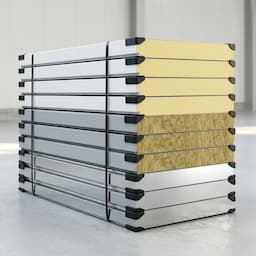
Get Glass Wool Panel Quotation
Bangalore & South Zone
Delhi NCR & North Zone
Glass Wool Panel, Acoustic and Thermal Insulated Panels by SAMAN
From ₹1,010 / sq mt
30mm base spec · ex-GST · final price at quotation
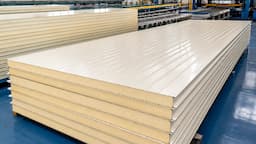
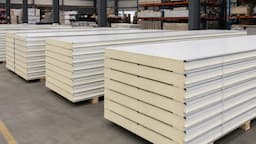
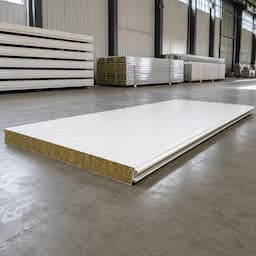
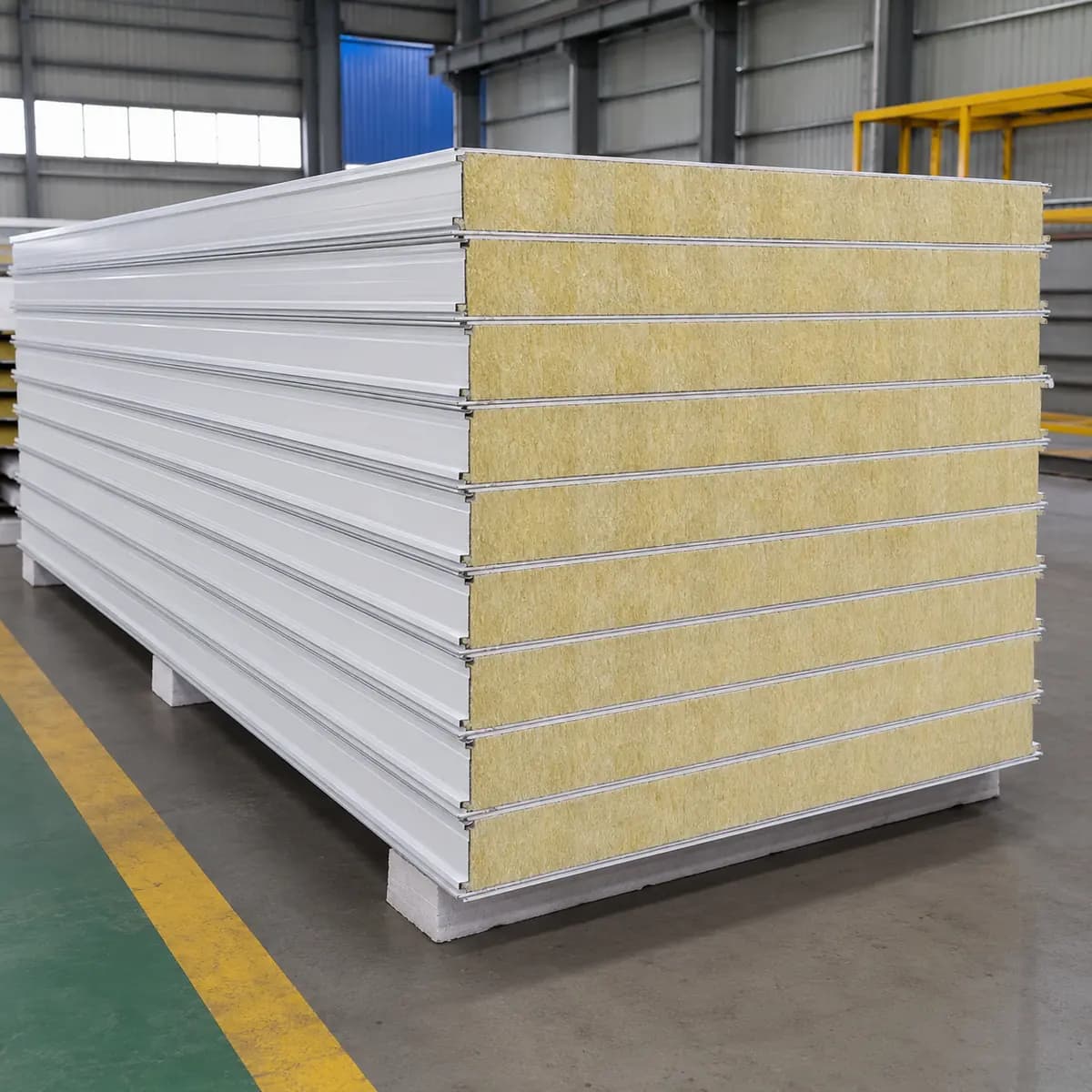
A glass wool panel is an insulated building panel with a high-density glass wool core bonded between two coated steel facing sheets. The fibrous, non-combustible core is what buyers choose it for: it absorbs sound the way foam cores cannot, and it handles heat the way budget cores cannot. SAMAN manufactures glass wool panels on our own lines in Bangalore and Greater Noida for acoustic partitions, plant rooms, generator enclosures and fire-conscious walls and roofs.
- Size
- Thickness 30–150 mm (110–200 mm made to order)
- Material
- Glass wool core 48–64 kg/m³, steel facings
- Delivery
- 3–5 day dispatch
- Coverage
- Bangalore · Delhi NCR
- Brand
- SAMAN Portable
Product Information
Product Details
Comprehensive information about Glass Wool Panel
A glass wool panel gives you three jobs in one board: a finished steel wall surface, thermal insulation, and, its real specialty, sound absorption from a fibrous core that foam panels cannot match. If your project has a noise problem, a plant room, or a specification that asks for a non-combustible core at a sensible price, this is the panel that fits.
Get a factory-direct glass wool panel quotation: South India +91 88616 22859 · sales@samanportable.com | North India / Delhi NCR +91 87960 39938 · ncr@samanportable.com
What is a glass wool panel?
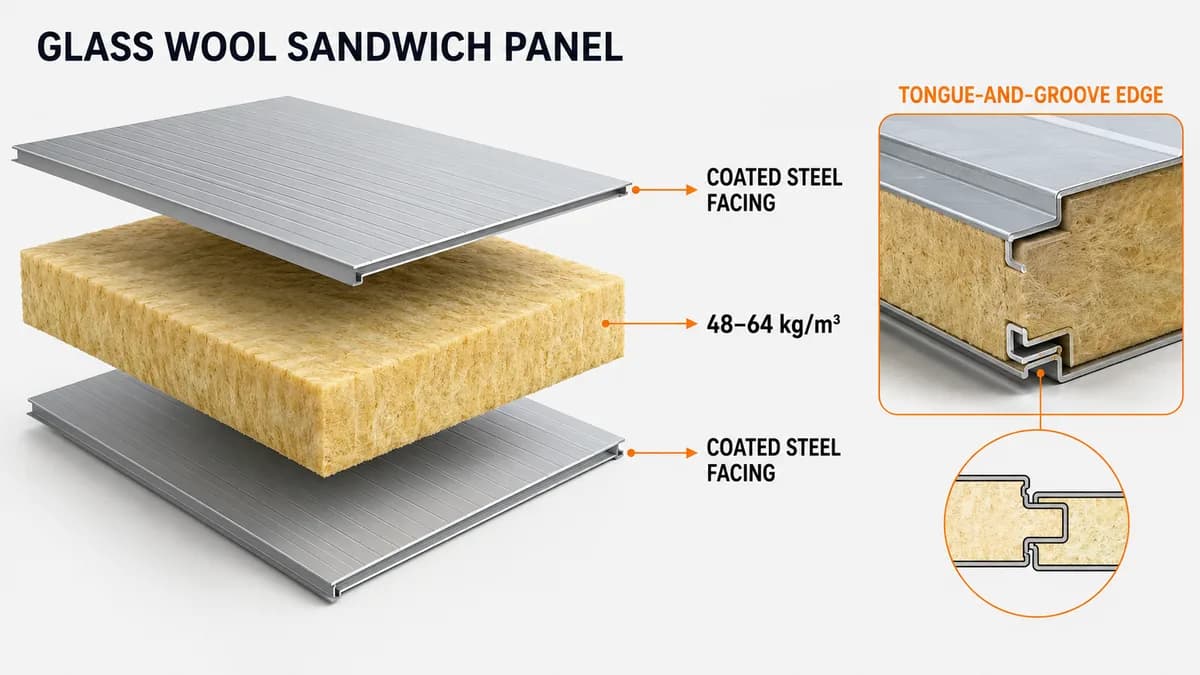
A glass wool panel is a three-layer insulated panel: two coated steel facing sheets bonded to a core of high-density glass wool, fine glass fibres pressed to 48–64 kg/m³. The steel facings carry the strength, weather resistance and finish; the fibrous core carries the thermal and acoustic performance.
Do not confuse the panel with loose glass wool insulation. Rolls and blankets of glass wool are raw material. They need a frame, a cladding layer and site labour before they become a wall. A glass wool panel arrives from our line as a finished, self-supporting board: fix it, seal the joints, and the partition or roof is done. Buyers searching for “glass wool” often land on loose-roll sellers; if you want the finished panel, this page is the right place.
Why choose a glass wool core: sound and heat together
The core is the decision. Glass wool’s fibre structure traps sound energy, which is why its acoustic behaviour rates very good to excellent: the best in our range alongside Rockwool, and clearly ahead of PUF, PIR or EPS foam cores. The same fibre structure is non-combustible glass mineral (Class A1 core behaviour when tested as a system), and the core tolerates a service range far beyond foam.
That combination: acoustic control, fire-conscious behaviour, honest thermal insulation (λ 0.036 W/m·K design value). At a price below Rockwool is the reason consultants specify glass wool panels for sound-sensitive and heat-exposed rooms that do not need a certified fire-rated wall assembly.
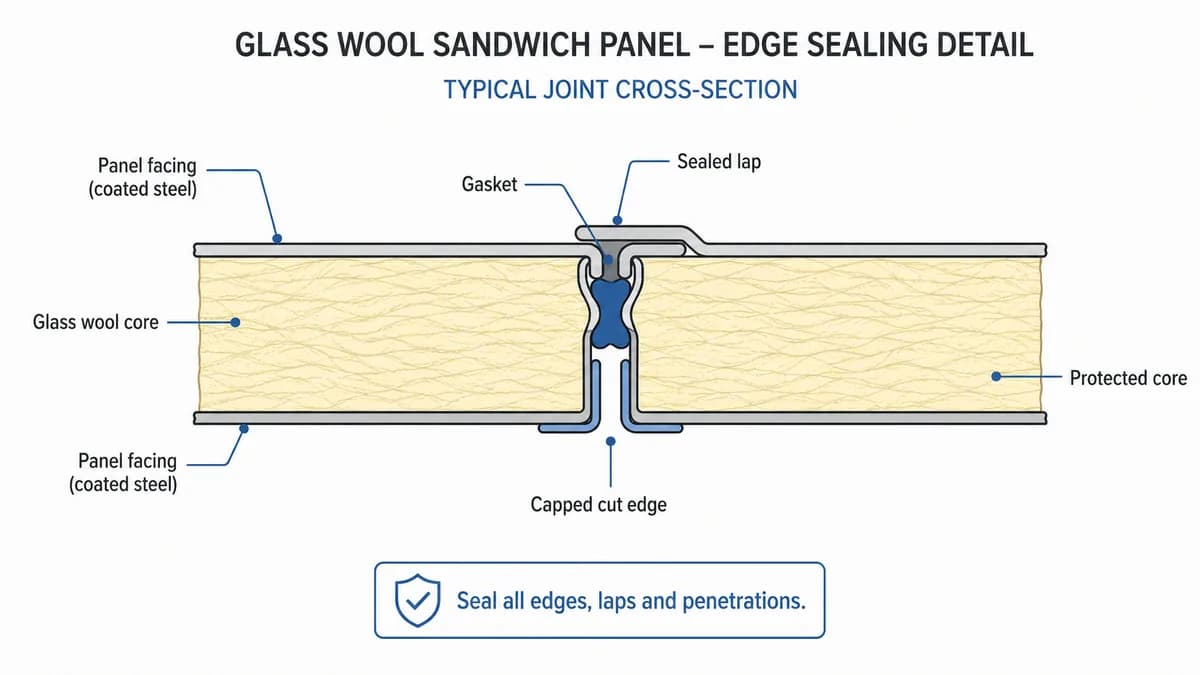
One honest limitation, because it decides jobs: the core is fibrous, so cut edges, laps and penetrations must be sealed against moisture. For wet or open-edge exposure, choose a closed-cell core instead. We will tell you which one when you send the application.
Where glass wool panels are used
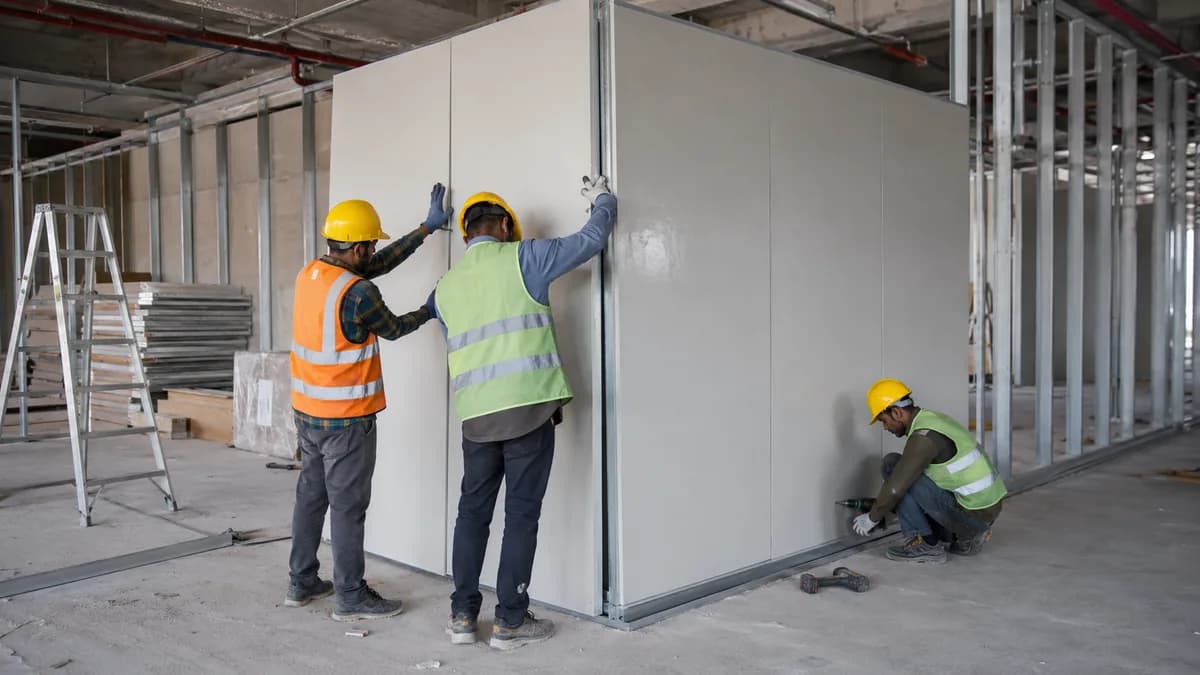
Acoustic partitions. Studios, halls, offices beside noisy floors, test rooms. The panel forms the partition and absorbs the noise in one build step.
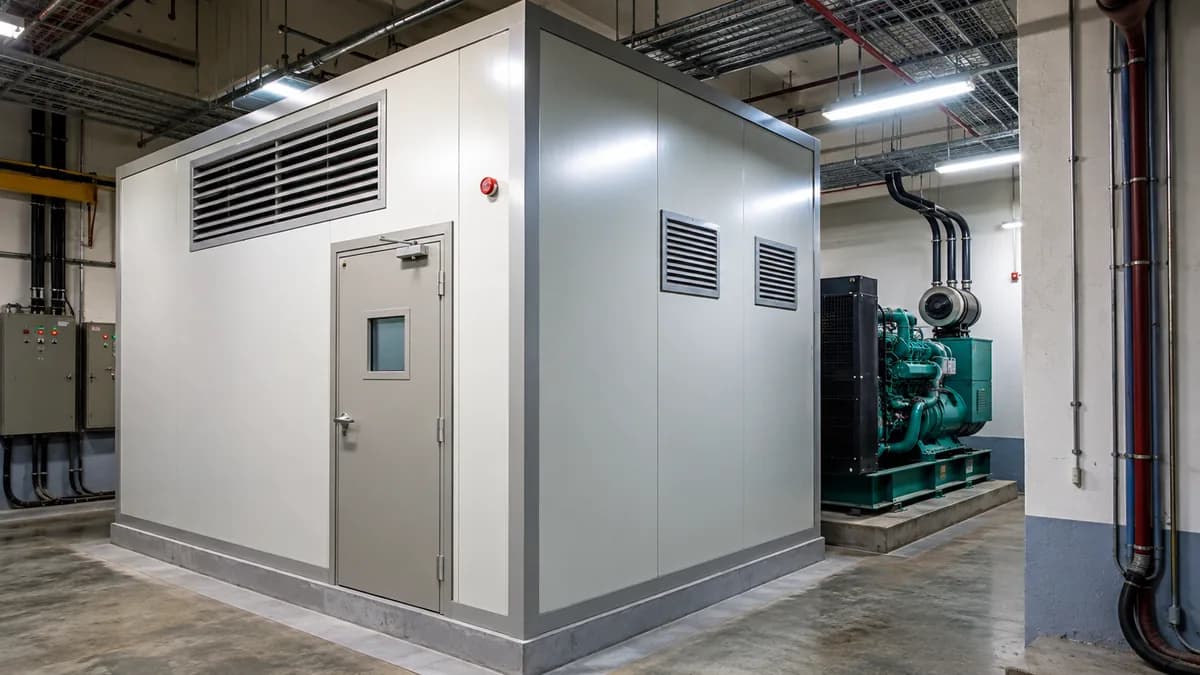
Generator enclosures and plant rooms. DG sets, compressors, HVAC plants. The panel takes the heat and cuts the noise leaving the room, which is the usual compliance problem.
Fire-conscious walls and roofs. Where the brief says “non-combustible core” without demanding a certified fire-resistance rating, glass wool panels answer it economically. Where a certified EI rating is demanded, see our Rockwool panel range’s fire-rated systems, that is its territory, not this page’s.
Insulated partitions and linings. Interior walls and ceilings in industrial and commercial buildings where thermal comfort and sound both matter.
Sizes, thickness and facings
Sizes, Thickness and Facings
Owner-verified
| Thickness (standard) | 30 / 40 / 50 / 60 / 70 / 80 / 90 / 100 / 150 mm |
| Thickness (made to order) | 110 / 120 / 130 / 140 / 200 mm, advance payment; price and lead time confirmed at quotation |
| Core density | 48–64 kg/m³ high-density glass wool |
| Effective width | ~950–1170 mm, profile-dependent |
| Panel length | Up to 12 m typical; confirmed against transport and handling |
| Facings | PPGI / PPGL / pre-painted Galvalume or galvanized steel, 0.45–0.60 mm (0.50/0.50 mm recommended) |
| Joints | Tongue-and-groove / hidden-fix / through-fix with gasket; all edges sealed |
| HSN (GST/RFQ) | 940690 |
- Thickness (standard)
- 30 / 40 / 50 / 60 / 70 / 80 / 90 / 100 / 150 mm
- Thickness (made to order)
- 110 / 120 / 130 / 140 / 200 mm, advance payment; price and lead time confirmed at quotation
- Core density
- 48–64 kg/m³ high-density glass wool
- Effective width
- ~950–1170 mm, profile-dependent
- Panel length
- Up to 12 m typical; confirmed against transport and handling
- Facings
- PPGI / PPGL / pre-painted Galvalume or galvanized steel, 0.45–0.60 mm (0.50/0.50 mm recommended)
- Joints
- Tongue-and-groove / hidden-fix / through-fix with gasket; all edges sealed
- HSN (GST/RFQ)
- 940690
Thickness follows the duty: 30–50 mm for interior acoustic partitions and linings, 50–80 mm for plant rooms, enclosures and roofs, and the thicker end where thermal load or sound targets are higher. Exact rate per thickness is confirmed at quotation; the price factors below explain what moves it.
Glass wool panel or Rockwool panel: an honest chooser
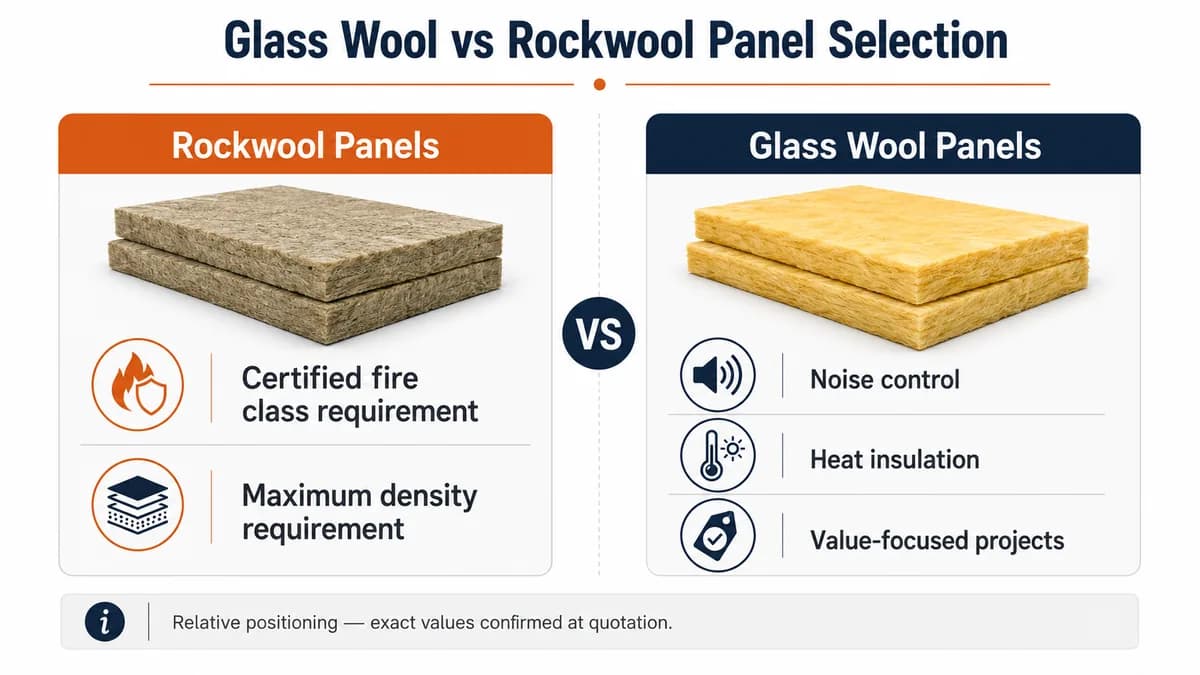
Both are mineral-fibre, non-combustible cores with strong acoustic behaviour, and they are the two panels buyers cross-shop. The honest split: Rockwool is denser (100–120 kg/m³), carries certified fire-rated wall assemblies, and costs more, it is the specification-grade fire panel. Glass wool is lighter, quieter for its price, easier to handle, and from ₹1,010/sq mt against Rockwool’s ₹1,290. It is the value choice for acoustic and heat-conscious work that does not need a certified fire rating. If a tender names a fire-resistance class, go Rockwool; if the problem is noise, heat and budget, glass wool usually wins the comparison.
How SAMAN manufactures and checks glass wool panels
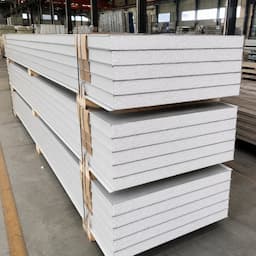
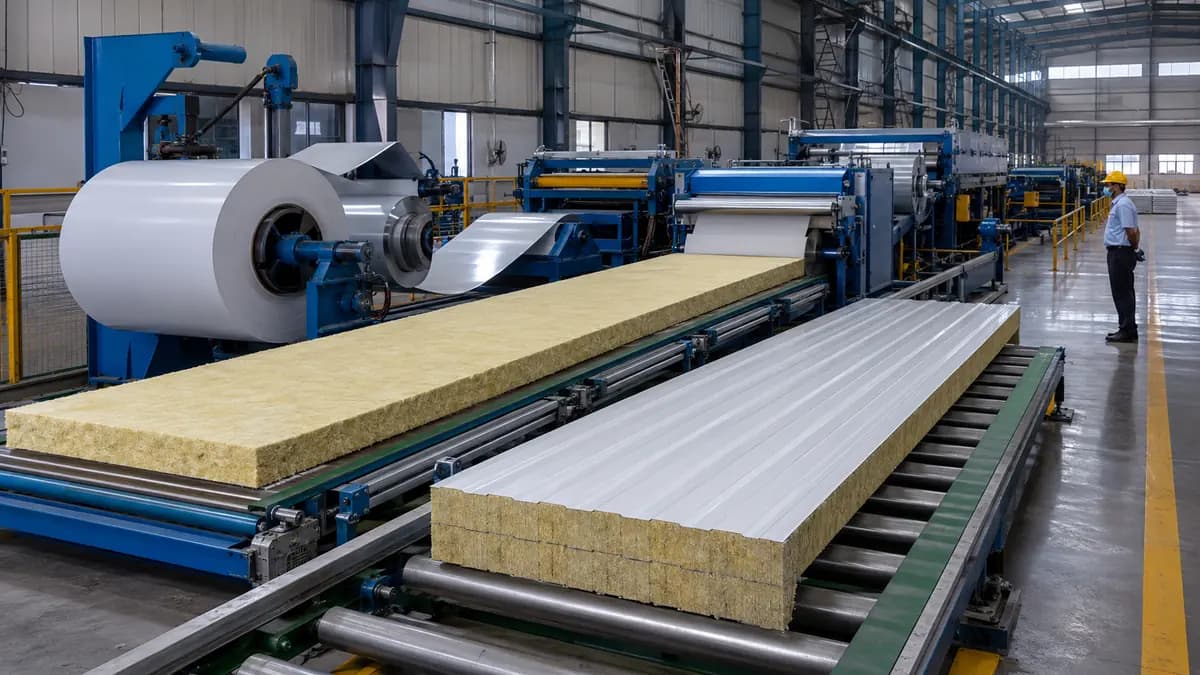
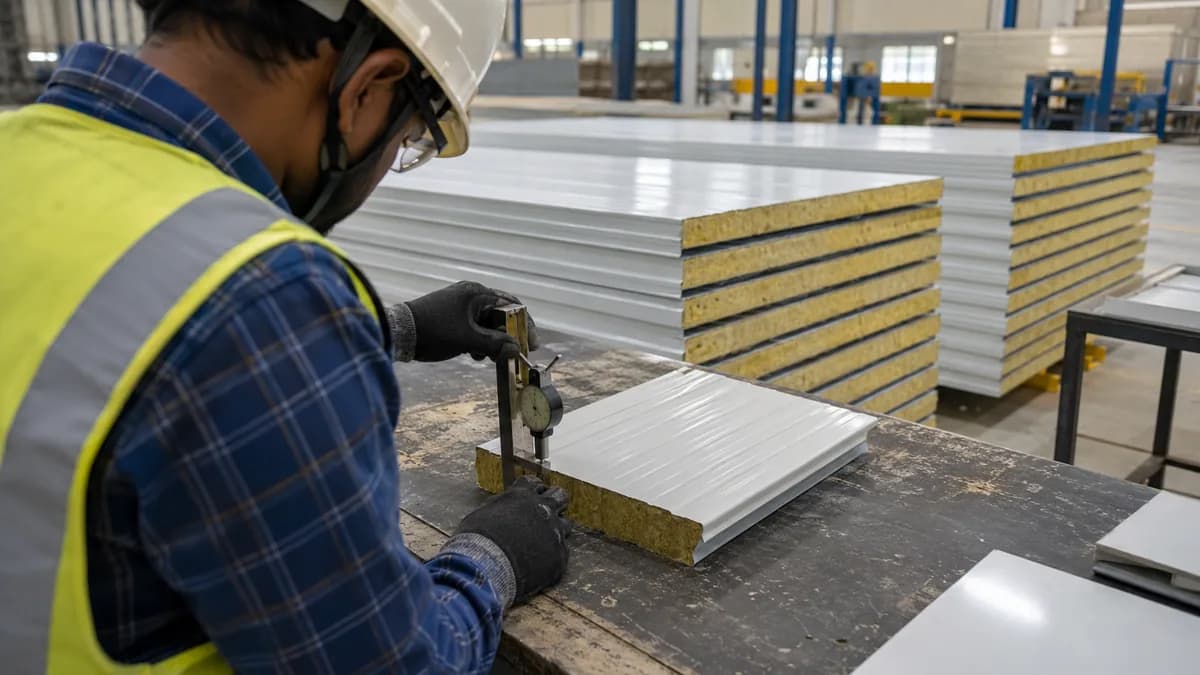
Our lines bond the high-density glass wool core between two facing coils under pressure so the fibre slab and both steel skins behave as one board, not a loose infill inside a tray. Each batch is checked for facing gauge, panel thickness, core density and joint profile, and every panel leaves edge-protected and bundled, because an unsealed fibrous edge is the one weakness this product has. We dispatch from Bangalore for South India and Greater Noida for North India and Delhi NCR.
Price factors: what moves the rate
The published base is ₹1,010/sq mt for the 30 mm base spec, ex-GST. Thickness is the biggest lever; core density, facing steel and coating, panel length and any hidden-fix or gasket detailing move it from there. GST, transport, unloading, installation and accessories are quoted separately. Send thickness, area and site city and we return a fixed quotation, for the thickness-wise rate table, a dedicated price guide follows this page.
Delivery, warranty and quotation
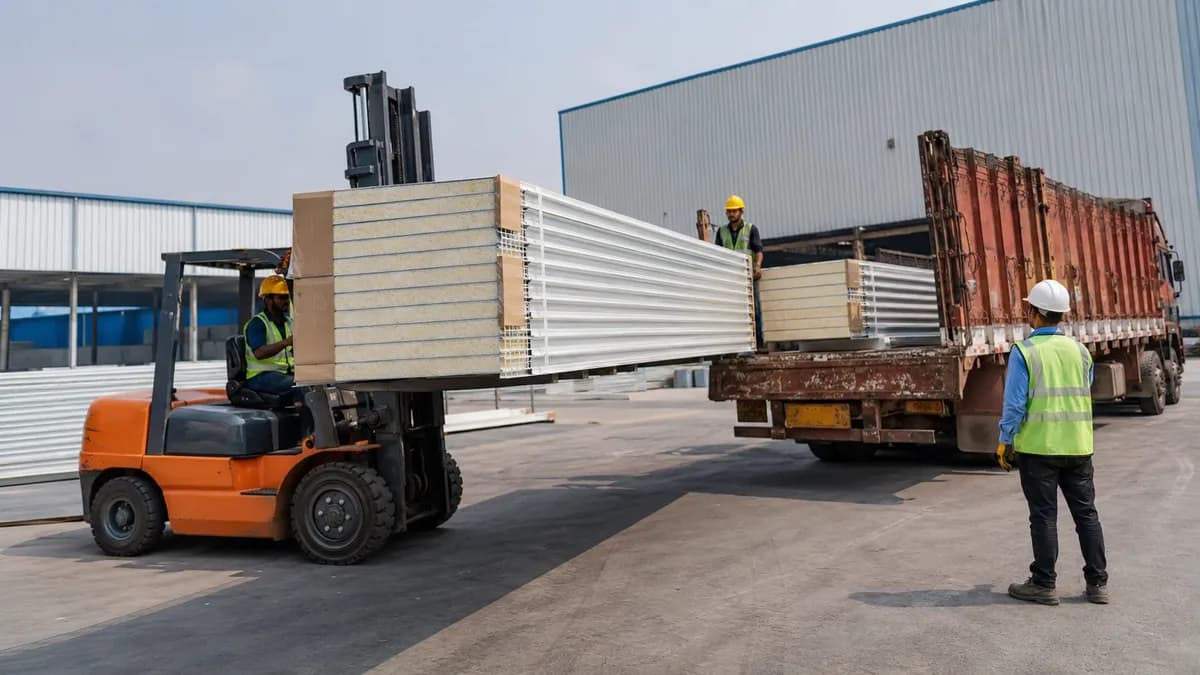
Default dispatch is 3–5 business days on standard products; transport is confirmed at quotation, and a 500 m² minimum billing applies to long-distance dispatch, see our Delivery Policy. Panel warranty is 5–10 years, confirmed at quotation. Standard products carry 7-day returns (3-day on custom), see our Refund & Return Policy. Quotes are supply-only unless stated otherwise.
Why buy from the manufacturer
A trader sells the panel that is in stock; we manufacture to your job: density, thickness, facing, length and joint matched to the noise, heat or fire brief, with factory QC on every batch and two dispatch origins to shorten freight. To see how glass wool sits against all five cores we make, compare every sandwich panel core we manufacture. For cost-led dry partitions where acoustic performance is not the driver, the budget-friendly EPS panel option is the honest alternative.
Get Glass Wool Panel Quotation
Bangalore & South Zone
Delhi NCR & North Zone
Glass Wool Panel Technical Specifications
Glass Wool Core & Performance
Owner-verified
| Core material | High-density glass wool / fibreglass insulation |
| Core density | 48–64 kg/m³ common |
| Design thermal conductivity (λ) | 0.036 W/m·K |
| Fire behaviour | Class A1 / non-combustible core when tested; system certificate required for rated assemblies |
| Acoustic behaviour | Very good to excellent |
| Moisture notes | Fibrous core, seal all edges, laps and penetrations |
| Service temperature | −50°C to +250°C core/service range; panel system by certificate |
| Best applications | Acoustic partitions, generator enclosures, HVAC/plant rooms, fire-conscious wall/roof panels |
| Use caution | Not for wet exposure unless fully sealed |
- Core material
- High-density glass wool / fibreglass insulation
- Core density
- 48–64 kg/m³ common
- Design thermal conductivity (λ)
- 0.036 W/m·K
- Fire behaviour
- Class A1 / non-combustible core when tested; system certificate required for rated assemblies
- Acoustic behaviour
- Very good to excellent
- Moisture notes
- Fibrous core, seal all edges, laps and penetrations
- Service temperature
- −50°C to +250°C core/service range; panel system by certificate
- Best applications
- Acoustic partitions, generator enclosures, HVAC/plant rooms, fire-conscious wall/roof panels
- Use caution
- Not for wet exposure unless fully sealed
Facings, Dimensions and Joints
Owner-verified
| Standard facings | PPGI / PPGL / pre-painted Galvalume or galvanized steel |
| Facing thickness | 0.45–0.60 mm; 0.50/0.50 mm recommended |
| Coating / finish | PPGI/PPGL polyester standard; SMP / PVDF / SS / PVC for coastal, food and pharma environments |
| Effective width | ~950–1170 mm, profile-dependent |
| Panel length | Up to 12 m typical; confirm handling limit |
| Joints | Tongue-and-groove / hidden-fix / through-fix with gasket |
| Thickness: standard | 30 / 40 / 50 / 60 / 70 / 80 / 90 / 100 / 150 mm |
| Thickness: made to order | 110 / 120 / 130 / 140 / 200 mm, advance payment; confirmed at quotation |
| HSN | 940690 |
- Standard facings
- PPGI / PPGL / pre-painted Galvalume or galvanized steel
- Facing thickness
- 0.45–0.60 mm; 0.50/0.50 mm recommended
- Coating / finish
- PPGI/PPGL polyester standard; SMP / PVDF / SS / PVC for coastal, food and pharma environments
- Effective width
- ~950–1170 mm, profile-dependent
- Panel length
- Up to 12 m typical; confirm handling limit
- Joints
- Tongue-and-groove / hidden-fix / through-fix with gasket
- Thickness: standard
- 30 / 40 / 50 / 60 / 70 / 80 / 90 / 100 / 150 mm
- Thickness: made to order
- 110 / 120 / 130 / 140 / 200 mm, advance payment; confirmed at quotation
- HSN
- 940690
Thickness-wise thermal performance (core-only values)
| Thickness | Approx R-value (m²K/W) | Approx weight (kg/m² at 0.45/0.45 steel) | Typical use |
|---|---|---|---|
| 30 mm | 0.83 | 9.0 | Thin acoustic/fire-conscious lining, light roof/wall |
| 40 mm | 1.11 | 9.7 | Light acoustic partitions, ceilings |
| 50 mm | 1.39 | 10.3 | Acoustic partitions, plant rooms, fire-conscious walls |
| 60 mm | 1.67 | 10.9 | Generator enclosures, plant rooms, acoustic walls |
| 70 mm | 1.94 | 11.6 | Intermediate acoustic/fire wall thickness |
| 80 mm | 2.22 | 12.2 | Premium acoustic/fire-conscious roof and wall |
Values are core-only thermal calculations; system performance varies by profile, joint, facing and installation. 90–150 mm standard and MTO values confirmed at quotation.
Request Exact Quotation
Bangalore & South Zone
Delhi NCR & North Zone
Dispatch, Delivery and Returns
Default dispatch is 3–5 business days on standard products; transport is confirmed at quotation, and a 500 m² minimum billing applies to long-distance dispatch, see our Delivery Policy. Panel warranty is 5–10 years, confirmed at quotation.
Standard products carry 7-day returns (3-day on custom), see our Refund & Return Policy. Quotes are supply-only unless stated otherwise.
Customer Reviews
0 reviews
No reviews yet. Be the first to review this product.
Write a Review for Glass Wool Panel
Frequently Asked Questions
What is a glass wool panel?
A glass wool panel is a three-layer insulated panel: two coated steel facing sheets bonded to a high-density glass wool core (48–64 kg/m³). The steel gives strength and finish; the fibrous core gives thermal insulation and sound absorption, so one board forms a finished, insulated, acoustic wall or roof.
Is a glass wool panel good for soundproofing?
Yes, acoustic control is its specialty. The fibrous glass wool core absorbs sound energy in a way foam cores cannot, rating very good to excellent. It is the standard choice for acoustic partitions, generator enclosures, plant rooms and studios where noise must stay inside the room.
Is a glass wool panel fireproof?
The glass wool core is non-combustible glass mineral (Class A1 core behaviour when tested as a system), it does not burn. But a "fire-rated wall" needs a certified panel assembly, which is Rockwool panel territory. We state it honestly: glass wool is fire-conscious; certified fire resistance is confirmed per system at quotation.
Glass wool panel vs Rockwool panel, which should I choose?
Choose Rockwool when a tender demands a certified fire-resistance class or maximum density. Choose glass wool when the problem is noise, heat and budget. It is lighter, easier to handle, acoustically excellent, and starts at ₹1,010/sq mt against Rockwool’s ₹1,290.
What is the difference between a glass wool panel and glass wool insulation?
Glass wool insulation is loose material, rolls and blankets that still need framing and cladding. A glass wool panel is the finished product: the same wool pressed to high density and factory-bonded between steel facings, arriving as a self-supporting board that installs in one step.
What sizes do glass wool panels come in?
Standard thickness runs 30 to 150 mm, with 110–200 mm made to order on advance payment. Width is roughly 950–1170 mm depending on profile, and lengths run up to 12 m subject to transport. Facings are PPGI, PPGL or pre-painted Galvalume at 0.45–0.60 mm.
Do you manufacture glass wool panels in India?
Yes. SAMAN manufactures glass wool panels at two factories, Bangalore serving South India and Greater Noida serving North India and Delhi NCR, with pan-India dispatch, so the density, thickness, facing and length are made to your job rather than picked from stock.
Get Glass Wool Panel Quotation
Bangalore & South Zone
Delhi NCR & North Zone
ISO 9001:2015
E20250218645
ISO 14001:2015
E20250218646
ISO 45001:2018
E20250218647
NSIC Government Purchase Enlistment
NSIC/GP/BAN/2024/0055207
Startup India Recognition
DIPP56005
Udyam Registration
UDYAM-KR-03-0172770