
Related Products
Explore similar items
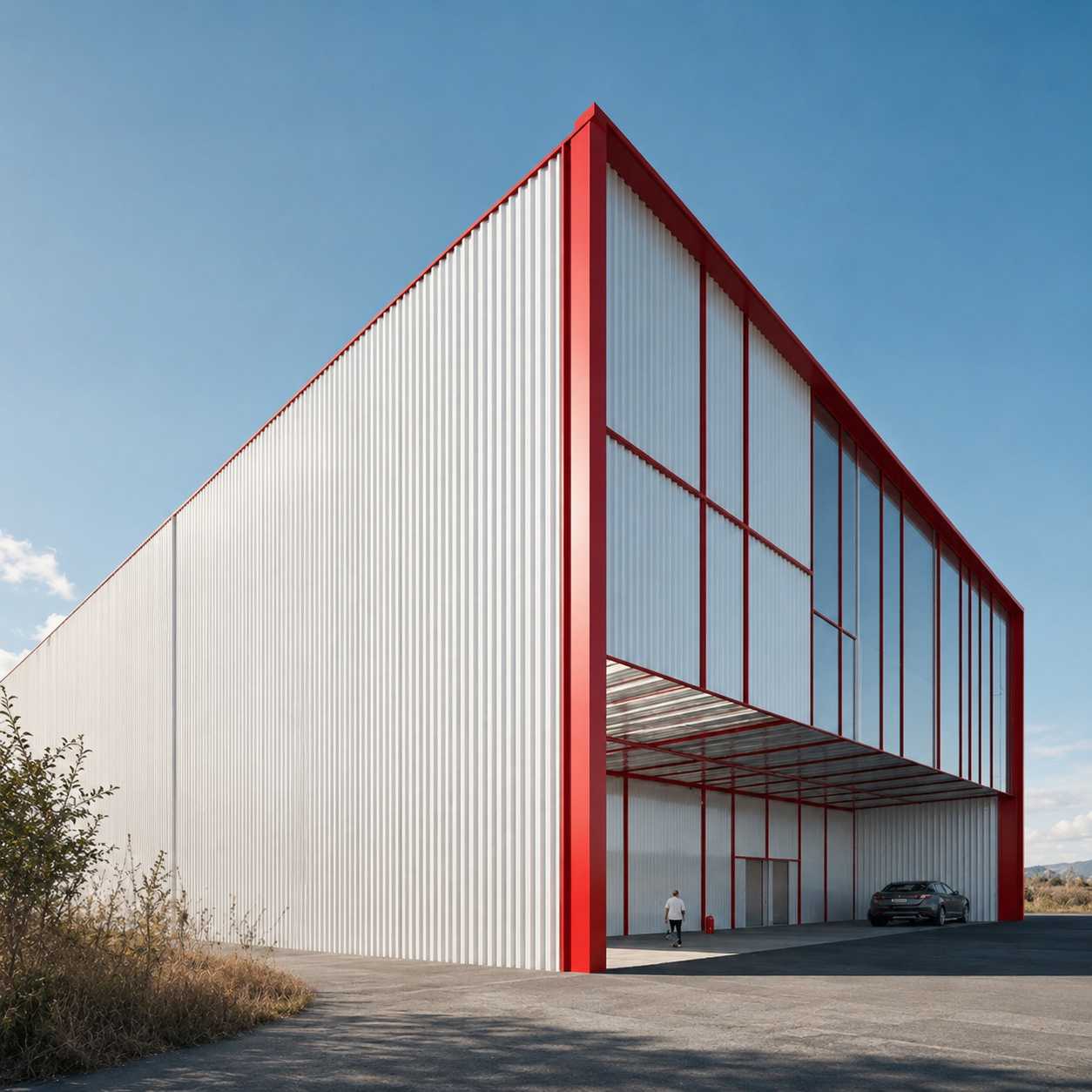
Peb Steel Structure
Inclusive of all taxes
Product Information
Product Details
Comprehensive information about Peb Steel Structure
Product Overview
Detailed information about Peb Steel Structure
What a PEB Steel Structure Is
A PEB steel structure is the pre-engineered steel skeleton of an industrial building — built-up I-section columns and rafters forming the primary frame, with cold-formed Z and C purlins as the secondary members. Fabricated to IS 2062 in a controlled factory and bolted together on site, it spans far wider than reinforced concrete at a fraction of the weight, which is why factories, warehouses, and logistics sheds across India are built this way.
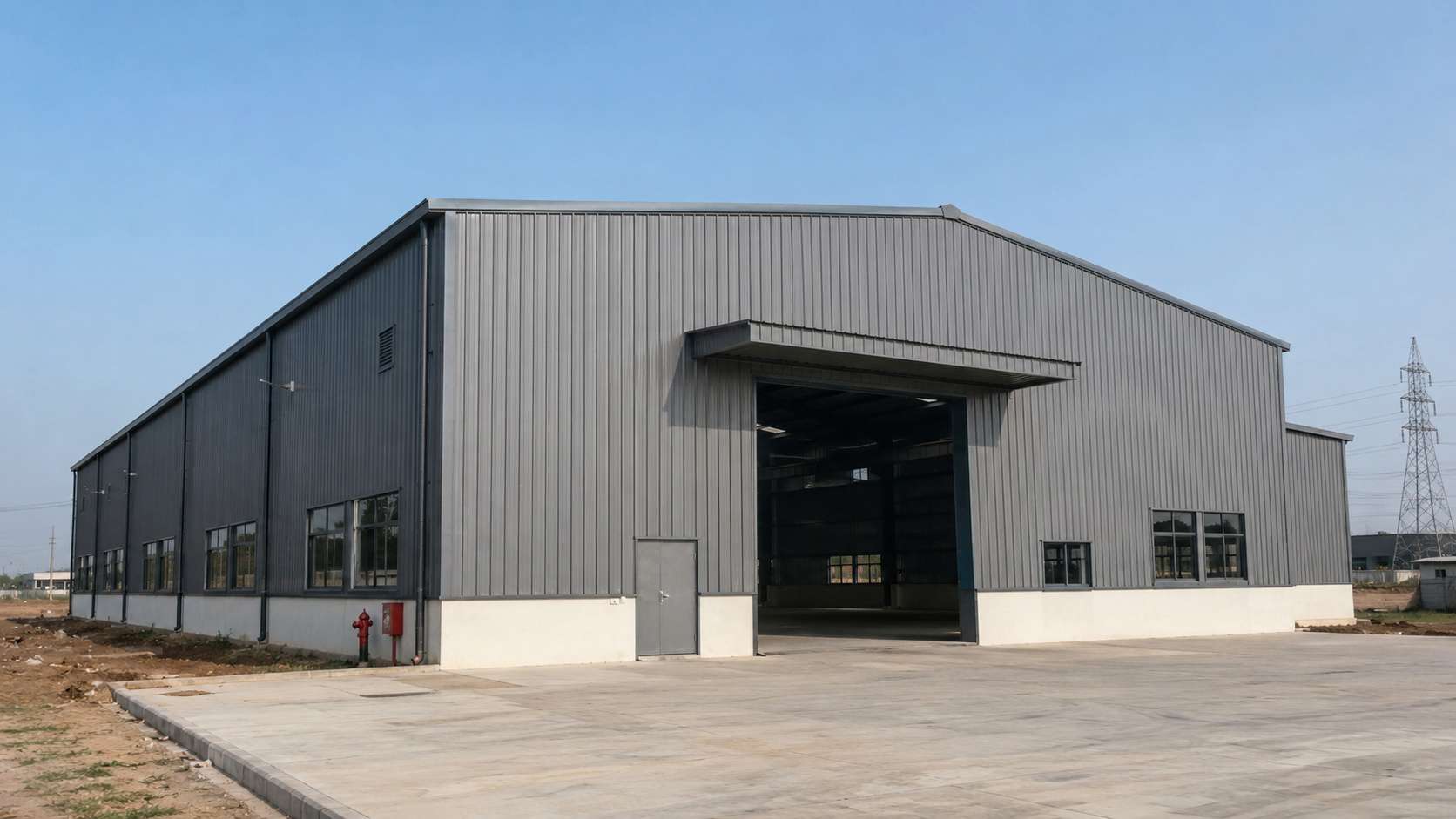
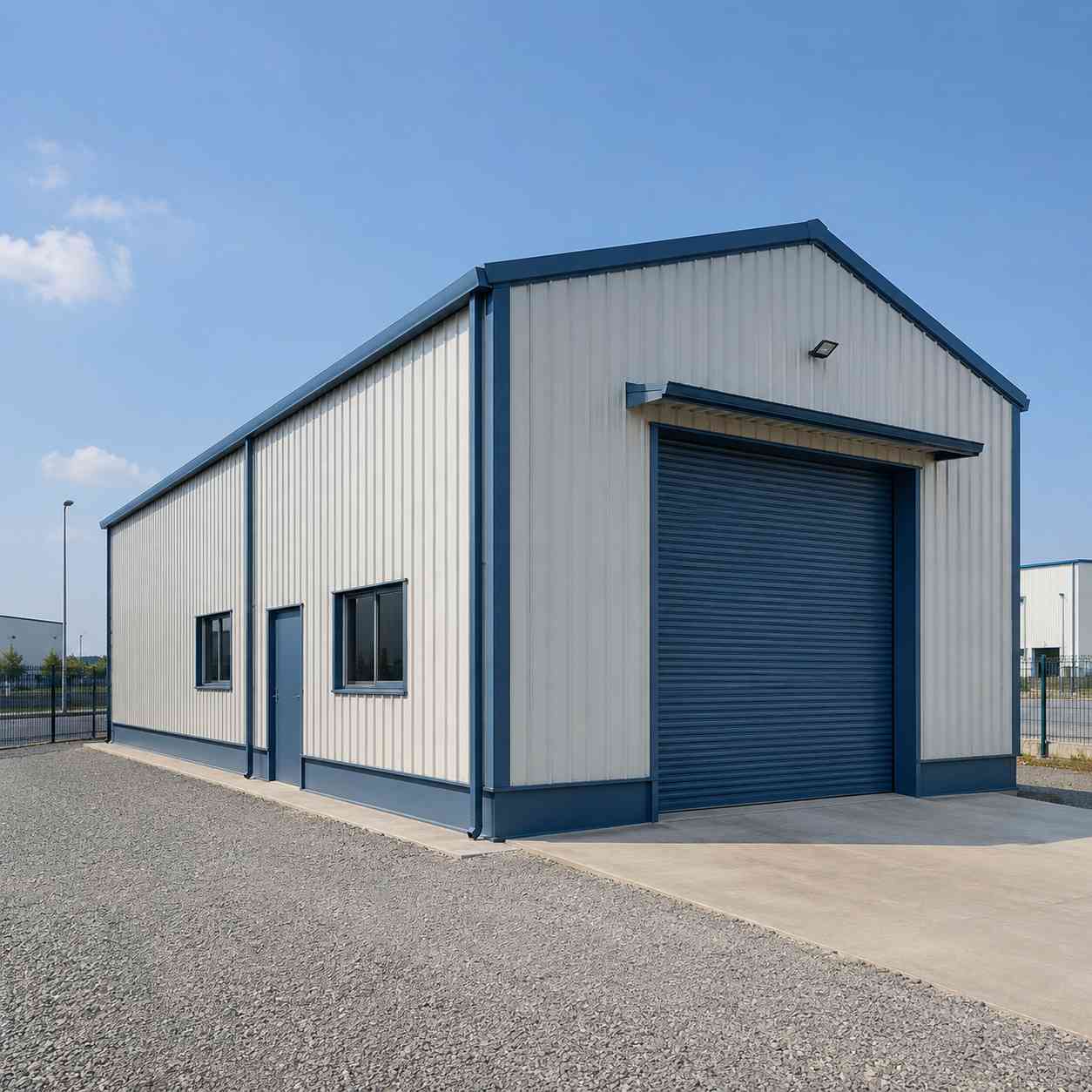
A finished PEB steel structure on an industrial estate — factory-fabricated frame, erected on a concrete apron.
What SAMAN delivers is not loose steel. We design the frame to your loads, fabricate every member in our own facility, and erect the completed structure on your site — so the grade in the drawing is the grade that gets bolted up.
The Steel Inside: Grades, Sections, and Why They're Chosen
The strength of a steel PEB structure comes down to two decisions: what grade of steel goes into it, and which section type carries which load. Both follow Bureau of Indian Standards practice.
Primary members — the columns and rafters that carry the building — are built-up I-sections welded from steel plate conforming to IS 2062, usually grade E250 or E350 (the number is the minimum yield strength in MPa). E250 is sufficient for lighter spans such as a standard warehouse; E350 is specified where loads are heavier, as in a production plant or a high-wind, high-seismic site. Secondary members — the purlins and girts that the roof and wall cladding fasten to — are cold-formed Z and C sections, lighter steel shaped to span between frames without adding dead weight.
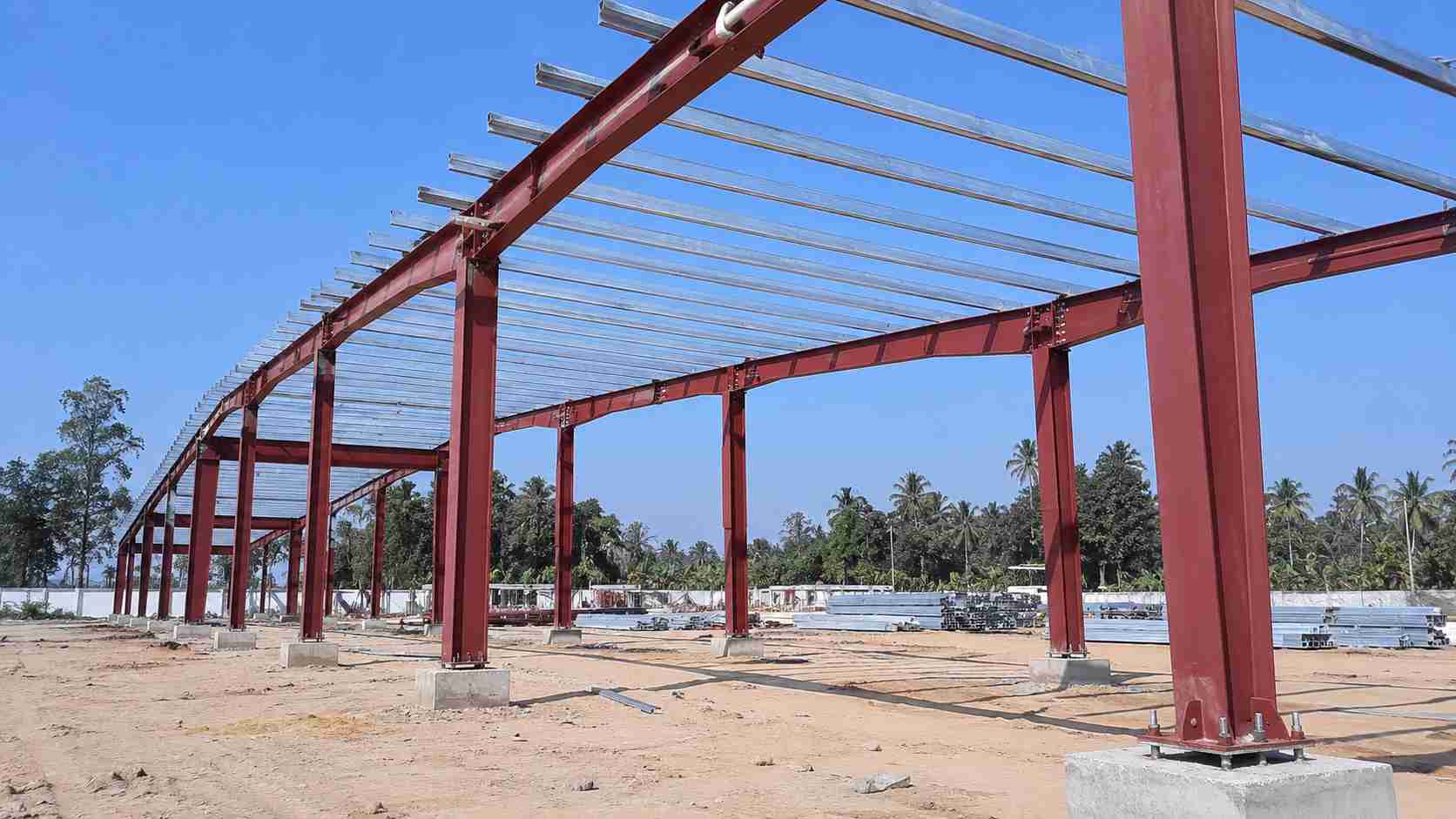
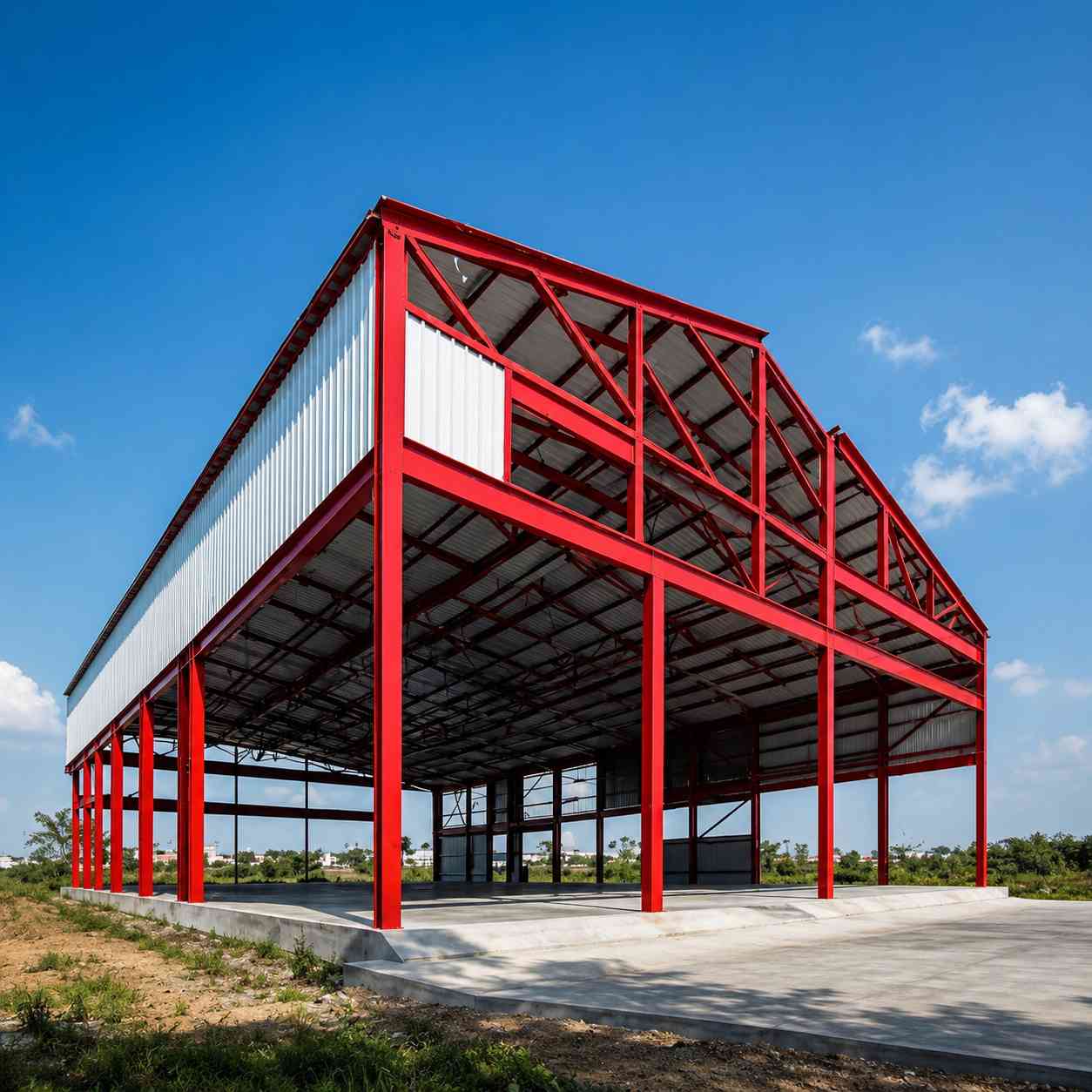
Built-up I-section primary frames in red-oxide primer with Z-purlin secondaries — the IS-2062 steel skeleton before cladding.
| Member group | Section & grade | Structural role |
|---|---|---|
| Primary frame (columns, rafters) | Built-up welded I-section, IS 2062 E250 / E350 | Carries the full building load to foundation |
| Secondary frame (purlins, girts) | Cold-formed Z & C, galvanised steel | Spans between frames; holds roof and wall cladding |
| Connections | HSFG bolts + shop welds | Joins members; transfers load at every node |
How those members join matters as much as the steel itself. The primary connections — rafter to column, column to base plate — are made with high-strength friction-grip (HSFG) bolts, while the heavy plate-to-plate joints inside a built-up section are shop-welded under controlled conditions before the member ever leaves the factory. Welding in the factory rather than on site is what holds tolerances tight: members arrive pre-drilled and match-marked, so the on-site work is bolting to a plan, not cutting and adjusting in the field. That is also why erection is fast — a structure of this size bolts up in days, not weeks.
Getting this allocation right is what keeps a PEB steel frame building light and economical without giving up load capacity — over-specifying grade everywhere inflates cost, while under-specifying a primary member is a structural risk.
Coatings and Corrosion Protection: How Long the Steel Lasts
Steel only lasts as long as its protection against moisture. Every primary member we fabricate is shot-blasted and given a shop primer coat, with an epoxy or PU top coat available for coastal and chemically aggressive sites. The roof and wall cladding is galvalume or colour-coated profiled sheet, conforming to IS 277 for galvanised sheet and IS 14246 for pre-painted galvanised sheet, in the 0.47–0.55 mm thickness range that balances weight against durability.
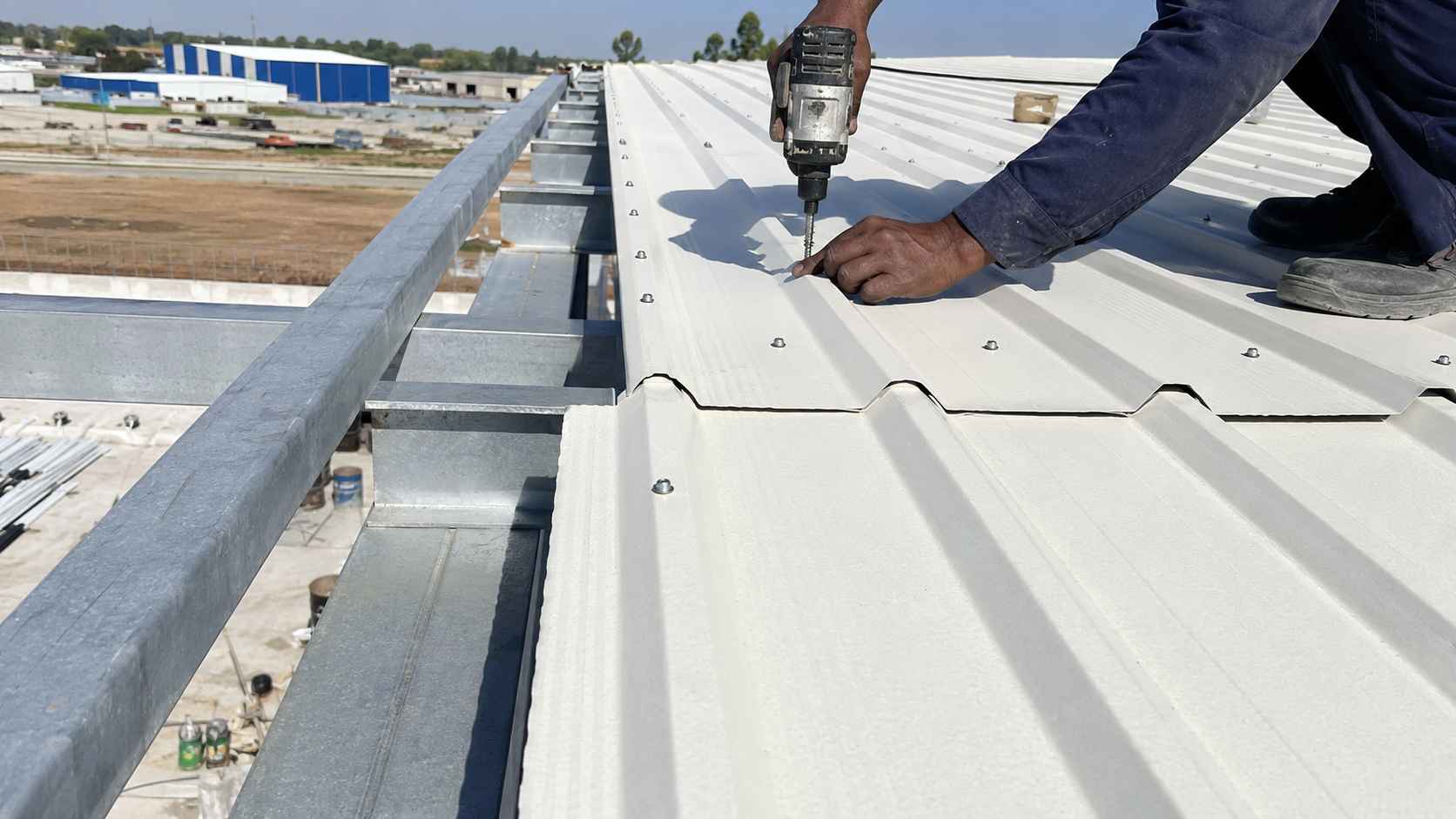
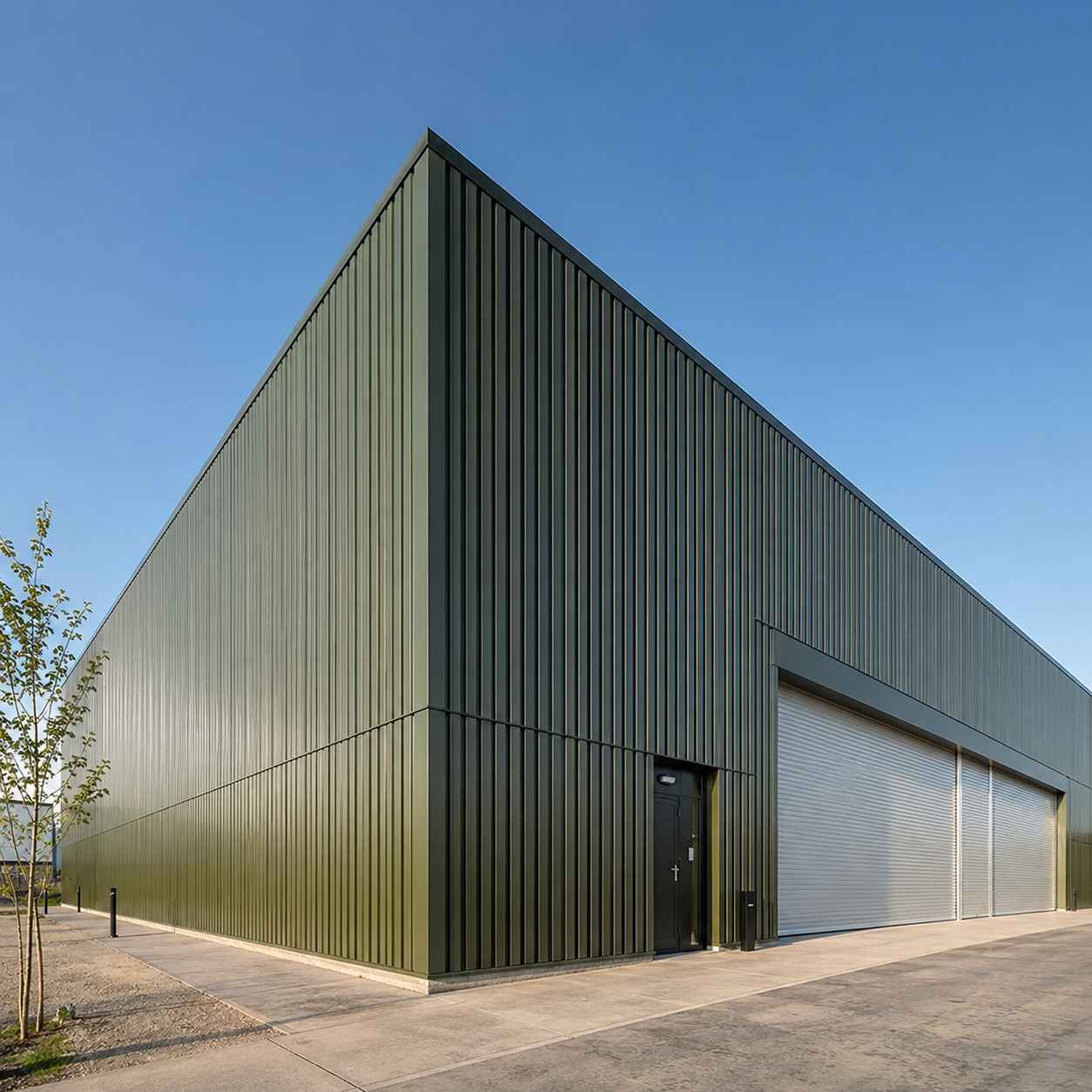
Galvalume colour-coated sheeting fixed to purlins — the coated cladding that protects the steel for 25-plus years.
The coating decision is driven by where the building stands. An inland, dry-climate site — most of interior South India, the Deccan, the northern plains — is well served by a standard red-oxide primer with a single top coat. A coastal or high-humidity site within roughly 20 km of the sea, or a plant handling salts, fertilisers, or chemicals, needs a heavier system: hot-dip galvanising or a zinc-rich epoxy primer under a PU top coat, because chloride-laden air attacks ordinary primer far faster. Specifying the coastal system inland wastes money; specifying the inland system on the coast shortens the life of the steel. Tell us the site and we specify the system to match it.
Specified and coated correctly, the steel carries a 25-year-plus design life with minimal maintenance — comparable to the structure of any permanent building, and well ahead of what an uncoated or thinly-coated shed will hold up to. For buyers who need a simpler, smaller single-span enclosure rather than a full engineered frame, a basic single-span industrial shed is the lower-spec alternative.
What a 120 × 30 × 20 ft PEB Steel Structure Costs
A SAMAN PEB steel structure measuring 120 × 30 × 20 ft — a 3,600 sq ft clear-span building, designed, fabricated, and erected — is priced at Rs 47,25,000, which works out to roughly Rs 1,312 per sq ft. That figure covers structural design to IS code, factory fabrication of all primary and secondary members, IS-certified PEB steel with documentation, transport, and erection by our own crew. It is not a steel-supply rate; it is the cost of a finished, standing structure.
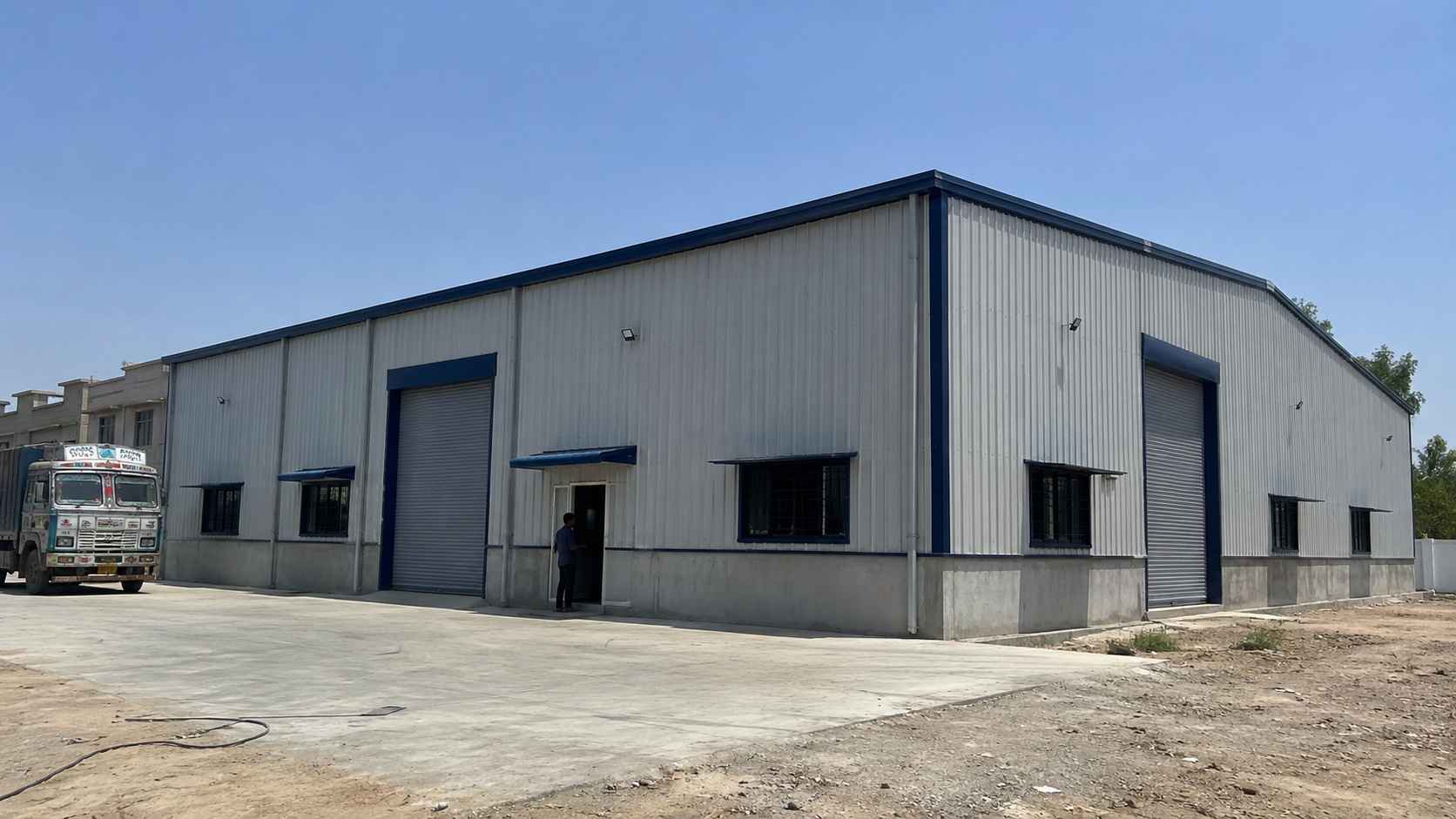
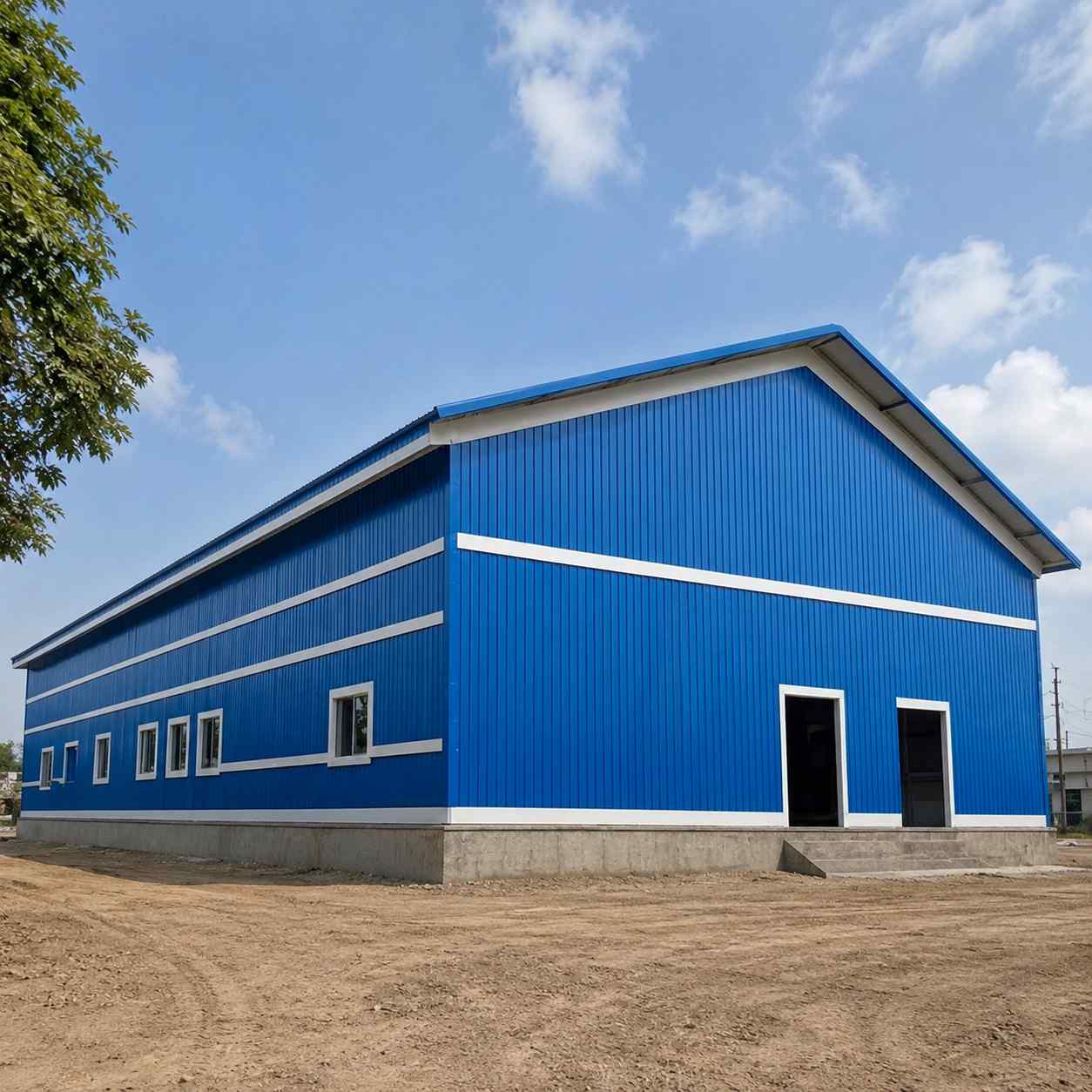
The 120×30×20 ft PEB steel structure complete — truck and worker show the 3,600 sq ft clear-span scale.
Two things move the number on a custom span: the steel grade your loads demand, and the clear span itself. Grade is straightforward — an E350 heavy-duty frame costs more than an E250 light frame for the same footprint. Span is less obvious but matters more: a wider clear span means the primary rafter has to carry load across a longer unsupported distance, so its built-up section gets deeper and heavier. Widening a building from a 30 ft span to a 50 ft span does not just add 20 ft of width — it steps up the section depth of every primary frame across the whole length, which is why a wider building costs more per square foot, not less. Knowing your true required clear span before you quote is the single biggest lever on the steel cost. For the full per-sq-ft range across building sizes and use cases, see our turnkey PEB construction service at the hub.
Verifying the Steel, and Who Builds It
The one document that protects a PEB buyer is the Material Test Certificate. An MTC traces each batch of steel back to the mill and confirms its grade and chemistry against IS 2062 — ask for it on every order, and keep it with your IS-compliance file for building approval. Every SAMAN structure ships with its MTC and IS-code structural documentation as standard.
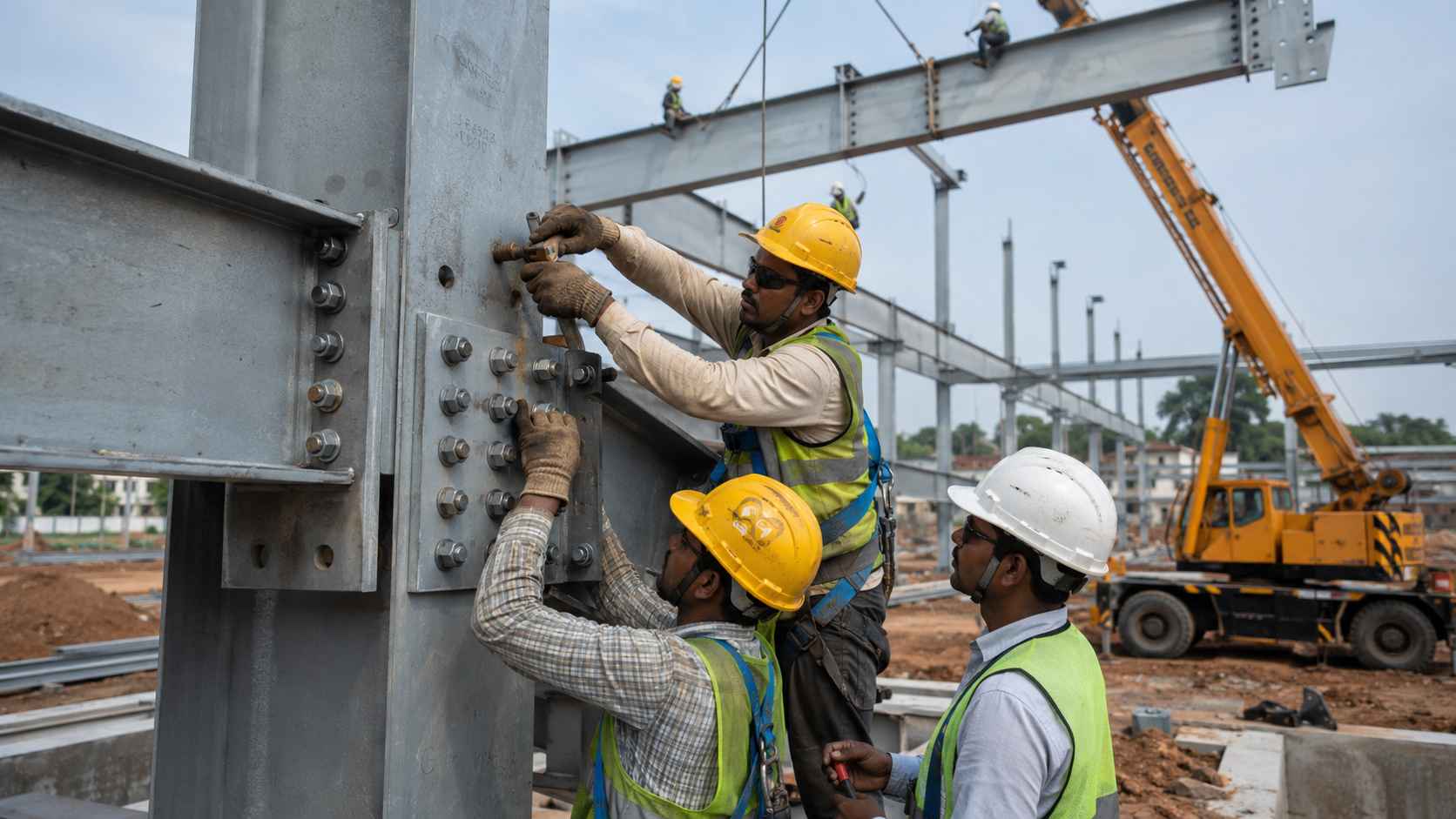
SAMAN's own crew bolting the primary frame — single-contract design, fabrication and erection.
SAMAN designs, fabricates, and erects the complete structure — one accountable entity from drawing to handover. If instead you have your own erection contractor and only need the steel pre-engineered and supplied to your specification, that is sourced as a product rather than a service; our pre-engineered buildings range is built for exactly that. Choose the erected structure here when you want a single point of accountability through to a standing building.
Frequently Asked Questions
What grade of steel is used in PEB?
Primary members are built-up I-sections fabricated from IS 2062 plate, grade E250 or E350 (some specifications use ASTM A572-50 / Grade 345 equivalents). E250 suits lighter warehouse-type spans; E350 is used for heavy-duty industrial loads. Secondary Z and C purlins are cold-formed from galvanised steel. Every grade is confirmed by Material Test Certificate.
What is the difference between PEB and RCC?
A PEB is a factory-fabricated steel frame bolted together on site; RCC is reinforced concrete cast in place. PEB is far faster to build, spans much wider without internal columns, weighs a fraction as much (lighter foundations), and can be dismantled and relocated. RCC suits multi-storey load-bearing work; for large single-storey clear-span industrial buildings, steel is usually faster and lighter.
How much does a PEB steel structure cost?
A 120 × 30 × 20 ft SAMAN structure (3,600 sq ft) is Rs 47,25,000 — about Rs 1,312 per sq ft — including design, fabrication, IS-certified steel, transport, and site erection. Steel grade and clear span are the main cost drivers on a custom size.
Do you supply the steel only, or build the whole structure?
We design, fabricate, and erect the complete structure as a service — one contract through to a standing building. If you need only the steel supplied to your own erection team, see our pre-engineered buildings range, which is set up for product supply.
Get a Structural Quote
Tell us your required clear span, length, eaves height, intended use, and site location. We will respond with a preliminary structural brief and an itemised cost estimate within 24 hours.
Bangalore — Call +91 80886 85440 · WhatsApp +91 88616 22859
Delhi NCR — Call +91 87960 39938 · WhatsApp +91 97089 89937
Customer Reviews
0 reviews
No reviews yet. Be the first to review this product.
Write a Review for Peb Steel Structure


Need Custom Requirements?
Get in touch with our experts for customized solutions and bulk orders. We're here to help you find the perfect solution.