
Bangalore & South Zone
Delhi NCR & North Zone
Prefabricated Construction
Inclusive of all taxes
Product Information
Explore the Range
Related products
Enter a length and width between 4 and 60 ft. For larger buildings, request a quotation and we will size it with you.
Please add your name and mobile number so our sales team can send your fixed quotation.
Enter a 10-digit Indian mobile number.
Please add your email so we can send your quotation PDF.
Design saved on this device.
Your saved design has been restored. Start over to begin fresh.
Link copied. Anyone who opens it sees this exact configuration.
Configuration received. We aim to send your fixed-price quotation within 48 business hours after receiving complete dimensions, specifications, delivery PIN code and scope. Complex engineered configurations may require additional time, which we will confirm.
We could not submit right now. Please try again, or WhatsApp us at +91 88616 22859 and we will take it from there.
Your saved design has been restored. Start over to begin fresh.
Customized cabin
Porta Cabin
20×10 ft · 200 sq ft
Estimated total
₹2,50,000₹2,95,000 incl. GSTThis is a general cabin estimate. It does not price the product on this page.
Published cabin price tables
All primary prices are ex-GST. Including-GST figures apply 18 percent GST.
Porta Cabin price table
| Size | Area | Price ex-GST | Including 18% GST |
|---|---|---|---|
| 10x10 ft | 100 sq ft | ₹1,43,750 | ₹1,69,625 |
| 20x8 ft | 160 sq ft | ₹2,20,000 | ₹2,59,600 |
| 20x10 ft | 200 sq ft | ₹2,50,000 | ₹2,95,000 |
| 20x12 ft | 240 sq ft | ₹2,88,000 | ₹3,39,840 |
| 30x10 ft | 300 sq ft | ₹3,60,000 | ₹4,24,800 |
| 40x10 ft | 400 sq ft | ₹4,75,000 | ₹5,60,500 |
Product Details
Comprehensive information about Prefabricated Construction
Product Overview
Detailed information about Prefabricated Construction
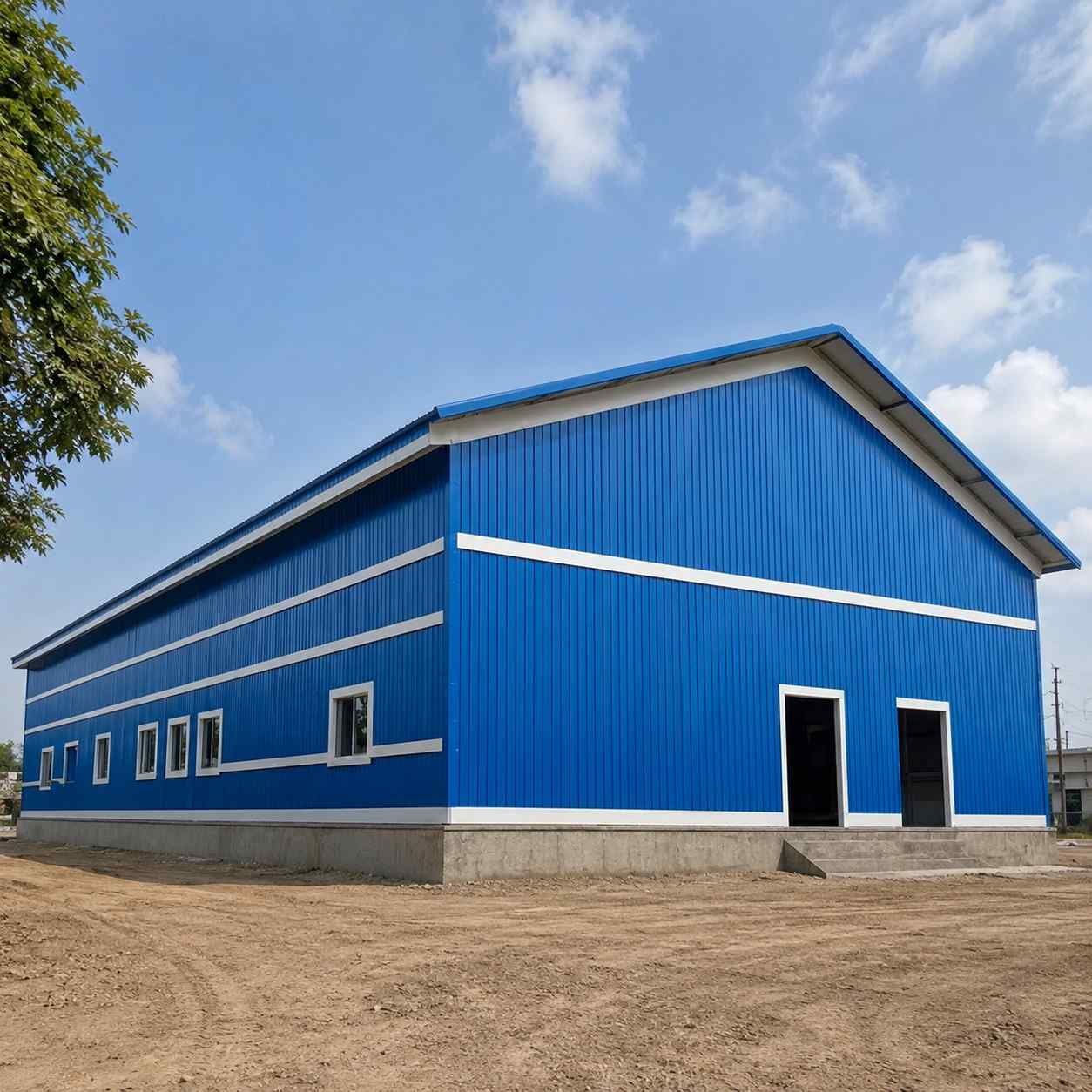
Prefabricated construction is a building method in which the structural components, frames, wall and roof panels, and sometimes whole modules, are manufactured in a factory and then transported to your site for assembly, and at SAMAN we design, build, and hand over commercial and industrial buildings this way from our facilities in Bangalore and Greater Noida. It replaces most of the wet, weather-exposed work of a conventional build with controlled factory production and a short on-site assembly phase.
Prefabricated construction on an industrial plot, factory-made components assembled into a finished building.
What prefabricated construction means
Prefabricated construction means a building's parts are made off-site in a factory under controlled conditions, then delivered and bolted together on a prepared foundation. Instead of casting and laying everything on site, the structure arrives as finished components, steel frames, panels, or complete modules, and is assembled in days rather than months.
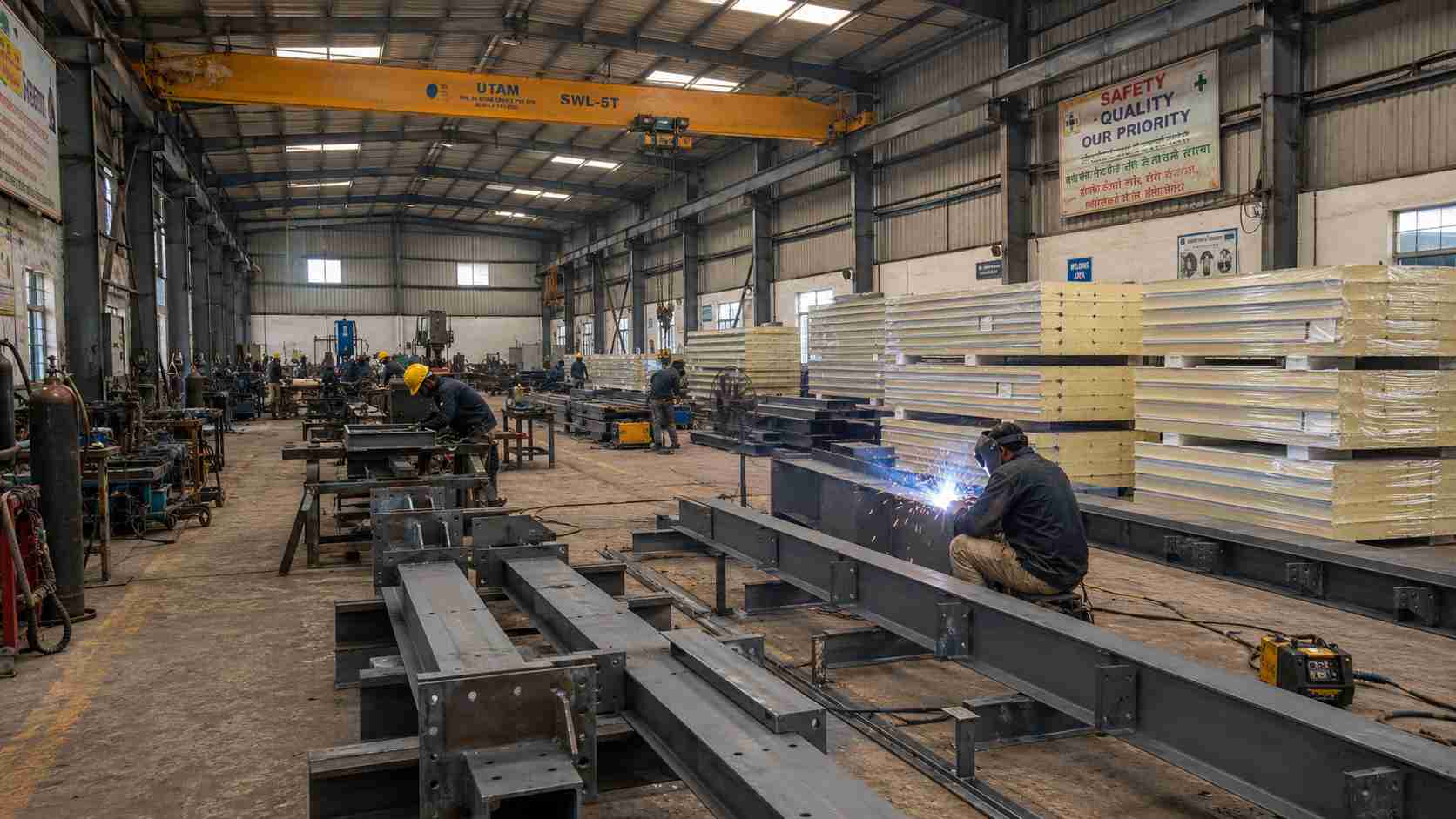
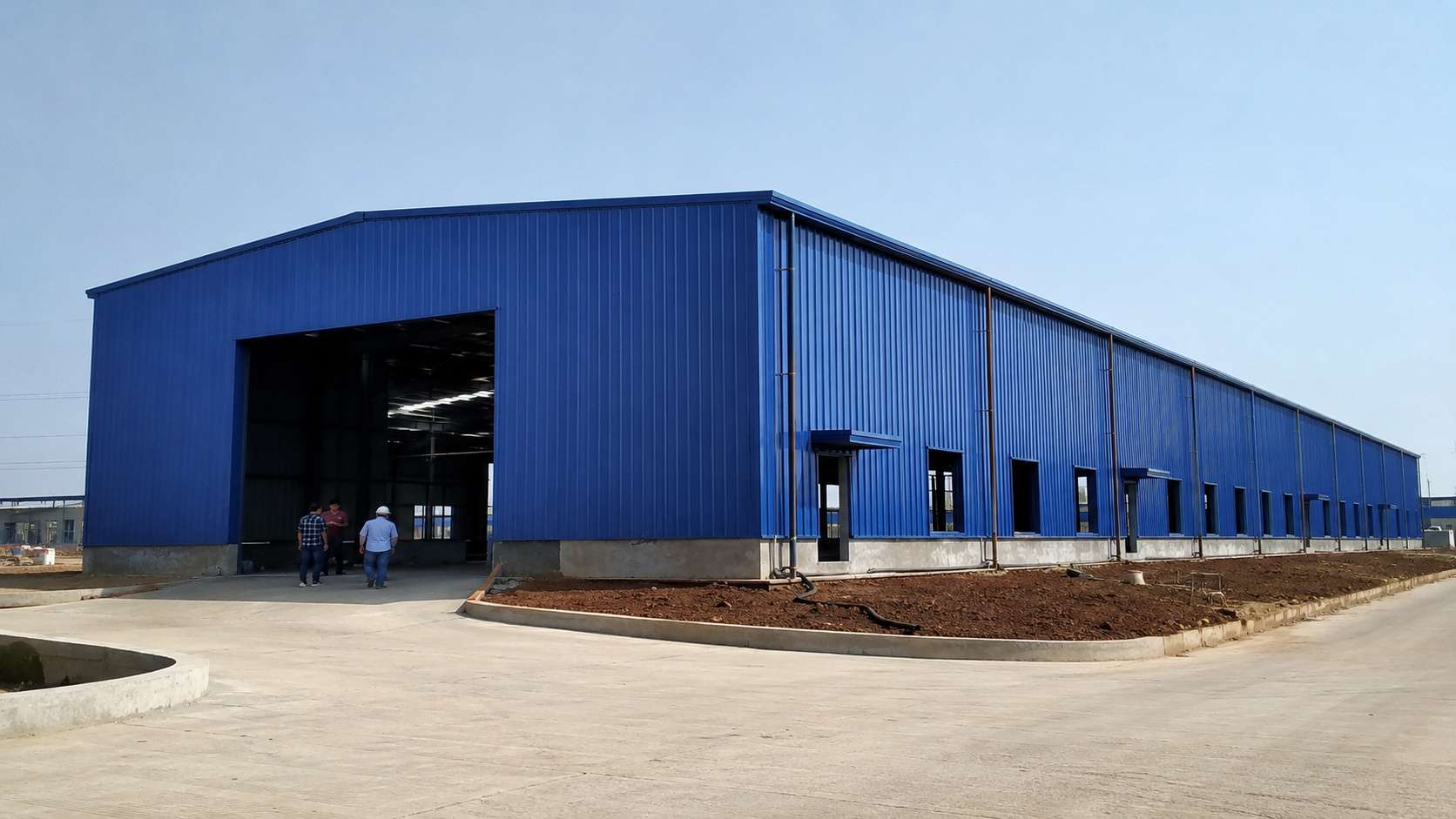
Off-site fabrication, steel sections and panels made in the factory before reaching site.
The factory-made components vary by technique: a steel frame clad in insulated panels, precast concrete elements, panelised wall systems, or volumetric modules built as whole rooms. What unites them is the same principle, factory-controlled production first, on-site assembly second. Because fabrication and your civil foundation can run at the same time, the two timelines overlap instead of stacking, which is where prefabricated construction earns most of its time saving over conventional RCC.
Where prefabricated construction fits: and where it doesn't
Prefab construction suits buildings where speed, repeatable quality, and a predictable result matter: factories and workshops, warehouses and storage, site offices, commercial blocks, and staff facilities. Factory-made construction also holds its quality better than site work exposed to monsoon and dust, and a bolted steel structure can later be dismantled and re-erected if your operation moves.
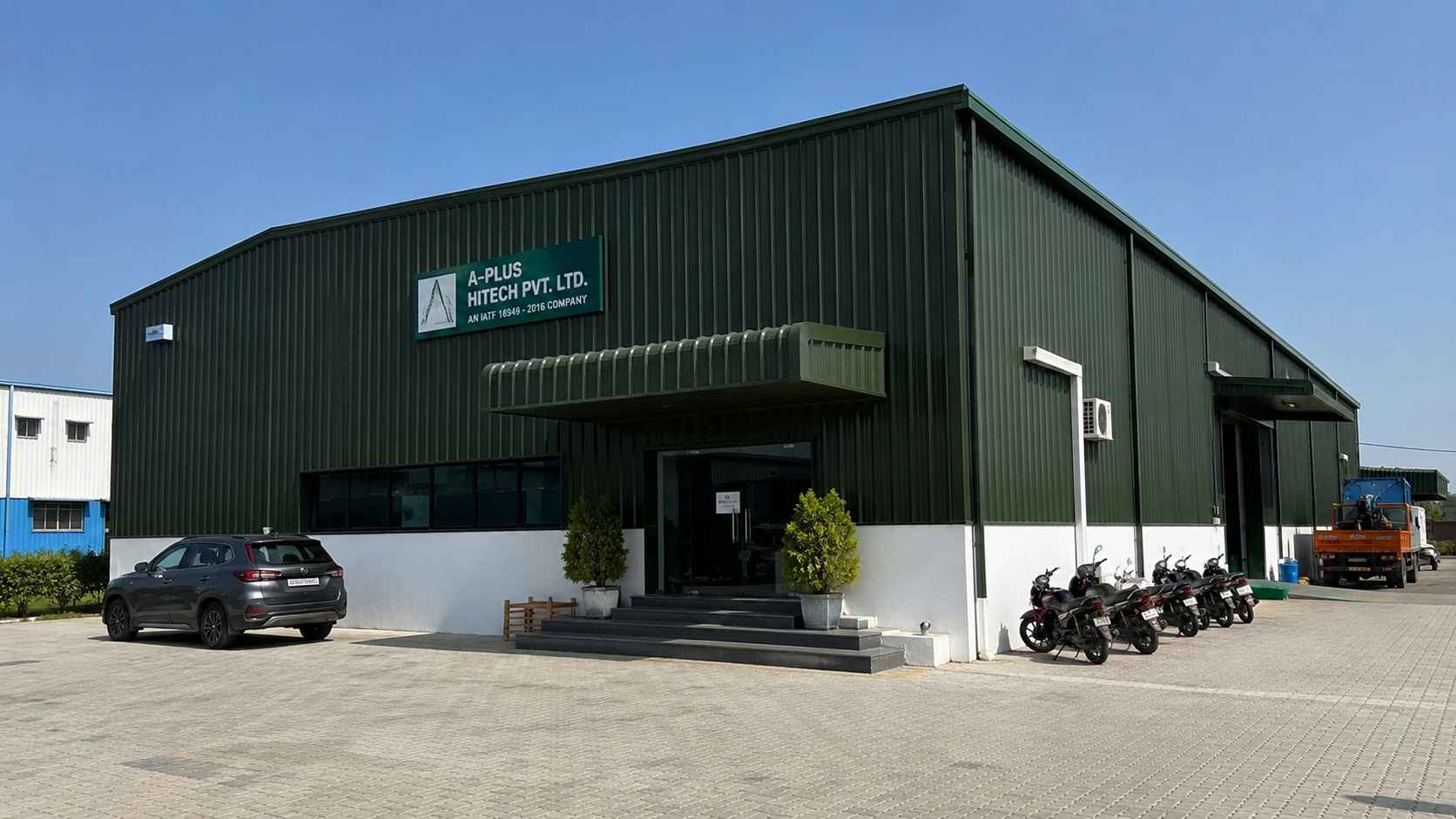
Where prefab fits. A finished factory-built unit working on an industrial estate.
It is not the right answer for every job. The disadvantages of prefabricated construction are real and worth stating plainly: components are sized to travel by road, so very wide unbroken spans need engineering around transport limits; the design is best locked early, because late structural changes are harder once fabrication has begun; and a level foundation poured to drawing has to be ready before assembly. For a one-off building with constant design changes, conventional construction can be simpler. For a defined commercial or industrial structure you want up and working quickly, prefab is usually the stronger choice.
How SAMAN delivers prefabricated construction: and what the 3,600 sq ft unit includes
As a prefab construction service, SAMAN handles the full path: structural design, factory fabrication, transport, on-site erection by our own crew, and handover, you are not left to assemble panels yourself. The configuration shown on this page is a 120 × 30 × 20 ft building, 3,600 sq ft of floor area at a 20 ft height, on a structural steel frame clad in PUF sandwich panels, built and handed over for ₹53,45,000 to ₹53,55,000, inclusive of all taxes.
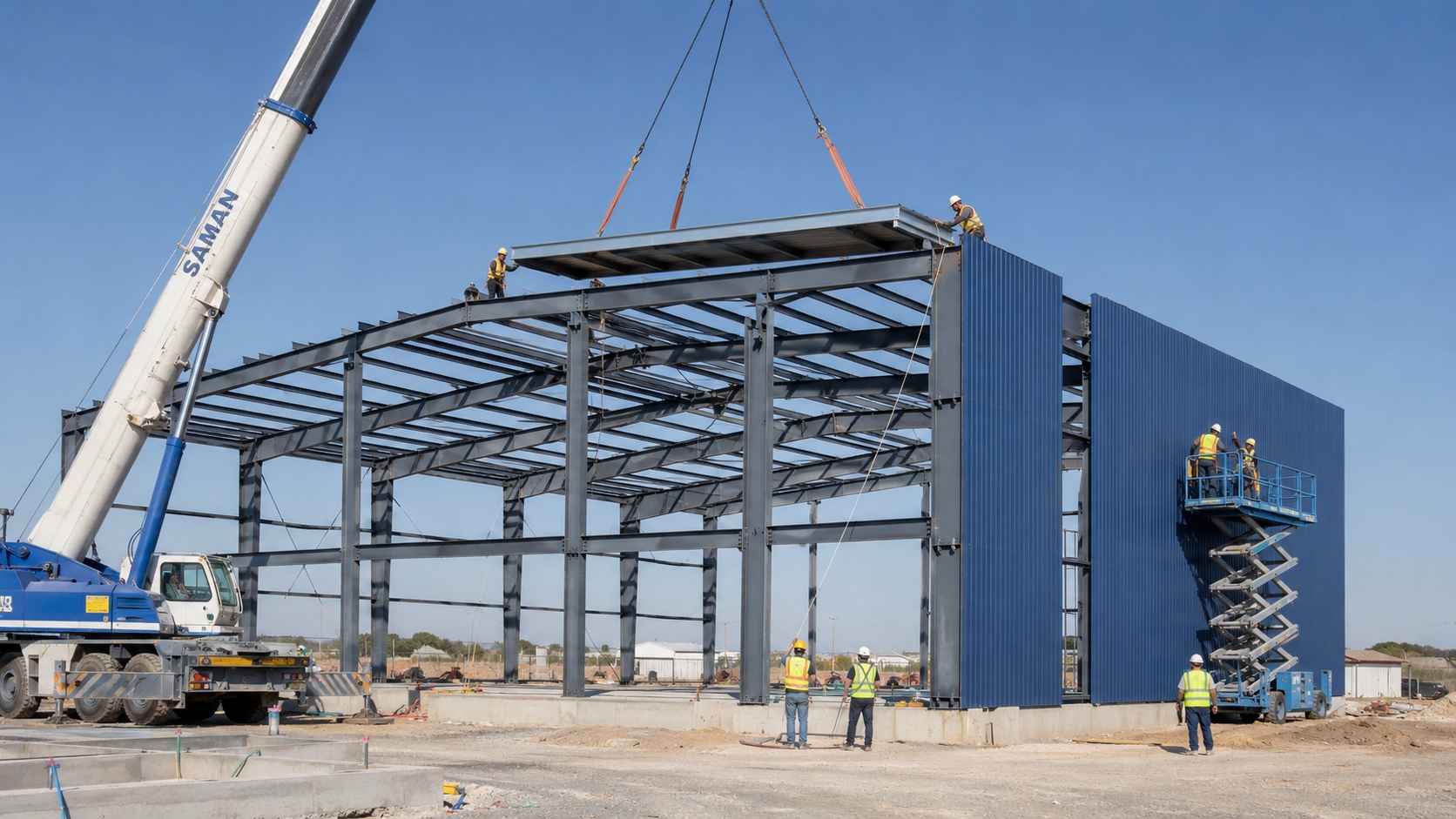
SAMAN's crew erecting the steel frame and panels of a 3,600 sq ft prefabricated building.
That scope covers the steel frame, wall and roof panels, doors and windows as configured, transport, and site assembly. You arrange a level plinth poured to the layout drawing we issue, and utility connections after structural handover. Other sizes follow the same method and are quoted per square foot. For the complete single-contract service on larger factory and warehouse projects, including IS-code structural documentation, see SAMAN's turnkey PEB construction service.
Prefabricated construction vs constructing a specific prefab building
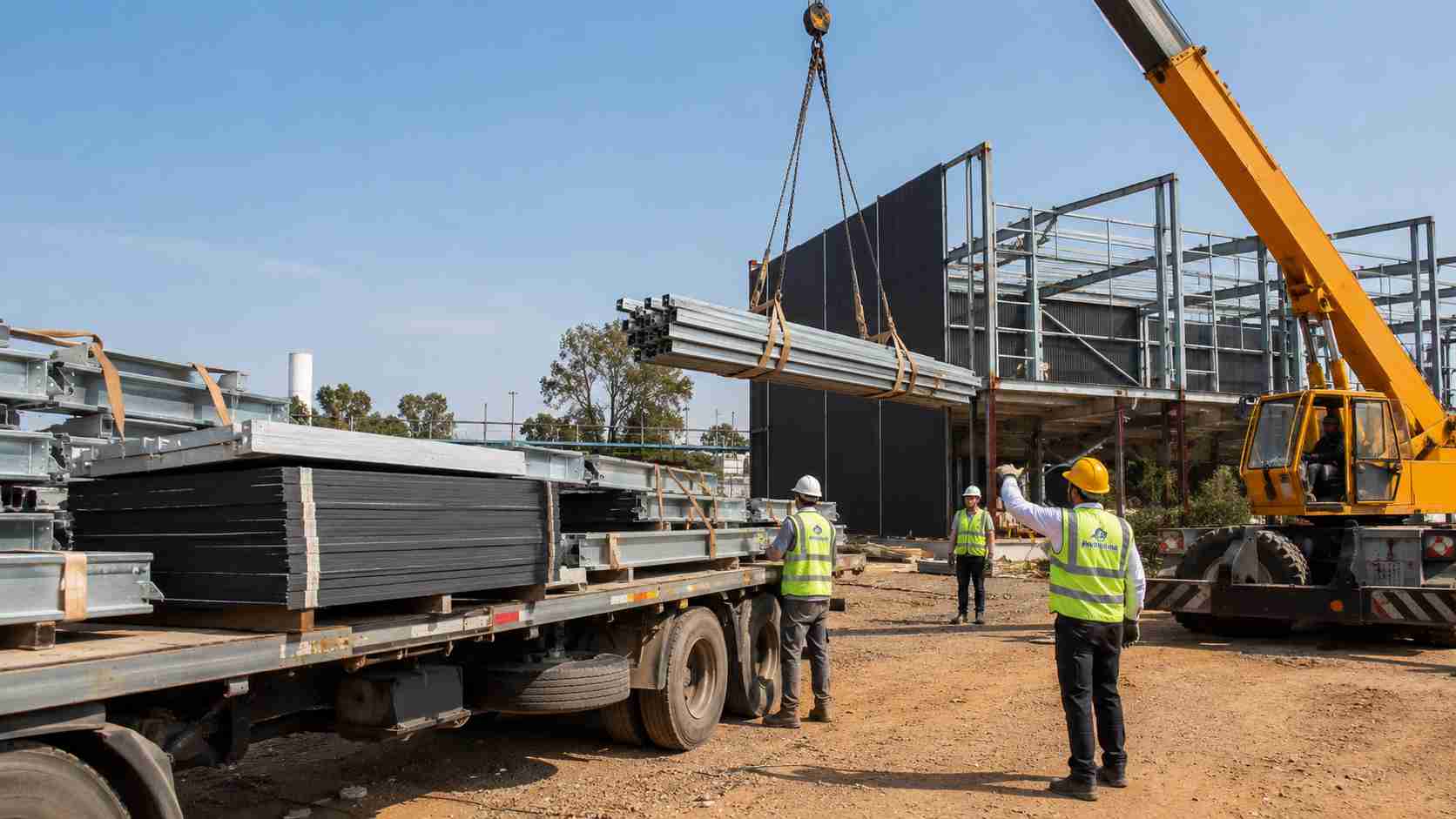
Components delivered to site. The difference between a method page and a single fixed build.
This page explains prefabricated construction as a method and offers it as a service across building types. If your need is narrower, a particular building constructed and handed over to one specification, that is covered on our page for constructing a building to a fixed specification, where a single configuration is set out end to end. And if you expect to add bays or floors later, an expandable modular approach is designed from the outset to grow without structural rework. Tell us the use and we will point you to the right one.
Prefabricated construction: common questions
What is prefabricated construction?
It is a method where building components are manufactured in a factory and assembled on site, rather than built piece by piece in place. The result is a faster, more predictable build because factory production and site foundation work happen in parallel.
What are the disadvantages of prefabricated construction?
The main constraints are transport limits on very large components, the need to finalise the design early before fabrication starts, and a foundation that must be ready and accurate before assembly. For defined commercial and industrial buildings these are easily planned around; for constantly changing one-off designs, conventional construction can be simpler.
What is the first stage of prefabricated construction?
The first stage is structural design and a site survey. Once the layout and loads are confirmed, components are fabricated to that design while your foundation is poured in parallel, so the project starts well before anything reaches the site.
Which is better, modular or prefabricated construction?
Modular is one form of prefabricated construction, whole rooms or volumes built in the factory and craned in. "Prefabricated" is the broader term covering steel-frame, panel, and modular methods. Modular suits fast multi-room occupancy and future relocation; choose it when an expandable, relocatable layout matters more than a single fixed structure.
Get a prefabricated construction quote
Share your plot location, floor area, and intended use, and our team will issue a layout and price.
Bangalore, Call +91 80886 85440, WhatsApp +91 88616 22859
Delhi NCR, Call +91 87960 39938, WhatsApp +91 97089 89937
Certifications and Manufacturer Credentials
SAMAN POS India Private Limited (POS = Portable Office Solutions) has designed, fabricated and erected steel structures since 2009 (incorporated 2019), with 500+ projects delivered across India from our plants at Gopasandra, Bengaluru 560099 and Greater Noida (Vill Jalpura, Tehsil Dadri, Greater Noida, Gautambudha Nagar, Uttar Pradesh 201308). Certifications and registrations: ISO 9001:2015 (Cert No. E20250218645), ISO 14001:2015 (Cert No. E20250218646), ISO 45001:2018 (Cert No. E20250218647), NSIC enlisted (Ref. NSIC/GP/BAN/2024/0055207), DPIIT-recognised startup (Ref. DIPP56005), Udyam registered (UDYAM-KR-03-0172770), GST 29ABBCS7101B1ZR (Bangalore) and 09ABBCS7101B1ZT (Noida). Structural steel to IS 2062. Explore the full PEB construction range.
Customer Reviews
0 reviews
No reviews yet. Be the first to review this product.
Write a Review for Prefabricated Construction
Built by a verified manufacturer: ISO 9001:2015 certified, Udyam registered, NSIC-enlisted, GST registered.
View manufacturer credentials