
Related Products
Explore similar items
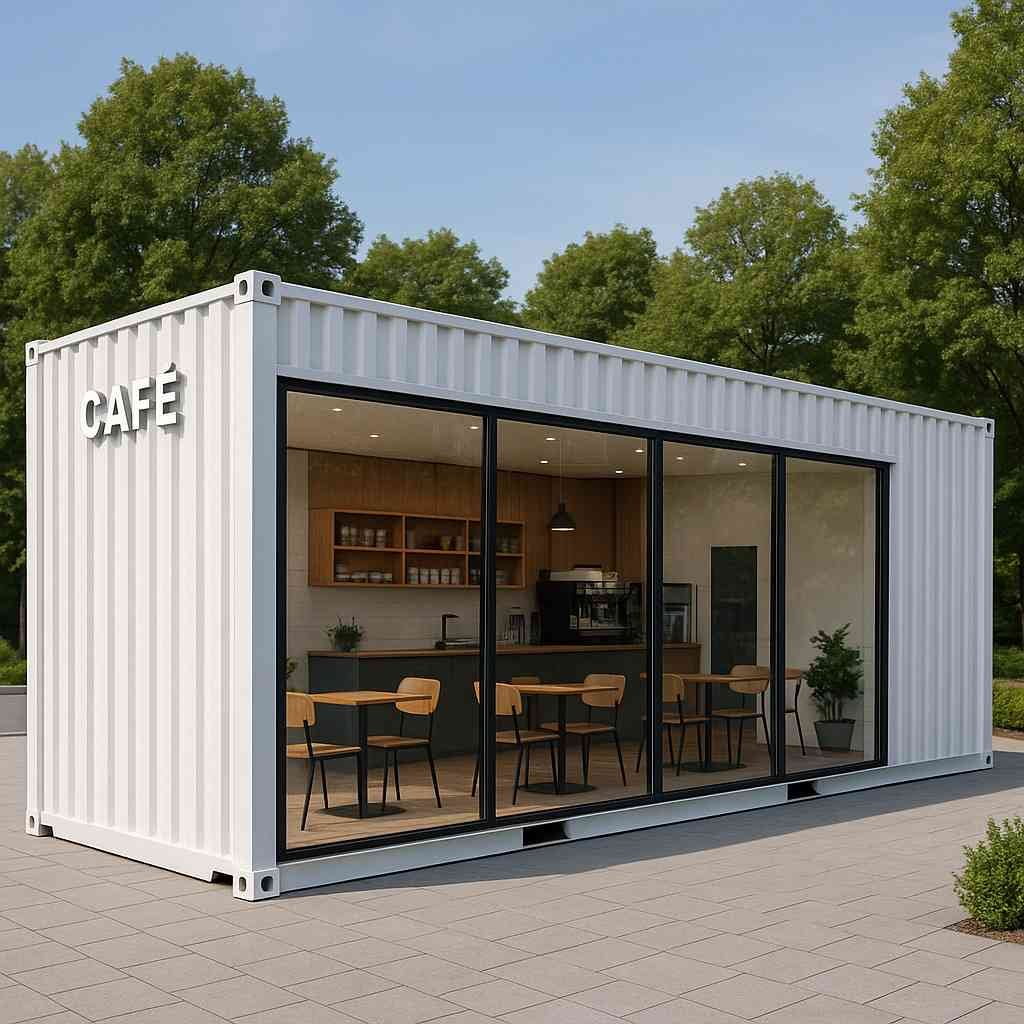
Mobile Restaurant
Inclusive of all taxes
Quantity
Product Information
Product Details
Comprehensive information about Mobile Restaurant
Product Overview
Detailed information about Mobile Restaurant
A mobile restaurant container is the 22'×12'×10' factory-fitted F&B build SAMAN delivers to restaurant operators with a multi-flagship plan — the unit opens at one flagship address, trades for three to five years, and is craned onto a low-bed trailer and reopened at the next flagship when the lease, the catchment, or the brand expansion calls for it. The build sits at ₹11,25,000 (sale, regular ₹11,95,000), seats twelve to eighteen covers at table service, and is engineered with corner-lift hardware for repeat redeployment at restaurant scale. If the operation runs six or more weekend markets a year, the planned-circuit cafe build is the right page for that pattern instead.
Who Buys a 22×12 Restaurant Build — Three Multi-Flagship Operator Profiles
The 22×12 mobile restaurant container is engineered around three operator profiles, and they share one trait: the business runs at restaurant scale, not cafe-kiosk scale, and the operator already knows the unit will move at least once in its working life.
Profile 1 — Single-flagship with a planned future relocation. The operator opens flagship A on a three- to five-year plot lease, runs the brand to maturity, and relocates the same unit to flagship B when the lease ends or a better catchment opens nearby. One lifetime relocation, planned around year three or four, executed at year five. The lift-rated frame and the factory-fitted kitchen travel intact; only the venue-specific finishing — exterior signage, outdoor deck, customer-flow furniture — gets re-laid at the destination. Most common in metro tier-1 cities where premium catchments rotate every five to seven years and the brand needs to follow the customer.
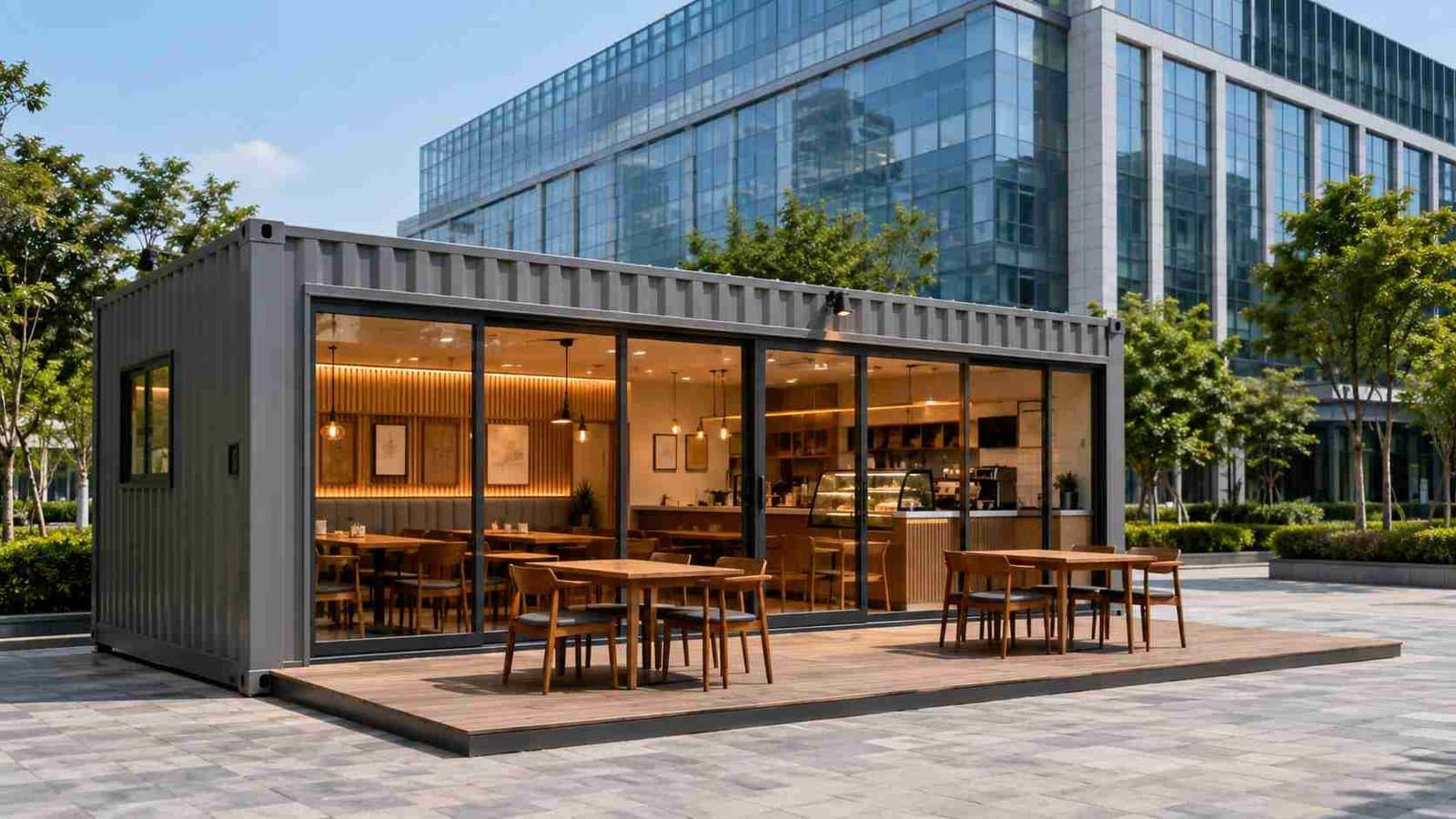
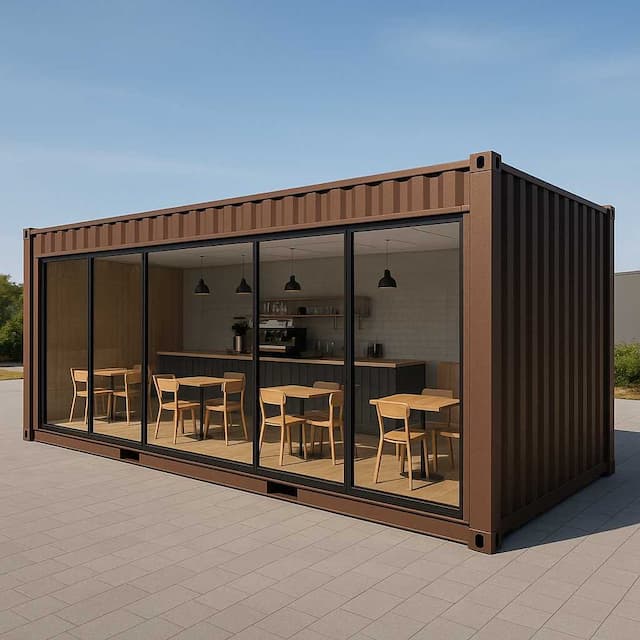
Mobile restaurant container at a tech-park flagship — Profile 1 deployment for the corporate catchment.
Profile 2 — Two-flagship operator with an exit option built in. The operator runs flagships A and B, and wants the option three years from now to retire A and reopen the same unit at C — without selling a built-out restaurant for scrap, and without rebuilding from scratch at the new site. Two lifetime relocations over a seven- to ten-year horizon. The 22×12 mobile restaurant container serves the brand's portfolio strategy rather than a single restaurant's life. Common with multi-outlet operators who have learned that a tier-1 site is only ever wrong eighteen months after signing the lease, and want an asset class that protects against that learning curve.
Profile 3 — Test-flagship in tier-2, permanent in tier-1. The operator tests the brand format in a tier-2 or peripheral site for twelve to twenty-four months before committing to a tier-1 flagship lease, then moves the same unit to the permanent address once the pilot signals strong. One lifetime relocation, planned at year one or two. Common with restaurant chains expanding from a parent metro into a new city, and with consultant-chef-led concepts de-risked at lower-rent geography before the full-format opening.
Who this build is not for — five exit paths. A 22×12 mobile restaurant container is the wrong asset for five adjacent operating patterns. If the unit needs to move six-plus times a year on a planned circuit, the planned-circuit cafe build already linked above is the right pattern. If the unit is a cafe rather than a restaurant and moves once every twelve to thirty-six months, the 10×10 cafe build for occasional single-site moves is the closer fit. If the unit drives between sites on its own road licence rather than crane-lifting, the trailer-wheels build for daily road routes is the right model. If the deployment is event-only with no continuing route afterwards, the event-only pop-up restaurant build commits to that pattern. If the brand statement is the real shipping-container origin and the unit stays at one address for the long haul, the static 20-ft ISO restaurant build is the cleaner pick.
22×12 ft × ₹11,25,000 — What the Build Actually Is at Restaurant Scale
Two things make a 22×12 mobile restaurant container different from every other mobile F&B build in the SAMAN range — the form factor and the price tier.
Fabricated steel + wood module, not a real ISO shipping container
The 22'×12'×10' unit is a steel-framed module with wood interior fittings — not a converted ISO 668 cargo container. The decision is deliberate. A real twenty-foot shipping container has an 8-ft outer width and a narrower inner width; twelve feet of inside width is wider than any cargo container offers. That width is the difference between restaurant-scale dining and cafe-scale layouts. For operators whose brand statement is the cargo-container origin, the fabricated route is the wrong choice and the static ISO build is the cleaner one.
264 square feet — the working sweet spot
A 22×12 unit gives 264 sq ft of usable floor, between an ISO 20-ft at ~160 sq ft and an ISO 40-ft at ~320 sq ft. Wide enough to seat four-tops across the floor rather than two-tops along the wall, narrow enough to clear a single-pick crane lift, and short enough to ship on a standard low-bed trailer without permit gymnastics on cross-state routes.
Corner-lift hardware engineered into a wider footprint
The four corner-lift points are welded to the column-to-base joint of a reinforced steel frame, sized for the loaded mass of a 22×12 unit with kitchen fitout — heavier than a 10×10 cafe, lighter than a 40×10 static restaurant. Slings hook into the lift points; the load goes through the frame, not the body cladding. This is the construction detail that separates a mobile restaurant container built to be moved repeatedly from a fabricated module that can be moved once if it has to be.
Steel where the load goes, wood where the customer's eye does
The frame runs IS 2062 Grade A structural steel welded into base, columns, and roof. The interior fittings — partition framing, dining-side wall finish, ceiling — work in wood at restaurant grade, not commercial laminate. A pure-steel interior runs cold and customer-unfriendly; a pure-wood structure won't take the lift load. The 22×12 mobile restaurant container uses each material where it earns its place.
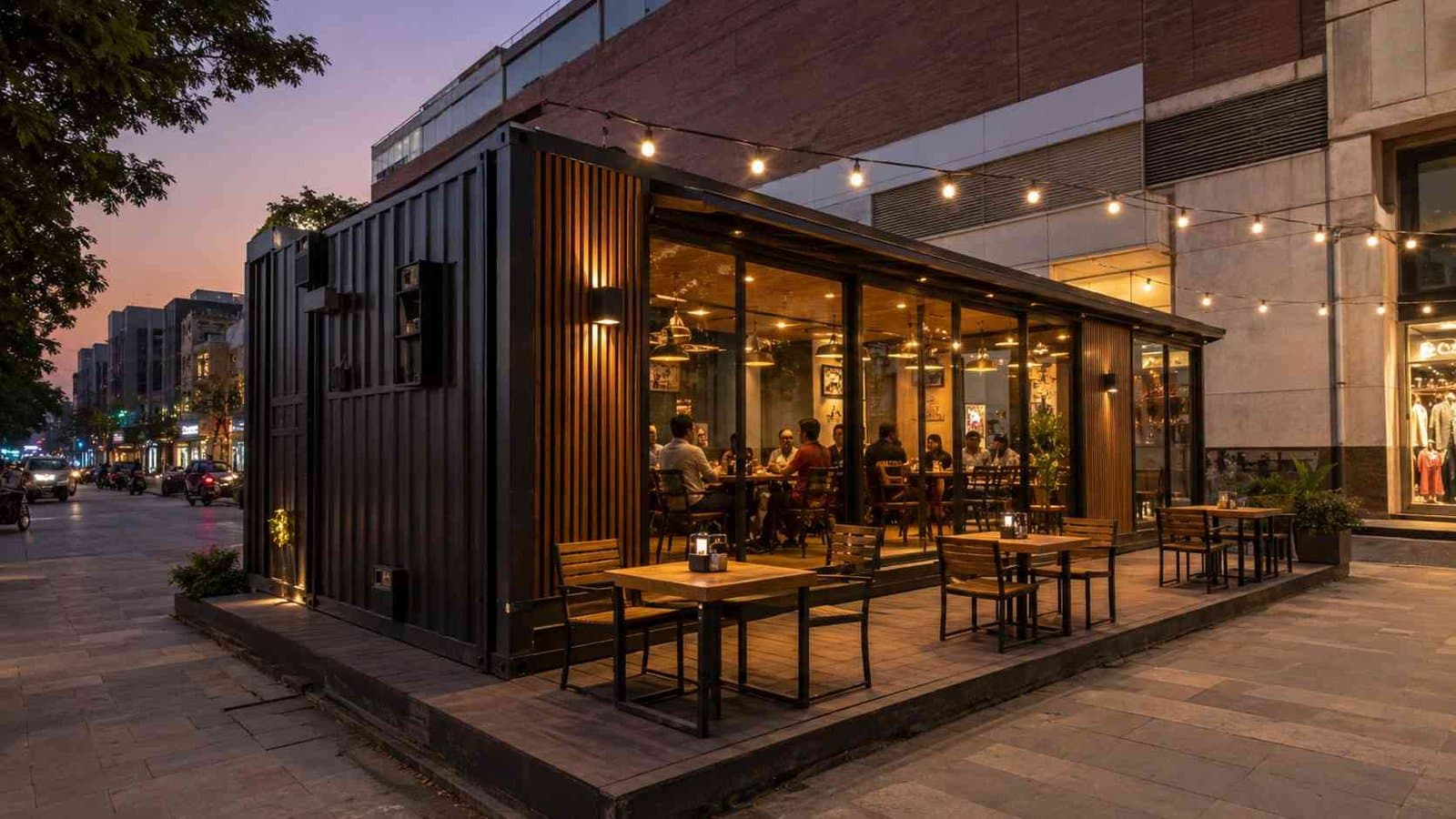
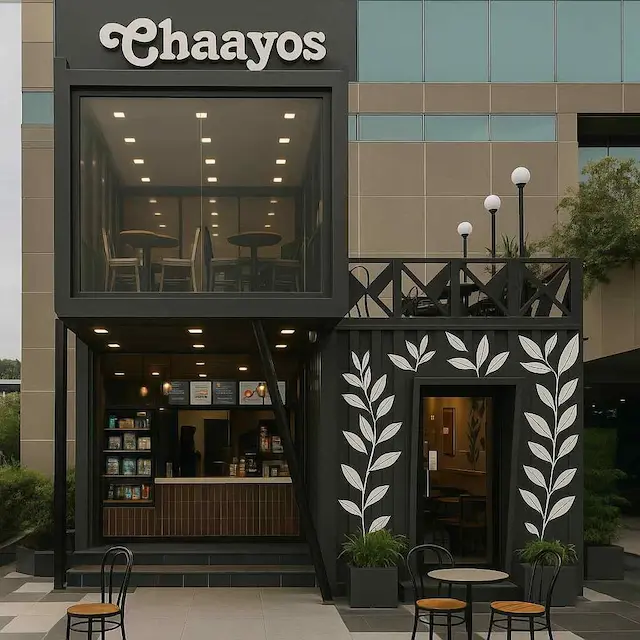
Mobile restaurant container at an urban high-street flagship — evening service, dark exterior finish, terrace seating.
Inside 264 sq ft — How a 22×12 Restaurant Splits Across Kitchen, Pass, and Dining
Six things have to fit inside a 22×12 mobile restaurant container, and the floor plan is more constrained than the footprint suggests until the zones are drawn.
Kitchen zone (~6 ft of length, ~72 sq ft across the 12-ft width)
The kitchen runs across one short end of the unit — 6 ft of length, 12 ft of width. That fits a four-burner commercial range or a two-burner-plus-tawa configuration, a prep counter along one long wall, a three-bay stainless sink, a hood-and-exhaust over the cooking line, an MCB panel with three-phase capacity, and an LPG inlet for piped gas or a cylinder bank. The hood vents through the roof. Wall lining is food-grade stainless on the cooking face and PUF panel elsewhere.
Service pass (~1.5 ft of length)
A partition wall cuts across the 12-ft width at the kitchen-dining boundary, with a service window framed into the partition. Plates leave through the pass, staff stay on the kitchen side, customers stay on the dining side. The partition is also the wall that runs FSSAI's clean-to-contaminated zone separation, which makes the airflow geometry automatic — kitchen ventilation draws upward through the hood, dining ventilation runs through the entry-side opening, and the partition stops lateral cross-flow between zones.
Dining zone (~14.5 ft of length, ~174 sq ft)
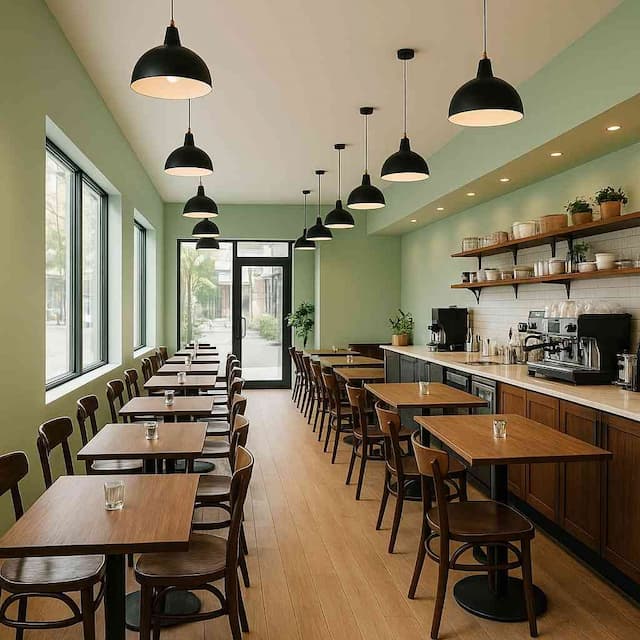
The remaining floor — the full 12-ft width over ~14.5 ft of length — gives 174 sq ft of customer floor. Entry sits on one of the long faces or the short face opposite the kitchen, picked against the site's customer approach. Wall finishes run from wood-batten cladding to laminate-and-paint; flooring runs from anti-slip vinyl to ceramic tile to wood-look LVT.
Cover capacity: 12 to 18 seats at table service
The 174 sq ft of dining floor seats 12 covers at fine-dining-tempo table spacing or up to 18 covers at faster-tempo restaurant spacing. Three table-mix routes work cleanly inside the 12-ft width:
- 3 × four-tops = 12 covers — generous spacing, slow-tempo service, suits chef-driven concepts.
- 2 × four-tops + 2 × two-tops = 12 covers — flexible for couples and small groups.
- 3 × four-tops + 3 × two-tops = 18 covers — denser, cafe-restaurant tempo.
The 12–18 band fits standalone restaurant economics in most Indian catchments. Growing past 18 covers means an outdoor deck or a second unit at the next flagship — both routes are covered in the FAQ below.
Why the 12-ft width matters
In an 8-ft-wide ISO container, four-top tables don't sit across the width — four customers and their elbow space won't clear the walls. Two-tops have to run along the long wall, and the dining floor becomes a corridor. In a 12-ft-wide unit, four-tops sit across the width with walking aisles on both sides — the layout customers read as a restaurant rather than a takeaway with seating. The width is why the 22×12 mobile restaurant container sits at this price tier rather than at the cafe-kiosk band below.
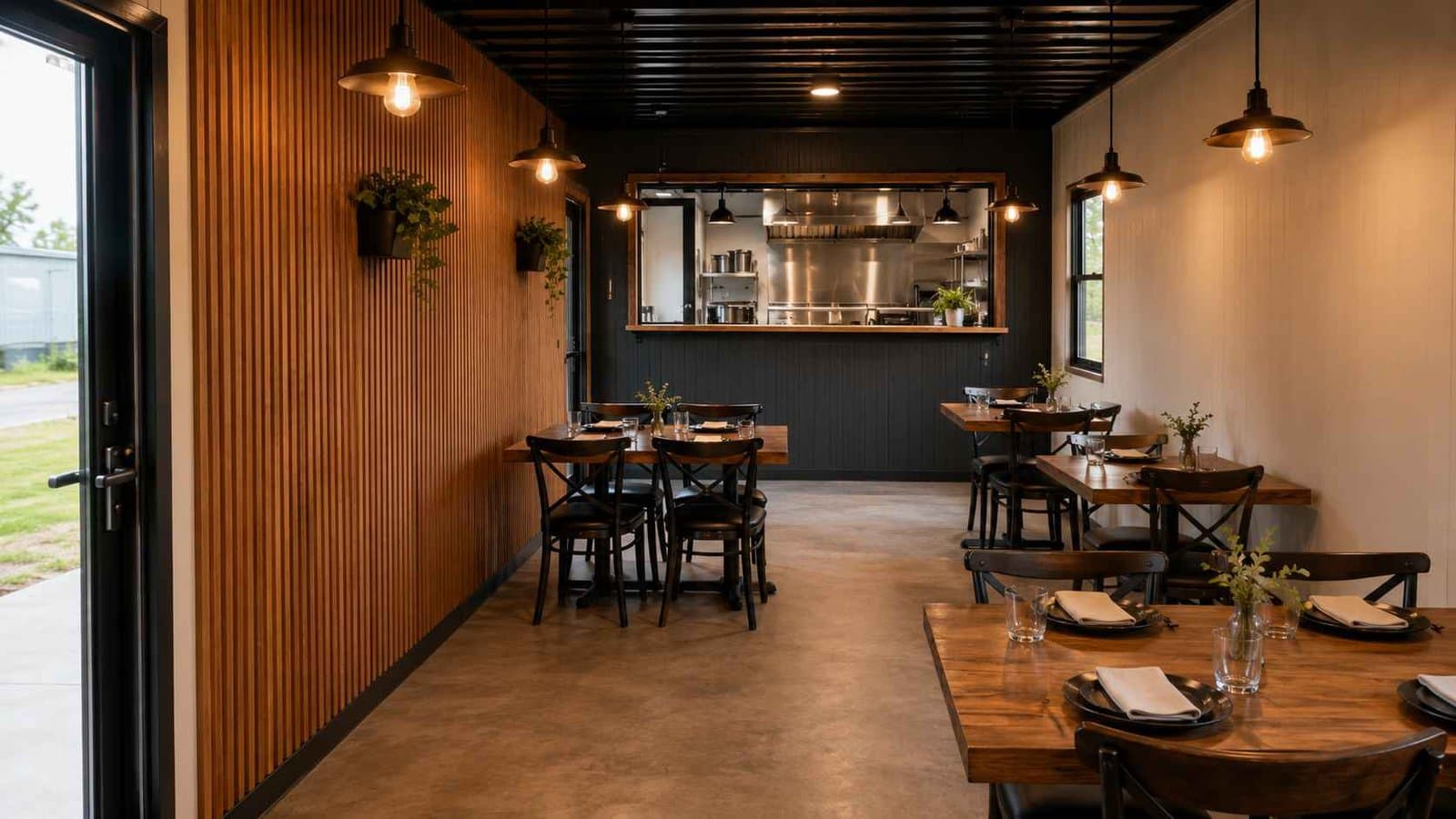
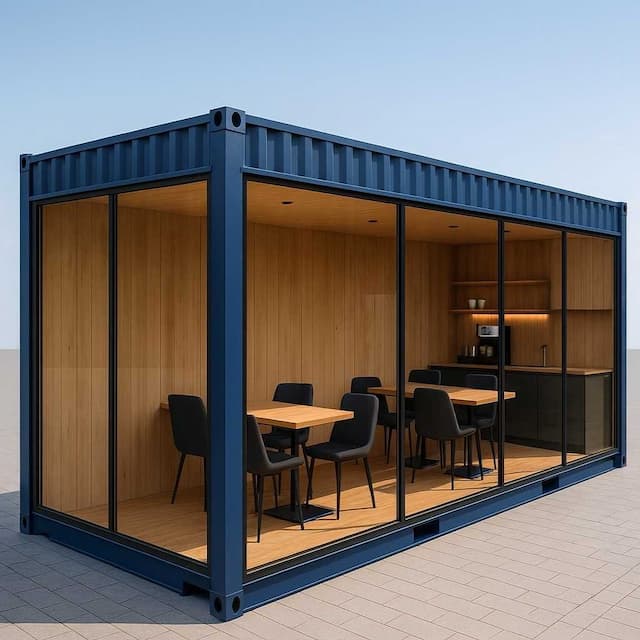
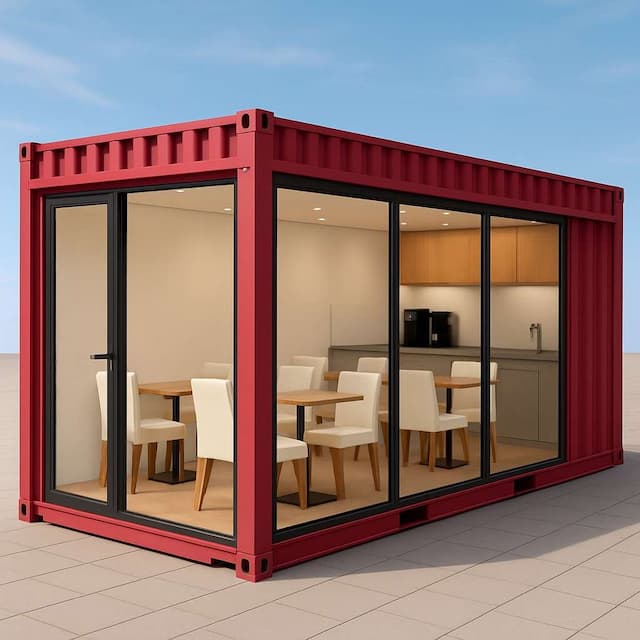
The 22×12 dining floor in table-service layout — five tables, walking aisles, service window.
A Restaurant-Scale Move — 25-Tonne Crane, Low-Bed Trailer, 5–8 Days Downtime
Moving a fitted 22×12 mobile restaurant container from one flagship to the next is mechanically the same operation as moving a 10×10 cafe — crane up, transit on a flatbed, crane down — but the scale shifts every line item.
Pre-move day at the closing flagship
The kitchen runs its final service and shuts down. Utilities get disconnected by the site electrician and plumber — three-phase power at the MCB, water at the inlet, drain at the floor outlet, gas at the LPG bank or piped inlet. The kitchen gets a deep clean. Lift-shackle hardware fits to the four corner lift points (the hardware ships with the unit and travels with the operator). The unit is ready for the crane.
The crane lift — 25-tonne class
A 22×12 mobile restaurant container with full restaurant fitout lifts on a 25-tonne mobile crane — heavier than the 10-tonne class a cafe-scale unit needs, because the loaded mass climbs with the wider footprint and the restaurant interior. Slings rig to the four corner lift points; the lift is a single-pick operation that runs twenty to thirty minutes from boom-out to load-on-trailer. Crane class and rigging cost are quoted per move based on venue access and the unit's loaded weight.
The low-bed trailer
The unit travels on a low-bed flatbed trailer, with route permits arranged where the haul crosses state borders. The low-bed clearance handles the 10-ft external height; a standard flatbed would push loaded height past the typical 14-ft road-clearance ceiling and force route changes. Loaded haulage is costed per kilometre.
Re-pad and re-connect at the destination
The destination needs four things in place when the trailer arrives. A level RCC pad, 6 inches thick, sized two feet larger than the unit on all sides — so a 24×14 ft pad for a 22×12 unit. A three-phase electrical supply at the site boundary, sized to the kitchen load. A half-inch water inlet line and a drainage connection to the municipal line or a soak pit within fifteen feet. An LPG bank or piped-gas connection at the kitchen elevation. The fire NOC at the destination is the operator's to arrange — same documentation pack travels with the unit, but the local approval is site-specific.
Downtime: typical 5–8 working days
From the kitchen's final service at flagship A to the kitchen's first service at flagship B: one day for utility disconnect and lift prep, one day for the crane lift and trailer load, one to two days for transit, one to two days for the destination re-pad commissioning, and one to two days for utility reconnect plus a soft-open kitchen test. Same-state moves with a prepared destination pad run at the lower end; cross-state moves with permit waits run at the upper end.
Per-move cost band
A relocation of the 22×12 mobile restaurant container runs roughly two-and-a-half to three-and-a-half times the equivalent move at 10×10 cafe scale. The shift comes from three line items: the crane class (25-tonne instead of 10-tonne), the trailer class (low-bed flatbed instead of standard truck), and the loaded haulage per kilometre on a heavier unit. The unit cost is once at purchase; the per-move bundle repeats at every relocation. SAMAN returns a worked per-move estimate alongside the unit quote so the operator can model the lifetime cost before committing.
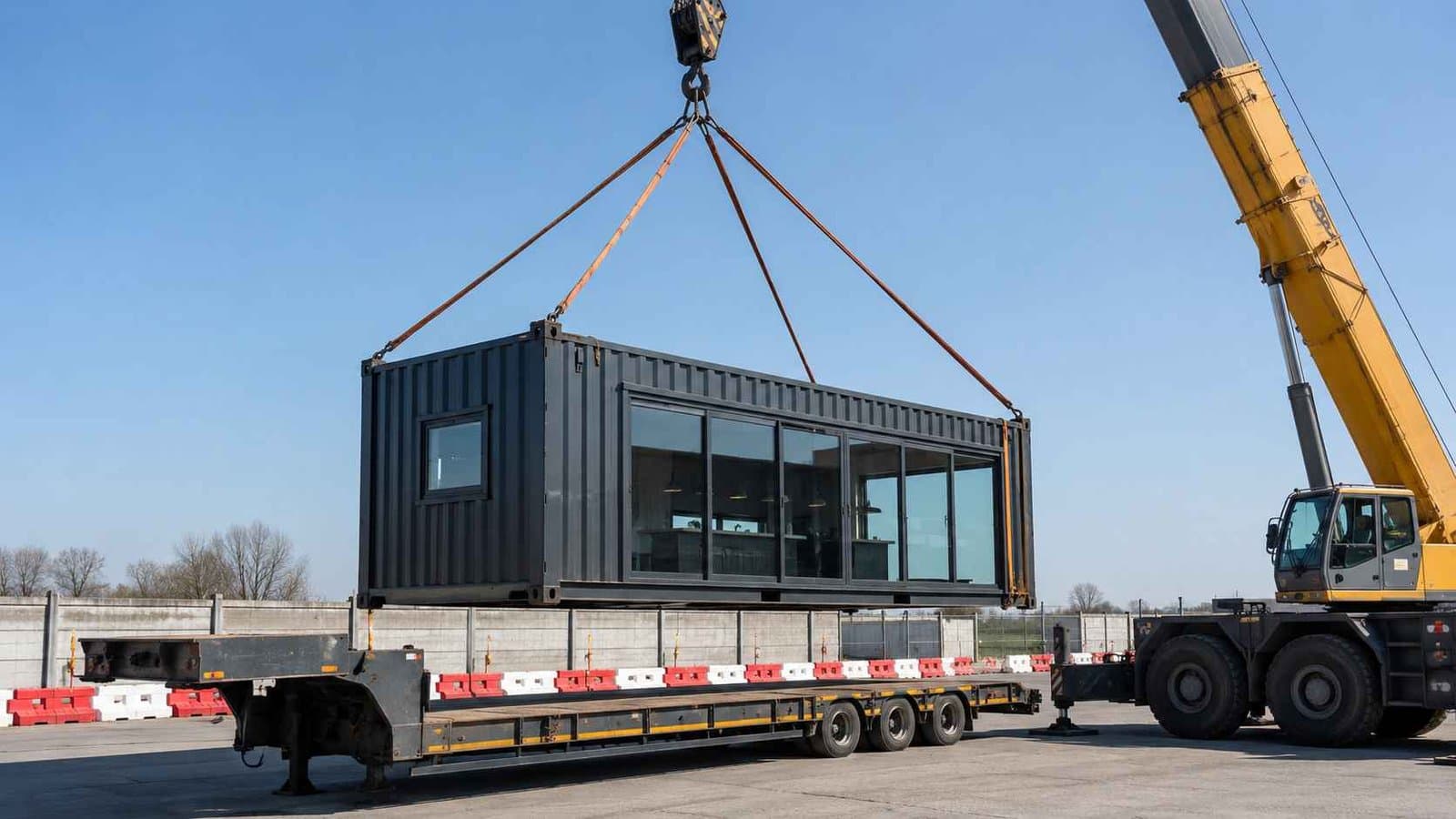
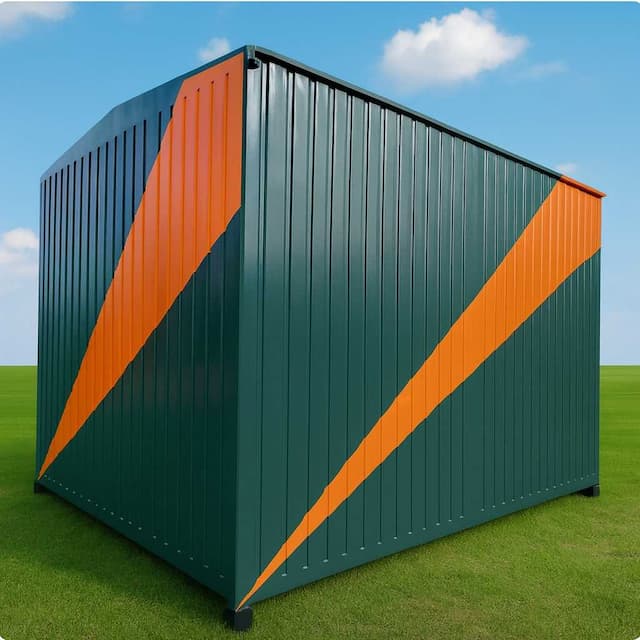
Mid-lift during a flagship-to-flagship relocation — 25-tonne crane, low-bed flatbed, single-pick operation.
FSSAI When the Restaurant Changes Address — State Licence, Address Amendment, Multi-State Posture
A mobile restaurant container files an FSSAI State Licence (Form B) at its current registered address — the same licence class as any brick-and-mortar restaurant. When the unit moves between cities or states, the operator files a registered-address amendment, not a fresh licence application, provided the operating entity stays the same. Multi-state moves trigger separate amendments for GST registration, professional tax, and shops & establishments at the destination state.
Why State Licence, not petty/hawker class
A 22×12 fixed-kitchen restaurant serving prepared meals to dine-in customers is classified under FSSAI as a fixed food establishment — same category as any standalone brick-and-mortar restaurant. The petty food business registration (turnover under ₹12 lakh) is structurally wrong for a build of this size. The Central Licence applies only above the state-level turnover threshold (₹20 crore in most states, varies by category) — most flagship-scale operators sit in the State Licence band and stay there.
Address amendment, not a fresh licence
When the operating entity stays the same and only the mobile restaurant container's physical address changes, the FSSAI portal accepts a registered-address amendment against the existing licence. The licence number persists; the address field updates. The inspection at the new address is a verification visit, not a fresh full inspection, provided the kitchen layout and surface specification on the SAMAN documentation pack match the original build. If the operating entity itself changes — new LLP, new private limited, change of partners — that triggers a fresh licence regardless of whether the address moves.
Annual vs five-year licence
The State Licence runs in one-year or five-year terms. For a multi-flagship operator with two or more lifetime relocations planned, the five-year licence is the cleaner pick — fewer renewals, lower admin overhead, lower per-year cost amortised across the term. Operators still finalising the operating entity or the brand structure pick the one-year for the first cycle and convert to five-year at first renewal.
What else changes on a multi-state move
GST registration is state-specific in India; moving across a state border triggers a GST address amendment at the existing GSTIN (no fresh GSTIN if the entity stays the same). The operating entity files a fresh state-level professional tax registration and shops & establishments certificate at the destination. The municipal trade licence at the destination is local and starts fresh. The food handler card and the water-source documentation travel with the unit; only the water-source verification needs a re-test at the new site.
Where SAMAN supplies documentation
SAMAN provides the documentation an FSSAI inspector asks for at first registration and at every address amendment thereafter — kitchen layout drawing, electrical specification, structural drawing, and material certification. The application itself is filed by the licensee, typically the brand-owner entity or the operating company, at the State FSSAI portal.
Mobile Restaurant vs Static Container Restaurant vs Shipping Container Restaurant — The Three-Way Restaurant-Format Border
Three SAMAN builds at C5 sit in the same general territory — a working restaurant inside a container-shaped unit — and the border between them is one decision: how does the operator's plan handle relocation?
| Build | Size | Price | Dining floor | Operating posture | Ideal pattern |
|---|---|---|---|---|---|
| Mobile Restaurant Container (this page) | 22'×12'×10' | ₹11,25,000 | 12–18 covers | Relocatable, crane-flatbed | Multi-flagship, 1–3 lifetime relocations |
| Static Container Restaurant | 40'×10'×9' | ₹15,55,000 | 16–24 covers | Static, fixed-site | Single-site full-service, long lease |
| Shipping Container Restaurant | 20'×8'×8.5' / 40'×8'×8.5' (ISO) | From ₹11,85,000 | 8–24 covers | Static, real ISO origin | Single-site, container origin as brand statement |
The static 40-ft full-service restaurant build is the pick when the brand commits to one address for the long haul and wants the full dining-experience footprint that 320 sq ft of floor delivers. The real ISO cargo container build is the pick when the brand statement is the corten-and-corner-casting look of an authentic shipping container, and the operator accepts the narrower 8-ft ISO width in exchange for that visual identity. The 22×12 mobile restaurant container is the pick when relocation is in the operating plan from day one — the form factor is wider for better cover economics, the price tier matches the static-ISO 20-ft alternative, and the build is engineered for the move rather than retrofitted for it. The single decision: is the operating plan flagship-relocatable, fixed-site full-service, or fixed-site ISO-brand-statement?
Mobile Restaurant Container vs the Rest of the SAMAN Mobility Range — The Operator-Pattern Border
Five SAMAN builds at C5 share a common trait — the unit isn't permanently rooted at one address — and the border between them isn't the build's spec, it's the operator's pattern. The 22×12 mobile restaurant container sits at one specific point on that border; the other four cover patterns the 22×12 isn't engineered for.
| Build | Size | Price | Mobility class | Operator pattern |
|---|---|---|---|---|
| Mobile Restaurant Container (this page) | 22×12 ft | ₹11,25,000 | Crane + flatbed, restaurant scale | Multi-flagship, 1–3 lifetime relocations |
| Mobile Cafe | 10×10 ft | ₹2,25,555 | Crane + flatbed, cafe scale | Active circuit, 6+ moves a year |
| Mobile Container Cafe | 10×10 ft | ₹2,35,000 | Crane + flatbed, cafe scale | Single-site cafe with planned occasional move |
| Food Truck Container | Trailer chassis | ₹4,55,000 | Road-going, own wheels | Daily or weekly drive route |
| Pop-Up Restaurant Container | 15×10 ft | ₹2,85,000 | Event-only, pack down after | One event, no continuing route |
Cafe-scale circuit operators run an active mobility business — six or more weekend or festival deployments a year — and need the lift-cycle engineering of the dedicated cafe-circuit build, not a 22×12 restaurant unit that's overspec'd for kiosk service. Operators planning one occasional cafe relocation in three years pick the 10×10 single-site move build. Road-going daily routes need a chassis and a road licence, not a crane. Event-only single-deployment operators commit to a build that packs down rather than reopens. Multi-flagship restaurant operators — the buyers a mobile restaurant container is engineered for — sit at the top row of the table, and the four siblings are the wrong fit for that pattern just as the 22×12 is the wrong fit for the others.
Customising a 22×12 Mobile Restaurant Container — Exterior Brand, Kitchen Spec, Dining Finish, Lift-Hardware Upgrade
Inside the steel frame, five customisation decisions sit with the operator. Each gets locked at order stage and travels with the unit through its working life.
Exterior brand finish
The outer cladding takes three routes. Direct paint in the brand colour is the simplest and the cheapest, refreshable on site between flagships. Wood-batten cladding gives a warmer, restaurant-coded exterior — premium look, slower re-skin between addresses. Vinyl-wrap graphics carry the full brand kit including typography, photography, and pattern work — wrap-replaceable in 24–48 hours at a re-skin job, which makes it the favourite finish for operators who plan to refresh the brand at each flagship rather than carry the same exterior across the unit's full life.
Kitchen spec at restaurant grade
The standard kitchen ships with a four-burner commercial range, prep counter, three-bay stainless sink, hood-and-exhaust line sized for sustained cooking volume, and an MCB panel with three-phase capacity. Upgrades at order stage: six-burner range with salamander, separate cold-prep area with under-counter chillers, walk-in chiller along one short wall (trades against dining floor — covers drop from 18 to 12), and piped-gas inlet instead of a cylinder bank where the site supports it. Operator picks the spec at quote conversation; the build factory-fits before dispatch.
Dining-side finish
Customer-facing walls, ceiling, and flooring carry the brand's interior design. Walls run from wood-batten cladding through laminate-and-paint to panel-board with branded inserts. Ceiling options run exposed-steel-painted, acoustic panel, or wood-batten suspended. Floors run anti-slip vinyl, ceramic tile, or wood-look luxury vinyl tile. Lighting and service-counter top match the brand kit, fitted at the factory before dispatch.
Lift-hardware upgrade for 3+ lifetime moves
The standard build ships with corner-lift hardware rated for one to three lifetime relocations — the dwell pattern that matches the three operator profiles in the section above. For operators planning four or more lifetime moves — a multi-city pilot-and-roll-out, an annual relocation across a 3-flagship rotation — the lift-hardware upgrade adds heavier shackle rating, reinforced column-to-base welds at the lift points, and a planned workshop-refurb visit every five to seven moves. Specified at order, not retrofitted later between flagships.
Factory-locked vs destination-re-spec
The kitchen, partition wall, structural frame, and lift hardware are factory-locked — once dispatched, they travel with the unit through its working life. The exterior brand finish, customer-facing wall treatments, lighting, furniture, and outdoor deck (where the site supports one) are re-spec-able between flagships. A vinyl exterior at flagship A can become wood-batten at flagship B; the kitchen layout cannot.
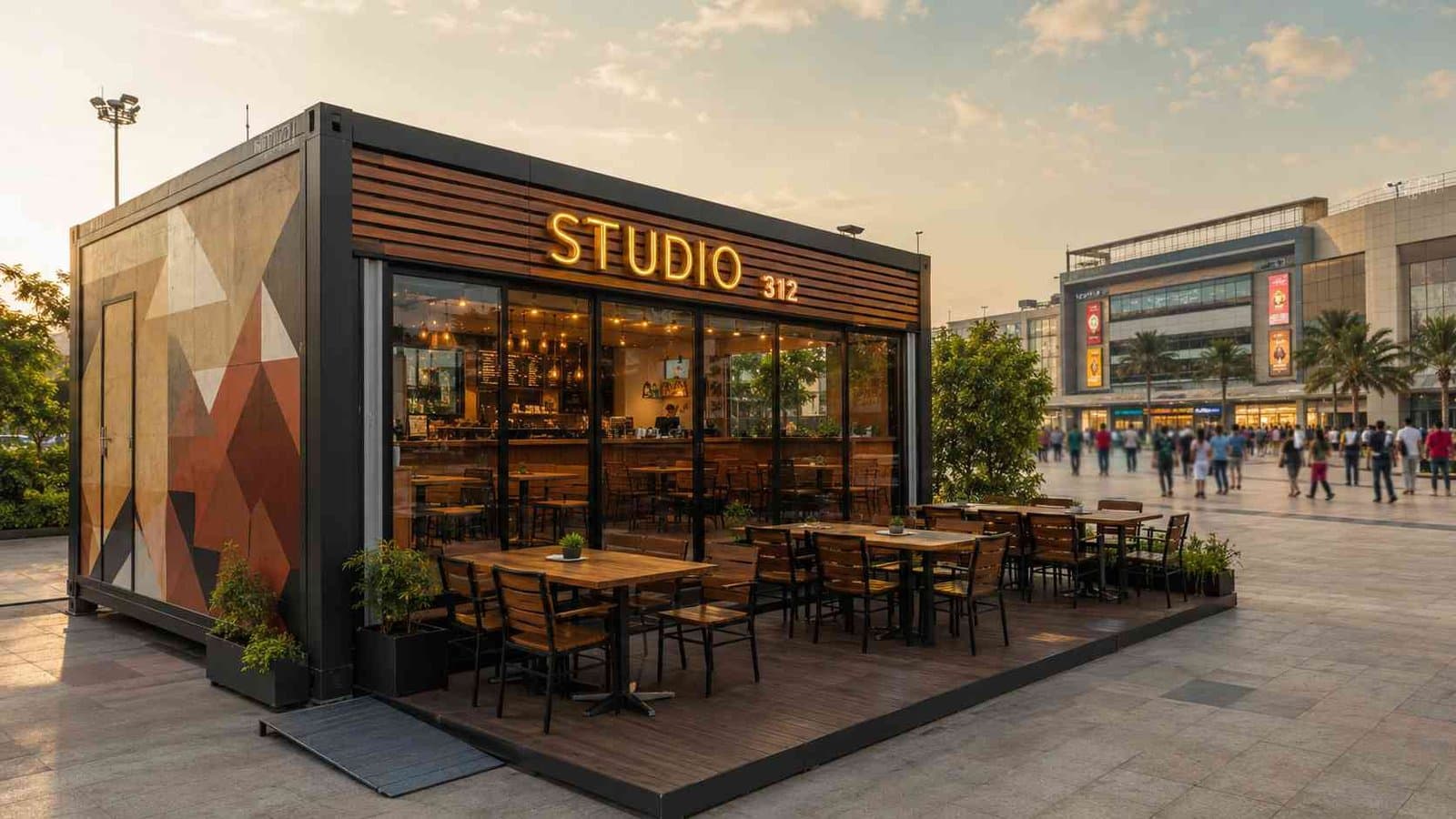
Mall-forecourt deployment with customised vinyl-wrap exterior and wood-batten accent — late-afternoon trade-ready setup.
Where SAMAN Mobile Restaurant Container Builds Have Been Deployed — Cities, Plants, the 20-Day Build Timeline
Deployed SAMAN mobile restaurant container projects include sites in Whitefield, HSR Layout, and Hosur in the Bangalore cluster, and Greater Noida and Gurugram in the Delhi NCR cluster. These are restaurant-grade builds — table-service operators running 22×12 flagship units, not cafes or kiosks. Photographs of representative deployments sit in the product gallery at the top of this page.
Manufacturing happens at two SAMAN facilities. Gopasandra (Bangalore) handles South India dispatches; Jalpura (Greater Noida) handles North and Central India. Pan-India delivery and on-site crane unloading route from whichever facility sits closer to the destination flagship.
The standard fabrication and delivery window for a mobile restaurant container at 22×12 spec is 20 working days from confirmed order — longer than cafe-scale builds because of the restaurant fitout, the kitchen spec, and the dining-side finish. The window runs design lock and PO at days 1–3, factory build days 4–15, trailer transport days 16–18, and crane install plus commissioning days 19–20. Custom kitchen specifications, non-standard glazing, or operator-supplied brand-finish materials can push the window to 25 working days; that's quoted upfront, not buried in dispatch.
Internal QA on every dispatched unit runs through the standard SAMAN 52-checkpoint protocol — input verification, frame welding, panel bonding, kitchen fitment, surface treatment, brand-finish application, pre-dispatch inspection. Same protocol from either factory, same IS 2062 Grade A material specification, same documentation pack.
Plan Your Multi-Flagship Restaurant Build — Quote, Per-Move Estimate, Flagship-Sequenced Layout in Two Working Days
Send four inputs and SAMAN's design team returns a flagship-sequenced layout and an itemised quote within two working days.
- Flagship sites — your current flagship address (or the first flagship if you're opening from zero), plus the planned next flagship or the geography you expect the unit to relocate to.
- Brand concept and dining format — chef-driven, cafe-restaurant, family-restaurant, brand-led — and any customer-flow preferences for the entry, the service window, and the dining floor.
- Brand-finish preferences — exterior cladding (paint / wood / vinyl), kitchen-spec upgrades, dining-side wall treatment, and signage placement from your brand kit.
- Target opening dates and the expected relocation horizon — flagship A target opening, expected dwell at flagship A, planned move-out window.
The reply covers the mobile restaurant container unit cost (₹11,25,000 sale at current pricing, ₹11,95,000 regular), a worked per-move estimate based on the actual flagship-A-to-flagship-B route, a layout drawing tailored to flagship A, an outline layout for the planned flagship B, and the delivery-and-crane schedule for flagship A's build. Pan-India delivery from the Bangalore plant for South India and the Greater Noida plant for North and Central India.
For adjacent F&B builds — the static full-service restaurant, the real-ISO container restaurant, the cafe-scale mobility cluster — see the full container cafe range to compare the cluster.
Call or WhatsApp: +91 97089 89937 (Greater Noida) · +91 80886 85440 (Bangalore)
Frequently Asked Questions
How many lifetime relocations can a 22×12 mobile restaurant container handle, and is there a heavy-cycle option?
The standard SAMAN build is engineered for one to three lifetime relocations across a seven- to ten-year horizon — the dwell pattern that matches the three operator profiles this page is built for. Each lift cycle runs through the corner lift points on the reinforced base frame; the structural rating clears that move count without specific concern. For operators planning four or more lifetime moves — annual relocation across a multi-flagship rotation, or a multi-city pilot-and-roll-out — the lift-hardware upgrade option at quote stage adds heavier shackle rating, reinforced lift-point welds, and a planned workshop-refurb visit at SAMAN's plant every five to seven moves. The upgrade is specified at order; it's not an aftermarket retrofit.
What's the realistic per-move cost band for a 22×12 mobile restaurant relocation, and what line items repeat at every move?
Per-move cost at 22×12 scale runs roughly two-and-a-half to three-and-a-half times the equivalent move at 10×10 cafe scale, with the swing driven by route distance and crane access. Four line items repeat at every move: a 25-tonne mobile crane at the closing flagship for lift-out and another at the destination for lift-down; a low-bed flatbed trailer rated to the loaded weight, costed per kilometre over the actual route; utility re-connection at the destination (three-phase tie-in, water source, drainage, gas line); and the destination plot's pad readiness work where the site doesn't come pre-prepared. SAMAN returns a worked per-move estimate alongside the unit quote so the operator can model the mobile restaurant container's lifetime cost before committing.
When the mobile restaurant container moves between states, what changes for FSSAI, GST, and the operating entity's trade licence?
The FSSAI State Licence updates through an address amendment — not a fresh application — provided the operating entity stays the same. The licence number persists, the address field updates, and the destination inspection is a verification visit rather than a full fresh inspection. GST is state-specific: the operating entity's GSTIN gets an address amendment, no fresh GSTIN required. Professional tax registration and the shops & establishments certificate are state-specific and start fresh at the destination state. The municipal trade licence at the destination is local and runs through the destination's municipal corporation. The food handler card and the water-source documentation travel with the unit; only the water-source verification needs a re-test at the new site.
If my first flagship needs more covers than 18, do I expand with an outdoor deck or buy a second unit at the next flagship?
Two paths, two different operator decisions. An outdoor deck adjacent to the 22×12 unit at the same flagship can add 12 to 24 outdoor covers — a wooden deck, a tensile shade, or a paved area sized to the site — giving operating capacity of 30 to 42 total at peak. Outdoor covers add to the FSSAI footprint declaration and may need a separate municipal NOC depending on local rules. The alternative is to buy a second unit at the next flagship rather than scale the first — useful when the brand is moving toward a multi-flagship portfolio anyway, and when the second site has its own catchment that needs its own seat capacity. For operators who expect to outgrow 18 covers permanently rather than seasonally, the multi-unit growth route is cleaner — see the multi-unit modular build for staged growth for the connected-units configuration.
Why fabricated steel + wood at 22×12 instead of a real ISO 20-ft shipping container at the same price tier?
Form factor and operator plan. A real ISO 20-ft shipping container is 8 ft wide — narrow enough that restaurant-scale dining tables run along the wall rather than across the width, and cover capacity sits in the 8 to 12 band rather than 12 to 18. The fabricated 22×12 module trades the cargo-container origin for the wider footprint, and the price tier sits at the same ₹11+ lakh band as the ISO-20-ft restaurant build because the wider fabricated frame and the lift-rated engineering cost roughly what the ISO conversion costs. If the brand statement is the cargo-container origin — corten exterior, corner castings, ISO 668 build — the static ISO route is the cleaner pick. If the operating plan is relocation and the priority is cover economics inside a craneable footprint, the 22×12 mobile restaurant container is the right form factor.
What gets insured during a flagship-to-flagship relocation — the unit, the fitout, in-transit kitchen equipment?
Three insurance lines apply at a flagship move and the operator typically carries all three. A standing asset cover on the unit and its fitted kitchen — the same cover that runs while the unit is operating, extended for the move window through an endorsement at the existing policy. An in-transit cargo cover for the lift-load and the road haul between flagships — typically a single-trip policy underwritten against loaded weight, route distance, and crane-handling exposure. A separate cover for movable kitchen equipment that travels outside the unit — chillers, cooking equipment, POS hardware — packed and shipped separately by the operator's logistics provider. SAMAN coordinates the move schedule with the operator's insurance broker on request, but the policies are placed by the operator. Most flagship-scale restaurant operators already carry these covers as standard practice for a fixed-site restaurant; the relocation simply triggers the in-transit cover for the move window.
Need Custom Requirements?
Get in touch with our experts for customized solutions and bulk orders. We're here to help you find the perfect solution.