
Related Products
Explore similar items
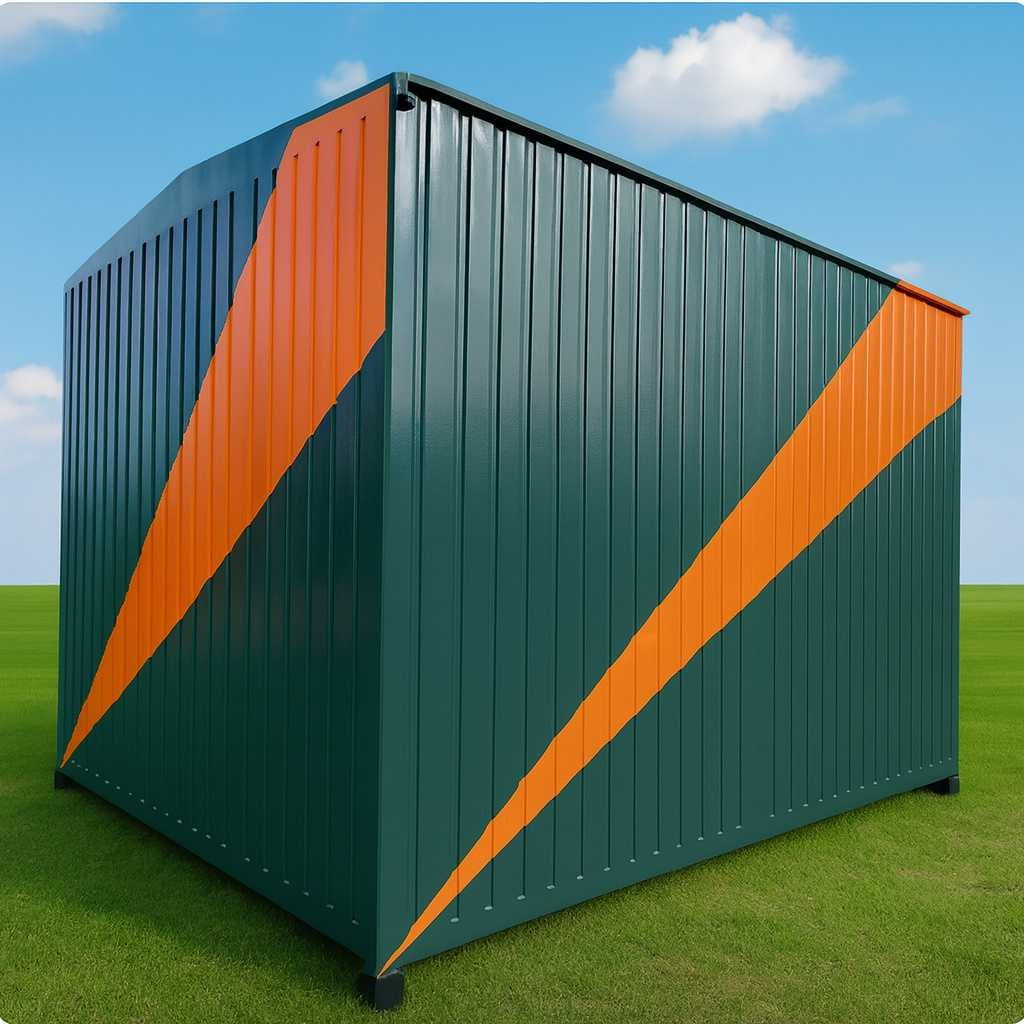
Container Coffee Shop
Inclusive of all taxes
Quantity
Product Information
Product Details
Comprehensive information about Container Coffee Shop
Product Overview
Detailed information about Container Coffee Shop
A 10-ft factory-built coffee unit at ₹2,15,000 — espresso bar, customer window, and exterior paint fitted before it leaves our floor. Fixed-location, single-product retail. Built to open a coffee brand, not to relocate every quarter.
A 10-ft Pre-Built Coffee Unit — What It Is and Who Opens One
A container coffee shop is a single 10-ft × 10-ft × 9-ft factory-built cabin configured around a coffee operation — the espresso bar wall fitted along one side, the customer-facing service window cut on the other. SAMAN delivers it pre-built at ₹2,15,000 (sale) / ₹2,35,000 (regular), painted in your brand colour, with the espresso machine, grinder, and fridge as the only major equipment you bring yourself.
It is not a 20-ft general F&B container adapted for coffee. It is also not a unit built around relocation — if your plan is to move the cabin between sites every couple of years, the crane-lift cafe build for site rotation is engineered for that instead. The four buyer profiles we usually build for: a first-time entrepreneur opening a portable coffee shop concept, an existing café operator adding a compact second site, an established coffee brand expanding kiosk presence, and a resort, mall, or campus property buying a turnkey beverage unit.
To compare every cafe format we offer, see the full SAMAN cafe lineup.
The Espresso Bar Setup Inside — Counter, Plumbing, Power, and the Customer Window
This is where a coffee-fitted container differs from a generic cafe shell.
The espresso bar wall runs along one long side. Factory-fitted: stainless-steel work surface at standing counter height, a single-bowl sink with under-counter water inlet, the cutout for an under-counter milk fridge, a recessed grinder pad, and a syrup rail mounted above the counter. The exhaust micro-hood opening sits above the espresso machine position — sized for a typical 2-group commercial machine, not a deep-fry kitchen load.
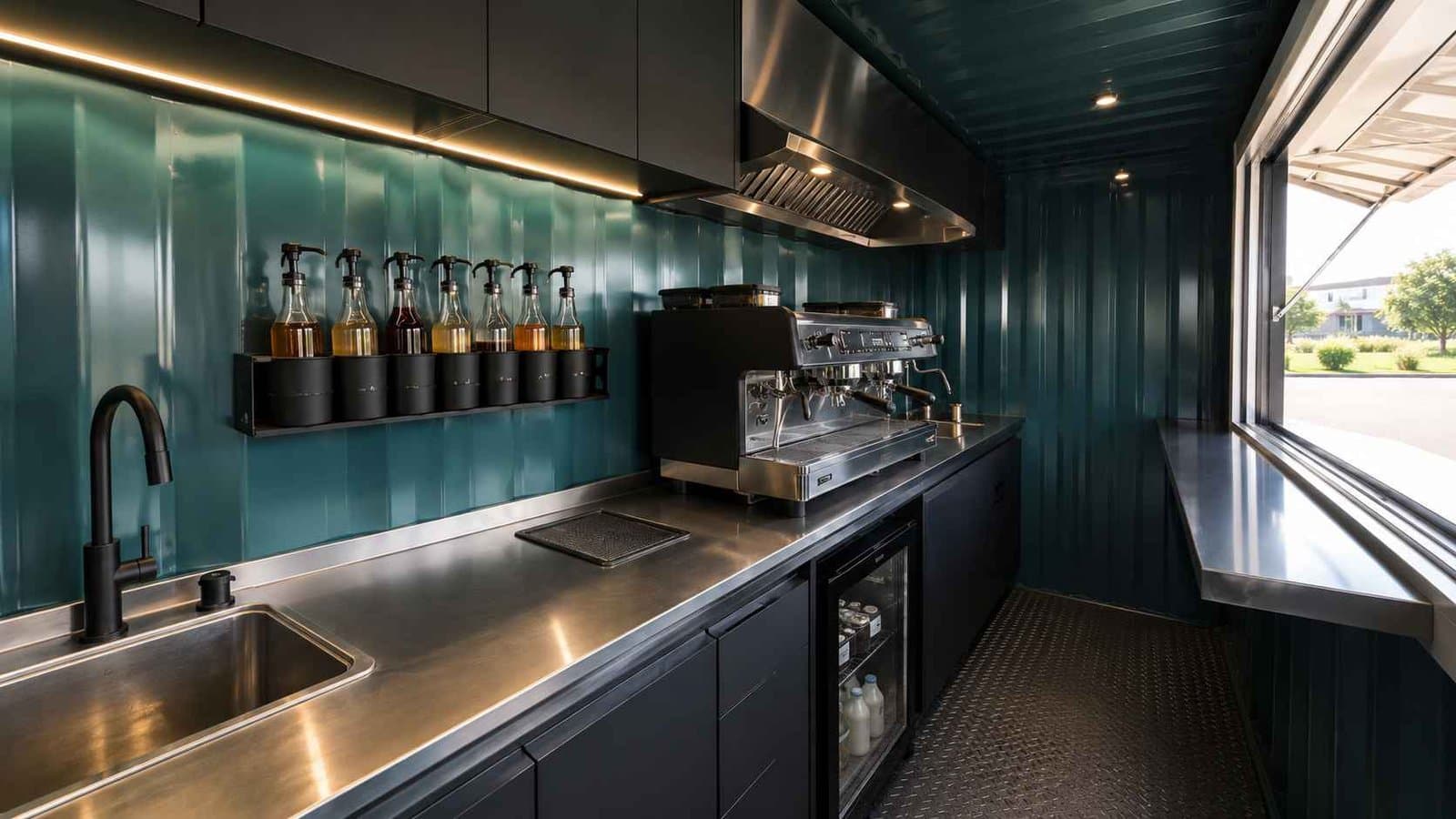
Factory-fitted espresso bar wall inside a 10-ft container coffee shop — the SAMAN configuration before the operator's machine and grinder are installed.
Power is sized for real coffee equipment. The standard MCB panel handles a single-phase 15A circuit for a prosumer espresso machine (Rocket Appartamento, Lelit Bianca grade) on its own breaker, plus separate breakers for the grinder, milk fridge, water boiler, and lighting. For a commercial dual-boiler unit (La Marzocco Linea Mini Pro, Slayer single-group, Synesso ES.1), we upgrade the panel to 3-phase 20A at the order stage — specify your machine model when you quote.
Plumbing is a 15mm water inlet at the espresso bar wall feeding the boiler, the steam-wand purge sink, and the rinse sink. A 32mm waste outlet runs to the floor drain.
The customer window is on the opposite wall — a roll-up shutter window with a counter at standing height for walk-up coffee service. The order point, the espresso bar, and the pickup point line up on one continuous workflow so a single barista works the line without crossing zones.
Compact Coffee Shop Design — How a 10×10 Floor Plan Actually Works for Coffee
100 sq ft of floor sounds tight until you walk one. The small container coffee shop design we ship uses the floor in three zones along the 10-ft length: the espresso bar line (about 4 ft along the long wall), the barista working aisle (about 3 ft, the spine of the unit), and the prep and storage zone (about 3 ft at one end).
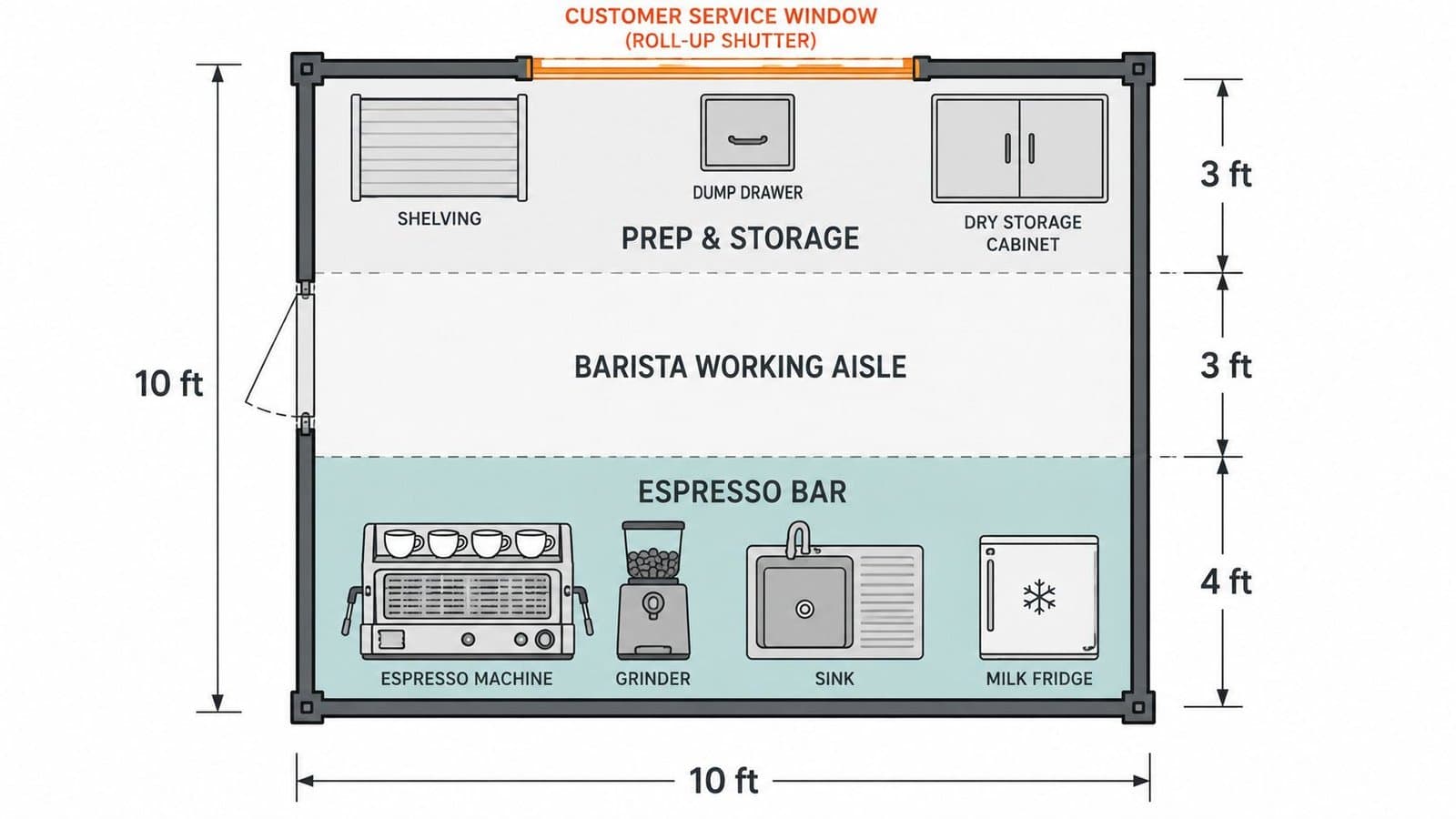
10×10 ft container coffee shop layout — espresso bar line, barista aisle, and prep zone mapped along the 10-foot length.
The customer window sits at the espresso bar end, not the prep end — customers see the machine and the barista pulling shots, which is the brand impression coffee buyers come for. The prep zone holds clean cups, syrup stock, dry storage, and the dump drawer for spent pucks. Dine-in seating does not fit inside the unit; budget 100 to 250 sq ft of outdoor area alongside the cabin if your concept needs covers.
Cups per Hour — How Many Coffees a Walk-Up Window Can Serve
A trained single barista at a 10-ft container coffee shop window typically serves 40 to 60 espresso-based drinks per hour at peak — flat whites, cappuccinos, lattes — and 30 to 45 off-peak. Filter coffee or batch-brewed cold coffee pushes throughput higher because the bottleneck shifts from extraction time to milk steaming. Pour-over and single-origin manual brews drop throughput to 15 to 25 cups per hour because each cup is a 2 to 3 minute commitment.
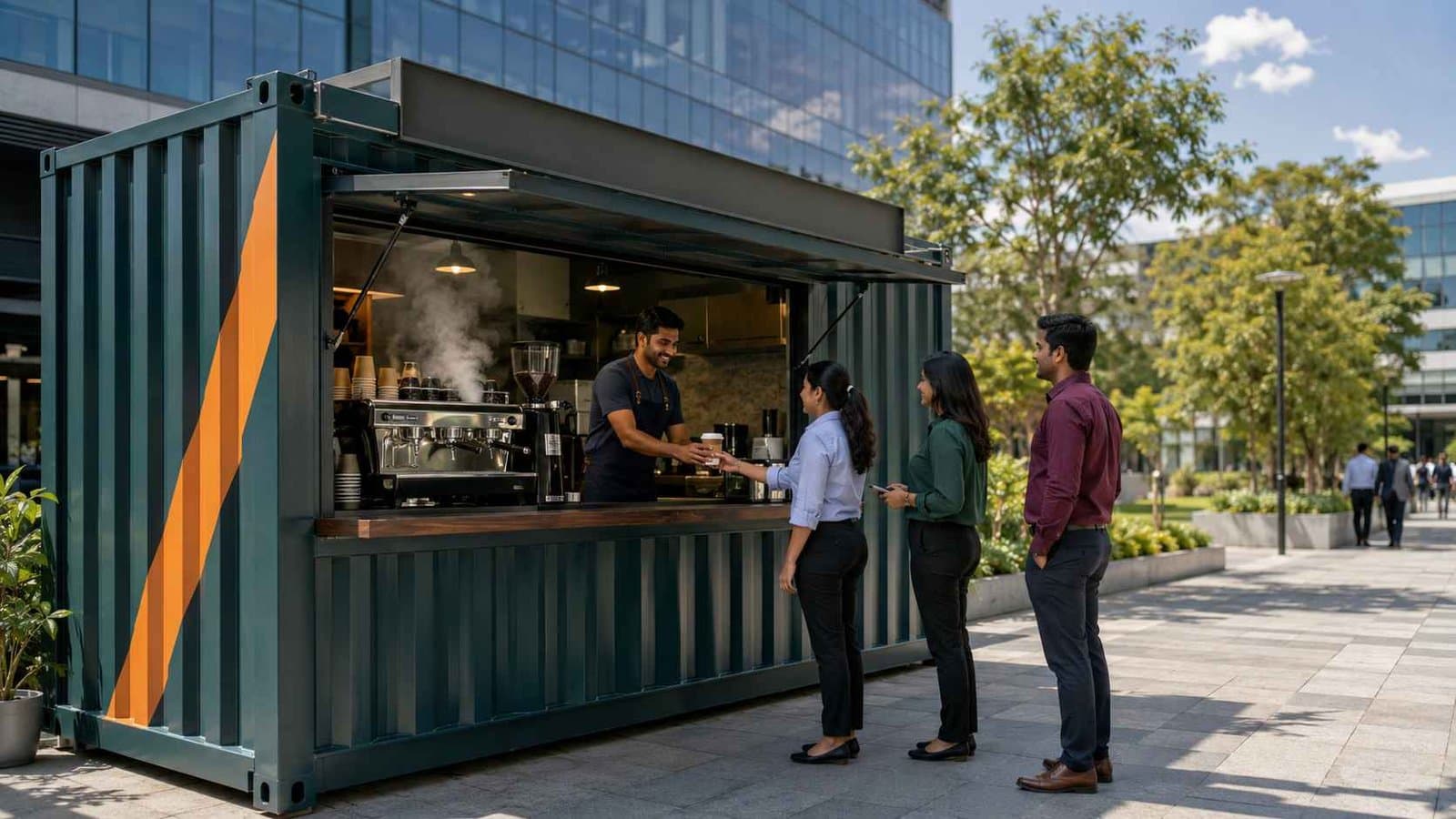
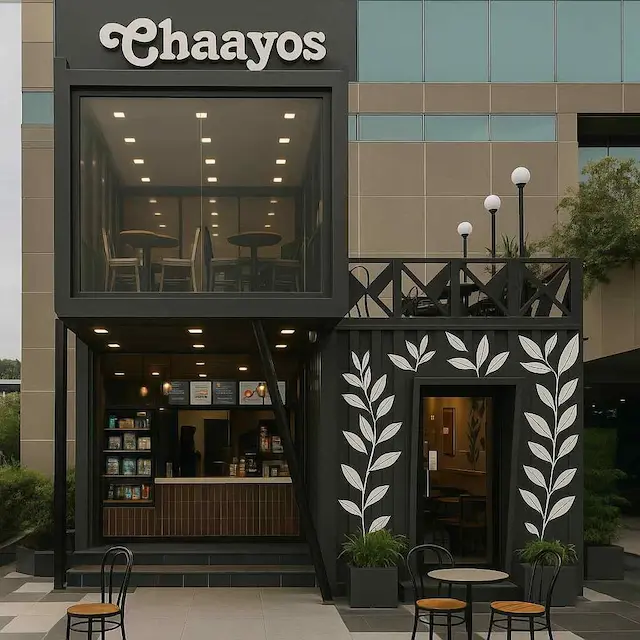
Walk-up coffee service in action at a SAMAN container coffee shop deployed inside a tech-park courtyard — peak-hour customer flow.
If your projected peak crosses 60 cups per hour, plan for a second window cut on the rear wall (one barista per window, two-station workflow) — we add this at factory build, not as a site retrofit.
Branding the Outside — Coffee Identity on a 10-ft Container
Exterior choices shape what customers see from across the street. Two finishes cover most coffee identities:
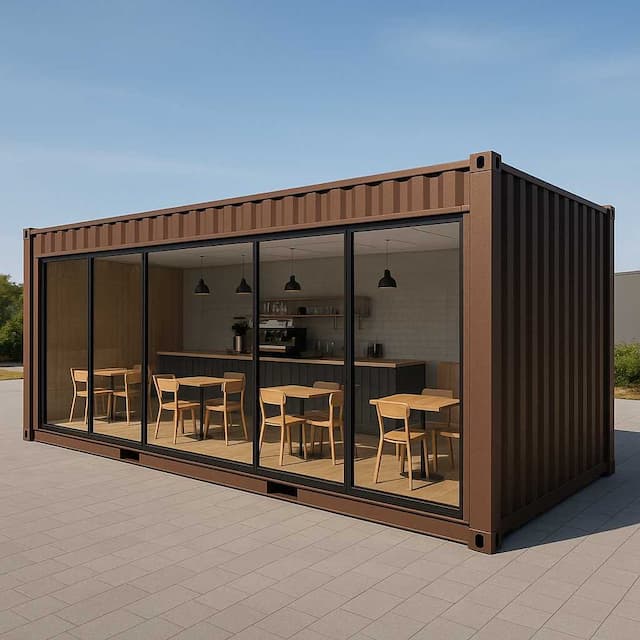
Corten-look corrugated steel for the raw, third-wave coffee aesthetic — visible weathered steel patina, paired with wood-look signage and warm lighting. Works for specialty roasters, single-origin brands, and concepts that lead on coffee provenance.
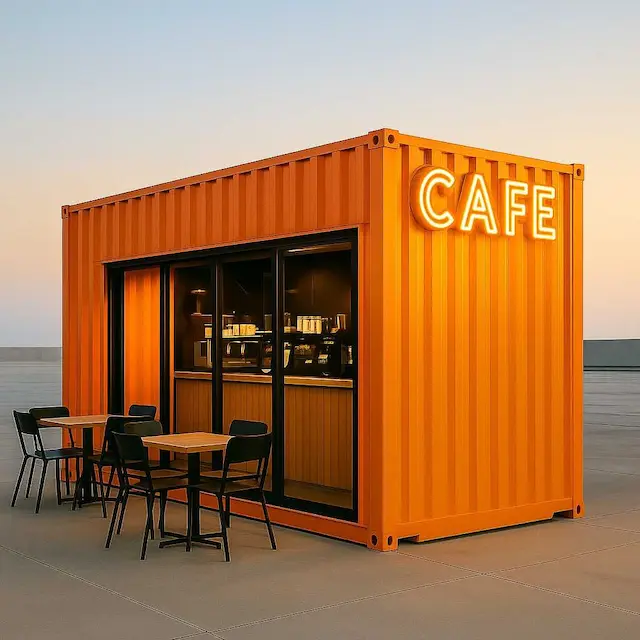
Pre-painted GI cladding in your brand colour for clean-finish brand-led concepts — a flat painted surface that takes vinyl wraps cleanly, with a signage rail running along the front fascia and an LED light strip above the customer window. Works for established coffee chains expanding kiosks, juice or single-product spin-off concepts, and white-label retail builds.
A vinyl wrap on the painted GI variant lets you swap seasonal campaigns or menu graphics without a repaint — the surface is rated for full-wrap application and removal across the unit's life.
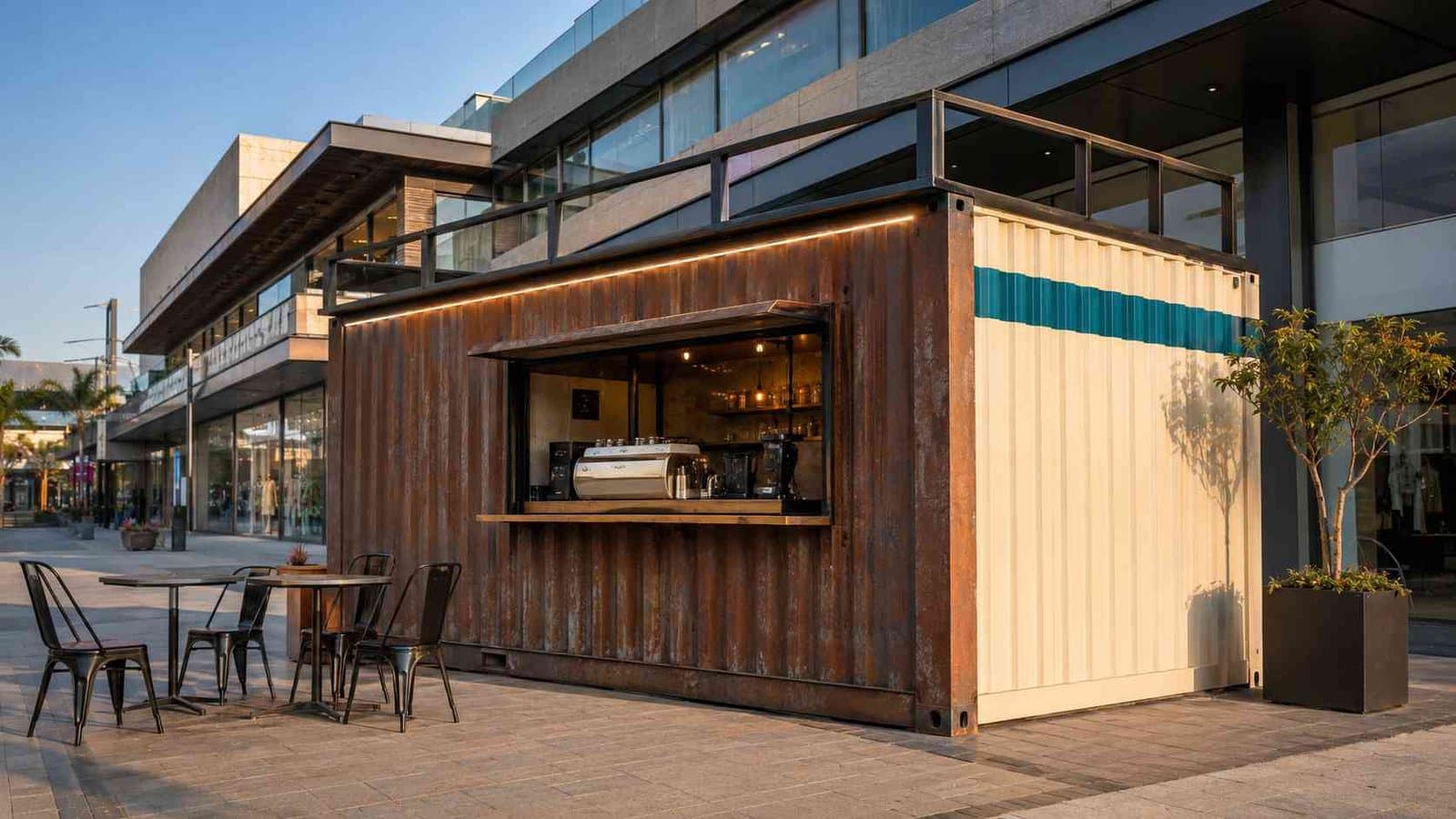
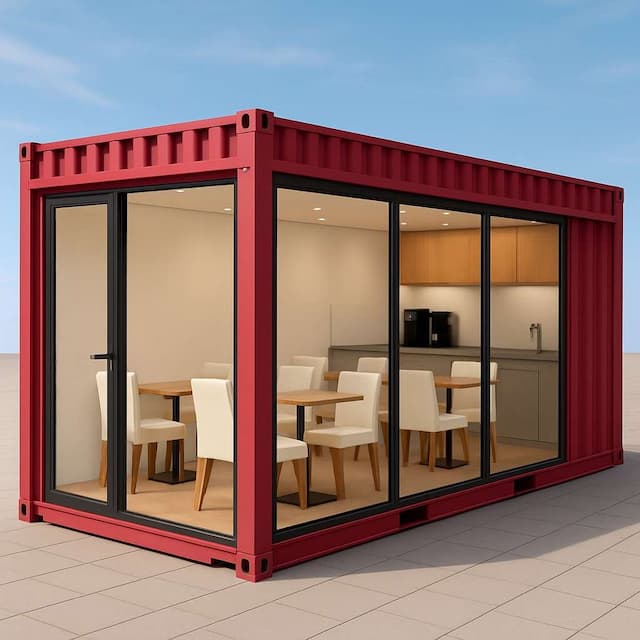
Two exterior finish options on one SAMAN container coffee shop — corten-look weathered steel and painted GI cladding side by side.
What ₹2,15,000 Buys, What's Extra, and When It Arrives
The ₹2,15,000 sale price (regular ₹2,35,000) on this SKU (SP-CC-40-2024) is the factory-finished 10-ft container coffee shop — not a bare shell with a quote-for-everything caveat.
Included: 10' × 10' × 9' shell with IS 2062 Grade A steel frame and 50mm PUF wall and roof panels · espresso bar wall fitted (counter, sink, grinder pad, milk fridge cutout, syrup rail, exhaust micro-hood opening) · customer window with roll-up shutter · single-phase MCB panel with circuits for espresso machine, grinder, milk fridge, boiler, and lighting · 15mm water inlet and 32mm waste outlet · factory paint finish in your brand colour · delivery within India and crane unloading at site.
Owner-supplied: espresso machine, grinder, milk fridge, water boiler · furniture and outdoor seating · signage and exterior vinyl wrap · FSSAI State License application · fire NOC and local municipal approvals at your site.
Fabrication runs 7 to 21 working days from confirmed order at our Gopasandra (Bangalore) or Jalpura (Greater Noida) facility. For the iconic 20-ft or 40-ft visible shipping-container silhouette as a brand statement, see our ISO-format cafe builds.
Container Coffee Shop vs Mobile Container Cafe — Coffee-First or Move-First?
Both products share the 10×10×8-ft form factor and sit in the same price tier, which is exactly why the choice between them needs to happen at quote stage, not after delivery.
A container coffee shop is engineered around the coffee operation itself — the espresso bar wall fitout, the electrical sizing for the machine you've already picked, the brand-led exterior, the FSSAI fixed-establishment grade. The unit is meant to stay put and become your address.
A mobile container cafe is engineered around the move — reinforced corner lift points welded to the base frame, redeployment-ready utility seals, a build spec that survives 2 to 4 site relocations across its lifespan. Pick the relocation-ready 10-ft build if you plan to move the unit between sites every couple of years. Pick this page's coffee-fitted build if your operation stays in one spot and what's inside matters more than how it travels.
FSSAI for a Single-Product Coffee Operation — Fixed Establishment, Not a Petty Vendor
A 10-ft fixed-location coffee shop files an FSSAI State License (Form B) as a fixed food business establishment — not a petty food business registration (which is for hawkers and vendors below ₹12 lakh annual turnover) and not a Central License (which is for businesses crossing state-level thresholds).
SAMAN supplies the documentation an FSSAI inspector asks for: a layout drawing of the unit showing the espresso bar wall and customer window, the kitchen specification listing food-grade surfaces and exhaust micro-hood, and the IS 2062 Grade A material certification for the structure. The application itself is filed by the licensee — typically the brand owner or operating entity — at the State FSSAI portal.
Where SAMAN Has Delivered Coffee Units — Five Cities, One Cluster Standard
Coffee units in our live deployment record include HSR Layout in Bangalore, Whitefield in Bangalore, Hosur on the Bangalore-Tamil Nadu corridor, Gurugram in the Delhi NCR cluster, and Greater Noida in the Delhi NCR cluster. South India dispatches from our Gopasandra facility outside Bangalore; North and Central India dispatches from Jalpura outside Greater Noida.
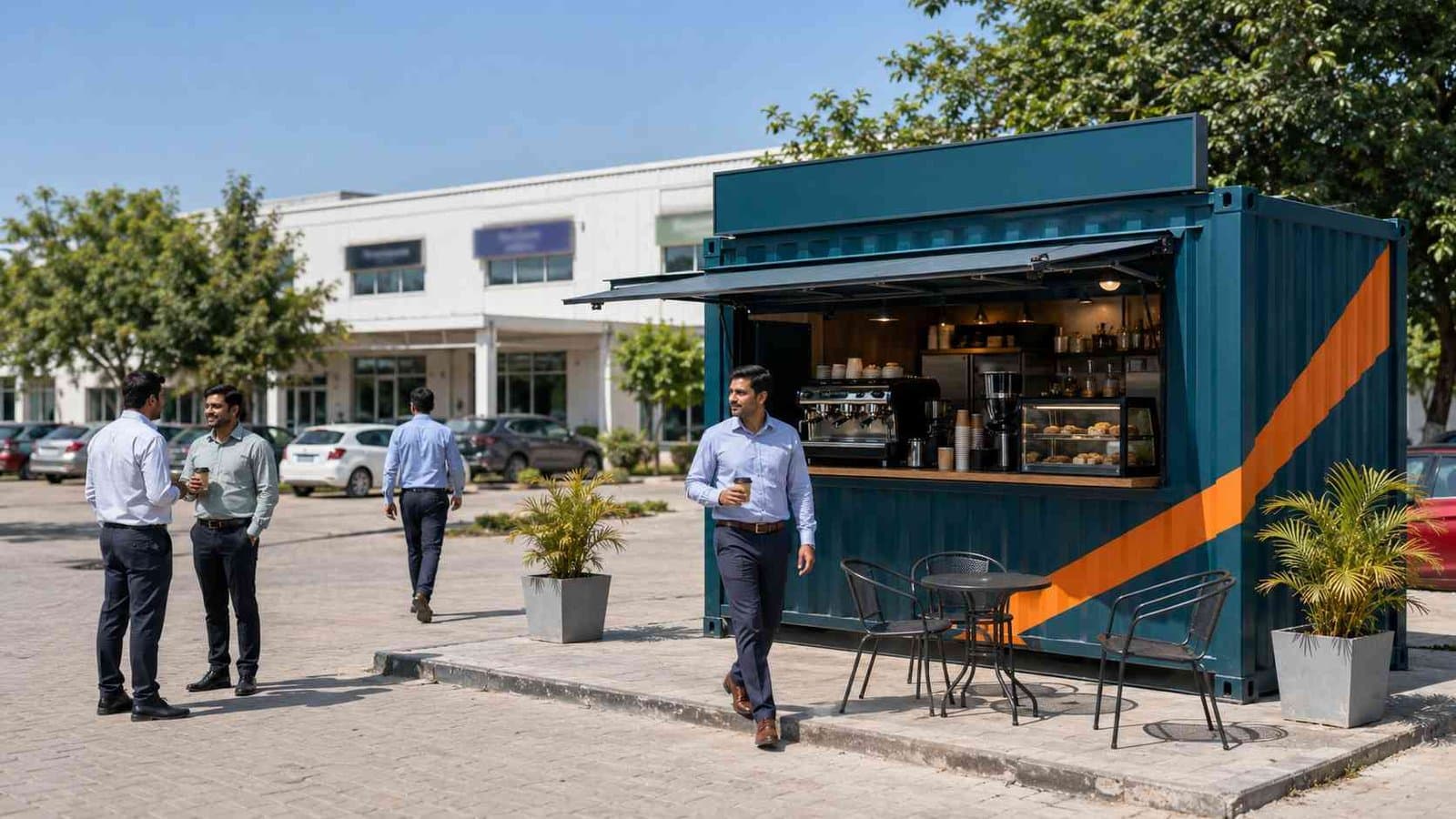
SAMAN container coffee shop operating at an SME office compound — same factory standard delivered to industrial-business parks across Delhi NCR.
Same 52 internal quality checkpoints across every dispatched unit — input verification, frame welding, panel bonding, espresso-bar fitment, surface treatment, pre-dispatch — and the same IS 2062 Grade A material spec from either factory. If your plan needs scaling to a multi-container layout or food court later, see the modular configuration for staged growth.
Frequently Asked Questions
Can a 10-ft container coffee shop actually run a real prosumer or commercial espresso machine, or just a domestic-grade unit?
Yes. The standard SAMAN MCB panel handles a single-phase 15A circuit for a prosumer machine (Rocket, Lelit, ECM grade) on its own breaker. For a commercial dual-boiler unit (La Marzocco Linea Mini Pro, Slayer single-group, Synesso), we upgrade the panel to 3-phase 20A at the order stage. Specify your machine model at quote conversation so we factory-fit the right breaker capacity before dispatch.
I want a coffee shop and I might relocate it in 2–3 years — should I buy this 10-ft coffee unit or the mobile container cafe?
Depends on how many moves are in your plan. If you expect 1 relocation across the unit's life — say, a 3-year lease that may not renew — this page's coffee-fitted build is the cleaner economic call; lift points can be retrofitted at a small one-time cost and the espresso-bar fitout is preserved. If you're planning 2 or more relocations at 12-to-36 month intervals — leased plots with short tenure or brand expansion across multiple sites — start with the mobile build instead. It is engineered for the move from day one.
What's the minimum site footprint I need around the 10-ft coffee unit for queue space and outdoor seating?
Plan for 100 to 250 sq ft alongside the unit for a queue line and 6 to 12 outdoor covers, scaling with how much dwell time your concept generates. Add 50 sq ft minimum behind the unit for utility access — water tank, gas cylinder if your concept needs one, MCB panel reach. Specialty coffee concepts where customers sit and read for an hour push to the 250+ sq ft end; quick takeaway-led concepts work at 100 sq ft.
Can I run a single-product non-coffee concept — juice, tea, dessert, or vada pav — in the same 10-ft container coffee shop unit?
Yes — the espresso bar fitout adapts to other single-product menus. A juice bar omits the boiler line and adds a blender circuit. A tea brand kiosk swaps the espresso machine for kettle-grade electrical, with the grinder removed. A dessert or vada pav counter replaces the milk fridge cutout with a chiller cutout and adjusts the exhaust hood for the cooking load. Specify the menu at order so the factory-fit matches before dispatch — converting after delivery is more expensive than ordering it right.
What does the inside look like before I add my own coffee machine, grinder, and fridge — is it factory-fitted or just a bare steel shell?
Factory-fitted. The espresso bar wall arrives with the work surface, sink, grinder pad, milk fridge cutout, syrup rail, and exhaust micro-hood opening already in place. The customer window is cut and shuttered. The MCB panel is wired with labelled circuits. The exterior is painted in your brand colour. What you add: the espresso machine, the grinder, the milk fridge, the water boiler, signage, furniture. Marketplace listings advertising "container coffee shop" at ₹90,000 to ₹1,60,000 are bare steel shells without any of this fit-out — that is the difference.
Plan Your Container Coffee Shop
Share your city, your brand concept, and your espresso machine model if you've picked it. We come back within 24 working hours with an espresso bar layout drawing, an exterior finish recommendation, and an itemised quote. Standard fabrication runs 7 to 21 working days from confirmed order.
Call or WhatsApp: +91 97089 89937 (Greater Noida) · +91 80886 85440 (Bangalore)
Need Custom Requirements?
Get in touch with our experts for customized solutions and bulk orders. We're here to help you find the perfect solution.