
Related Products
Explore similar items
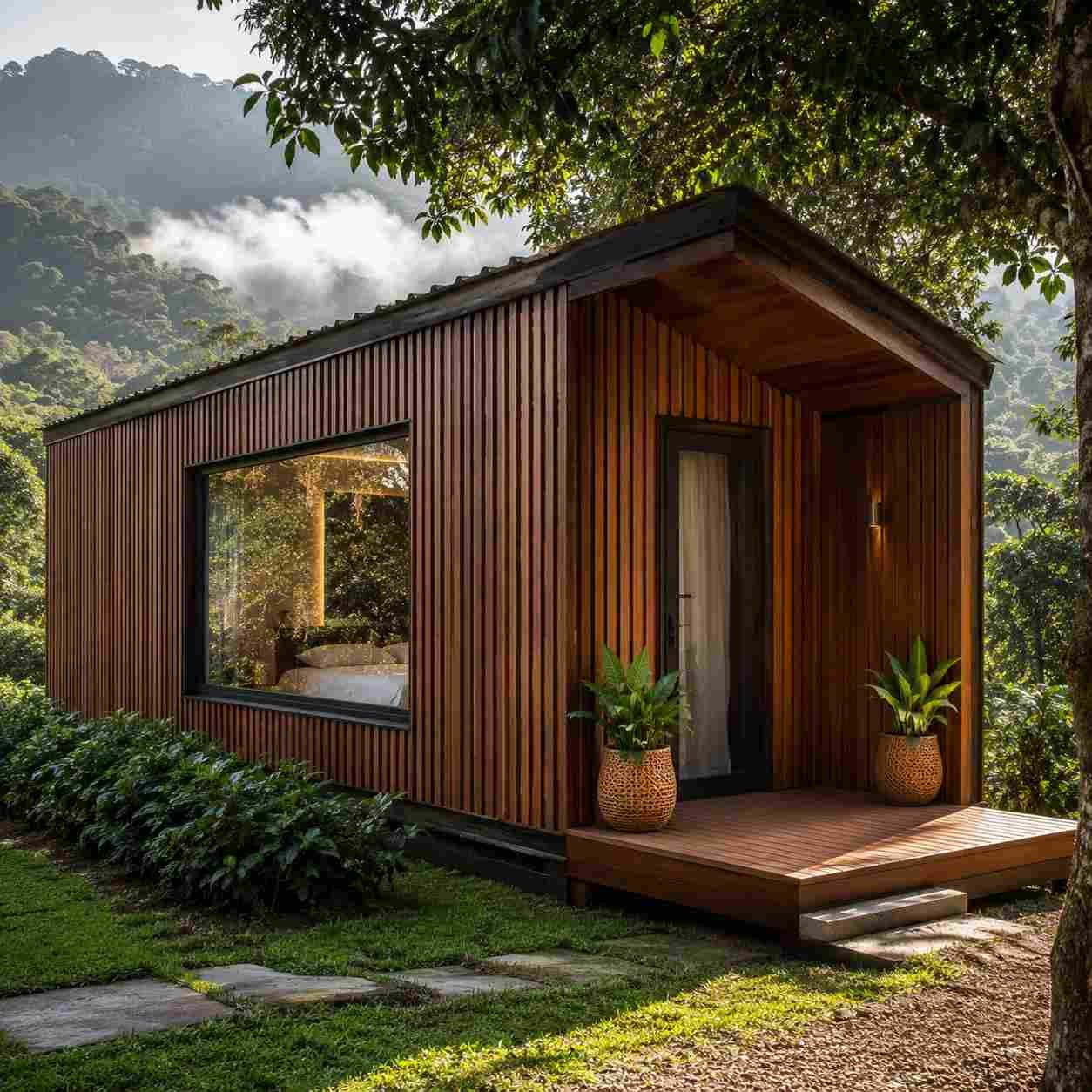
Container Hotel
Inclusive of all taxes
20×10 ft module — single-property boutique hospitality build
Quantity
Product Information
Product Details
Comprehensive information about Container Hotel
Product Overview
Detailed information about Container Hotel
A container hotel is a boutique hospitality property built from container modules — hotel rooms in containers, configured at single-property scale for operators planning 5 to 25 keys. The format is built for first-time hospitality entrepreneurs opening a farm-stay, hill-station inn, or beach-side cottage cluster; existing operators extending an established property with a 5 to 15 key block; and resort developers piloting a small tourism-zone concept where land is available but the project scale stays boutique. This page covers what a single-property containerised hotel actually is, what ₹4,95,000 buys you at SAMAN spec, the three room configurations boutique operators pick, project plans from 5 keys through 25 keys, the four soft-finish exterior options that make the property read as a hotel rather than a parked container, where boutique container hotels fit in Indian tourism zones, what your site needs before delivery, the order-to-opening timeline at this scale, and where this build sits next to SAMAN's stacked resort build for larger projects.
What a Single-Property Container Hotel Is — And Who It's Built For
A single-property container hotel is a hospitality property where every guest room is a factory-built container module, placed on a prepared pad at your site, and finished to read as a boutique hotel rather than as visible-corten shipping containers. The build sits between a small prefab homestay (too unstructured for paying hospitality guests) and a multi-storey resort (too much project for a 10-key tourism plot).
The boutique container hotel buyer is usually one of three profiles. First, the first-time hospitality entrepreneur — often a family with land in a tourism zone — opening a farm-stay or weekend property with 5 to 12 rooms. Second, the existing operator — homestay, small hotel, resort — adding a 5 to 15 key cottage block to a property already running. Third, the boutique resort developer — building a single tourism-zone concept (Coorg coffee-stay, Himachal eco-lodge, Goa interior villa cluster) with 15 to 25 keys at design-led finish levels.
Each of these buyers needs the same thing: a hospitality-grade build that doesn't price like brick construction, doesn't take a brick build's 14 to 18 months to open, and doesn't look like a parked shipping container when guests arrive.
The 20-Foot Module: What ₹4,95,000 Buys at SAMAN
The base container hotel module from SAMAN is a 20'×10'×9' factory-fitted unit at ₹4,95,000 (sale) / ₹5,15,000 (regular), GST inclusive, ex-factory. Each module ships from either Bangalore (Gopasandra) or Greater Noida (Jalpura) — whichever facility is closer to your site.
The 20'×10'×9' shell
Steel structural frame, 50mm PUF panelled walls and roof for insulation, weather-sealed corner-casting joints, vinyl flooring base, exterior in primer for whichever finish you select. The 50mm PUF spec is the same baseline insulation that runs across our container hospitality and container houses ranges — calibrated for Indian temperature and humidity ranges.
What ships inside one module
Bed-position framing along one long wall, attached bathroom enclosed at the short end (around 35 sq ft enclosing the shower stall, WC, and washbasin), wall-mounted split AC unit, a window cut-out or full-glass span on the view side, an entry door, electrical conduiting fitted to switchpoints, and plumbing rough-in including a hot-water tap connection. Lighting is fitted; the geyser, sanitary fittings, and the AC unit are quoted alongside based on the fit-out tier you choose.
What ₹4,95,000 does not include
Land. Foundation and RCC pad work. On-site connections — water main run from your supply to the module, drainage to your soak pit or municipal connection, electrical run from your supply panel to the module entry point. Soft furnishings — mattresses, linens, towels, art, decor pieces. Licensing and approvals. Kitchen and F&B equipment if you're adding a dining module separately. Honest scoping matters here — boutique buyers run small budgets, and knowing what the module-cost number covers helps you plan the full project cost correctly.
Three Boutique Room Configurations — Cottage, Couples Suite, Family Suite
Single-property operators don't market rooms by key count — they market by room type. SAMAN builds container hotel modules in three pickable configurations.
Cottage room (20'×10' single module)
A queen bed or twin twins, a built-in wardrobe along the short wall, a writing nook or vanity counter under the window, attached bathroom with shower-WC-basin partition, split AC, and a window-side reading seat. Around 200 sq ft of internal floor — sized for solo and couple boutique stays, farm-stay cottages, and hill-station cabins.
Couples Suite (40'×10' single module)
A bedroom zone at one end with a queen bed and lounge seating along the centre of the 40-ft floor, separated visually from the bathroom by a wardrobe wall. Bathroom is bigger here — room for a soaker tub if the brand calls for it. An exterior deck-extension along the long side is the popular upgrade for honeymoon-zone bookings. Around 400 sq ft internal. The configuration most boutique resorts use as their top room tier.
Family Suite (two 20'×10' modules joined)
Two sleeping zones with a shared sitting area between, two bathrooms, family-friendly layout. Around 400 sq ft internal across the joined pair. The configuration eco-lodges and farm-stays in family-tourism zones pick for 3 to 4 guest occupancy.
Most boutique container hotel projects use a mix — for example, a 10-key build might be six cottage rooms plus two couples suites plus one family suite, with the remaining count made up in the common-area module. The mix is set during design lock before factory build starts.
Project Plans for 5-Key, 10-Key, 15-Key, 20-Key and 25-Key Boutique Hotels
The most useful number for a boutique container hotel buyer isn't per-key cost — it's the full module count and approximate module-cost total at the key count you're planning. Here's how the math runs at five common project sizes.
| Project size | Room modules | Common-area modules | Approx. module-cost total | Typical timeline | Site footprint |
|---|---|---|---|---|---|
| 5-key boutique | 5 × 20' cottage modules | 1 reception/lounge module | ≈ Rs 30 lakh | 60–75 days | 0.15–0.2 acres |
| 10-key boutique | 10 × 20' (mix of cottages and a couples suite or two) | 1 reception + 1 small F&B counter | ≈ Rs 62 lakh | 75–90 days | 0.25–0.35 acres |
| 15-key boutique | 15 × 20' (8 cottage + 5 couples suite + 2 family suite typical) | 1 reception + 1 dining module | ≈ Rs 95 lakh | 90–105 days | 0.4–0.5 acres |
| 20-key boutique | 20 × 20' (configured to your guest mix) | 1 reception + 1 dining + 1 back-of-house | ≈ Rs 1.3 crore | 100–120 days | 0.5–0.65 acres |
| 25-key upper-boutique | 25 × 20' (configured to your guest mix) | 1 reception + 1 dining + 2 back-of-house/staff | ≈ Rs 1.6 crore | 110–130 days | 0.6–0.8 acres |
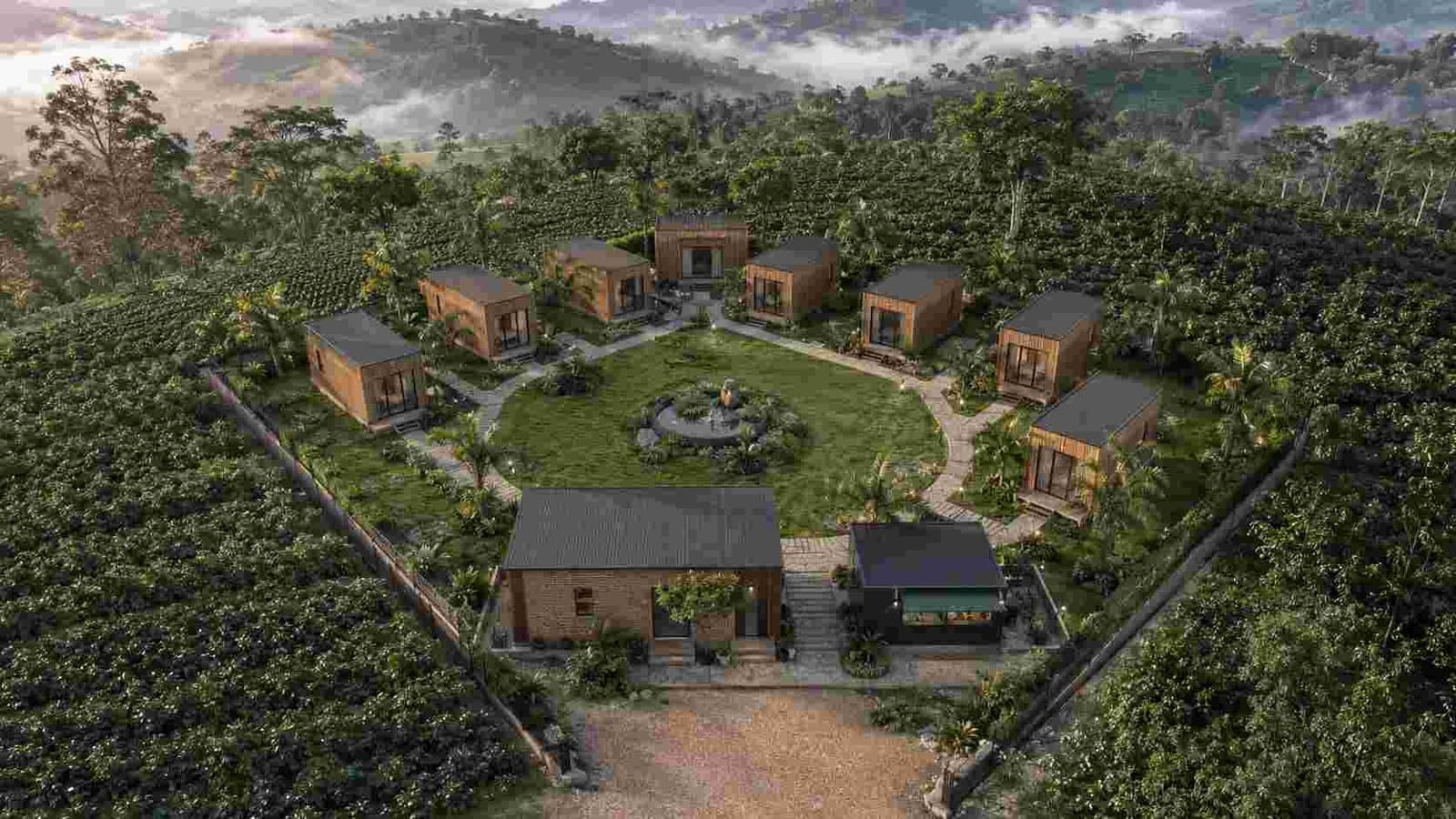
A 10-key boutique container hotel plan — 10 cottage modules in U-shape, reception in brick veneer, F&B counter in painted GI. Around 0.3 acres.
Module count exceeds key count because every boutique property needs at least a reception module, and most need a dining module or counter; properties of 15 keys and above usually need back-of-house and staff modules too. The approximate cost is module-build only — it does not include land, foundation, site connections, kitchen equipment, soft furnishings, or licensing.
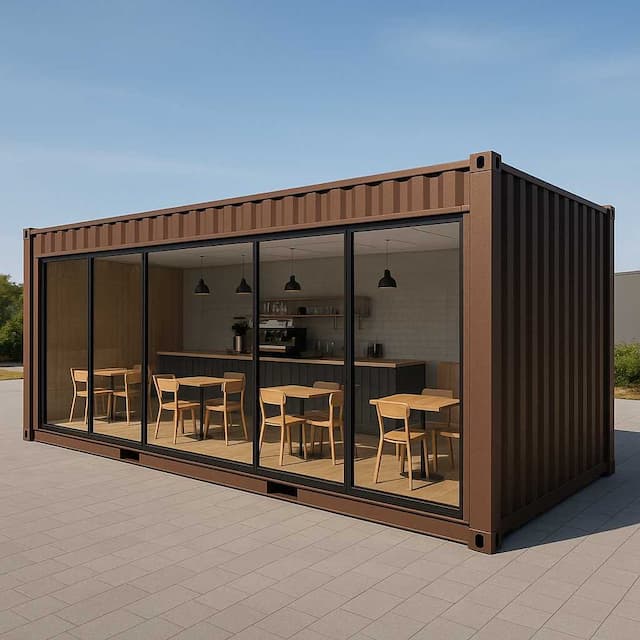
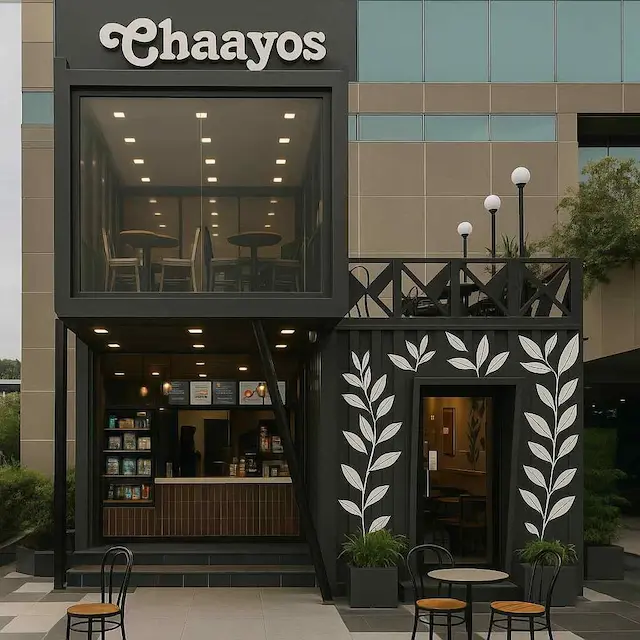
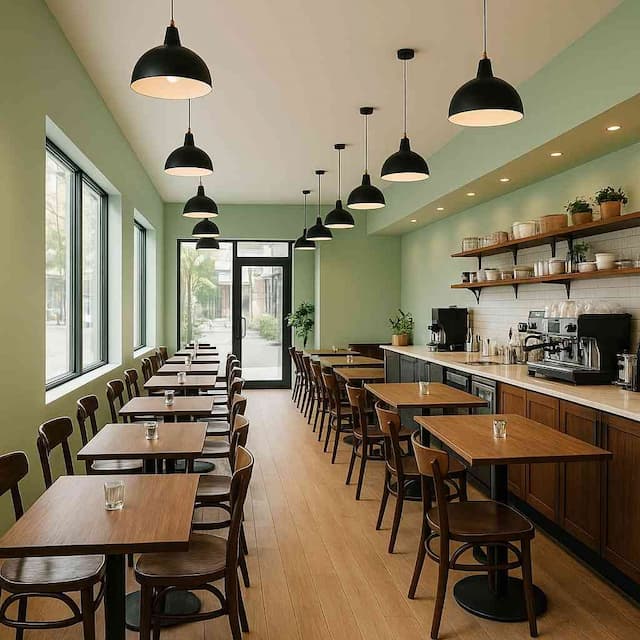
All boutique projects in this range stay single-storey or low-rise. No stacking engineering is needed at boutique scale — the modules sit ground-level on individual or shared pads, which keeps approvals simpler and the structural design uncomplicated. If you're adding F&B at project scale, a separate dedicated dining and kitchen module is often integrated — that runs through SAMAN's modular cafe units in the same factory range for the F&B component, designed to slot into the property layout alongside the room modules.
Soft-Finish Exteriors for a Hotel-First Look, Not a Container-First Look
The single biggest design decision in a boutique container hotel is what the exterior looks like. The visible-corten container aesthetic that resort-scale projects use as a brand asset reads wrong on a boutique farm-stay or hill-inn — guests booking a Coorg coffee-stay expect timber-batten cabins, not stacked cargo containers. Boutique container hotel design choices come down to four exterior options, all factory-applied before dispatch.
Wood-batten cladding
Vertical or horizontal timber slats fitted over the steel exterior, treated for outdoor use, with stain or natural finish. The module reads as a hill-station cottage or farm-stay cabin — not a container at all. Per-module premium typically Rs 35,000 to Rs 60,000 over the base. Best for Coorg, Chikmagalur, Wayanad, Himachal, Uttarakhand, and Northeast tourism zones where cabin-aesthetic expectations are set.
Painted GI cladding in brand colours
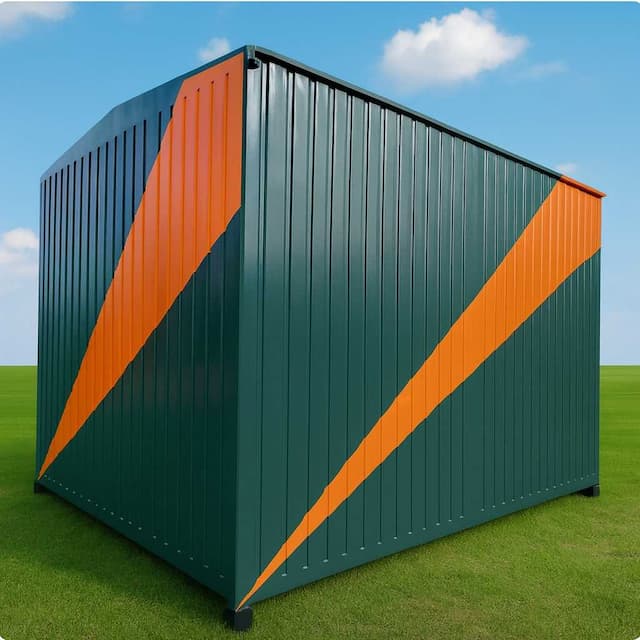
A factory-paint-finished GI sheet exterior in your brand colour, matt or gloss as the brand calls for, applied over the standard panel. The module reads as a finished hotel wall in your brand colour rather than a container. Per-module premium typically Rs 15,000 to Rs 25,000 over base. Best for coastal-adjacent zones like Goa interior and Andamans where saline air favours painted finish, and for properties where brand colour is part of the operator identity.
Brick-veneer exterior
Thin brick-tile cladding fitted over the steel, mortar-finished. The module reads as conventional brick architecture. Per-module premium typically Rs 50,000 to Rs 80,000 over base. The pick for properties wanting full hotel-traditional appearance — heritage-adjacent boutique concepts, properties in zones where guests don't want any container-visible aesthetic.
Perforated metal screens
Architectural perforated screen panels fitted as a layered facade over the module long side, usually with a structural offset that allows light and shadow play. The module reads as a contemporary boutique-hotel design — the look popular in upper-tier farm-stays and design-led resort concepts. Per-module premium typically Rs 40,000 to Rs 70,000 over base.
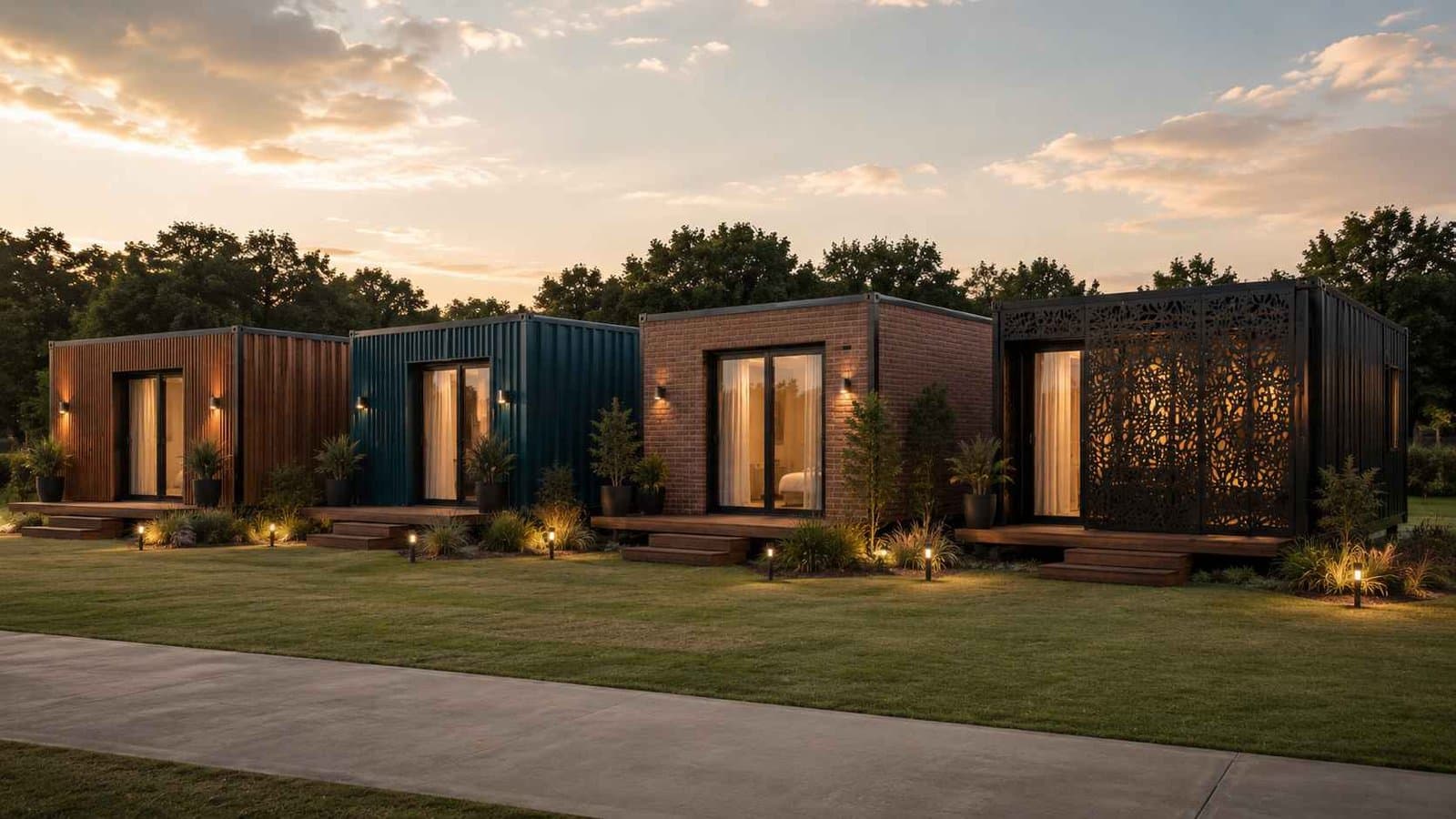
The four boutique container hotel exterior finishes shown together — wood-batten, painted GI, brick veneer, perforated metal screen. Most operators mix finishes across modules.
Most boutique properties mix finishes across modules for visual variety — the reception module in brick veneer, the cottage modules in wood-batten, the dining module in painted GI. The mix is part of the container hotel design conversation at the design-lock stage and doesn't add to the project timeline if locked early.
Tourism-Zone Fit — Coorg, Himachal, Goa Interior, Andamans, Rann of Kutch
Boutique container hotel buyers usually have a specific tourism zone in mind. The format works differently in each.
Western Ghats coffee belt — Coorg, Chikmagalur, Wayanad
Wood-batten exterior and tile-roof options match the local cottage aesthetic that guests already expect from coffee-estate stays. The factory-build advantage shows up most clearly in monsoon — your modules complete inside our covered Bangalore or Greater Noida facility while the rains run, then ship and install in the post-monsoon window. Standard 50mm PUF handles the temperate range comfortably.
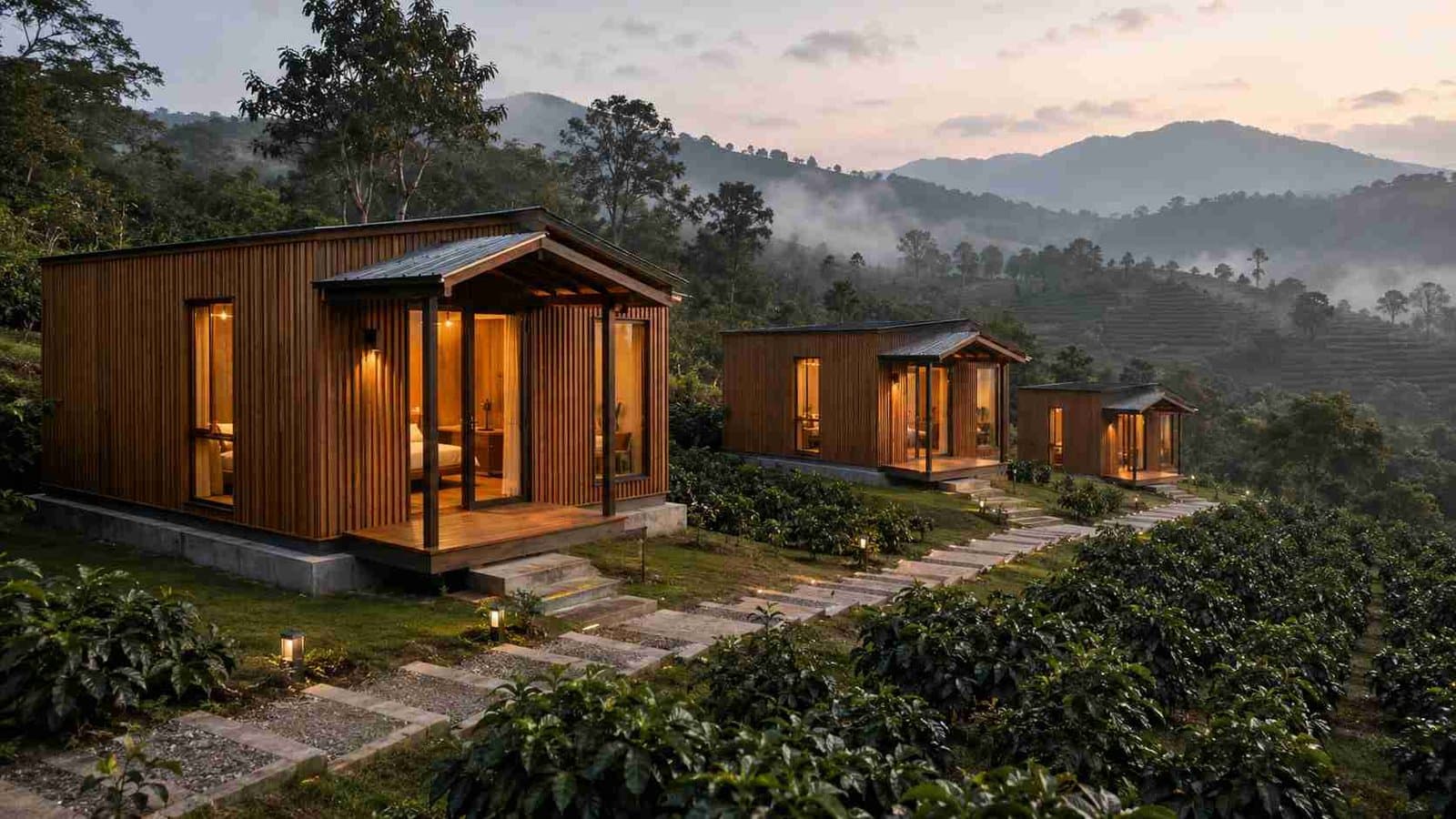
Coorg coffee-estate deployment — three wood-batten cottages stepped on individual pads. Sloped sites work well at boutique scale because each module gets its own pad.
Himachal foothills, Uttarakhand, Northeast hill stations
Wood-batten cladding plus steep-pitch overhang options. Foundation simplicity is a real advantage on sloped plots — each module sits on its own pad, no continuous foundation needed across the property. Insulation matters more in these zones; our standard 50mm PUF is the baseline, and a 75mm PUF option is available for properties at higher altitudes.
Goa interior, Konkan rural
Painted GI finish in brand colours or perforated screen for contemporary design-led concepts. Saline-resistant powder coat is standard for properties within roughly 5 km of the coast. Quick deployment matches the tourist-season opening calendar — most Goa-interior properties target an October-onwards opening, which fits the 60-to-90-day order-to-opening window cleanly.
Andamans, Lakshadweep, island tourism
The build constraint is logistics, not the build itself. SAMAN ships from mainland production; on-island assembly is handled with local crane partners. Painted GI standard for saline resistance. Project timelines run longer for transport — add 15 to 25 days to mainland figures.
Rann of Kutch, Western desert tourism, Rajasthan interior
Insulation is the priority because temperature swing across day and night is significant. Painted GI for desert sun resistance. Deck and shade-overhang module options are usually added — they're factory-fitted as integrated extensions to the cottage module rather than built on site.
Rural tourism plots near metros — Bangalore outer, Pune outer, Delhi NCR rural
All four finishes work; the choice runs on brand identity rather than zone constraint. This is also where weekend-stay and farm-stay properties for urban-tourist markets sit — the boutique container hotel format fits well here because the buyer base is metro-resident and brand-finish expectations are high.
Site Readiness Checklist for a Boutique Hospitality Plot
Boutique plots are usually rural, often without prior commercial use, and almost always with the operator handling site prep themselves. Seven items need to be in place when the first module arrives.
- Foundation pad. A level RCC foundation pad, six inches thick, sized to extend two feet beyond each module's footprint on every side. For 5 to 10 modules, individual pads per module are simpler. For 15+ modules, a continuous low slab is more efficient overall.
- Power supply at site boundary. 7 to 15 kW per cottage module depending on AC load and fit-out tier. Reception and dining modules need 20 to 30 kW. Three-phase is recommended at 10+ modules to balance load and reduce voltage drop.
- Water main. A half-inch inlet line per module, with a buffer tank if municipal pressure is variable — which it usually is in rural tourism zones.
- Drainage. Connection to a municipal drain where available, or a properly sized soak pit and septic system within 15 ft of each module bathroom. Tourism zones without municipal drain need a sized septic system as part of the readiness scope.
- Access road. Trailer-grade access for module delivery — 12 ft minimum width, no overhead constraints below 14 ft. Where your road is narrower, modules can be lifted off the trailer at the nearest accessible point and trolley-shifted onto your pad; that's quoted separately as additional handling.
- Crane access. A flat staging area near the pads for the unloading crane. SAMAN's crane unloading is included in pan-India delivery; site-side flat access is the operator's responsibility.
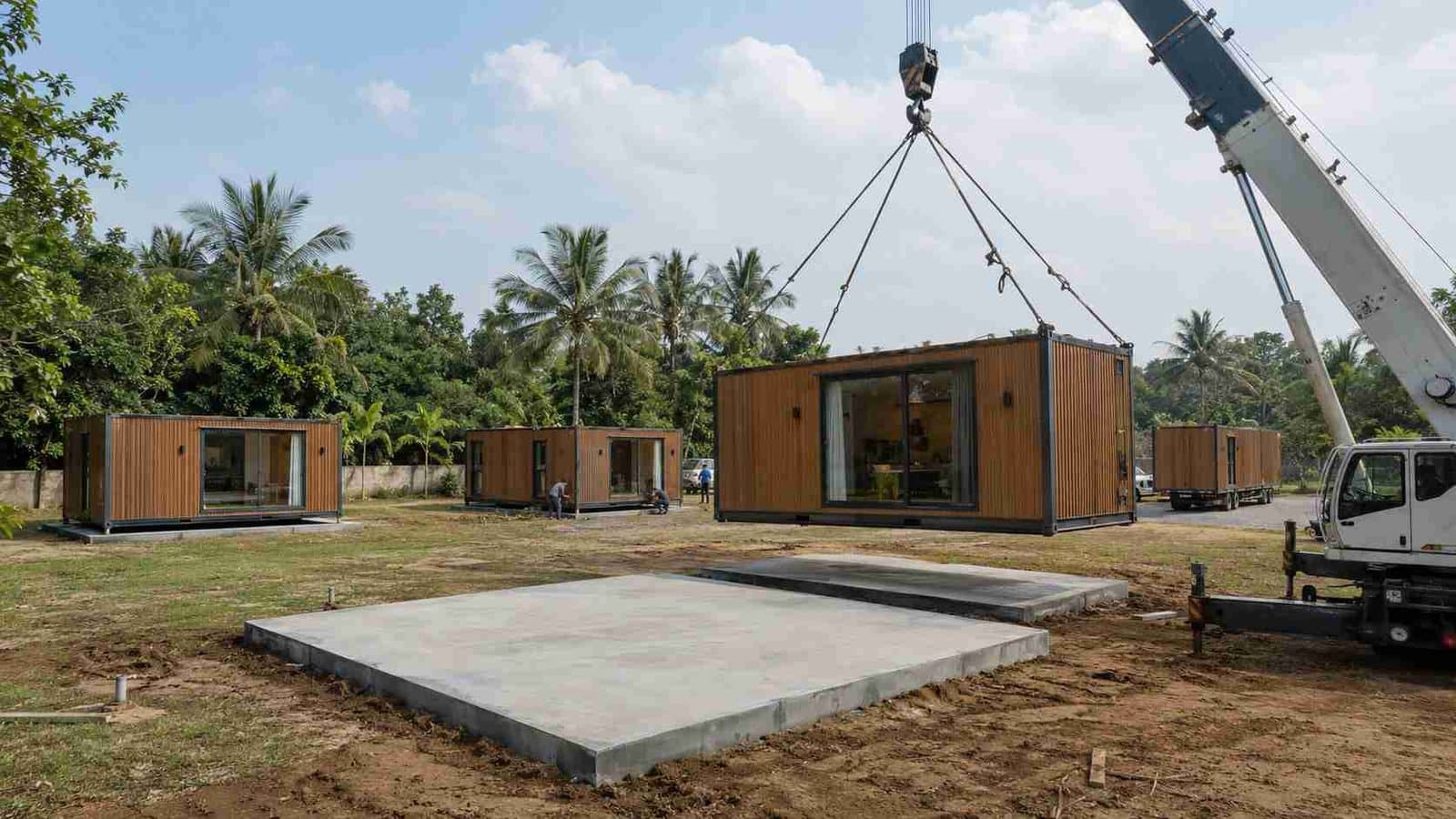
Crane unloading and pad placement at a boutique tourism-zone site — RCC pad cured, trailer access ready, crane-lifted onto the prepared pad.
7. Approvals — zoning. Boutique container hotel builds at this scale usually clear faster than conventional brick hotels because module count keeps the build under the "permanent construction" thresholds many state policies use. Karnataka, Kerala, Goa, Himachal Pradesh, and Uttarakhand have specific farm-stay and homestay policies that boutique container hotels typically fit cleanly within. We don't handle approvals on your behalf, but we provide the structural drawings, electrical specifications, and module documentation that your approval application requires.
The Order-to-Opening Timeline at Boutique Scale: 60 to 120 Days
Factory build plus transport plus site work plus commissioning lands most boutique container hotel projects in a 60-to-130-day window from PO to keys-ready.
| Stage | Day range |
|---|---|
| Design lock + PO + advance payment | Day 1–7 |
| Factory build (Bangalore Gopasandra or Greater Noida Jalpura) | Day 8–35 (varies with module count) |
| Trailer transport pan-India | Day 36–42 (varies with site distance) |
| Crane unload + pad placement + inter-module sealing | Day 43–50 |
| Site connections — power, water, drainage hookup | Day 51–60 (runs in parallel where the site team is ready) |
| Final commissioning + soft-furnishings handover | Day 61–75 |
By project scale, a 5-key build typically opens 60 to 75 days from PO; a 10-key, 75 to 90 days; a 15-key, 90 to 105 days; a 20-key, 100 to 120 days; a 25-key, 110 to 130 days. The timeline shortens where your site is ready early — most of the work that happens after factory dispatch can run on a site that's already pad-poured and services-trenched.
When to Choose a Container Hotel vs a Shipping Container Hotel
Two SAMAN builds sit in the container hotel space, and the choice between them is mostly about project scale and whether the visible-container silhouette is part of your brand.
Container hotel (this page). Single-property, 5-to-25-key range, single-storey or low-rise. Soft-finish exteriors — wood-batten, painted GI, brick veneer, perforated screen — mean the property reads as a hotel, not as parked containers. Best for farm-stays, hill-inns, boutique tourism resorts, hospitality extensions to existing properties, and design-led concepts in tourism zones.
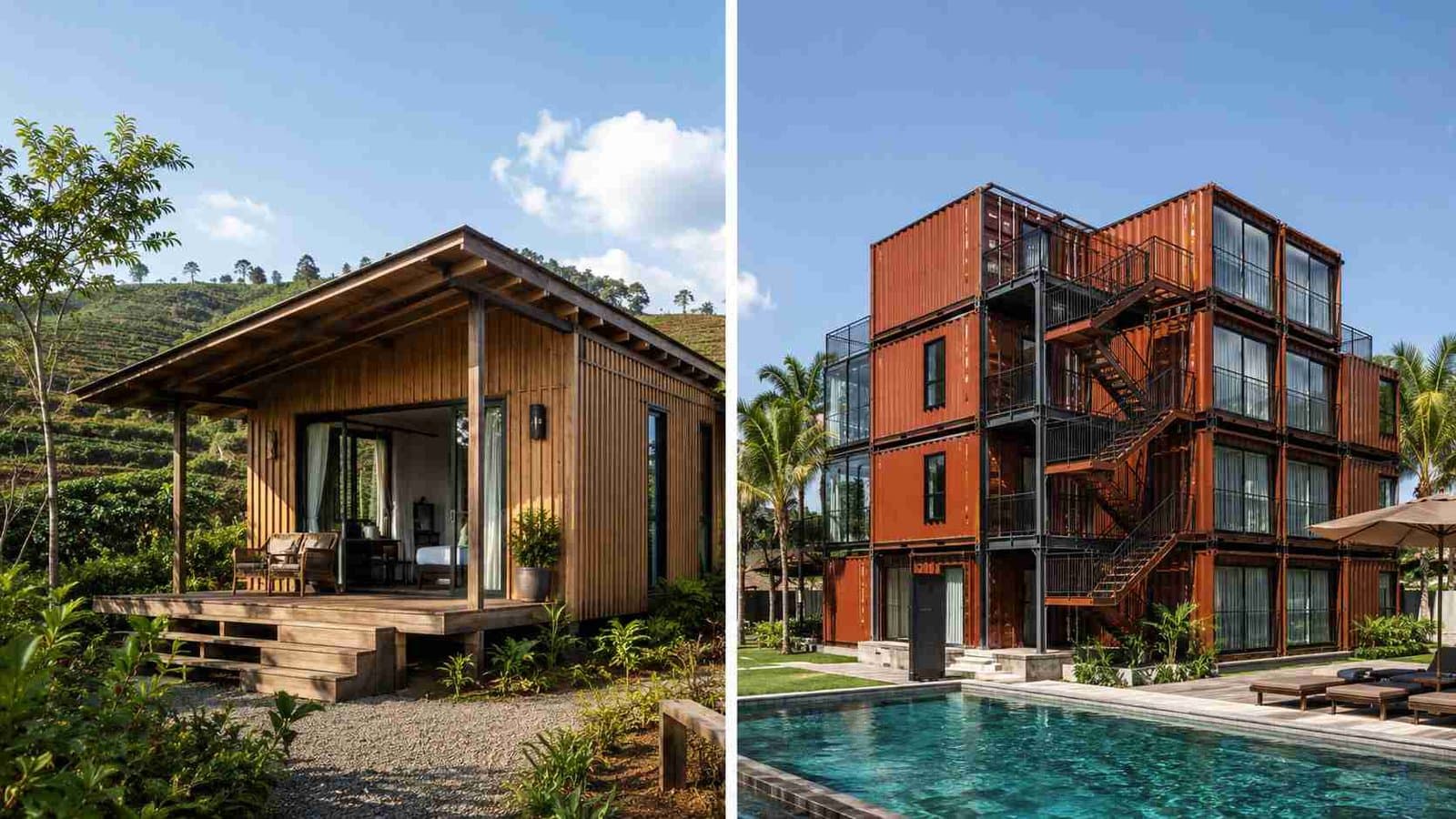
The two SAMAN container hospitality builds — boutique single-property container hotel (left) and stacked ISO shipping container hotel for resort-scale projects (right).
The stacked ISO container hotel build. 20-to-100+ key range, stackable to two or three storeys, designed for resorts, highway hotels, and chain-operator projects where modular scale and per-key economics drive the decision. The visible-corten silhouette is part of the brand identity. For that route, see the stacked ISO container hotel build for resort-scale projects.
Where the project isn't a guest-paying property at all — a personal weekend stay, an inherited family land plot used as a second home, a farmhouse for owner use — this build isn't sized correctly. The right SAMAN range for personal residential living is container homes for residential use, which is calibrated on family-living spec rather than hospitality spec.
Boutique Container Hotels Already Operating in India
Boutique container hotels are open and operating in Indian tourism zones today — useful proof for first-time operators that the format clears real guest expectations.
Kiri Container Resort in Gudamalani, Rajasthan, in Barmer district, operates as a single-property container resort. The property is listed as the top specialty lodging in Gudamalani on Tripadvisor at a 4-of-5 rating with around 67 user photos uploaded by guests. Facilities include a pool, gym, recreation room, and on-site dining — proof that boutique container properties can carry standard hospitality amenities at this scale. Note: not a SAMAN-built property; referenced here as third-party proof of format.
Beach Box, a single-room container hospitality concept in Baga, Goa, operates on Airbnb at the entry-rate point — proof that single-property container hospitality works at the smallest possible scale, even before you reach the 5-key threshold this page covers. Again, not a SAMAN build; referenced as format proof.
SAMAN's own boutique container hotel installations across Bangalore (HSR Layout, Whitefield, Hosur), Greater Noida, and Gurugram are visible in the product gallery on this page. Each is a real factory-built, on-site delivered cottage module — spec confirmed, finish confirmed, hospitality-grade fit-out. For project-specific details, the quote response covers the matching install reference closest to your zone and finish tier.
Frequently Asked Questions
How many containers do I need for a 10-key boutique container hotel?
A 10-key boutique build typically uses 10 × 20-ft cottage modules plus 1 reception or common-lounge module and 1 small F&B counter module — 12 containers total. If you want a mix of cottage rooms and 40-ft couples-suite modules, the count drops to roughly 7 × 20-ft cottages plus 2 × 40-ft couples suites plus 2 common-area modules — 11 containers across two module sizes. Most 10-key projects we design land in the 10-to-12 module range total.
Can I get a wood-finish or brick-veneer exterior so the property doesn't look like a shipping container?
Yes. Four soft-finish exteriors are factory-applied options: wood-batten cladding (Rs 35,000 to Rs 60,000 per module premium), painted GI in brand colours (Rs 15,000 to Rs 25,000 premium), brick-veneer cladding (Rs 50,000 to Rs 80,000 premium), and perforated metal screens (Rs 40,000 to Rs 70,000 premium). Each ships finished from our Bangalore or Greater Noida facility — no exterior site work needed once the module arrives. Most boutique operators mix finishes across modules — reception module in brick veneer, cottage rooms in wood-batten — for visual variety across the property.
What does a single-property container hotel cost from order to opening at boutique scale?
SAMAN module-build cost ranges from approximately Rs 30 lakh for a 5-key boutique (5 cottage modules + 1 common-area module) to approximately Rs 1.6 crore for a 25-key upper-boutique (25 modules + 4 common-area). These figures cover the modules only — they don't include land, foundation and RCC pad work, on-site connections, kitchen and F&B equipment, soft furnishings, or licensing. Add roughly Rs 8 to 15 lakh per acre for site prep depending on your zone and ground condition, plus your fit-out scope beyond the standard module spec. A 10-key boutique typically lands at around Rs 62 lakh for SAMAN modules plus Rs 15 to 20 lakh for site prep, fit-out, and equipment — call it Rs 75 to 85 lakh all-in before land.
Do I need building approvals for a 5-key boutique container hotel on agricultural land?
Most states classify boutique container builds at this scale under their farm-stay or tourism-policy framework rather than under conventional hotel construction approvals, because the module count typically stays below the permanent-construction threshold most state policies use. Karnataka, Kerala, Goa, Himachal Pradesh, and Uttarakhand each have specific farm-stay and homestay policy frameworks that boutique container hotels usually fit cleanly within. SAMAN provides the structural drawings, electrical specifications, and module documentation your approval application requires — we don't handle licensing on your behalf, but the documentation supports a faster approval cycle than a brick hotel build.
Can I expand my container hotel later if the first tourist season runs well?
Yes. Boutique container builds expand cleanly. The simpler path is adding modules side-by-side on extended pad layout — a 5-key build that grows to 10 keys after the first season runs roughly another 5 cottage modules plus 1 dining module plus extended pad work plus connection rework. Lead time for the expansion modules runs the same 35-to-50 working-days factory window plus your site prep. Most boutique operators we've delivered to expand once within the first two years of operation.
How is a container hotel different from a container house — can I use these modules as a personal weekend home too?
A container hotel is built for guest-rented hospitality use — module configurations, fit-out tiers, and project planning are scoped to short-stay hospitality. A container house is built for personal residential living and uses a different design baseline (family layouts, long-term living spec, residential insulation calibration). The modules look similar at a glance but the spec, the fit-out, and the project planning differ. For a private weekend home, second home, or personal farmhouse stay unit, see container homes for residential use — that's the right SAMAN build for personal residential use. Container hotel modules can be retrofitted for personal use but they're over-specced for it.
Get a Boutique Container Hotel Quote
Tell us four things and we return a module-build quote, a site-readiness checklist scoped to your zone, and a project timeline within two working days.
- Target key count — 5, 10, 15, 20, or 25 keys, or your own number in between.
- Site location — city and state, plus whether your plot is rural, in a tourism zone, or urban-adjacent.
- Finish tier preference — wood-batten, painted GI in brand colours, brick veneer, perforated screen, or a mix across modules.
- Target opening date — helps us slot factory build window correctly.
Standard fabrication runs 35 to 50 working days from PO at our Bangalore (Gopasandra) or Greater Noida (Jalpura) facility — the closer facility ships to your site. Crane unloading and on-site placement included pan-India.
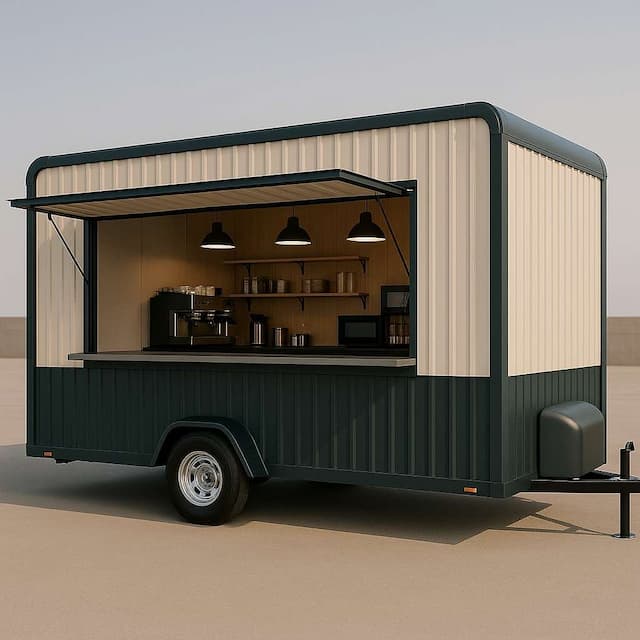
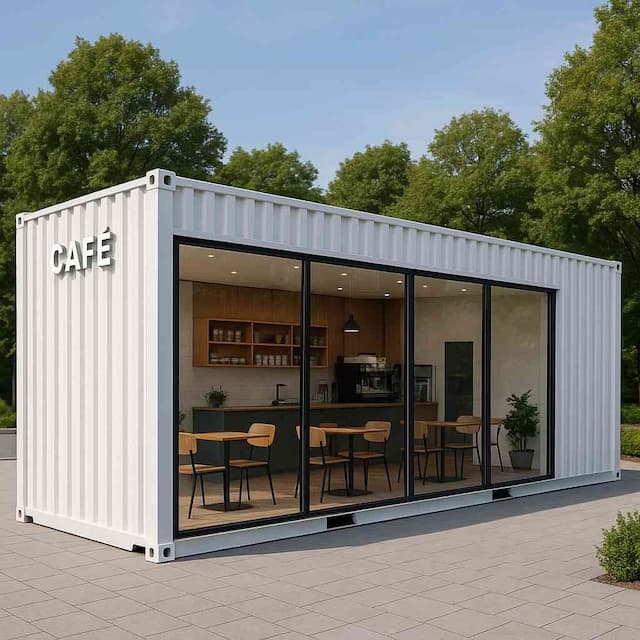
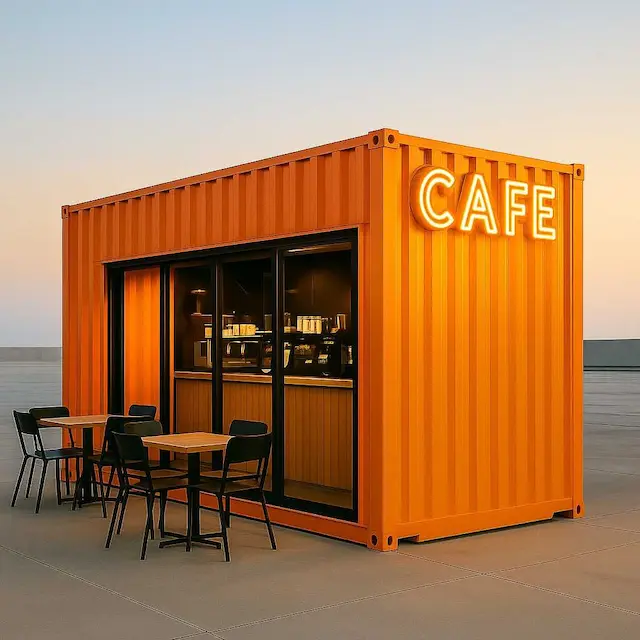
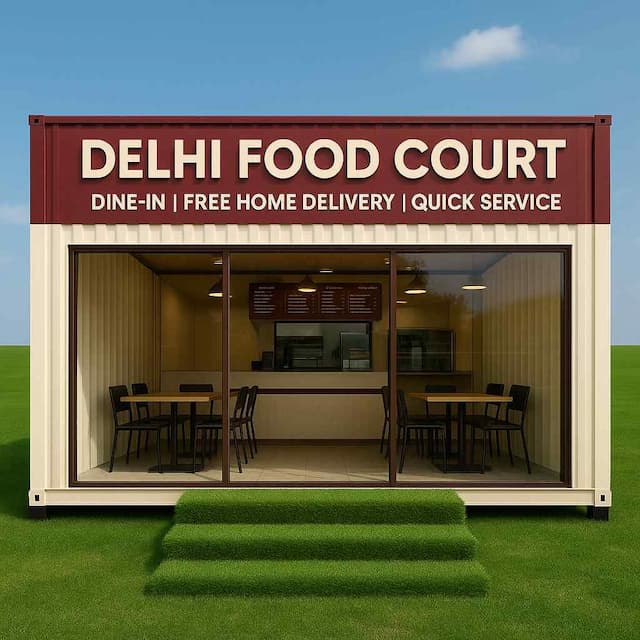
For non-hotel container hospitality formats — restaurants, cafes, kitchen units — see the full container cafe range.
Call or WhatsApp: +91 97089 89937 (Greater Noida) · +91 80886 85440 (Bangalore)
Need Custom Requirements?
Get in touch with our experts for customized solutions and bulk orders. We're here to help you find the perfect solution.