
Explore the Range
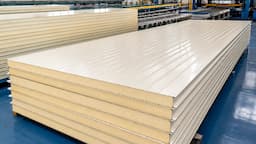

Get a factory-direct quotation
Bangalore & South Zone
Delhi NCR & North Zone
PUF Panel Specification: Thickness, Size, Facing and Weight
From ₹1,050 / sq mt
30mm base spec · ex-GST · final price at quotation
This is the PUF panel specification reference for our full panel range: thickness, size, facing and weight, gathered in one place with the numbers we can verify and the ones we deliberately don’t publish.
- Size
- Thickness 30–200 mm
- Material
- PPGI-faced PUF core, density stated at quotation with test documentation
- Delivery
- 3–5 day dispatch
- Coverage
- Bangalore · Delhi NCR
- Brand
- SAMAN Portable
- Application
- Wall, roof, house and cold storage panels
Product Information
Product Details
Comprehensive information about PUF Panel Specification
This is the PUF panel specification reference for our full panel range: thickness, size, facing and weight, gathered in one place with the numbers we can verify and the ones we deliberately don’t publish.
PUF panel specification table
| Thickness (standard) | 30 / 40 / 50 / 60 / 80 / 100 / 120 / 150 / 200 mm |
| Thickness (made to order) | 70 mm, 90 mm, 140 mm, advance payment; price and lead time confirmed at quotation |
| Freezer-grade thickness | Manufactured up to 150 mm |
| Facing options | PPGI / PPGL / BGL / Stainless Steel / Aluminium / Craft Paper · 0.35–0.80 mm |
| Roof cover width | 1000 mm effective (1070 mm overall) |
| Roof profiles | Trapezoidal · ribbed |
| Wall profiles | Plain · baby ribs · micro ribs |
| Length | 2–15 m standard; custom lengths transport/site dependent |
| Joint system | Tongue & groove (other joint systems confirmed at quotation) |
| Panel weight | Approximately 10–12 kg/m² at 50 mm thickness; scales with thickness, exact figure confirmed at quotation |
| Warranty | PUF panel warranty 5–10 years, confirmed at quotation |
| HSN code | 940690 |
| Core density, thermal conductivity, R-value, U-value, fire rating | Confirmed at quotation against tested values |
Every row above is owner-verified for SAMAN's own panels. The last row is deliberately unfilled, see Density, weight, R-value and U-value for why.
PUF panel thickness
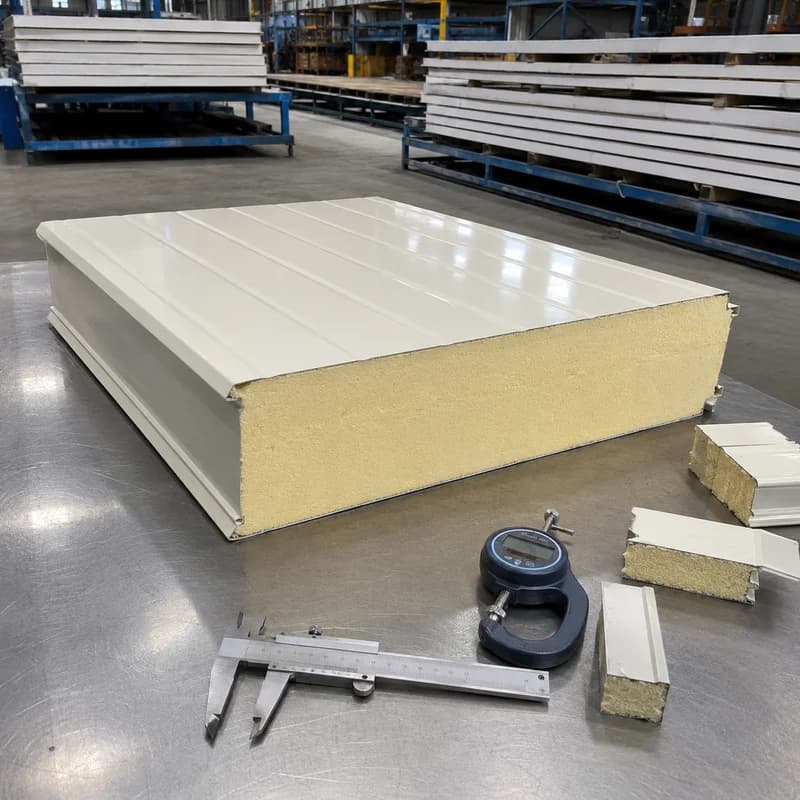
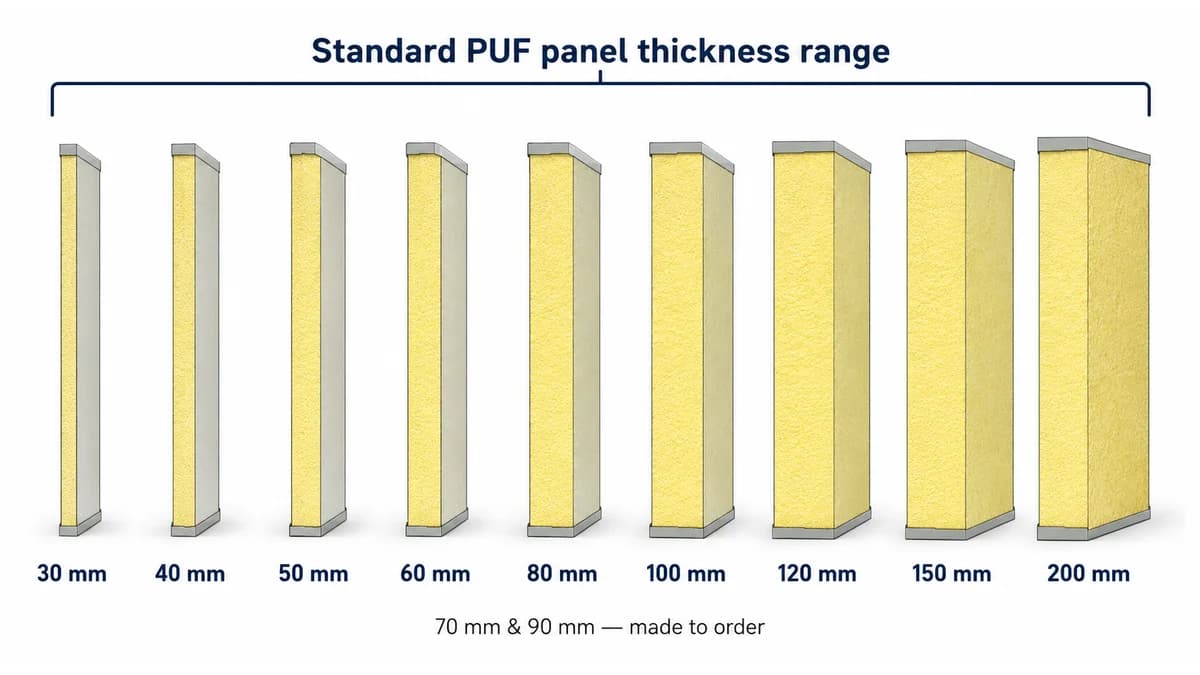
PUF panel thickness runs from 30 mm to 200 mm in standard steps: 30, 40, 50, 60, 80, 100, 120, 150 and 200 mm. Freezer-grade panels are manufactured up to 150 mm. Three thicknesses sit outside the standard line: 70 mm, 90 mm and 140 mm are made to order on client request, against advance payment, with price and lead time confirmed at quotation rather than quoted as a stock rate.
Thickness selection follows the job, not a fixed rule: thinner panels (30–50 mm) suit walls, partitions and general cabin use; 60–100 mm suits roofs and buildings needing stronger heat control; 100 mm and above suits cold storage and extreme-climate builds. For application-specific guidance, see our cold storage grade panel thickness guidance.
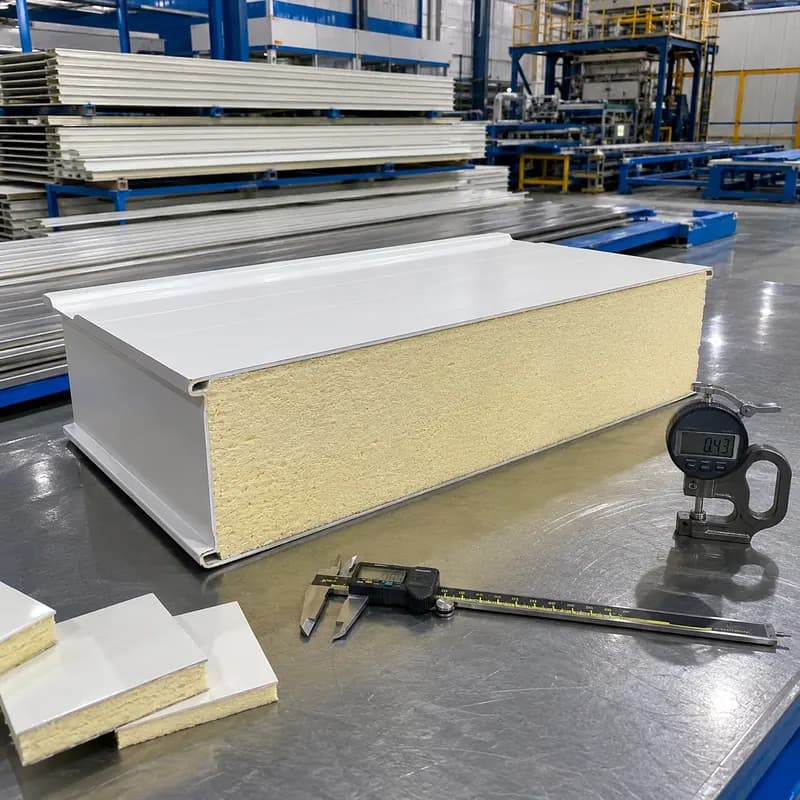
PUF panel size and sheet size
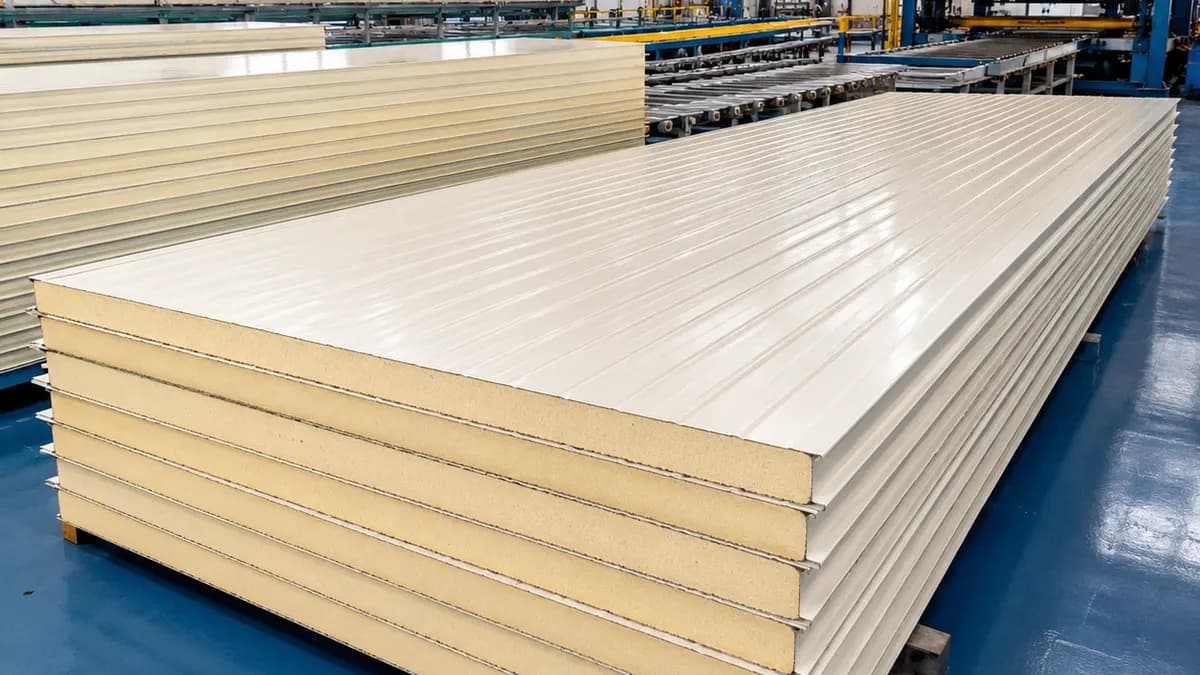
A PUF panel sheet is defined by three dimensions: thickness (30–200 mm, as above), covered width, and length. Roof panels cover 1000 mm effective width (1070 mm overall); wall panels are supplied in plain, baby-rib and micro-rib profiles at the same core width range. Length runs 2–15 m as standard, with longer or custom lengths possible but transport- and site-access-dependent. A long panel needs road clearance and offloading space, so the workable length for your site is confirmed before production.
There is no single fixed “PUF sheet size” beyond these ranges, because panels are cut and profiled to your drawing rather than sold as a pre-fixed sheet. The thickness, width and length are set from your specification at quotation.
Density, weight, R-value and U-value: what to verify before you buy
This is the section most PUF panel listings get wrong, because it is where sellers most often quote borrowed industry figures as if they were tested values for their own panels. We do not publish a core density, thermal conductivity, R-value or U-value for our panels here, because we do not have independently tested values we can stand behind in writing for every batch.
That is not the same as having nothing to say. Here is what to actually verify before you buy any PUF panel, from any seller:
- Ask for the core density in writing, not a verbal claim. A lower-density core insulates worse and is more prone to facing separation over time, and it is the most common hidden cost-cut in a cheap quote.
- Ask for a thermal conductivity or R-value/U-value figure backed by a test certificate, not a number copied from a generic PUF datasheet. Two panels labelled the same thickness can perform differently if the core density differs.
- Ask how the figure was tested. Batch-tested values are worth more than a one-time factory average applied to every order.
When you send us your project's insulation requirement, we confirm the tested values that apply to your order at quotation, rather than quoting a number that may not hold for your actual batch. A seller who can't produce a certificate on request is the clearest sign the figure was never tested for their panels either.
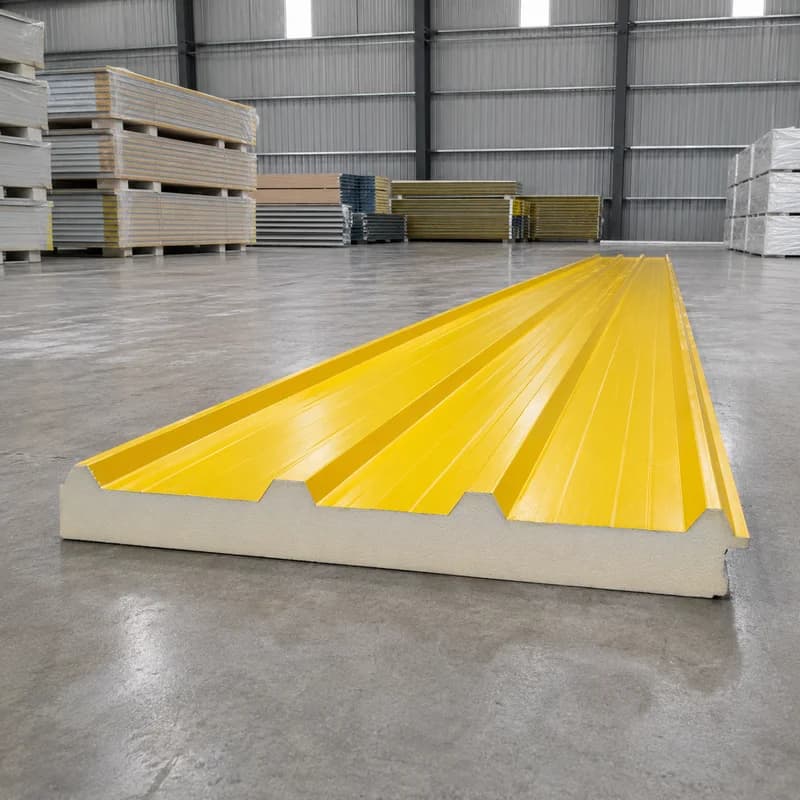
Wall, roof, house and cold storage specifications
The thickness, facing and length ranges above apply across our whole panel line, only the profile and joint detailing change by application:
- Walls, partitions and ceilings use the same core range in wall and partition panel applications, in plain, baby-rib or micro-rib profiles.
- Roof panels use trapezoidal or ribbed profiles at 1000 mm effective width.
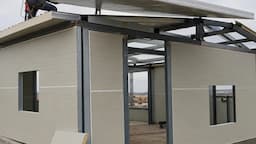
- The same wall and roof panel range, specified to your residential drawing, supplies residential PUF panel house projects.
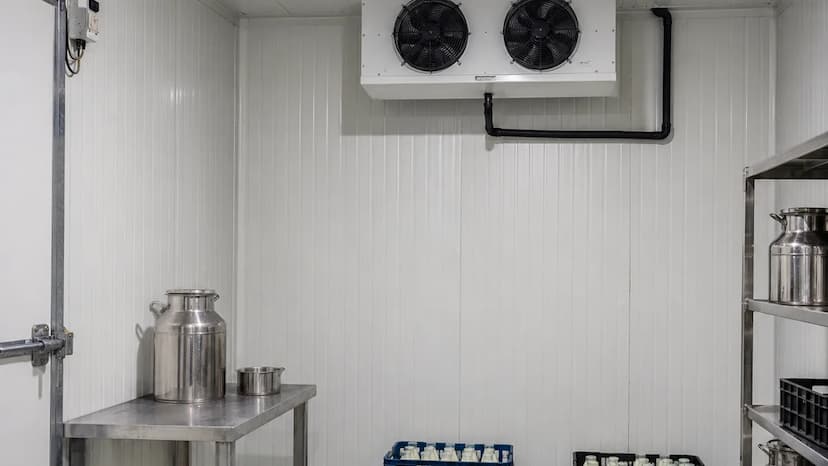
- Cold storage panels typically run 80 mm and above, with freezer-grade manufacture up to 150 mm.
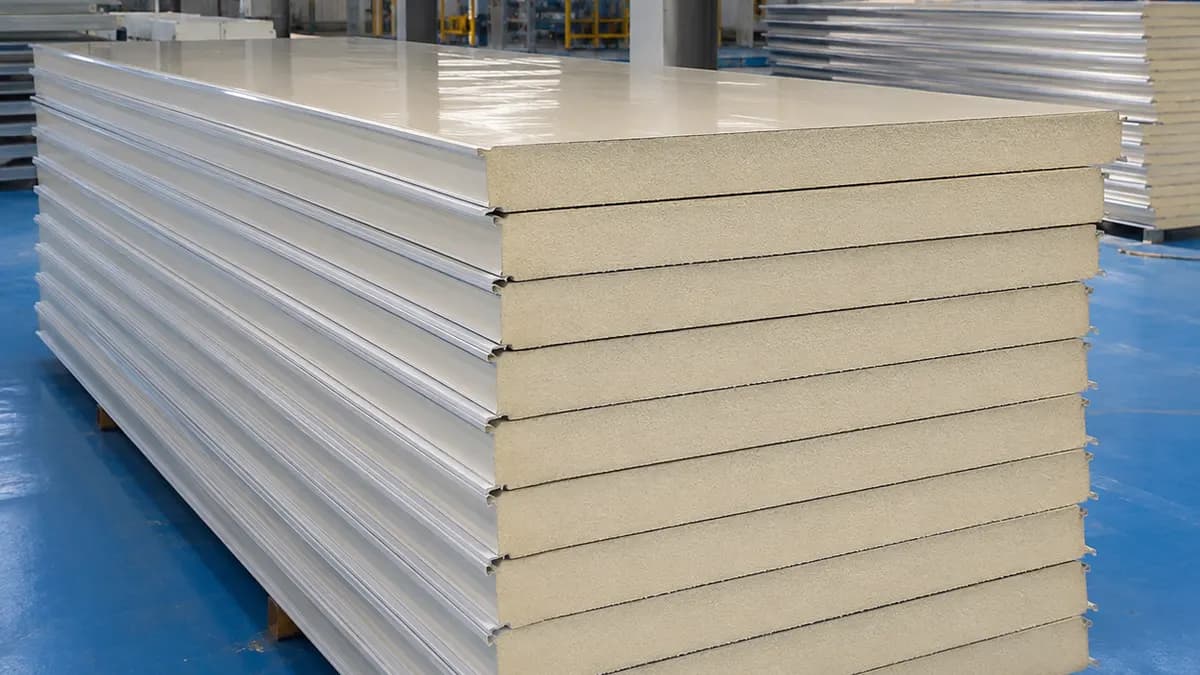
How to read a PUF panel quote
A complete PUF panel quote states, in writing:
- Thickness, one of the standard steps, or a made-to-order thickness with its own lead time.
- Facing type and gauge: PPGI, PPGL, BGL, stainless steel, aluminium or craft paper, at the gauge quoted.
- Profile: plain, baby-rib, micro-rib, trapezoidal or ribbed, depending on wall or roof use.
- Joint system, tongue & groove as our standard.
- Length, within the 2–15 m standard range, or confirmed for a custom length.
- What is excluded. GST, transport, installation and accessories are not bundled into the panel rate.
- Warranty, stated as a specific figure, not left unstated.
If a quote is missing any of these seven, ask for it before you compare price. Our PUF panels manufactured in Bangalore and Greater Noida are quoted against this exact structure every time.
Frequently asked questions
What is the PUF panel specification?
The core specification covers thickness (30–200 mm standard, with 70/90/140 mm made to order), facing (PPGI/PPGL/BGL/stainless steel/aluminium/craft paper, 0.35–0.80 mm), profile (plain/baby-rib/micro-rib for walls, trapezoidal/ribbed for roofs), length (2–15 m standard) and joint type (tongue & groove).
What is the density of a PUF panel?
We do not publish a core density figure, because we do not have an independently tested value we can stand behind for every batch. Ask any seller, including us, for a batch-tested certificate rather than a generic industry number; we confirm tested values at quotation against your project’s requirement.
What is the standard PUF panel thickness?
30, 40, 50, 60, 80, 100, 120, 150 and 200 mm are standard. 70 mm, 90 mm and 140 mm are made to order on request, not standard stock.
How much does a PUF panel weigh?
A PUF panel weighs approximately 10–12 kg/m² at 50 mm thickness, scaling up with thickness. We confirm the exact figure for your chosen build at quotation.
What size sheets does a PUF panel come in?
Roof panels cover 1000 mm effective width (1070 mm overall); wall panels run the same core width range. Length runs 2–15 m standard, with custom lengths confirmed against transport and site access.
Do you publish R-value or U-value figures?
No. We do not publish R-value, U-value or thermal conductivity figures without a test certificate behind them for the specific order. We confirm tested values at quotation rather than quote a borrowed industry number.
What joint system do PUF panels use?
Standard panels use a tongue-and-groove side joint. Other joint systems are confirmed at quotation against your project’s requirement.
What should I check before buying a PUF panel?
Ask for thickness, facing type and gauge, profile, joint system, length, what the rate excludes, and the warranty, all in writing. A quote missing any of these is not comparable to one that states them.
Get your PUF panel specification confirmed at quotation
Send your application, thickness and site city for a firm quote.
Bangalore & South Zone
Delhi NCR & North Zone
The table above (Description tab) is the full reference. This tab holds the same owner-verified specification alongside the technical diagrams.
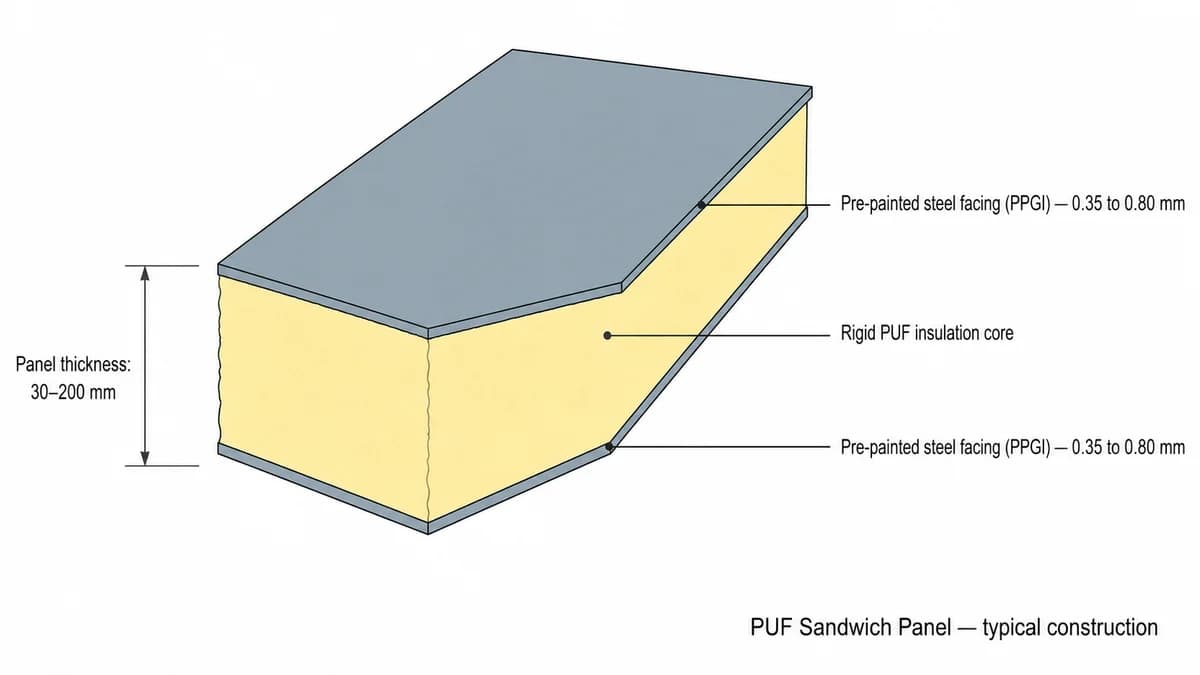
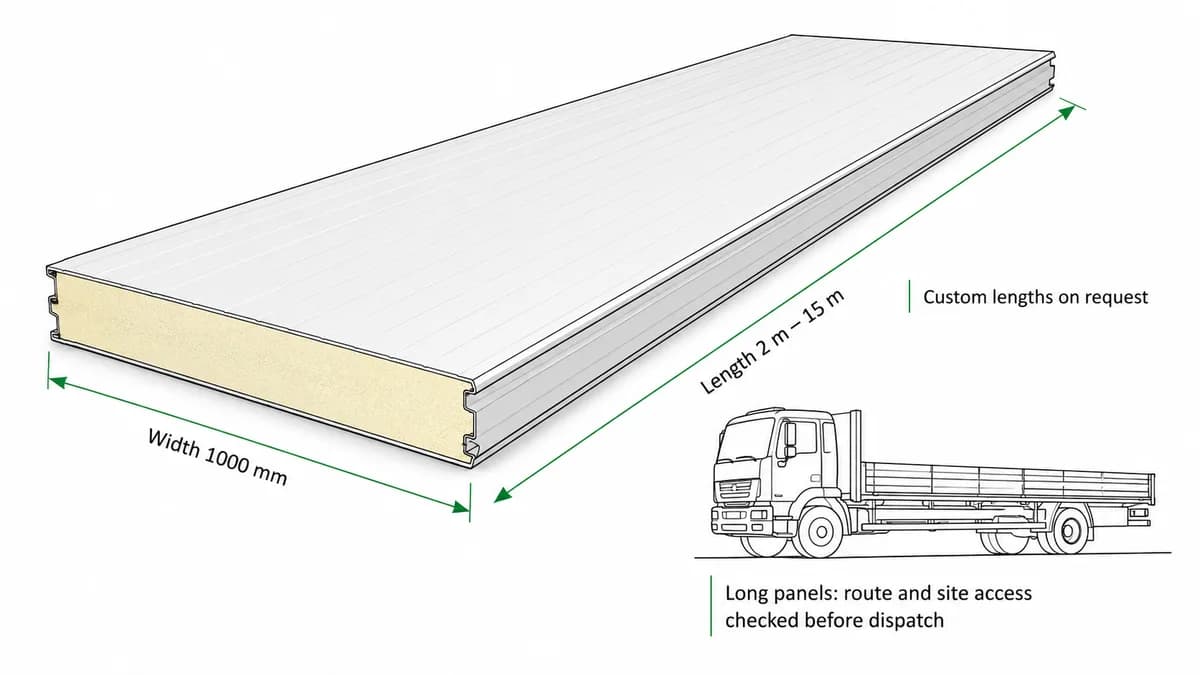
We dispatch from Bangalore for South India and Greater Noida for North India and Delhi NCR. Pan-India delivery; transport confirmed at quotation; 3–5 business day default dispatch, see our Delivery Policy.
Standard products carry 7-day returns (3-day on custom), see our Refund & Return Policy.
Customer Reviews
0 reviews
No reviews yet. Be the first to review this product.
Write a Review for PUF Panel Specification
Related PUF Panel Products
ISO 9001:2015
E20250218645
ISO 14001:2015
E20250218646
ISO 45001:2018
E20250218647
NSIC Government Purchase Enlistment
NSIC/GP/BAN/2024/0055207
Startup India Recognition
DIPP56005
Udyam Registration
UDYAM-KR-03-0172770