
Related Products
Explore similar items
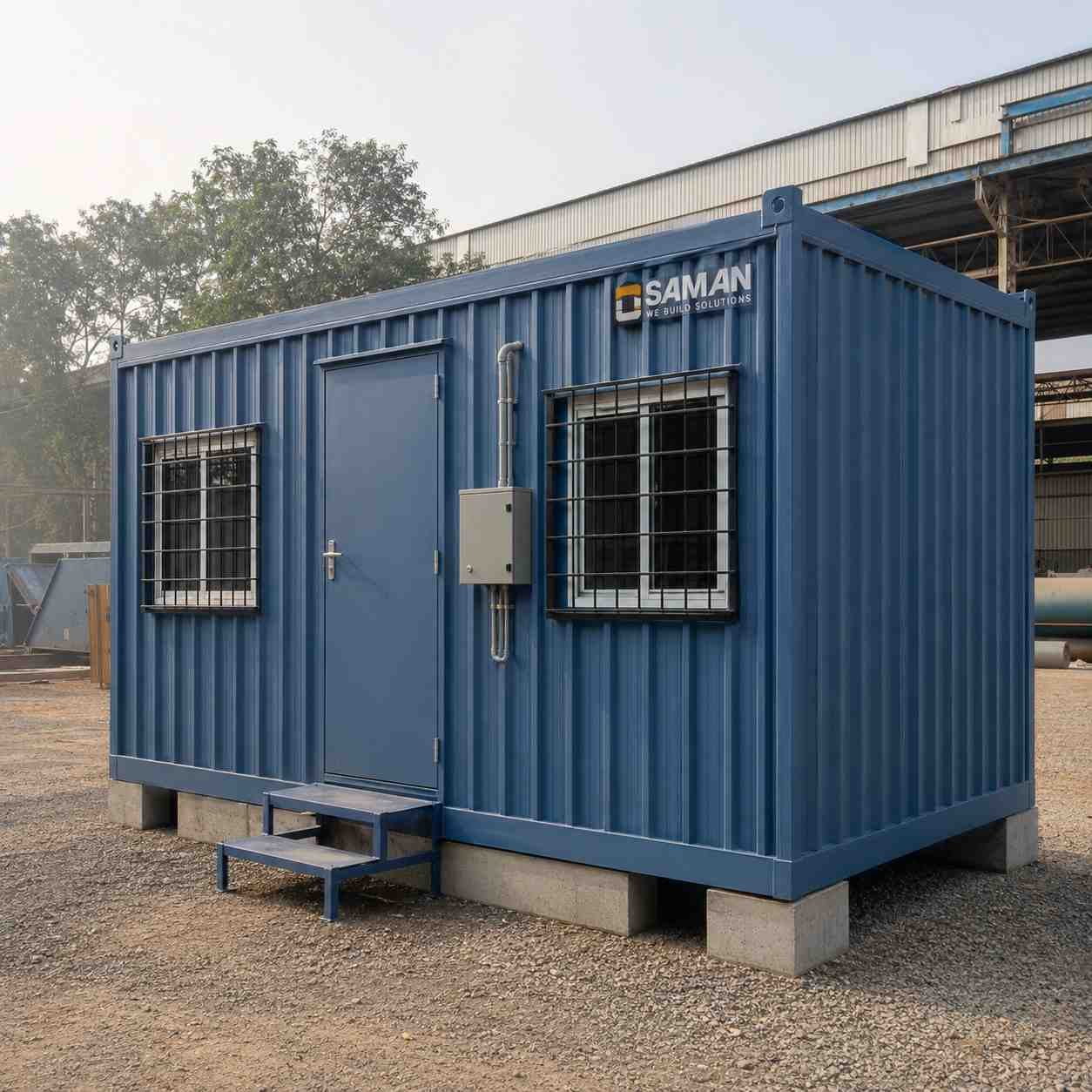
Prefab Labor Hutments
Inclusive of all taxes
Quantity
Product Information
Product Details
Comprehensive information about Prefab Labor Hutments
Product Overview
Detailed information about Prefab Labor Hutments
Prefab Labor Hutments — Factory-Made Worker Units for Large-Scale Projects
A prefab labor hutment order is what you place when the build-method choice is already made and what you need now is volume — 100, 200, or 400+ factory-made hutment units on a sequenced dispatch schedule. SAMAN supplies prefab labor hutments from our manufacturing facilities at Bangalore and Greater Noida to infrastructure and industrial projects across India. This page covers production, dispatch, scale economics, and order workflow. For buyers still weighing build methods, see our labor hutments page.
When the Procurement Spec Should Say "Prefab Hutments" Instead of "Hutments"
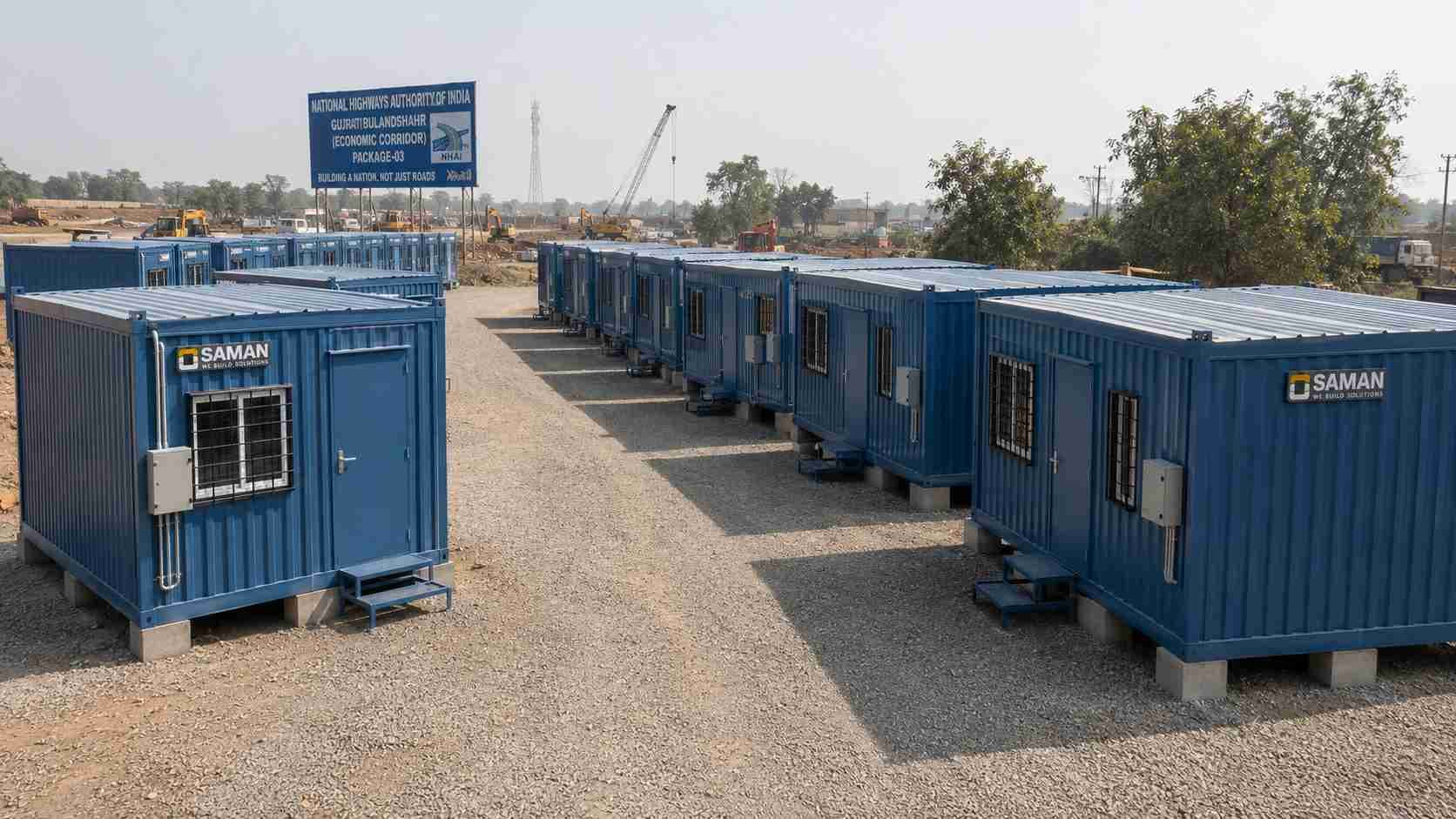
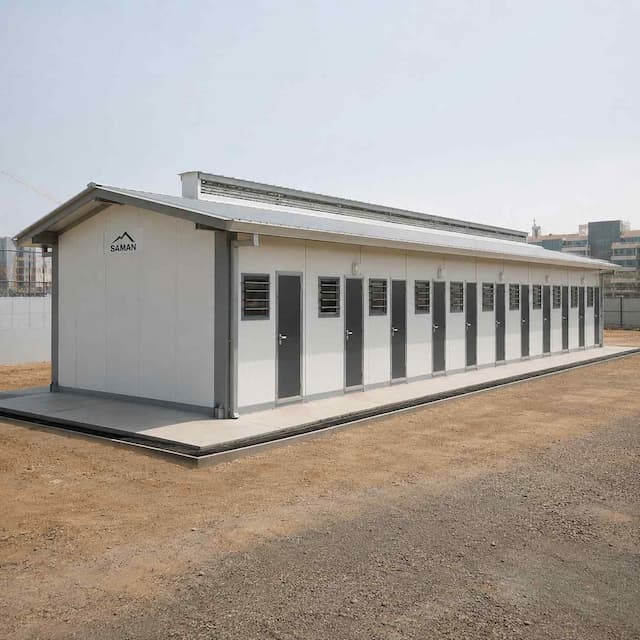
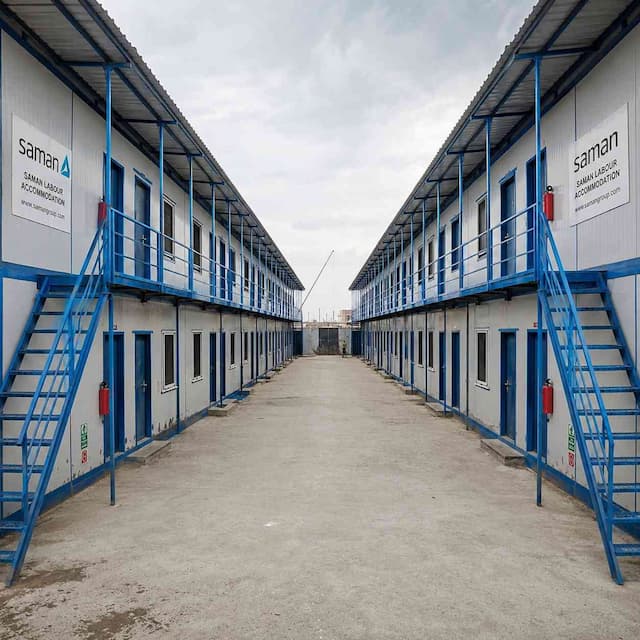
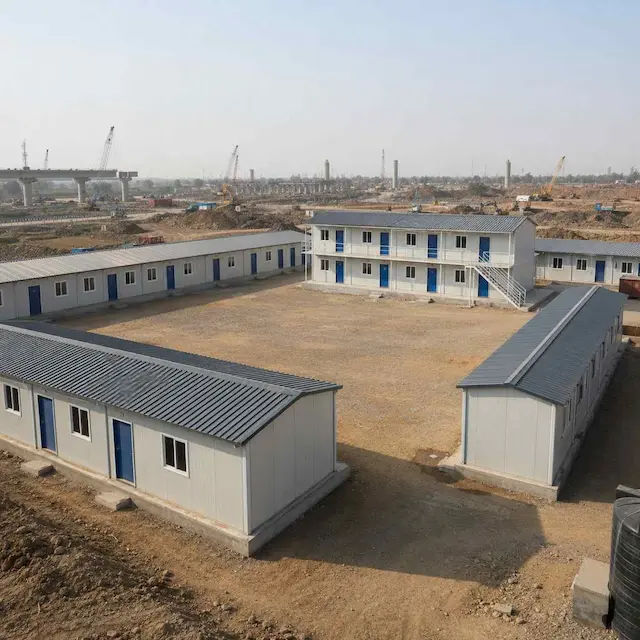
SAMAN prefab labor hutments deployed at scale on highway projects — first-batch units occupy site within 7 to 10 working days.
Three procurement reasons explain why a project team would tighten the spec from open-method hutments to prefab hutments specifically.
The first is BoQ specificity. A prefab hutment line item locks per-unit cost, dimensions, and dispatch date at PO stage. An open-method line carries on-site labour rate variability and timeline drift into the project cost.
The second is schedule commitment. Factory dispatch lead time is calendar-committable in working days from PO confirmation. On-site builds depend on labour deployment that varies with project phase.
The third is unit-to-unit replication. Across orders of 100 hutments or more, factory production holds panel sealing, door alignment, and electrical fitout to the same tolerance — relevant when colony layout planning assumes interchangeable units.
Inside the Factory: How a Prefab Hutment Is Built and Quality-Checked
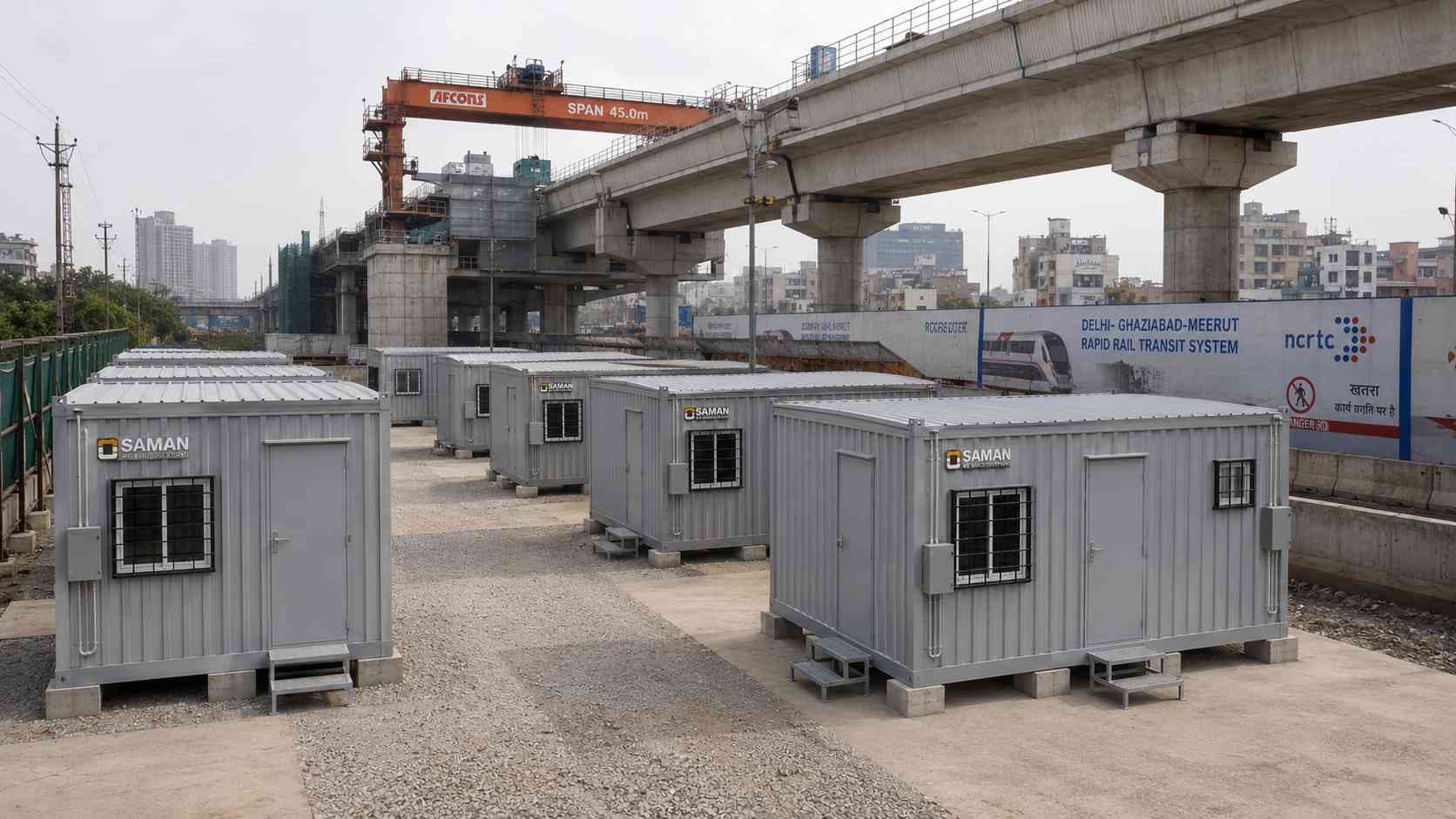
SAMAN prefab labor hutments serve metro rail contractors — compact deployment footprint for urban land constraints.
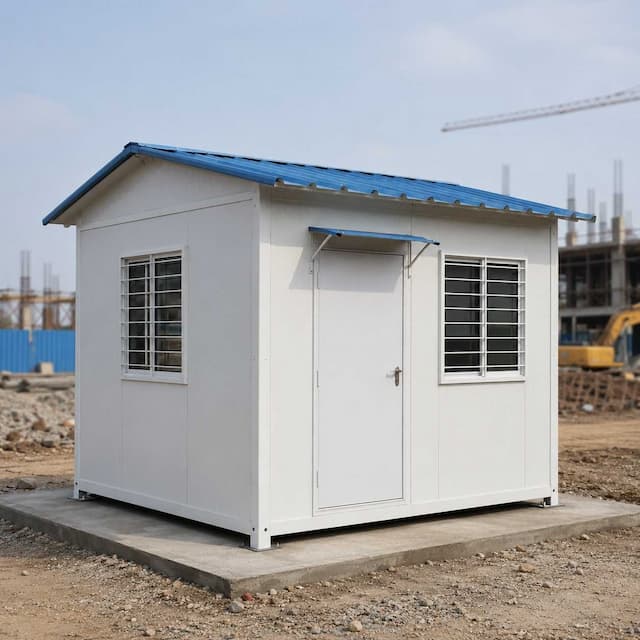
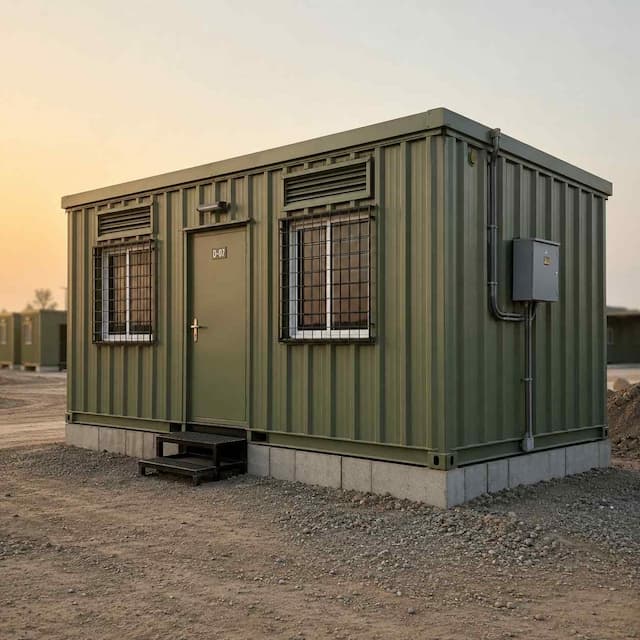
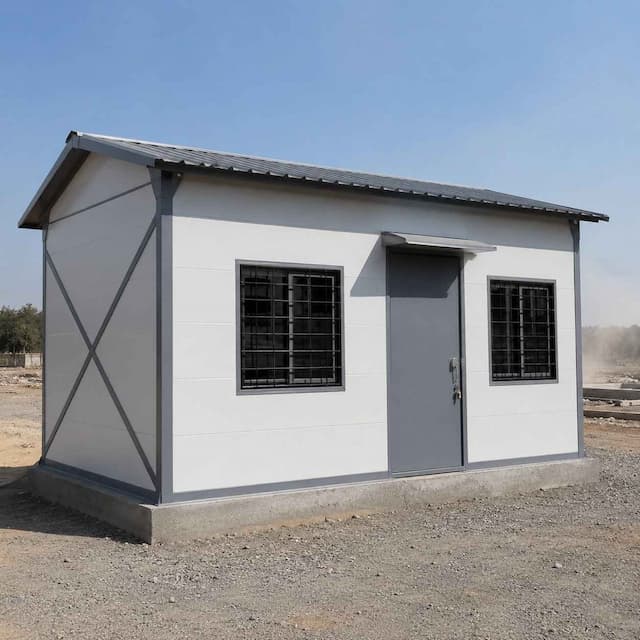
Each hutment moves down a five-station production line set up for single-unit small-format builds. Station one squares the MS angle-and-section frame on a hutment-sized jig in IS 2062 Grade A steel, welded and dimensionally checked before it leaves the station. Station two clads the frame in 30 to 40 mm PUF sandwich panels, edge-sealed at every joint. Station three lays the PPGI single-skin roof with overlap-sealed laps and tests drainage on a slope rig. Station four installs the doors, windows, and electrical fitout — two light points, one fan point, one plug point on single-phase wiring, a single MS door with weather hood, and two sliding windows with grill and shutter. Station five is the dispatch check.
A 52-point QC sign-off is the gate between line and dispatch. The check covers frame squareness, electrical continuity across the fitout points, panel-to-frame adhesion, door-window alignment, and the roof seal. A hutment that fails any one of the 52 points goes back to the line for rework — it does not ship and get fixed on site.
Three Prefab Hutment Configurations and Their Project-Volume Profile
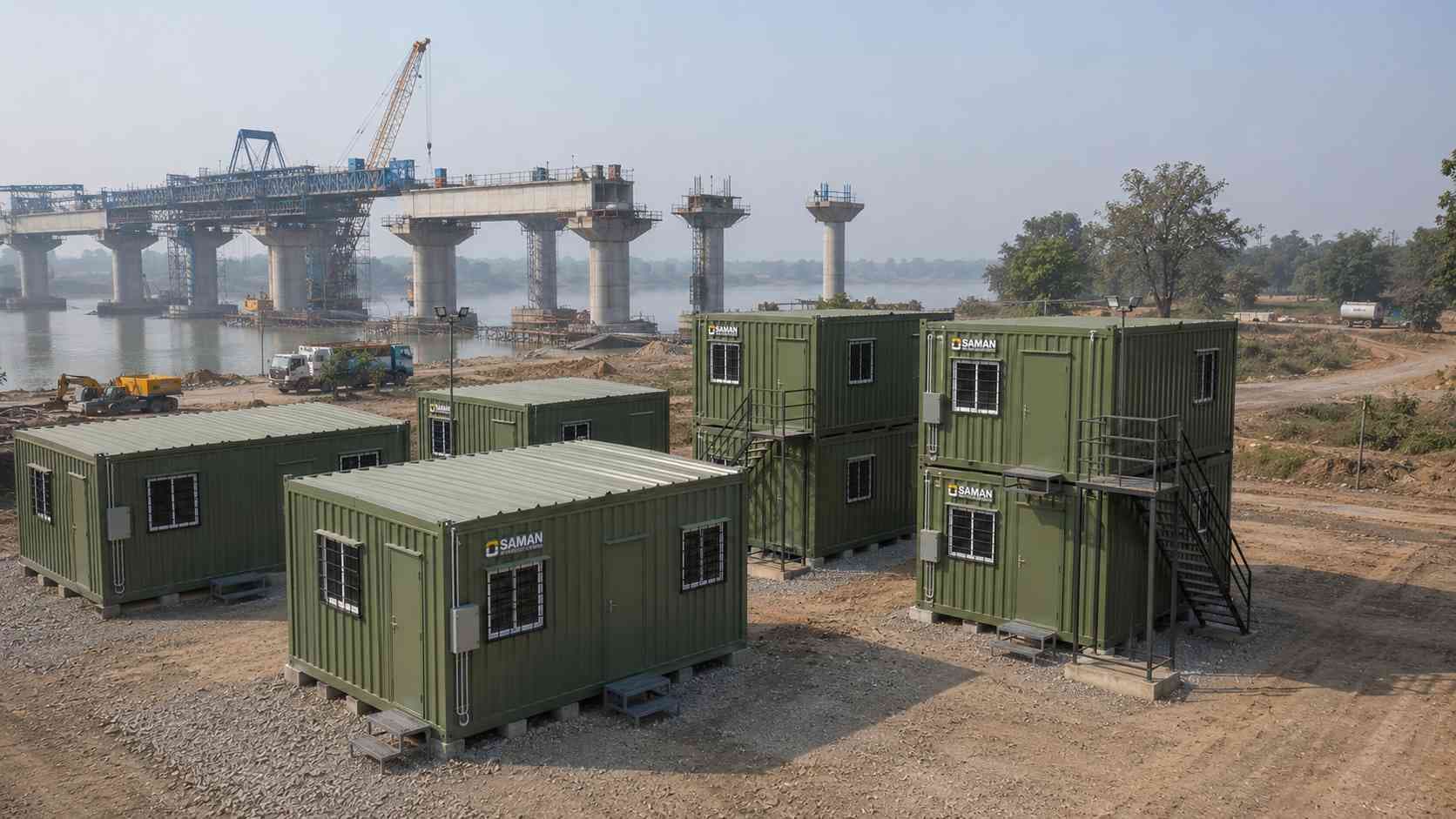
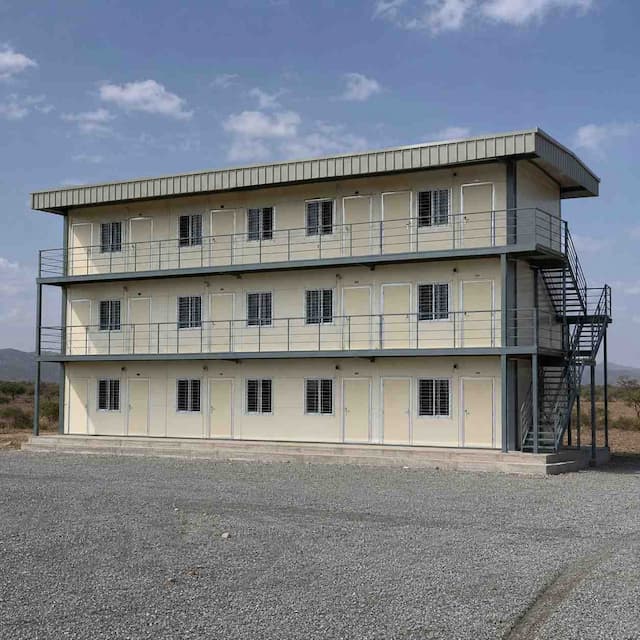
SAMAN prefab labor hutments support bridge construction camps — mixed single-storey and G+1 spec sized to land-to-worker ratio.
Three prefab hutment configurations cover the standard project-volume range.
The 10 × 10 ft hutment sleeps 4 workers and fits sub-contractor crews — typical project volume runs 50 to 80 units.
The 12 × 20 ft hutment sleeps 6 to 8 workers in standard dorm format. This is the most commonly ordered prefab hutment configuration — typical project volume runs 80 to 200 units.
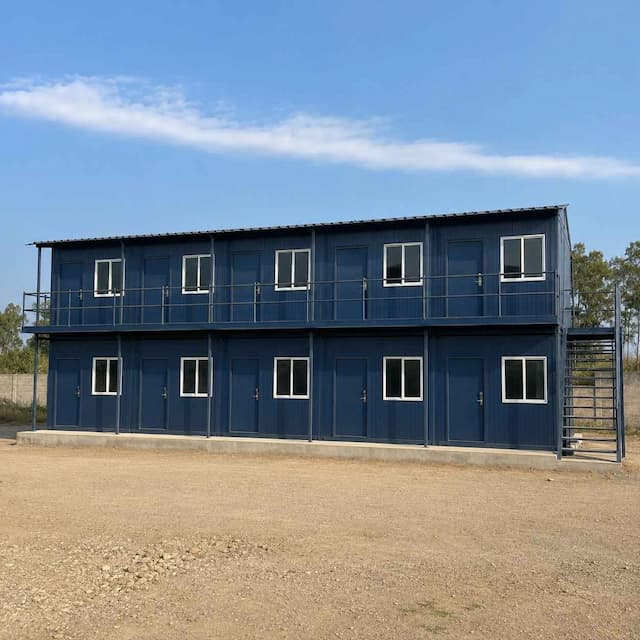
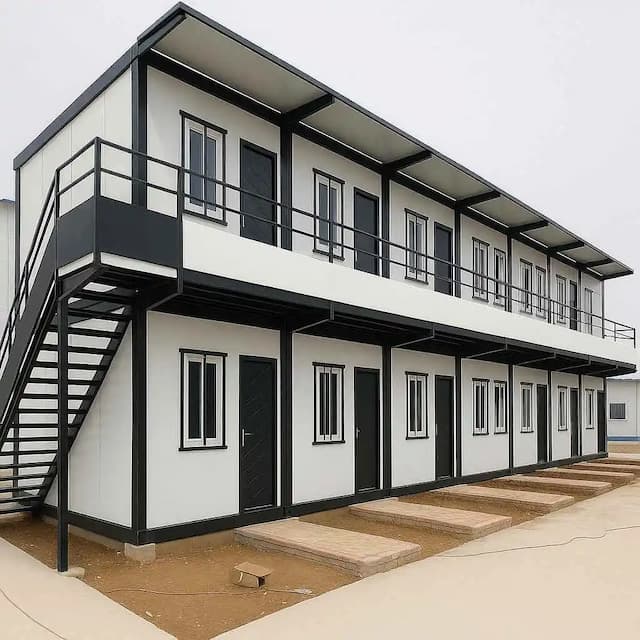
The 15 × 20 ft hutment with G+1 stacking sleeps 12 to 16 workers across two tiers, used when project land is constrained — typical project volume runs 50 to 150 units.
Factory Output and Batch Dispatch: Scaling From 50 to 400 Units
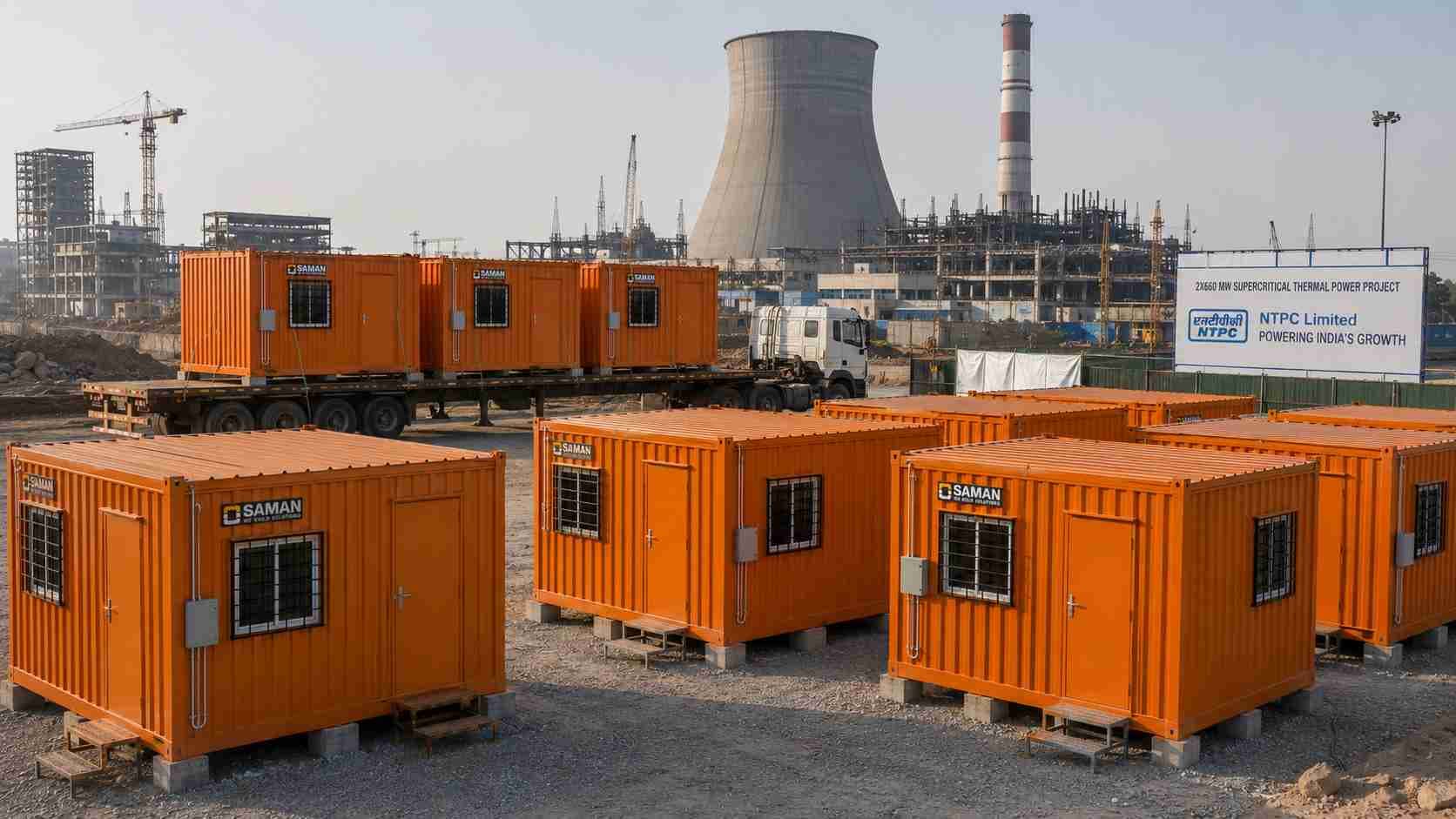
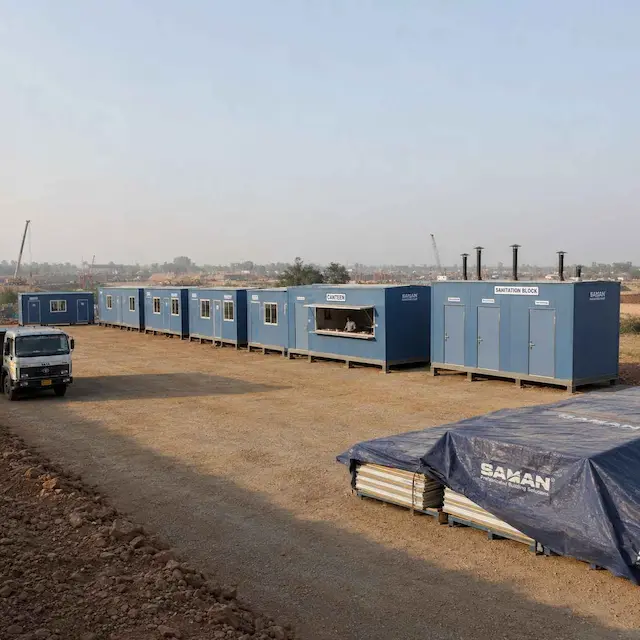
SAMAN prefab labor hutments batch-dispatched to thermal power plant projects — trailer offload sequenced for on-site assembly.
Combined factory output from Bangalore and Greater Noida supports 40 to 60 prefab hutments per week in standard configurations.
A standard 32 ft trailer carries 4 to 6 hutments depending on size. The 10 × 10 ft units load 5 to 6 per trailer; 12 × 20 ft units load 4 per trailer; 15 × 20 ft G+1 units load 3 per trailer with the upper tier dispatched separately.
Batch dispatch scales with order size:
A 50-unit order ships across 2 to 3 batches over 2 weeks. A 100-unit order ships across 4 to 5 batches over 3 to 4 weeks. A 200-unit order ships across 5 to 7 batches over 4 to 6 weeks.
First batch dispatches within 7 to 10 working days of confirmed PO. Site assembly runs in parallel with dispatch — workers occupy the first batch while the remaining batches arrive.
Multi-Project Asset Value: Why Prefab Hutments Pay Back Across Sites
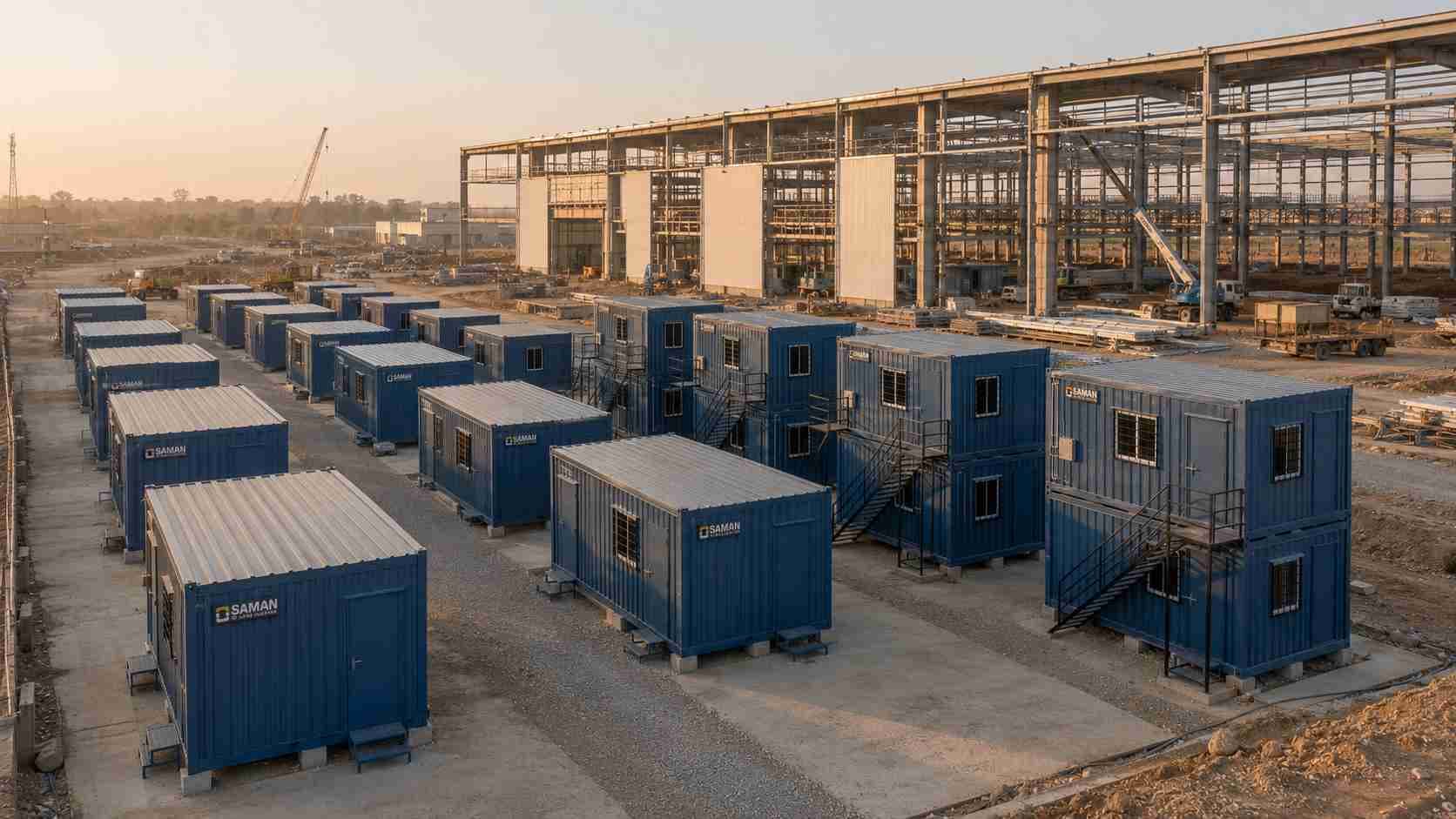
SAMAN prefab labor hutments redeploy across project sites — the same units serving back-to-back factory and warehouse builds.
A two-person crew handles the dismantle in around four to five working hours per hutment. The unit loads onto transport for direct movement to the next site or interim storage, with reassembly running on the same crew rate.
Structural integrity holds across two and sometimes three full project deployments under standard handling protocols. The frame and panel envelope survive the cycles; replacement items between deployments are limited to perimeter sealants and occasionally door hardware.
For EPC contractors running back-to-back projects, per-project amortised cost across two redeployments is typically 35 to 45% lower than renting equivalent accommodation for the same total duration.
Per-Unit Pricing at Volume Tiers
Indicative starting prices for SAMAN prefab hutments:
10 × 10 ft prefab hutment — from approximately Rs 1,20,000 per unit. 12 × 20 ft prefab hutment — from approximately Rs 1,80,000 per unit. 15 × 20 ft G+1 prefab hutment — from approximately Rs 3,20,000 per unit.
Per-unit pricing improves with order volume; 100+ unit orders qualify for a different cost basis than smaller orders.
Inclusions: MS frame, PUF wall panels, PPGI roof, standard electrical fitout, doors, windows. Exclusions: bunks, mattresses, lockers, transport beyond primary delivery zones, on-site civil works.
How to Get a Prefab Hutment Quote for Your Project Volume
A prefab hutment volume quote is issued within 24 to 48 hours on four inputs:
Hutment unit count and size mix. Site-ready date and project location. Road access for trailer delivery at the offload point. Multi-project redeployment plan, if any.
Primary dispatch zones are South India and Delhi NCR; pan-India delivery available.
Send inputs to +91 97089 89937 on call or WhatsApp, or through the enquiry form. For full facility scope across sleeping, sanitation, and dining, see the labor colony hub.
Frequently Asked Questions
How many prefab hutments can SAMAN dispatch per week from a confirmed PO?
Combined weekly dispatch from Bangalore and Greater Noida runs at 40 to 60 prefab hutments in standard configurations. Output runs at the top of that range for the 12 × 20 ft format which uses the most efficient line setup, and slightly lower for hutments with custom electrical loads. Weekly output for your specific size mix is confirmed in the quote and locks into the dispatch schedule.
How many prefab hutments fit on a standard truck or trailer dispatch?
A standard 32 ft trailer carries 5 to 6 of the 10 × 10 ft units, 4 of the 12 × 20 ft units, or 3 of the 15 × 20 ft G+1 hutments with the upper tier dispatched separately. Loading sequence is planned so the first units off the trailer are the ones positioned at the front of the site layout, reducing on-site handling.
Does the prefab hutment supply include electrical hookup and on-site assembly, or just unit delivery?
SAMAN supply includes unit delivery, on-site assembly by the SAMAN crew, and internal electrical fitout connections. Connection to the project's main power supply, civil works for unit foundations, and external services like water and drainage are outside scope and handled by the project's contractor. Scope is confirmed in writing at the quote stage.
When should the spec move from 12 × 20 ft single-storey to 15 × 20 ft G+1 stacking?
The G+1 spec is the right choice when accommodation land falls below roughly 30 sq ft per worker after dining, sanitation, and circulation are accounted for. Below that ratio, single-storey units push the colony footprint outward; G+1 stacking compresses the same worker count vertically and frees ground for other facility blocks.
Customer Reviews
0 reviews
No reviews yet. Be the first to review this product.
Write a Review for Prefab Labor Hutments
Need Custom Requirements?
Get in touch with our experts for customized solutions and bulk orders. We're here to help you find the perfect solution.