
What Is a Labour Hutment? Meaning, Types and Uses
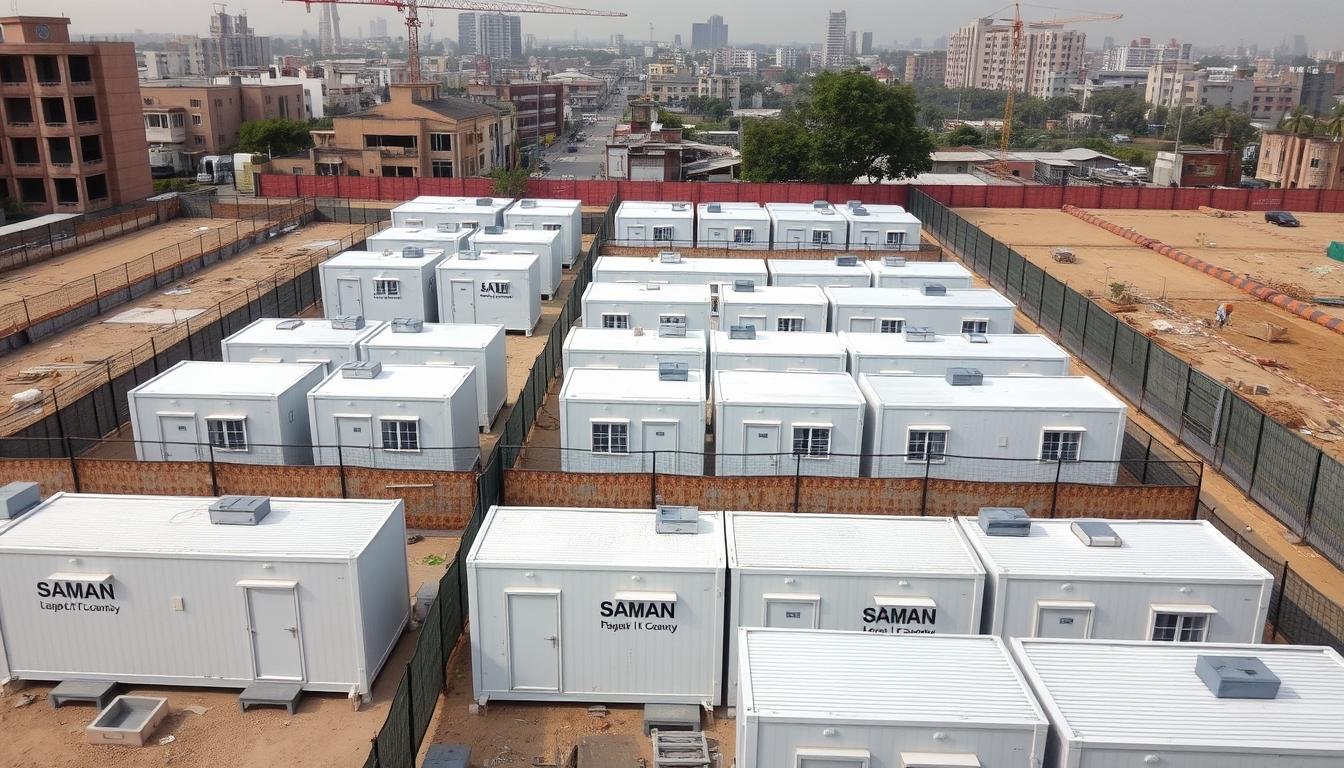
A labour hutment is on-site housing for construction workers. A basic, durable living unit put up at or near a project so the workforce can stay close to the work. In plain terms, the hutment meaning in construction is "a temporary worker dwelling": a room or cluster of rooms with sleeping space, ventilation and access to sanitation, built to be set up quickly and removed when the project ends. A group of these units together forms a labour colony.
This guide explains what a labour hutment is, the types used on Indian construction sites, the difference between portable and permanent hutments, and what SAMAN POS India Private Limited (POS = Portable Office Solutions) supplies as a direct manufacturer. For projects moving from individual hutments to a full camp, see SAMAN's prefab labour colony solutions.
Hutment Meaning in Plain English
The word "hutment" simply means a collection of huts or temporary dwellings, most often used for workers housed together on or near a worksite. On a construction project it refers to the worker accommodation block: somewhere for the crew to sleep, store belongings and rest between shifts, with toilets, washing and kitchen facilities planned around it. A labour hutment is not meant to be a permanent home; it is practical, relocatable housing for the duration of a build.
Older sites improvised hutments from tin sheets, tarpaulin and salvaged material. Modern projects increasingly use factory-built steel units instead, because they go up faster, last longer, and meet welfare and safety expectations a makeshift shelter cannot.
Types of Labour Hutments Used on Construction Sites
- Makeshift / on-site-built hutments, assembled from tin, tarpaulin or scrap. Cheapest, but weak on safety, hygiene and durability.
- Prefabricated steel hutments, factory-built MS-frame units with insulated panels, delivered and assembled on a prepared base. Durable, hygienic and relocatable.
- Single-room units, one room per unit for small crews or phased work.
- Multi-room blocks: several rooms in one block, with shared sanitation and common areas, for larger workforces.
- G+1 stacked hutments. Two levels to house the same crew on a smaller ground footprint, used where site space is tight.
SAMAN's prefab labour hutments fall in the prefabricated-steel category, made to order in room count, layout and sanitation provision.
Portable vs Permanent Labour Hutments
- Foundation: portable hutments sit on a light or bolt-down base; permanent quarters need full RCC footings.
- Speed: portable steel hutments are factory-built and assembled in days; permanent construction takes weeks.
- Relocation: portable hutments dismantle and move to the next site; permanent ones do not.
- Cost and reuse: a portable steel hutment is an asset you keep and redeploy across projects, usually the better economics for project-length housing.
For most contractors running time-bound projects, portable prefabricated hutments are the practical choice; permanent quarters make sense only for long-term township or staff housing.
Welfare and Compliance Context
Large construction sites are expected to provide suitable worker accommodation under the Building and Other Construction Workers (BOCW) Act and related state welfare rules, which cover sanitation, minimum space per worker, ventilation and fire safety. A planned labour hutment block is a fast route to housing that supports these requirements, because sanitation, ventilation and electrical fit-out are engineered in rather than improvised on site.
What SAMAN Supplies
SAMAN is a direct manufacturer of steel labour hutments and colonies, serving India since 2009, incorporated as SAMAN POS India Private Limited in 2019. What we build:
- Structure: IS 2062 MS steel frame with insulated PUF wall panels; double-decker steel bunks, lockers, cross-ventilation windows, LED lighting.
- Sanitation: toilet and bathing blocks sized to worker count, with bio-digester options for remote sites.
- Layouts: single-room, multi-room or G+1 stacked, planned around your headcount and site space.
- Quality systems: ISO 9001:2015, ISO 14001:2015 and ISO 45001 certified; NSIC and DPIIT (Startup India) recognised; 500+ projects delivered across India.
- Manufacturing: two plants, Gopasandra, Bengaluru 560099 and Jalpura, Greater Noida 201308, for dispatch across South and North India.
- Warranty: 5 years structural frame and base + 1–2 years finishing + 20–25 years engineered service life.
Planning worker housing? See how we configure a labour colony for construction sites, or share your headcount for a quote.
Call / WhatsApp +91 88616 22859 or use the Send Enquiry form.
FAQ
What is a labour hutment?
On-site temporary housing for construction workers: a durable, relocatable unit with sleeping space, ventilation and access to sanitation. Several together form a labour colony.
What does "hutment" mean in construction?
It means a cluster of huts or temporary dwellings for workers housed together on or near a worksite.
What is the difference between a labour hutment and a labour colony?
A hutment is an individual worker dwelling/unit; a labour colony is the organised group of hutments plus shared sanitation, kitchen and common areas.
Are prefab labour hutments better than tin-sheet ones?
For durability, hygiene and safety, yes. Factory-built steel hutments outperform makeshift tin or tarpaulin shelters and are reusable across sites.
How many workers does one hutment house?
It depends on room size and layout; occupancy is configured to your headcount and confirmed on enquiry.
Can labour hutments be relocated?
Yes. Prefabricated steel hutments are designed to dismantle, move and re-erect for the next project phase or site.
Does SAMAN manufacture labour hutments directly?
Yes. SAMAN fabricates them in-house at Bengaluru 560099 and Greater Noida 201308 and delivers across India.
Certifications and Manufacturer Credentials
SAMAN POS India Private Limited (POS = Portable Office Solutions) has manufactured steel labour colony units since 2009 (incorporated 2019), with 500+ projects across India from our plants at Gopasandra, Bengaluru 560099 and Greater Noida (Vill Jalpura, Tehsil Dadri, Greater Noida, Gautambudha Nagar, Uttar Pradesh 201308). Certifications and registrations: ISO 9001:2015 (Cert No. E20250218645), ISO 14001:2015 (Cert No. E20250218646), ISO 45001:2018 (Cert No. E20250218647), NSIC enlisted (Ref. NSIC/GP/BAN/2024/0055207), DPIIT-recognised startup (Ref. DIPP56005), Udyam registered (UDYAM-KR-03-0172770), GST 29ABBCS7101B1ZR (Bangalore) and 09ABBCS7101B1ZT (Noida). IS 2062 MS frame with insulated PUF panels. See our portable labour hutments or the full labour colony range.