Types of Container Offices: Complete Global Guide to Sizes, Modular, Portable & Custom Solutions
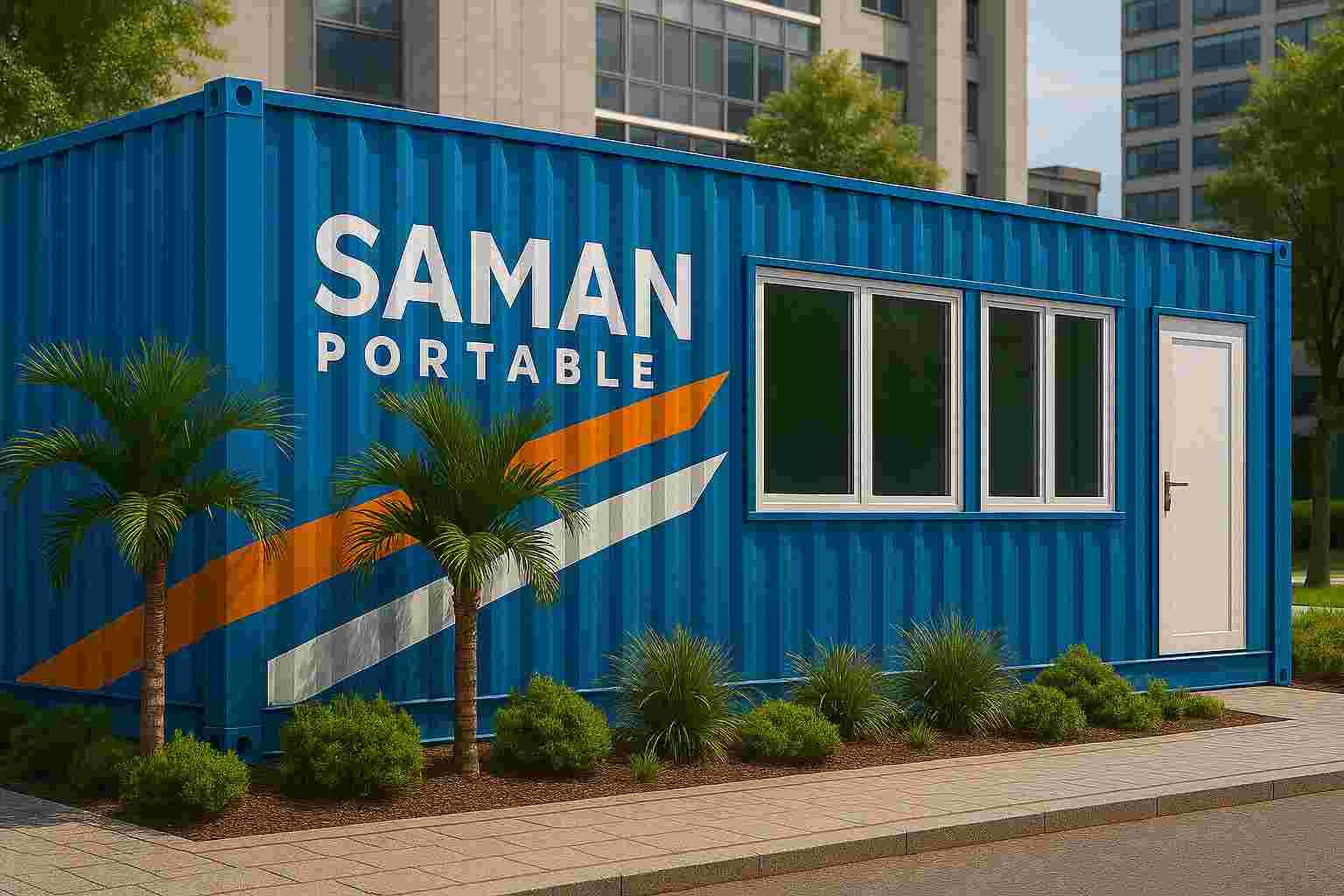
Standard Container Offices by Size (10ft, 20ft, 40ft, High Cube)
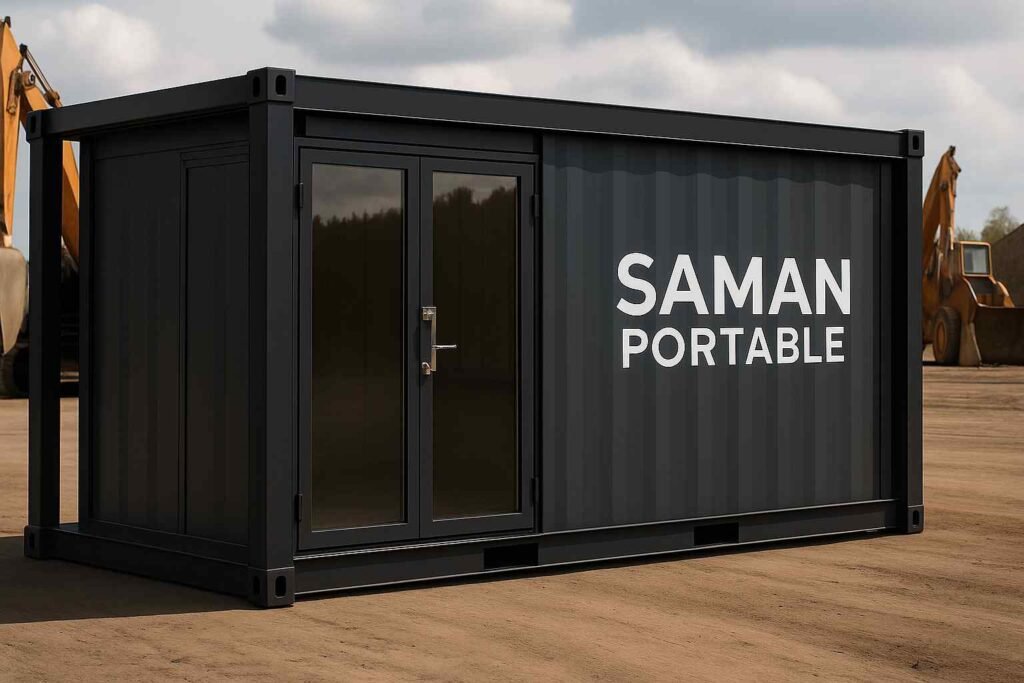
Introduction: Why Size Matters
Among the many types of container offices, four standard dimensions are most common: 10ft, 20ft, 40ft, and 40ft High Cube. These four account for the majority of container office installations and suit most site, corporate and industrial needs.
Size is the critical first choice for any buyer. It directly affects logistics, fit-out options, project costs, installation speed, and even resale value. A compact 10ft unit can be forklifted into a narrow urban site, while a 40ft High Cube may require a 20-ton crane and a reinforced foundation. Floor area decides whether the office can host a single desk or an entire meeting suite.
Resale markets also favor specific dimensions. The 20ft and 40ft models consistently hold the highest demand. Their popularity drives stronger second-hand value compared to niche sizes. For businesses evaluating investment and deployment, understanding each size category is essential. Among the most in-demand container sizes, buyers often explore container offices by SAMAN Portable to get detailed specifications and customization options.
10ft Container Offices
Specifications
- Exterior dimensions: 10’ L × 8’ W × 8’6” H
- Interior area: ≈75 sq ft
- Tare weight: ≈2,200 lb
- Wall material: Corten steel, 1.6 mm thick
- Insulation: polyurethane foam, R-value 4–5
- HVAC: one-ton split AC, ≈12,000 BTU
- Electrical: 2 × 15A circuits, ≈2 kW load
- Flooring: marine-grade plywood with vinyl overlay
- Windows/doors: one steel door, one small glazed window with grill
Installation timeline for modular types of container offices
10ft cabins are the easiest to deploy. They require only a small gravel pad or thin concrete slab. Forklifts or light cranes can handle placement. Setup takes 3–6 hours.
Typical uses:
- Guard kiosks and security cabins
- Ticketing booths for events or stations
- Monitoring rooms at infrastructure sites
- Compact offices for solo engineers
There is strong demand for ground-level container office spaces that combine mobility with secure, efficient layouts.
Cost comparison across types of container offices
Exact pricing depends on size, fit-out, insulation and site. SAMAN returns a written, itemised quote for your requirement.
Pros and cons across types of container offices
Pros
- Lowest cost among all sizes
- Movable with forklifts
- Minimal installation effort
- Fits congested locations
Cons
- Very limited floor space
- Not suited for teams
- Few customization options
- Weak resale compared to 20ft/40ft
Common use cases across 20ft types of container offices
Specifications
- Exterior dimensions: 20’ L × 8’ W × 8’6” H
- Interior area: ≈150 sq ft
- Tare weight: ≈4,500 lb
- Wall material: Corten steel, 1.6 mm
- Insulation: PIR panels, R-value ≈6
- HVAC: two-ton split AC, ≈24,000 BTU
- Electrical: 4–6 × 15A circuits, ≈5 kW load
- Flooring: marine plywood with vinyl or laminate
- Windows/doors: two glazed windows, one steel/uPVC door
Installation & Use Cases
20ft cabins need a crane for lifting. However, setup usually completes within a single day. Site prep involves compacted gravel or a concrete pad.
Common uses:
- Site manager cabins
- Small training rooms
- Modular project offices
- Startup spaces during transitions
Pricing details for different types of container offices
Cost varies with size, interiors, HVAC and delivery distance. Share your specification and we send a written quote, no obligation.
Detailed pros and cons of modular container offices
Pros
- The global standard size
- Easy resale due to demand
- Adaptable for modular setups
- Balanced space vs mobility
Cons
- Requires crane for placement
- Narrow depth limits layout options
- Storage areas reduce usable space
Advantages and disadvantages of 40ft types of container offices (Standard & High Cube)
Specifications
- Exterior dimensions (Std): 40’ L × 8’ W × 8’6” H
- Exterior dimensions (HC): 40’ L × 8’ W × 9’6” H
- Interior area: ≈300 sq ft
- Tare weight: 8,300–8,800 lb
- Wall material: Corten steel, 1.6 mm
- Insulation: spray foam, R-value ≈7
- HVAC: multi-zone 3–4 ton, 36,000–48,000 BTU
- Electrical: 6–8 circuits, ≈8–10 kW load
- Flooring: anti-static vinyl or ceramic tiles
- Windows/doors: multiple glazed windows, steel/uPVC doors
Installation & Use Cases
These units require heavy cranes and often an engineered base. Setup takes 1–2 days. High Cube versions, with extra height, are favored for comfort and technical installations.
Typical uses:
- Corporate headquarters on project sites
- Training centers and classrooms
- Executive offices with premium partitions
- Multi-room designs with pantry or restroom
Specifications and costs for major types of container offices
We price each unit against your actual layout and finish rather than a fixed list. Request a written, itemised SAMAN quote.
Pros and cons across types of container offices
Pros
- Largest standard floor area
- High Cube adds comfort
- Allows premium, multi-room layouts
- Long lifespan and resale potential
Cons
- High crane and transport costs
- Engineered foundations needed
- Longer fit-out timelines
Master Comparison Table (2025) for Types of Container Offices
| Feature | 10ft | 20ft | 40ft Std | 40ft HC |
| Interior Area | 75 sq ft | 150 sq ft | 300 sq ft | 300 sq ft (+1ft) |
| Setup Time | 3–6 hrs | 1 day | 1–2 days | 1–2 days |
| Typical HVAC | 1-ton split | 2-ton split | 3–4 ton multi | 3–4 ton multi |
| Best Uses | Guard kiosks | Site managers | Corporate HQ | Executive, labs |
| Install Method | Forklift | Crane | Large crane | Large crane |
Sustainability & Durability
Reusing shipping containers saves 2.5 tons of steel per unit. With insulation and efficient HVAC, container offices cut energy consumption significantly.
- New lifespan: 15–25 years
- Used lifespan: 10–15 years
- Portability: relocatable multiple times
- Resale: a meaningful share of purchase cost recoverable
Durability is critical. From humid monsoons to arid deserts, container offices withstand harsh climates. Eco-modifications such as solar panels, rainwater harvesting, and low-VOC interiors enhance sustainability further.
Types of Container Offices vs Traditional Offices
| Factor | Container Office (20ft) | Traditional Building |
| Relative cost per sq ft | Lower | Much higher |
| Time to Occupy | 1–7 days | 3–12 months |
| Portability | High | None |
| Resale Value | Meaningful | None |
| Energy Efficiency | High (with insulation) | Moderate |
Among all types of container offices, the 20ft size remains the global benchmark for portability and resale.
Modular & Stackable Container Offices
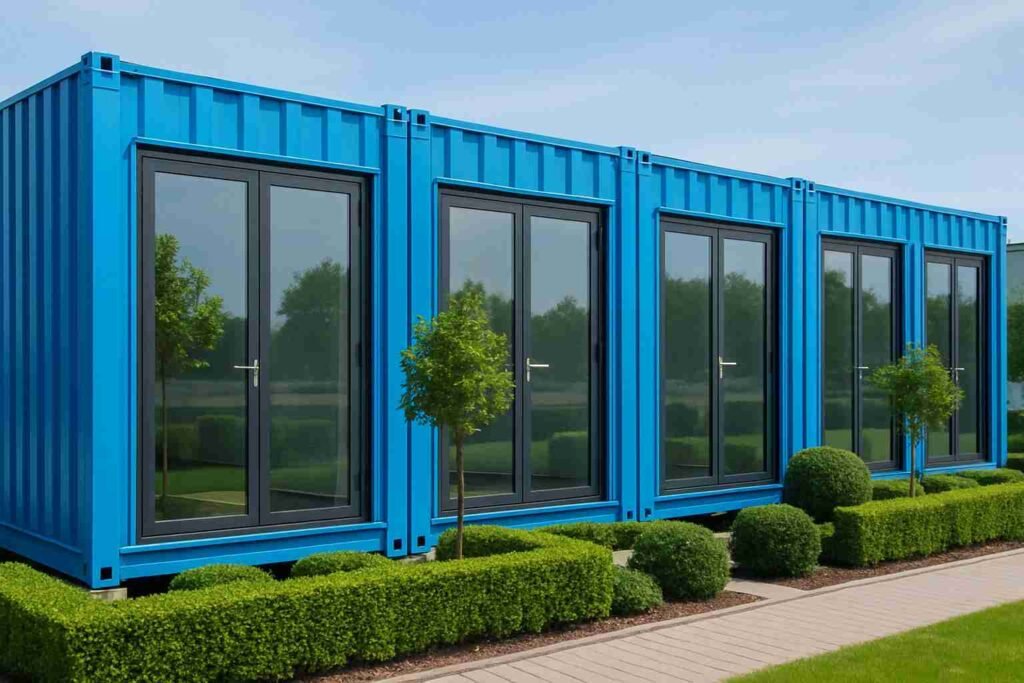
Introduction: Why modular matters
Modular builds change delivery. They compress time. They scale cleanly. They move again with ease. Therefore projects launch sooner. Costs hold steady. Teams get space when needed.
This pillar sits at the center of modern types of container offices. It links units side-by-side. It stacks units vertically. It ties corridors and services together. And it grows on demand.
Off-site fabrication reduces rework. Quality control improves. Site disruption falls sharply. In addition, waste drops noticeably. Stacks can reach four stories safely. Corridors bind blocks. Utilities plug and run.
Key gains arrive fast. Read them, then plan around them.
- Faster handover. Weeks, not months.
- Predictable budgets. Fewer surprises.
- Lower risk. Less weather exposure.
- True mobility. Reuse across sites.
This section covers the modular core inside the most effective types of container offices. You’ll see single units, horizontal suites, stacks, interfaces, MEP, safety, sustainability, and ROI.
Single-unit modular offices
Specifications
A single module starts simple, yet it is robust. It leaves the factory 85–95% complete. Fit-out quality stays high. Tolerances remain tight. You get reliable performance right away.
Before bullets, note the pattern. The module is a controlled product. Most features arrive standardized. Options layer on top later as needed.
- Footprints: 20ft or 40ft modules.
- Frame: reinforced Corten posts, ISO corners.
- Panels: EPS or PIR cores, R-6 to R-8.
- Seals: EPDM gaskets, cam-locks.
- HVAC: 1–2-ton split systems.
- Electrical: 4–6 circuits, 5–7 kW.
- Flooring: marine board, vinyl finish.
- Openings: uPVC windows, steel doors.
These modules slot into different types of container offices without fuss. They begin as site cabins. Later, they evolve into branded pods.
Installation & use cases
Install is quick and calm. Crews unload, level, and connect. Most units go live within 4–6 hours. Tools stay light. Noise stays low. Operations nearby continue normally.
Use cases expand rapidly with demand. Start small, then adjust.
- University labs and testing rooms.
- Corporate branch kiosks.
- R&D pods in tech parks.
- Small health screening rooms.
Feature comparison among types of container offices
Costs scale with finish. Factory time sets most of it. Transport adds the rest. Premium glazing and furniture increase totals further.
Final cost depends on configuration, fit-out level and site access. Ask for a written quote built to your exact requirement.
Practical pros and cons of portable container offices
Short bullets work best here. They keep trade-offs visible and honest.
Pros
- Very fast setup.
- Strong quality control.
- Easy to relocate later.
- Solid thermal performance.
Cons
- Costlier than basic shells.
- ISO geometry limits width.
- Heavy gear requires planning.
This format underpins several types of container offices. It proves speed and repeatability at scale.
Multi-unit horizontal suites
What a suite includes
Suites link modules side-by-side. Open floors appear first. Partitions then carve zones. Doors and glazing set privacy. Circulation flows along corridors. The result feels like a normal office, just faster.
Key elements repeat across projects. Keep them consistent for cost control.
- Two to six containers linked.
- Shared corridor spine.
- Meeting rooms and focus pods.
- Pantry and storage wall.
- Local electrical panels and data racks.
Horizontal suites anchor corporate hubs inside modern types of container offices. They deliver calm daily workflow. Later, they reconfigure as teams change.
Installation timeline for modular types of container offices
The sequence stays simple. Foundations go in first. Modules arrive next. Teams bolt, seal, and connect. Commissioning closes it out.
- Foundations: 1–3 days.
- Placement: 1–2 days.
- Connections: 1–2 days.
- Commissioning: 1 day.
Total: 4–8 days for a typical three-module suite.
Regional price guide by types of container offices
Linking adds structure and services. Finishes push numbers further. Keep a baseline, then add options consciously.
Exact pricing depends on size, fit-out, insulation and site. SAMAN returns a written, itemised quote for your requirement.
Pros and cons across types of container offices
Every suite needs honest trade-offs. Accept them, then design around them.
Pros
- Fast to occupy.
- Expandable laterally.
- Smooth daily flow.
Cons
- Corridors reduce net area.
- More joints to seal.
- Coordination requires discipline.
Suites remain the backbone across many types of container offices. They deliver usable space quickly and cleanly.
Multi-story stackable offices
Engineering & codes
Stacks rise where land is tight. Containers carry load at the corners. That design makes vertical growth practical. Three to four stories are common. Engineered cores can go higher where codes allow.
Before the list, remember safety first. Stacks must meet local requirements without compromise.
- Seismic: anchor to pads as required.
- Wind: tie-downs to 140 mph.
- Fire: rated stair towers.
- Egress: two exits per floor.
- Live loads: 50 psf for offices.
Stackable connectors unite frames. Gaskets control water. Vibration pads protect finishes. Therefore stacks feel solid and quiet.
Installation & timeline
The sequence is clear. Foundations first. Crane lifts next. Then interconnects. Finally, systems testing.
- Foundations: 3–5 days.
- Lifts: 1–3 days.
- Linking MEP: 2–4 days.
- Tests: 1 day.
Two to three weeks deliver a 2–3 story stack.
Cost impact table for types of container offices
Upward growth adds systems. Safety drives part of this. Comfort drives the rest. Plan the add-ons early.
| Feature | Cost Add-On | Timeline Impact |
| Stackable connectors | +10–15% | +1 day |
| Fire-rated partitions | +8–12% | +1–2 days |
| Seismic/wind anchors | +5–8% | +1 day |
| External stairs/gantry | +6–10% | +1 day |
| Roof drains/overflow | +2–4% | +0.5 day |
Comprehensive pros and cons of custom container offices
Set expectations early. Vertical brings benefits and obligations.
Pros
- Uses small footprints well.
- Builds upward quickly.
- Premium feel with glazing.
Cons
- Deeper permitting needs.
- Safety systems add cost.
- Crane windows drive planning.
Stacks remain the headliner among advanced types of container offices. They deliver elevation and presence in tight markets.
Connectors, gangways, and interfaces
Structural interfaces
Interfaces make modules one building. They keep alignment true. They keep water outside. They keep floors even. Good detailing prevents future callbacks.
- Twist-locks and cones at corners.
- Spreader plates for point loads.
- Gaskets and tapes at joints.
- Expansion joints in long runs.
- Thermal breaks under corridors.
Access & circulation
People need smooth movement and safe evacuation. Design these routes early.
- External steel stairs and ramps.
- Covered walkways between blocks.
- Balcony bridges for short spans.
- Gutters and downpipes sized for storms.
MEP integration for modular
Electrical and data
Power flows floor to floor. Racks sit near cores. Data trunks run in trays. Changes stay simple and fast.
- Sub-panels on each floor.
- 20A circuits for IT loads.
- PoE for wireless access points.
- Surge protection on mains.
- Generator cam-lock inlet for outages.
Plumbing and HVAC
Wet rooms group vertically. That shortens stacks and reduces maintenance.
- PEX manifolds with isolation.
- Instant water heaters where needed.
- 2–4-ton VRF cassettes.
- Fresh-air make-up per code.
- Return air through plenums.
This backbone supports comfort across high-performing types of container offices.
Sustainability, energy, and ROI
Where modular saves
Prefab cuts waste on site. It also shortens engine hours. Modules reuse across projects. Overall, footprints shrink.
- Noticeably less waste reported.
- less energy with insulation and controls.
- Lower embodied carbon through reuse cycles.
Add-ons that help
Lean features pay back quickly. They also support certification paths.
- Rooftop solar arrays.
- Smart thermostats with schedules.
- High-gain glazing and exterior shades.
- Demand-controlled ventilation.
- Rainwater harvesting for washrooms.
Total cost and value for types of container offices
Speed creates value. Mobility multiplies value. Reuse sustains value. Resale returns a meaningful share of purchase cost in healthy markets.
Cost varies with size, interiors, HVAC and delivery distance. Share your specification and we send a written quote, no obligation.
Practical notes on modular offices
Strong outcomes come from simple rules. Keep them close during design.
- Keep corridors short. Save area and cost.
- Stack wet rooms. Shrink services.
- Protect joints. Corners leak first.
- Stage lifts smartly. Cranes cost money.
- Plan reuse on day one. Value compounds.
This is the modular and stackable core of leading types of container offices. It delivers speed. It delivers flexibility. It delivers durable value across programs and places. These portable cabins show how certain types of container offices can lower project costs.
Portable & Mobile Container Offices (Skid, Wheel-Mounted, Crane-Lift)
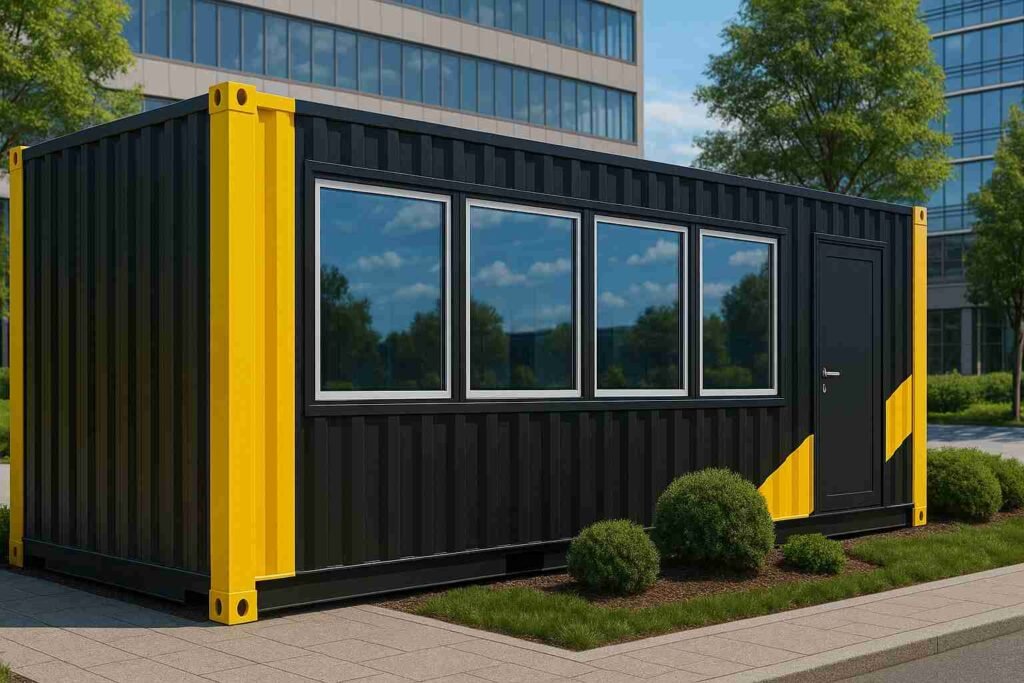
Introduction: Why portability matters
Portability defines freedom. It lets offices move when projects shift. It reduces downtime and saves costs. Among all types of container offices, portable models solve urgent needs. They work in construction sprints, events, disaster recovery, and film production.
Portable offices are widely used by industries that need flexible workspaces without heavy foundations. Mobility keeps operations continuous even under tight deadlines.
Portable container offices differ from modular complexes. They are lighter, reinforced for lifts, and optimized for rapid relocation. This section examines skid-mounted, wheel-mounted, and crane-liftable types. It explains specifications, costs, installation, and pros and cons.
Forklift-Skid Portable Offices
Specifications
Skid-mounted units integrate heavy-duty beams at the base. These skids allow forklifts or cranes to lift them safely. Their compact frame makes them ideal for small and shifting sites.
- Dimensions: 20ft × 8ft × 8.5ft standard.
- Weight: ≈ 4,800 kg empty.
- Insulation: 50 mm PIR board (R-6).
- HVAC: Rooftop ducted heat pump.
- Electrical: 220V, 3–4 circuits.
- Mobility: Forklift pockets, slide-in capability.
- Flooring: Marine plywood with vinyl overlay.
These features keep skid units rugged and simple. They are built for movement, not for permanence.
Installation & use cases
Skid offices deploy within 2–4 hours. Setup requires a level pad or compacted gravel base. Workers use forklifts or small cranes to place the unit.
Typical uses include:
- Mining fleets shifting daily between drill sites.
- Construction supervisors’ cabins at rotating zones.
- Small command booths for infrastructure works.
- Quick-deploy ticket counters near transit hubs.
Cost factors
We price each unit against your actual layout and finish rather than a fixed list. Request a written, itemised SAMAN quote.
Pros and cons across types of container offices
Pros
- Rapid redeployment.
- Low setup cost.
- Compact footprint.
Cons
- Limited distance mobility.
- Requires forklift availability.
- Space constraints for teams.
Wheel-Mounted Mobile Offices
Specifications
Wheel-mounted offices combine container shells with road-legal chassis. They ride on axles and tow behind trucks. This design suits industries that shift sites often but need road-approved movement.
- Dimensions: 20ft × 8ft × 9.5ft.
- Weight: ≈ 5,500 kg empty.
- Chassis: Two-axle, braking system.
- Insulation: 75 mm spray foam (R-8).
- HVAC: Split system with external condenser.
- Electrical: 220V, generator-ready.
- Features: Tow hitch, leveling jacks.
Installation & use cases
Setup requires towing trucks, jacks, and sometimes permits. Placement takes 4–6 hours. Leveling pads stabilize the chassis.
Applications cover:
- Film sets needing nightly relocation.
- Oilfield teams shifting between rigs.
- Rural healthcare clinics serving multiple villages.
- Event organizers needing branded ticket cabins.
Cost factors
Final cost depends on configuration, fit-out level and site access. Ask for a written quote built to your exact requirement.
Key pros and cons of prefabricated container offices
Pros
- Road mobility.
- Quick relocation.
- Self-contained systems.
Cons
- Transport permits needed.
- Heavier maintenance.
- Less interior flexibility.
Crane-Liftable Container Offices
Specifications
Crane-liftable offices retain ISO lifting points. Reinforced corners ensure safe hoisting. They move easily between distant sites via flatbed trucks and cranes.
- Dimensions: 10ft, 20ft, and 40ft sizes.
- Weight: 20ft ≈ 7,500 kg.
- Insulation: 100 mm rock wool (R-9).
- HVAC: Split systems or rooftop units.
- Electrical: 6–8 circuits, data-ready.
- Mobility: Corner plates with shackles.
- Durability: Corten steel frame, weatherproof seals.
Installation & use cases
Placement requires cranes (20+ tons) and engineered bases. Setup completes in 1–2 hours once the crane is onsite. This makes crane-lift units versatile for tough terrain.
Use cases include:
- Emergency response command centers.
- Temporary military bases.
- Urban event hubs with restricted access.
- Healthcare pods in disaster zones.
Cost factors
Exact pricing depends on size, fit-out, insulation and site. SAMAN returns a written, itemised quote for your requirement.
Pros and cons across types of container offices
Pros
- Flexible placement.
- Works in remote zones.
- Strong durability.
Cons
- Crane costs add up.
- Requires heavy logistics.
- Higher upfront expense.
Mobility types vs setup & cost
| Mobility Type | Movement Method | Setup Time | Site Needs |
| Forklift-Skid | Forklift / small crane | 2–4 hours | Level pad, forklift/crane |
| Wheel-Mounted | Truck towing | 4–6 hours | Tow permit, jacks |
| Crane-Liftable | Crane + flatbed | 1–2 hours | Crane capacity, piers |
Sustainability & durability
Portable container offices reuse steel shells. Each cabin saves 2.5 tons of steel from waste. With insulation and smart HVAC, they cut energy use. Reuse across sites increases lifecycle value. Proper maintenance extends life to 15–20 years even under heavy mobility.
Portable offices vs trailers
Many confuse container offices with office trailers. The differences matter.
| Feature | Portable Container Office | Office Trailer |
| Core Material | Corten steel | Wood/aluminum mix |
| Access | Ground-level | Raised, needs stairs |
| Durability | Harsh weather resistant | Prone to wear |
| Security | Strong steel walls | Moderate protection |
| Setup | Ready in hours | Requires extra prep |
| Resale Value | Meaningful recovery | Low or none |
Future trends
The portable segment is shifting. Analysts predict demand may double by 2035. Drivers include faster disaster-preparedness programs and construction booms in Asia and Africa.
Emerging upgrades include:
- Hybrid units with collapsible wings.
- Smart mobility with GPS tracking.
- Eco-portables using solar and rainwater harvesting.
- Rental growth from short-term events.
Portable offices will stay central in the evolution of modern types of container offices. They balance speed, mobility, and resilience across industries. Compared with other types of container offices, modular stacks deliver exceptional scalability.
Customized Container Offices (Interior, Exterior, Smart & Eco Options)
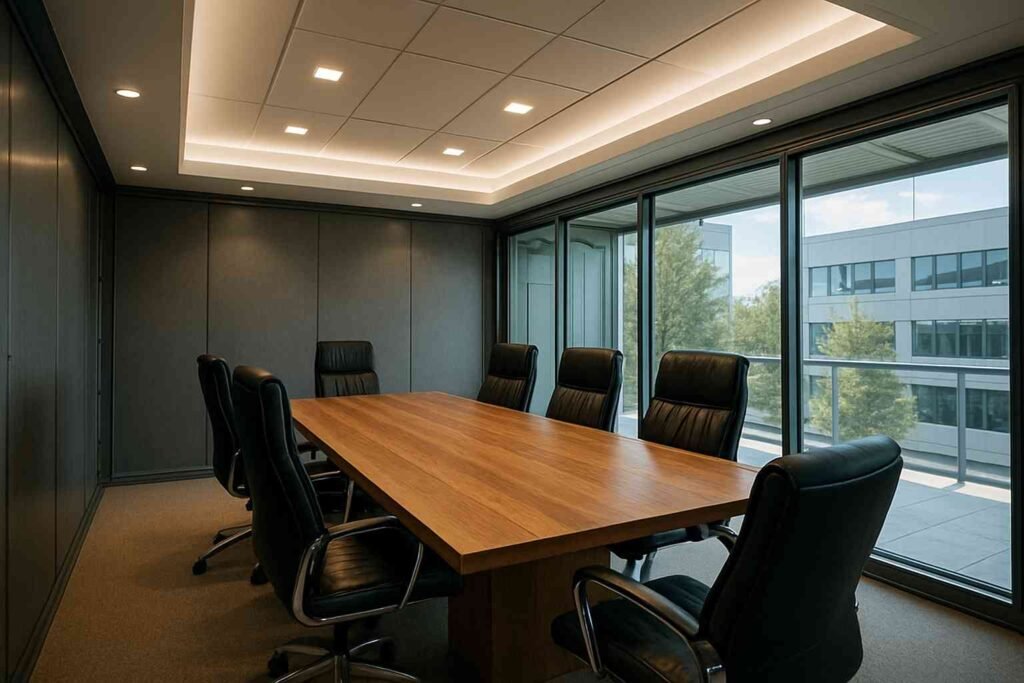
Introduction: Why customization defines value
Customization transforms a steel box into a tailored workspace. It changes plain shells into executive suites, collaborative hubs, or eco-smart labs. In every market survey, decision-makers report customization as the top driver of satisfaction with modern types of container offices.
Most new container offices now include specialised interiors, smart controls, or eco upgrades: driven by corporate branding needs, sustainability goals, and demand for hybrid workspaces.
This section explores four pillars of customization: interiors, exteriors, smart integrations, and eco-friendly enhancements. It details specifications and trade-offs for each, so you can match the right customisation to your use and budget.
Interior Customization
Fit-out specifications
Interiors create productivity. They control comfort, acoustics, and workflow. Container shells adapt easily with framing and insulation upgrades.
Common interior options:
- Insulation: Rock wool (R-8), spray foam (R-6/inch), PIR panels (R-7).
- Partitions: Drywall, modular panels, or glass partitions.
- Ceilings: Grid ceilings with LED lights, acoustic panels.
- Flooring: Vinyl, laminate, carpet tiles, anti-static epoxy.
- Furniture: Modular desks, folding tables, built-in storage.
- Amenities: Restrooms, pantries, HVAC cassettes.
Installation & use cases
Interior upgrades deploy within 1–3 weeks depending on scope. Electrical, plumbing, and HVAC are integrated simultaneously.
Common deployments:
- Executive cabins with high-end finishes.
- Training rooms for corporate or educational clients.
- Healthcare offices requiring hygienic flooring and washrooms.
- IT hubs needing data racks and anti-static surfaces.
Cost comparison across types of container offices
Cost varies with size, interiors, HVAC and delivery distance. Share your specification and we send a written quote, no obligation.
Essential pros and cons of shipping container offices
Pros
- Raises comfort and productivity.
- Tailored to industry needs.
- Boosts property value.
Cons
- Increases upfront cost.
- Longer setup compared to basic shells.
- Limits resale flexibility.
Exterior Customization
Façade and finishes
Exteriors impact brand image and durability. Modern projects focus on weatherproofing, aesthetics, and visibility.
Popular exterior options:
- Cladding: ACP, timber slats, or steel panels.
- Coatings: DTM industrial paints, powder coating.
- Signage: LED-lit brand logos, vinyl wraps.
- Shading: Sun-breakers, louvers, pergolas.
- Security: Reinforced doors, grills, CCTV mounts.
Installation & use cases
Exterior work lasts 1–2 weeks, depending on complexity. It can run parallel with interior upgrades.
Key applications:
- Branded corporate offices at construction sites.
- Retail pop-ups with bold exteriors.
- Event cabins with lighting and signage.
- Long-term offices with enhanced durability.
Pricing details for different types of container offices
We price each unit against your actual layout and finish rather than a fixed list. Request a written, itemised SAMAN quote.
Pros and cons across types of container offices
Pros
- Enhances brand recognition.
- Improves weather protection.
- Long-term durability.
Cons
- Costs rise with premium cladding.
- Heavier weight impacts mobility.
Smart Customization
Technology integrations
Smart offices improve efficiency and control. Containers are increasingly embedded with digital systems.
Smart features:
- Climate control: Smart thermostats, IoT HVAC.
- Lighting: Motion-sensor LED systems.
- Security: RFID access, CCTV, alarms.
- Connectivity: Wi-Fi mesh, 5G boosters.
- Energy tracking: Real-time monitoring dashboards.
Installation & use cases
Smart systems integrate during fit-out. Cloud management allows remote control.
Common users:
- Corporate HQs needing secure access.
- Co-working pods requiring network stability.
- Healthcare and labs monitoring sensitive environments.
Specifications and costs for major types of container offices
Final cost depends on configuration, fit-out level and site access. Ask for a written quote built to your exact requirement.
Notable pros and cons of modular container offices in projects
Pros
- Reduces energy costs.
- Strengthens security.
- Enables remote monitoring.
Cons
- Higher upfront investment.
- Dependence on stable internet.
Eco-Friendly Customization
Sustainable upgrades
Eco-customization addresses both regulation and corporate responsibility. It transforms containers into green assets.
Eco upgrades include:
- Solar PV: Rooftop systems 3–5 kW.
- Rainwater harvesting: Tanks and filters.
- Natural ventilation: Louvers and skylights.
- Low-VOC interiors: Healthier workspaces.
- Green façades: Vertical gardens.
Installation & use cases
Eco systems require engineering checks but install within 2–4 weeks. They align with LEED and BREEAM targets.
Common deployments:
- Corporate CSR-driven offices.
- Schools and healthcare centers.
- Remote eco-tourism hubs.
Feature comparison among types of container offices
Exact pricing depends on size, fit-out, insulation and site. SAMAN returns a written, itemised quote for your requirement.
Pros and cons across types of container offices
Pros
- Reduces operating costs.
- Supports sustainability goals.
- Improves corporate image.
Cons
- Higher setup costs.
- Maintenance of solar and rain systems.
Comparison Table: Custom Options
| Category | Key Features | Best Fit Industries |
| Interior | Partitions, furniture, HVAC | Corporate, healthcare |
| Exterior | Cladding, signage, shading | Events, retail, branding |
| Smart | IoT HVAC, access, lighting | Tech, finance, co-working |
| Eco | Solar, water, green walls | Education, CSR, tourism |
Conclusion
Customization unlocks value across all types of container offices. Interiors raise comfort. Exteriors project brand identity. Smart systems reduce costs. Eco upgrades future-proof investments. While costs vary, returns come through efficiency, branding, and sustainability. Customization ensures container offices meet not just today’s needs but tomorrow’s challenges. Industry adoption proves different types of container offices meet unique operational needs.
Functional Container Types: Hybrid & Office/Storage Combos
Beyond the standard categories based on size and mobility, container offices can also be defined by their specific function. Two of the most common and valuable functional types in the market are Office & Storage Combo units and Hybrid designs. By serving specific, practical needs, these units offer a powerful alternative to single-purpose solutions.
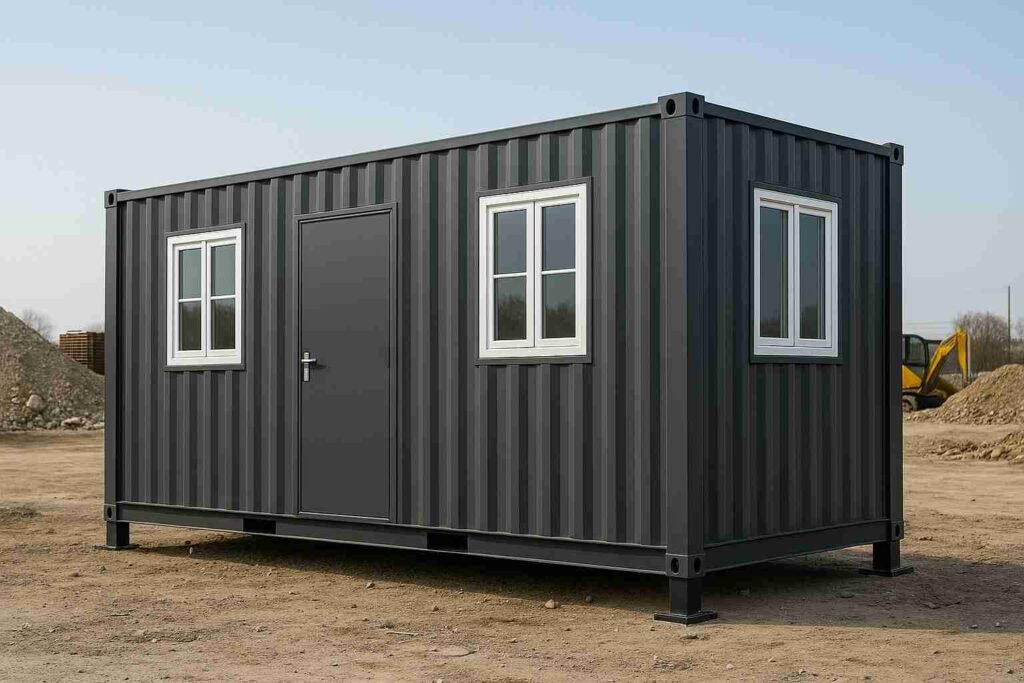
Office & Storage Combo Units
These highly practical units combine a climate-controlled office space with a secure, unconditioned storage area in a single container.3 This dual-purpose design is ideal for worksites, where project managers need both a workspace and a secure location for tools, supplies, and documents.3
- Specifications: Combo units are built with marine-grade corrugated steel for durability and security.4 They offer ground-level access and are equipped with features like security bars on windows, HASP locks, and locking door handles to deter theft.4 The office section includes standard office amenities like durable flooring and an HVAC system.4
- Dimensions: A typical 20-foot combo unit has exterior dimensions of 20′ L x 8′ W x 8′ 6″ H. The office portion is approximately 10′ 5.5″ L, providing about 76 sq ft of workspace, while the storage portion is 8′ 6″ L.4 The tare weight for a 20′ combo is approximately 5,300 lbs.4
- Uses: They serve as meeting rooms, ticket booths, and even record rooms for storing sensitive documents.4
Hybrid Container Designs
Hybrid designs represent a fusion of container architecture and traditional building methods.5 This approach combines the structural integrity and durability of a shipping container with materials like steel, wood, or glass to create unique aesthetic and functional properties. While they can be more complex and expensive to build, hybrid offices are perfect for businesses seeking a distinctive, branded workspace that goes beyond the standard container look. Global demand confirms that types of container offices are now a mainstream workplace solution.
Industry-Specific Container Offices (Construction, Corporate, Events, Education, Healthcare, Mining)
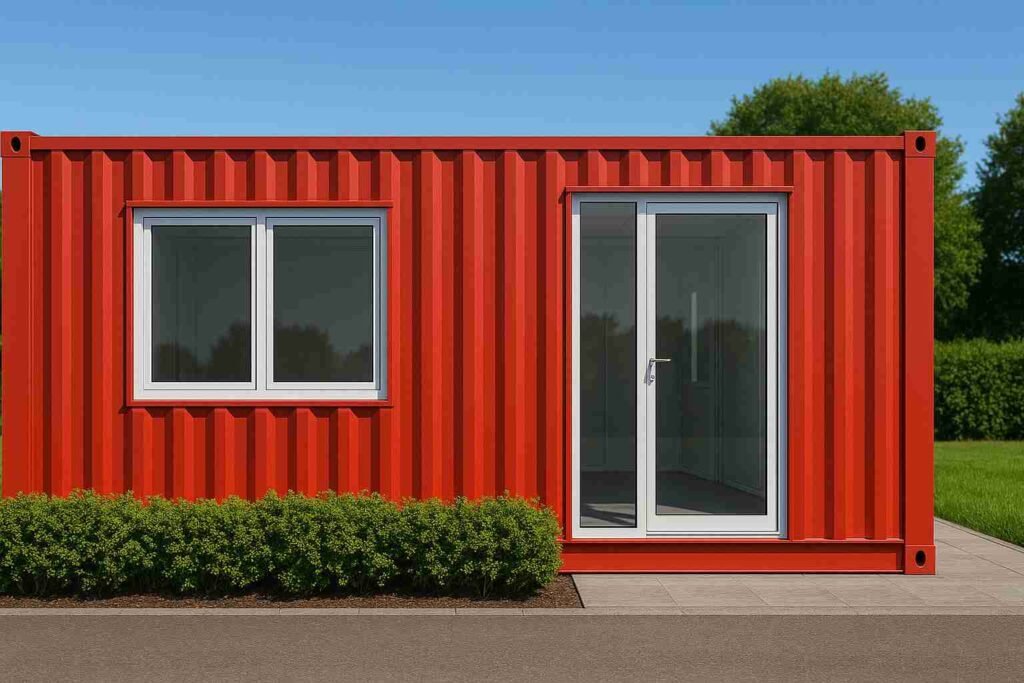
Introduction: Why industries demand tailored solutions
Container offices succeed because they adapt. Different industries demand different layouts, finishes, and systems. What works on a construction site fails in a hospital zone. Corporate users expect polish. Event managers want fast visibility. Mining supervisors need rugged cabins..
By 2025, industry-driven customization represents a large shareof all container office orders. Each sector optimizes for its own pressures: safety, speed, cost, branding, or durability. These tailored models reinforce the broad reach of modern types of container offices.
According to SAMAN Portable official website, demand for prefabricated container offices continues to rise across India’s construction and corporate sectors.
Construction Site Container Offices
Specifications
Construction offices prioritize rugged builds. Interiors stay simple but durable. Dust control and secure storage matter more than polish.
- Dimensions: 20ft and 40ft most common.
- Insulation: EPS panels, R-5 minimum.
- HVAC: 1–2 ton wall or split units.
- Electrical: 3–5 circuits for tools and lights.
- Flooring: marine plywood with heavy vinyl.
- Features: plan tables, racks, whiteboards, secure doors.
For rugged construction projects, some firms even compare portable porta cabins for sites as an alternative to container offices.
Installation & use cases
Deploy within 6–12 hours on gravel pads or footings. Often combined with tool storage or break rooms.
Applications:
- Project manager cabins.
- Site safety and briefing rooms.
- Tool lockups and drawing archives.
Regional price guide by types of container offices
Cost varies with size, interiors, HVAC and delivery distance. Share your specification and we send a written quote, no obligation.
Buyers planning their budgets can also check our container office price guide 2025 for an updated breakdown of new, used, and rental options.
Important pros and cons of portable container offices for users
Pros
- Rugged and secure.
- Fast deployment.
- Cost-effective.
Cons
- Limited amenities.
- Dust ingress if poorly sealed.
Corporate & Co-Working Container Offices
Specifications
Corporate offices demand image and comfort. Interiors focus on acoustics, branding, and ergonomics.
- Dimensions: 40ft standard or high cube.
- Insulation: Rock wool R-8+, acoustic boards.
- HVAC: 2–3 ton VRF systems.
- Electrical: full data, fiber, redundant power.
- Features: glass partitions, lounges, branded panels.
Installation & use cases
Typical build spans 2–3 weeks. Units link into suites or stacks for full co-working hubs.
Applications:
- Corporate HQ extensions.
- Co-working pods near city centers.
- Sales suites with premium fit-outs.
Cost comparison across types of container offices
We price each unit against your actual layout and finish rather than a fixed list. Request a written, itemised SAMAN quote.
Pros and cons across types of container offices
Pros
- Strong brand impact.
- Comfortable and modern.
- Flexible layouts.
Cons
- High fit-out costs.
- Longer timelines than basic cabins.
Event Container Offices
Specifications
Events prioritize mobility, branding, and visibility. Cabins often serve as ticket booths, registration counters, or command hubs.
- Dimensions: 10ft and 20ft most used.
- Insulation: light PIR or EPS.
- HVAC: compact split or window units.
- Features: large service windows, signage frames, LED lighting, sound systems.
Installation & use cases
Deploy in 4–6 hours. Designed for mobility and repeated use.
Applications:
- Concert ticketing cabins.
- Festival media hubs.
- Pop-up brand showcases.
Pricing details for different types of container offices
Final cost depends on configuration, fit-out level and site access. Ask for a written quote built to your exact requirement.
Valuable pros and cons of custom container offices for businesses
Pros
- High visibility.
- Portable and reusable.
- Branding flexibility.
Cons
- Limited insulation.
- High wear from repeated moves.
Educational Container Offices
Specifications
Education uses containers for classrooms, labs, and staff rooms. Safety and comfort drive design.
- Dimensions: 40ft high cubes preferred.
- Insulation: Rock wool R-9+, acoustic panels.
- HVAC: 2–3 ton split or VRF.
- Features: writable walls, secure cabinets, fire-rated doors.
Installation & use cases
Setup requires 1–2 weeks. Cabins often link into learning clusters.
Applications:
- Rural classrooms.
- Temporary labs.
- Teacher resource centers.
Specifications and costs for major types of container offices
Exact pricing depends on size, fit-out, insulation and site. SAMAN returns a written, itemised quote for your requirement.
Pros and cons across types of container offices
Pros
- Rapid educational expansion.
- Durable in remote areas.
- Affordable versus brick builds.
Cons
- Limited long-term expansion.
- Noise if poorly insulated.
Healthcare & Clinics
Specifications
Healthcare requires strict hygiene, climate control, and plumbing. Fit-outs follow medical standards.
- Dimensions: 20ft and 40ft high cube.
- Insulation: PIR or rock wool, R-8+.
- HVAC: 2–4 ton, HEPA filters.
- Features: medical flooring, stainless counters, handwash sinks, restrooms.
Installation & use cases
Deploy within 2–3 weeks. Units can run standalone with solar and water tanks.
Applications:
- Mobile clinics.
- Emergency testing centers.
- Rural primary care hubs.
Feature comparison among types of container offices
Cost varies with size, interiors, HVAC and delivery distance. Share your specification and we send a written quote, no obligation.
Realistic pros and cons of prefabricated container offices on sites
Pros
- Hygienic and climate-ready.
- Rapid emergency response.
- Can integrate solar and water tanks.
Cons
- Higher cost.
- Regular maintenance required.
Mining & Remote Container Offices
Specifications
Mining offices demand resilience against dust, vibration, and extreme weather.
- Dimensions: 20ft skid-mounted most used.
- Insulation: 75–100 mm PIR, R-8–R-9.
- HVAC: heavy-duty 2–3 ton split.
- Features: rugged flooring, satellite comms, reinforced steel doors.
Installation & use cases
Deployment finishes in 6–10 hours with forklifts or cranes.
Applications:
- Site management cabins.
- Control rooms near drilling rigs.
- Worker break areas.
Regional price guide by types of container offices
We price each unit against your actual layout and finish rather than a fixed list. Request a written, itemised SAMAN quote.
Pros and cons across types of container offices
Pros
- Withstands harsh climates.
- Portable across rugged sites.
- Supports satellite connectivity.
Cons
- Crane or forklift required.
- Comfort secondary to resilience.
Comparative industry table
| Industry | Size Preference | Deployment Time | Key Features |
| Construction | 20ft, 40ft | 6–12 hrs | Rugged, tool storage |
| Corporate | 40ft, multi | 2–3 wks | Glass, branding, lounges |
| Events | 10ft, 20ft | 4–6 hrs | Signage, counters, LEDs |
| Education | 40ft | 1–2 wks | Classrooms, acoustic panels |
| Healthcare | 20ft, 40ft | 2–3 wks | Hygiene, HVAC, plumbing |
| Mining | 20ft skid | 6–10 hrs | Rugged, insulated, comms |
FAQs on Types of Container Offices
Q1. What are the different types of container offices available today?
The main types of container offices include 10ft, 20ft, 40ft, and high cube models. Other variations include modular, portable, stackable, customized, and eco-friendly container offices designed for different industries.
Q2. Which size is most popular among different types of container offices?
The 20ft container office remains the most widely used. It balances portability, cost, and floor area. Its popularity is driven by easy resale, simple transport, and wide suitability across industries like construction, mining, and corporate use.
Q3. How much do different types of container offices cost in 2025?
Cost depends on size, fit-out, insulation and delivery. A compact 10ft unit sits at the lower end, a fully fitted 40ft high cube at the higher end, and rental is available for short-term needs. Share your size and finish and we return a written, itemised quote.
Q4. Are all types of container offices suitable for corporate use?
Yes, container offices are now common in corporate and co-working spaces. Customized 40ft and modular offices with glass façades, soundproofing, and branded finishes deliver professional environments for clients, teams, and executives.
Q5. Can eco-friendly features be added to all types of container offices?
Eco-friendly upgrades are widely available. Solar panels, rainwater harvesting systems, low-VOC interiors, and green façades make container offices more sustainable. These features reduce energy use and improve long-term ROI.
Q6. How portable are different types of container offices across industries?
Portability depends on design. Skid-mounted units move by forklift, wheel-mounted offices tow by truck, and crane-liftable cabins reach remote areas. This flexibility supports industries with shifting locations or temporary operations.
Q7. What is the average lifespan of different types of container offices?
New container offices last 20–25 years with proper maintenance. Used or refurbished units typically last 8–12 years. Regular painting, HVAC servicing, and structural checks extend life and protect resale value.
Q8. Do all types of container offices require permits and approvals?
Yes, most regions require permits. Temporary use, like construction sites or events, may only need short-term permits. Permanent offices must follow building, fire, and zoning regulations for safety and compliance.
Q9. Which industries rely most on different types of container offices?
Construction and mining lead global demand. Corporate hubs, events, education, and healthcare also rely on container offices. Each industry adapts layouts and fit-outs to its operational needs, from rugged shells to luxury suites.
Q10. Is it better to rent or buy different types of container offices?
Renting is best for projects under 18 months. Buying is cost-effective for long-term use. The breakeven point usually occurs between 24–30 months, after which ownership provides higher value and resale potential.
Talk to SAMAN about your container office
Get an indicative price and lead time for your container office, built new at our Greater Noida (Jalpura, PIN 201308) plant and delivered ready to use.
Call +91 88616 22859 or send your requirement through our enquiry form for a written quote.
About SAMAN: container office manufacturer
SAMAN POS India Pvt Ltd (POS = Portable Office Solutions) is a direct container office manufacturer, ISO 9001:2015 (Cert No. E20250218645), ISO 14001:2015 (Cert No. E20250218646) and ISO 45001:2018 (Cert No. E20250218647) certified; NSIC enlisted (Ref. NSIC/GP/BAN/2024/0055207); DPIIT-recognised startup (Ref. DIPP56005); Udyam registered (UDYAM-KR-03-0172770); GST 29ABBCS7101B1ZR (Bangalore) and 09ABBCS7101B1ZT (Noida). We build on IS 2062 steel and dispatch factory-direct from Bangalore (Gopasandra, 560099) and Greater Noida (Jalpura, 201308) with a route-based delivery charge confirmed at quotation and typical transit of 3–5 days. Call +91 88616 22859 or send an enquiry. Browse our container offices range or see our container office cabin.