
Related Products
Explore similar items
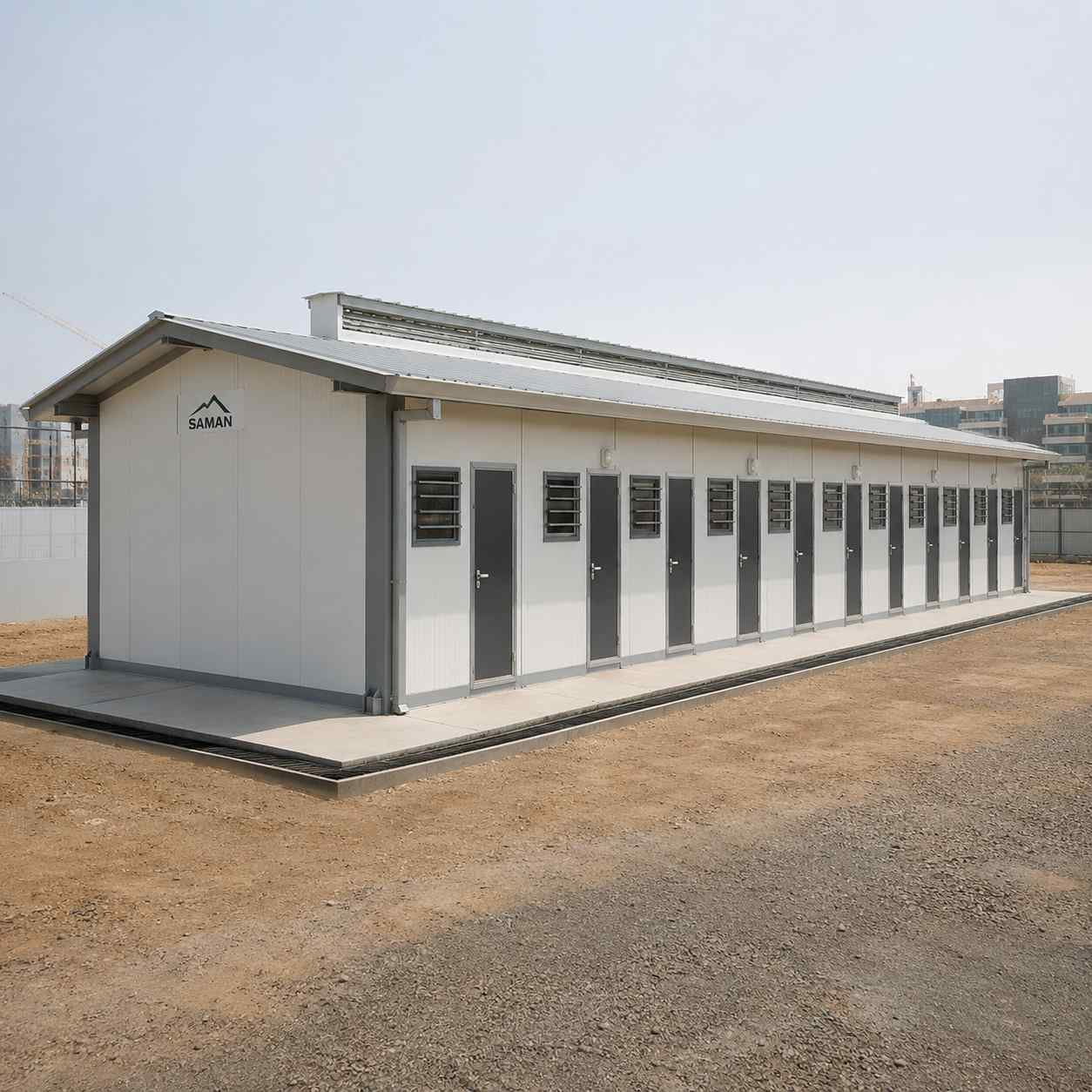
Labor Sheds
Inclusive of all taxes
Quantity
Product Information
Product Details
Comprehensive information about Labor Sheds
Product Overview
Detailed information about Labor Sheds
Labor Sheds — Standard Worker Accommodation for Project Sites
Labor sheds are the bulk-format sleeping unit in SAMAN's worker-accommodation range — a single-roof structure that houses a larger crew under one continuous shelter at a lower per-worker cost than individual cottage units. SAMAN manufactures labor sheds at our Bangalore and Greater Noida facilities for construction, infrastructure, and industrial project sites across India. This page covers the standard shed-format build, on-site assembly, worker capacity per shed, and where the shed sits in the wider labor colony range.
What Defines a Labor Shed: Single-Roof, Bulk-Format Worker Housing
A labor shed is a single-roof prefabricated structure that houses a worker crew under one continuous covered space — distinct from hutments, which are multiple smaller units, and cottages, which are individual long-stay accommodation. The defining feature is the span: one rectangular footprint with a single roof, internal bunk arrangement, and shared circulation. Inside the labor colony product range, sheds sit between the smaller hutment-cluster format and the full bundled accommodation tier. SAMAN supplies the standard on-site-assembled shed format — pre-fabricated frame and panel sets shipped to your project site and assembled on a level base.
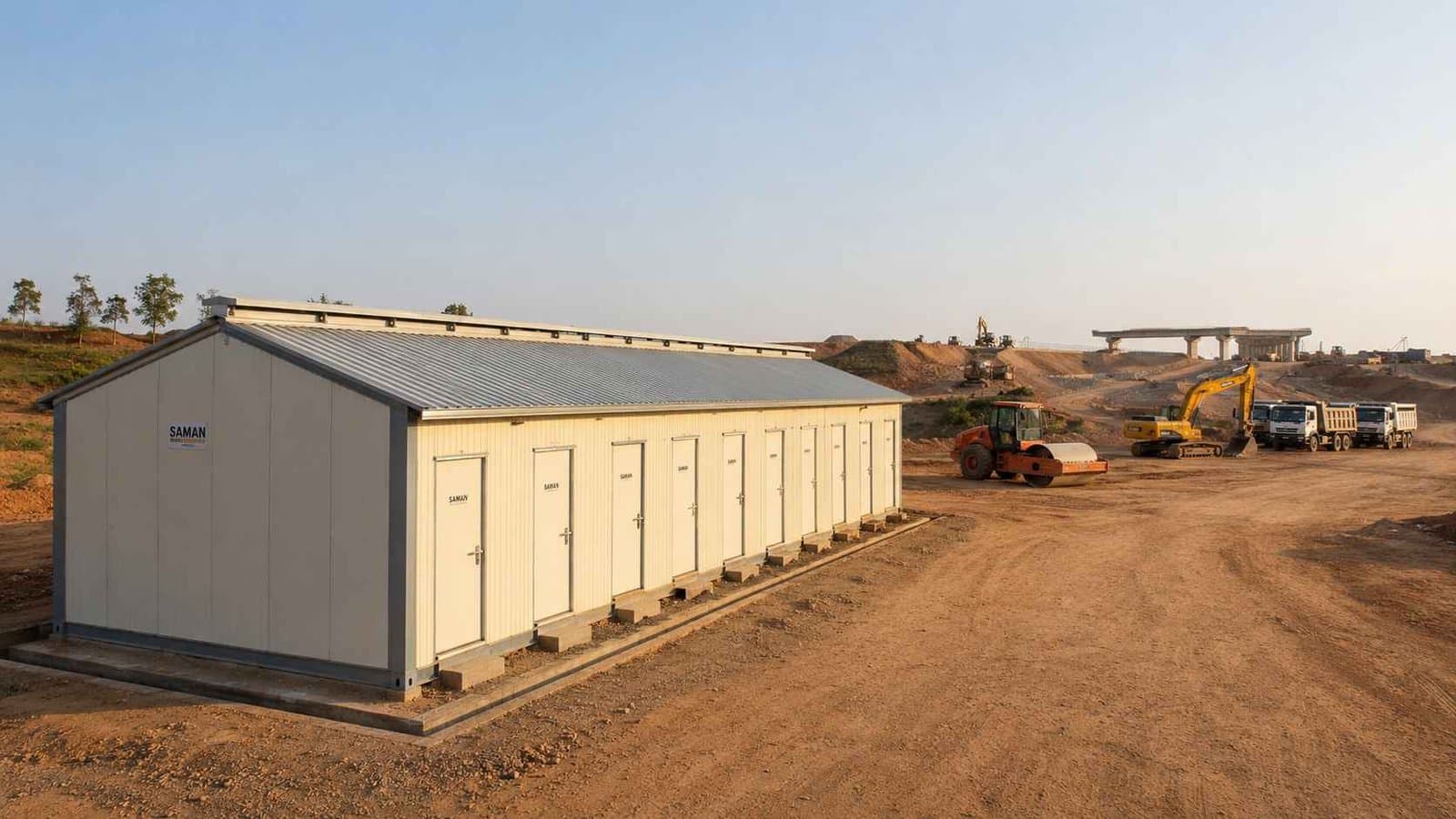
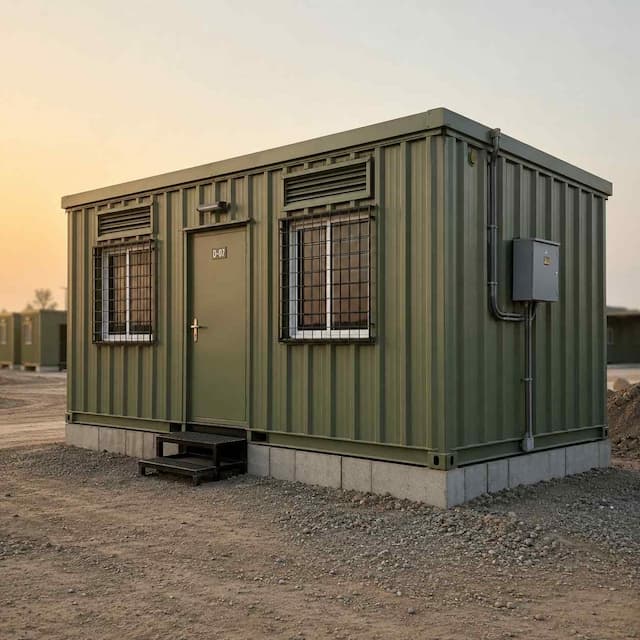
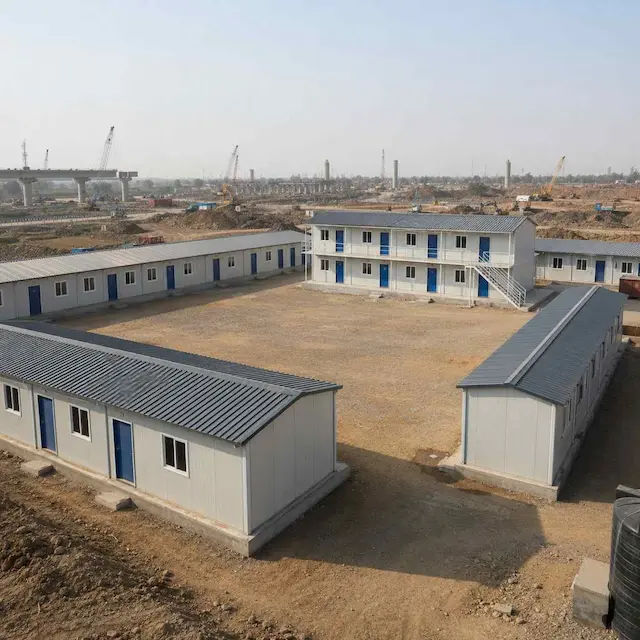
A SAMAN labor shed serving as worker accommodation at a highway project — single-block configuration sized for a 30 to 60 worker crew on a 6 to 12 month build.
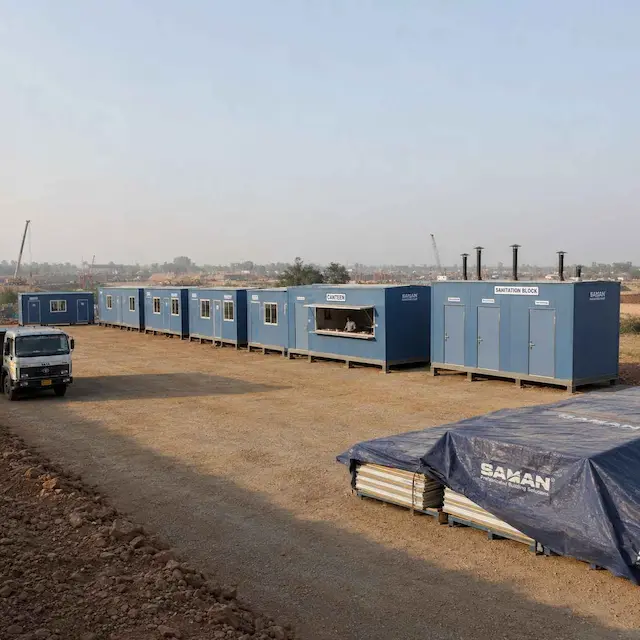
A labor shed is a sleeping unit only. Sanitation, dining, and supervisor quarters are separate blocks in the colony layout.
Standard Labor Shed Build: Frame, Walls, Roof, and Ventilation
A standard SAMAN labor shed is built around a welded MS frame with insulated wall and roof panels designed for India's monsoon and summer load. The build is calibrated for worker-grade durability without the factory-finished premium of a prefab unit.
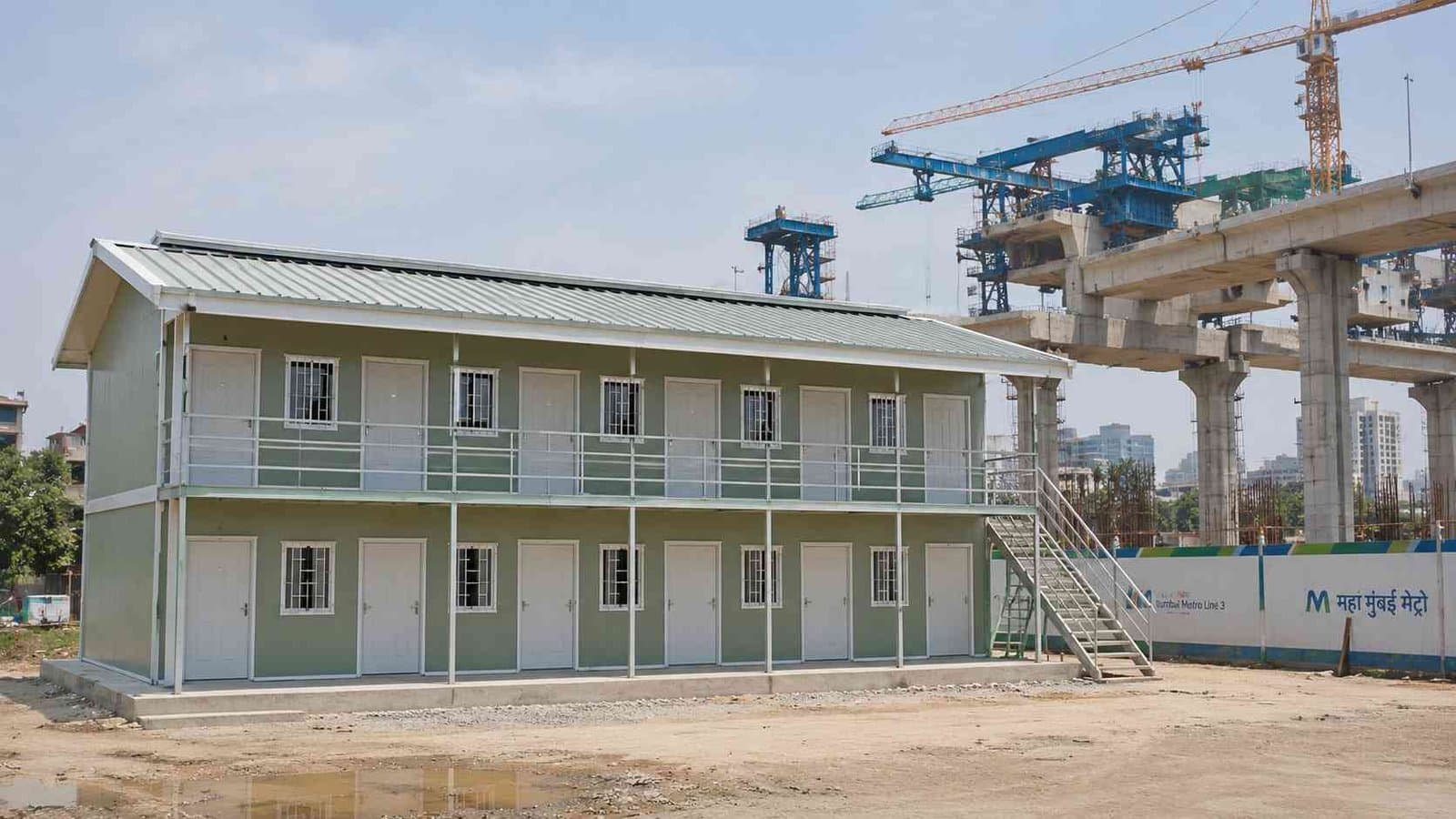
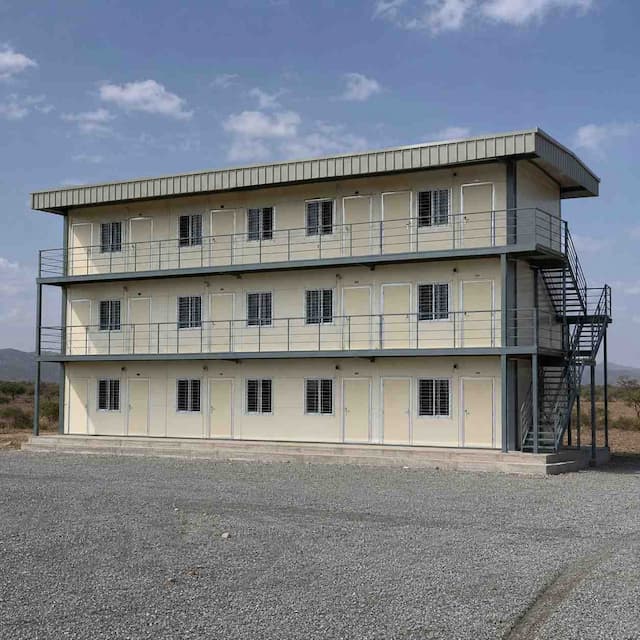
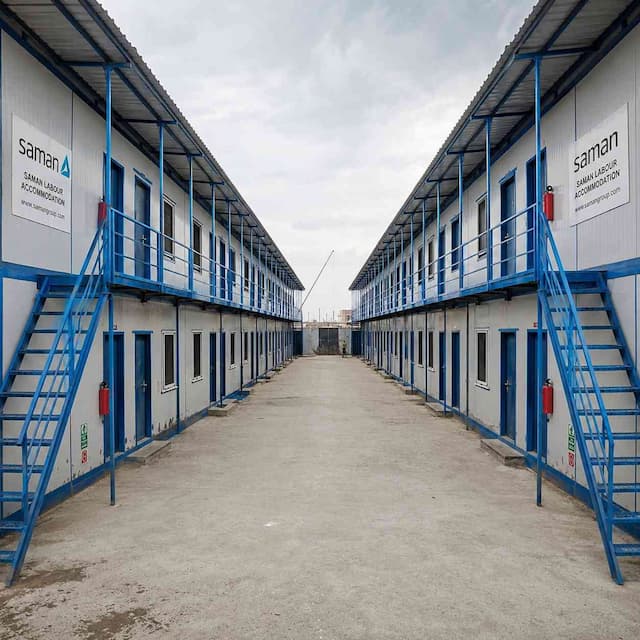
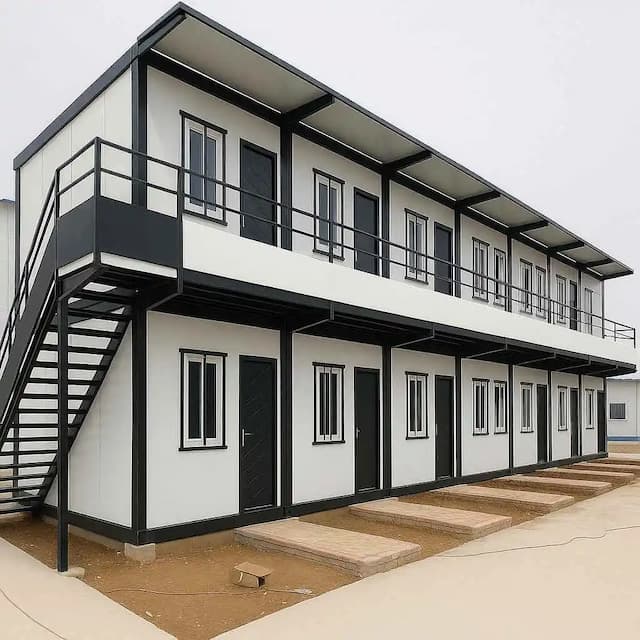
A G+1 labor shed at a metro construction camp — vertical stacking doubles the accommodation count on a constrained urban footprint.
| Component | Standard specification |
|---|---|
| Frame | IS 2062 MS angle and section, welded jig-built for repeated dismantling |
| Wall panel | GI sheet (budget tier) or 30 / 40 mm PUF sandwich panel (insulated tier) |
| Roof | PPGI single-skin profile, drainage-designed for monsoon span |
| Ventilation | Ridge ventilator along roof length + side louvres on both long walls |
| Floor | MS deck with cement-fibre or vinyl finish over a level base |
| Electrical | Lights overhead and ceiling-fan points along bunk runs; plug points on request |
| Doors and windows | MS or FRP doors, fixed louvre or grilled windows |
With a longer roof span than a hutment, ventilation positioning matters. Ridge ventilators run the full roof length and side louvres open along both long walls to push hot air out without depending on power. The basic electrical loadout is fitted before the shed leaves the line.
How Many Workers Fit in One Labor Shed
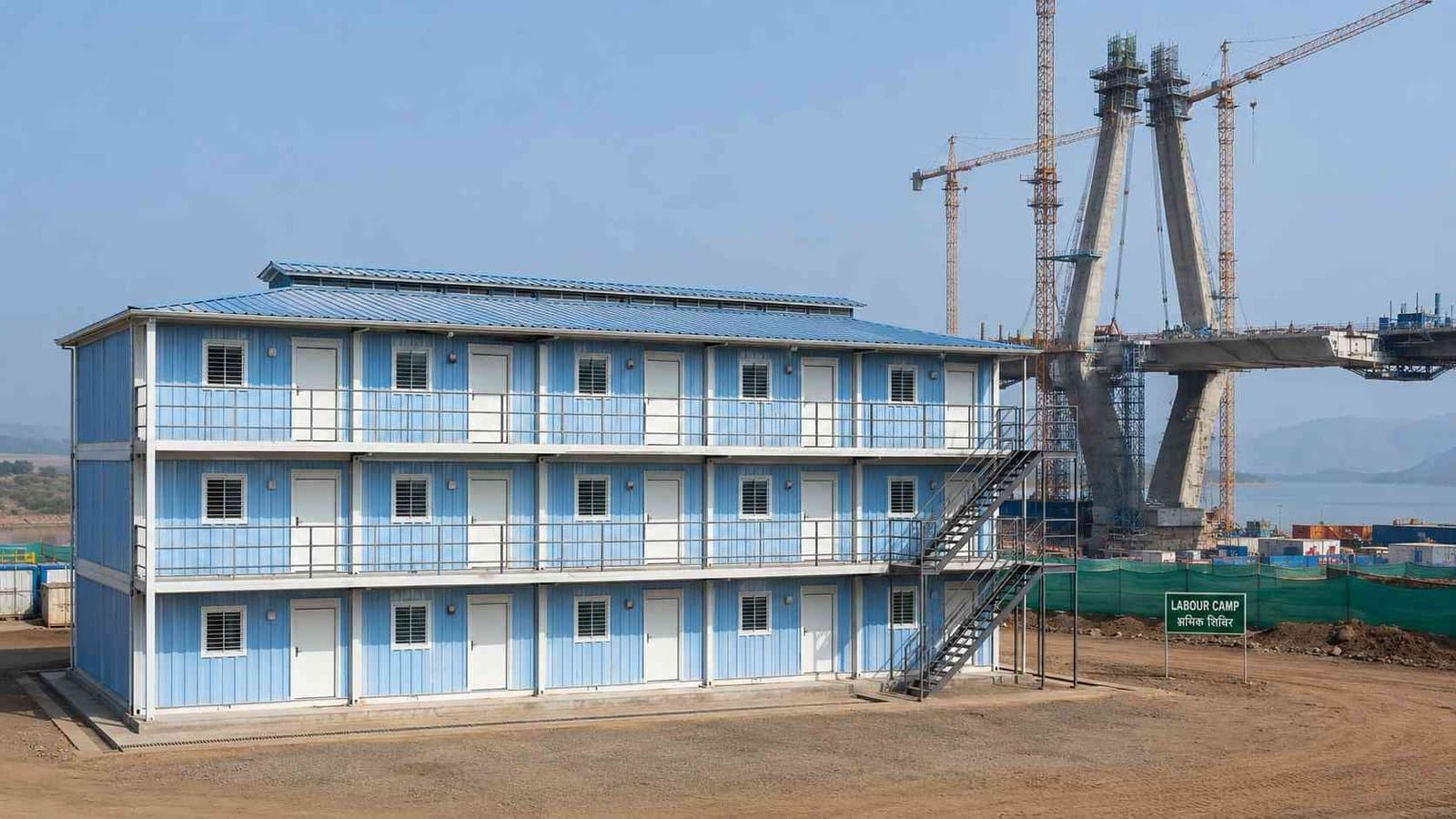
A G+2 labor shed at a bridge project — the maximum SAMAN vertical configuration, used on large infrastructure projects with tight accommodation land.
Worker capacity per shed scales with footprint and bunk tier. A labor shed functions as a single-roof dormitory — every bunk sits under one continuous roof, sharing internal circulation aisles. The three SAMAN configurations cover most project requirements:
- 20 × 30 ft shed — 24 workers single-tier / 48 workers double-tier
- 20 × 40 ft shed — 32 workers single-tier / 64 workers double-tier
- 30 × 50 ft shed — 50 workers single-tier / 100 workers double-tier
The double-tier bunk arrangement (G+1 internal stacking) doubles the workers per shed footprint without expanding the colony land area — useful when the project site has a fixed accommodation plot. Floor area per bed under BOCW guidance runs around 30 sq ft per worker including circulation; single-tier sheds run at this level, while double-tier brings the per-worker footprint down to about 18 sq ft. Single-tier is preferred for longer-duration projects; double-tier suits cost-sensitive short builds.
When a Labor Shed Is the Right Pick — and When to Step Up
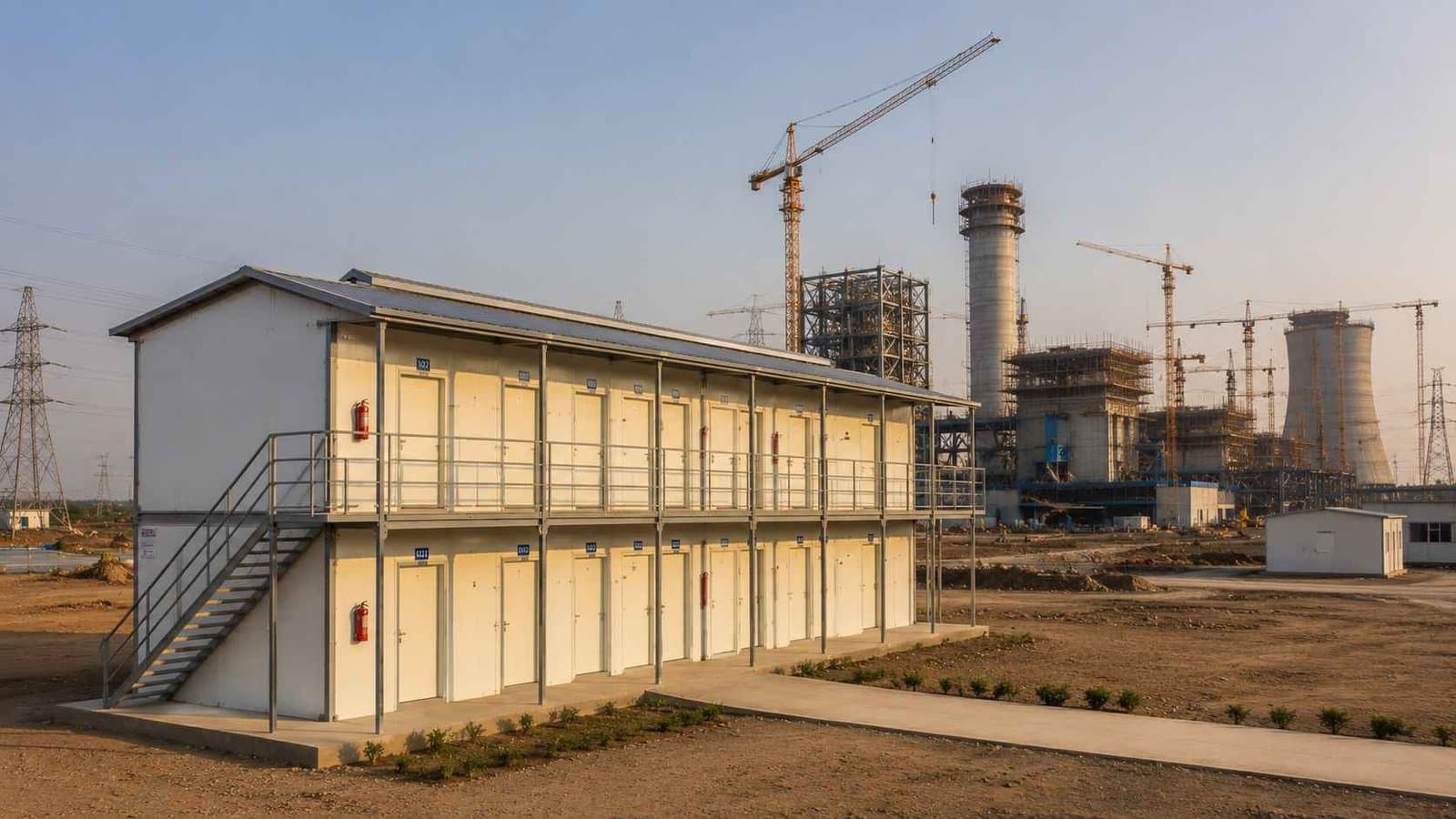
A G+1 SAMAN labor shed at a thermal power plant project — used for worker accommodation across long-duration 18 to 36 month industrial builds.
A labor shed is the right pick when the project runs 3 to 12 months, the worker crew is consistent enough for bulk housing, the site has level land for a larger single footprint, and the budget needs the lowest per-worker accommodation cost. Three alternatives are usually worth checking before order confirmation:
- For factory-finished consistency at scale, consider the factory-built prefab shed variant, which is built off-site and dispatched ready to position.
- For smaller, separated sleeping units instead of one continuous roof, the labor hutments format breaks the crew into multiple units.
- For long-stay individual privacy in cottage-style units, the labor cottages range covers that requirement.
If your order needs sleeping plus dining plus sanitation bundled as one package, that's a full accommodation tier rather than a shed-only order.
On-Site Assembly and Per-Shed Cost Drivers
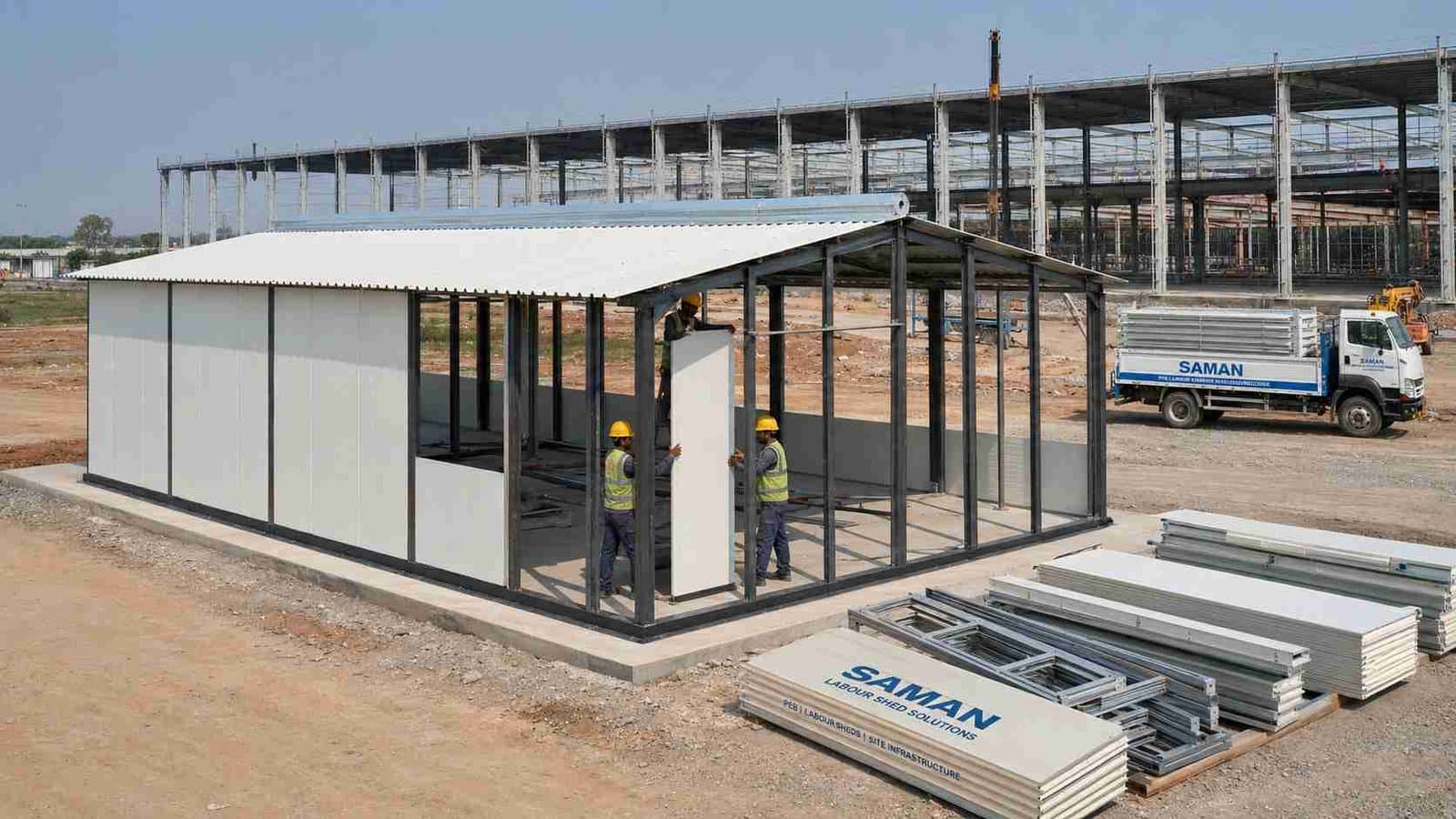
On-site assembly of a SAMAN labor shed — a 3 to 4 person crew completes the standard shed in 3 to 5 working days on a level base.
Standard labor sheds are assembled on site, not in the factory. SAMAN dispatches the pre-fabricated frame sections, wall panels, roof sheets, and fittings in a single truck load per shed. A 3 to 4 person crew assembles one standard shed in 3 to 5 working days on a level base. This on-site assembly model is what keeps the per-shed cost lower than a fully factory-built shed — the trade-off is longer time to occupancy and dependence on site crew availability.
Per-shed cost is driven by:
- Shed footprint and roof span
- Wall panel type — GI sheet (budget tier) or PUF sandwich panel (insulated tier)
- Insulation thickness if PUF is specified
- Electrical fit-out scope — lights only, or lights plus fans plus plug points
- Distance from Bangalore or Greater Noida to your project site
- Civil base requirement — flat ground accepts the shed directly; sloped or soft ground needs pre-levelling or footing blocks
Labor Shed Quote: What to Tell SAMAN to Get a Confirmed Price
For a per-shed quote returned within 24 to 48 working hours, share:
- Worker headcount per shed and total shed count required
- Project location for delivery radius
- Project duration to confirm build tier
- Single-tier or double-tier bunk preference
- Insulation tier — budget GI sheet or PUF sandwich panel
- Electrical fit-out scope
Call or WhatsApp +91 97089 89937 to start a labor shed quote, or browse the full labor colony range for related accommodation options.
FAQs About Labor Sheds
Q1: What is a labour shed used for on a construction site?
A labour shed houses project workers in a single-roof bulk-format unit on a construction or infrastructure site. It provides sleeping accommodation for crews of 20 to 100 workers under one continuous shelter — the main sleeping unit in budget-sensitive 3 to 12 month projects.
Q2: How many workers can sleep in one labor shed?
A standard SAMAN labor shed holds 24 to 50 workers in single-tier bunk arrangement, and 48 to 100 workers in double-tier (G+1) arrangement. Actual count depends on shed footprint — 20×30, 20×40, and 30×50 ft are the common specifications. Exact count is confirmed at quote stage.
Q3: Can a labor shed be moved to the next project after the current one closes?
Yes. The frame-and-panel build dismantles for relocation. A 3 to 4 person crew takes down a standard shed in 2 to 3 working days, transports it, and re-erects on the next project site. Electrical fittings are inspected and reused where possible.
Q4: What's the difference between a labor shed and a prefab labor shed?
Both are shed-format worker accommodation; the build method differs. A standard labor shed ships as a parts kit and is assembled on site. The factory-built version is finished off-site, then dispatched ready to position. The factory-built option carries a higher per-shed cost; the standard build is more economical with longer on-site assembly.
Q5: How long does on-site assembly take for one labor shed?
A 3 to 4 person crew assembles one standard SAMAN labor shed in 3 to 5 working days on a level base. Larger sheds or double-tier bunks push the upper end. Pan-India delivery lead time from confirmed order is typically 14 to 21 working days.
Need Custom Requirements?
Get in touch with our experts for customized solutions and bulk orders. We're here to help you find the perfect solution.