
Porta Cabin in Peenya: SAMAN’s Factory-Direct Site Cabins for Light-Engineering, Auto-Component, Garment and Food-Processing Plants on Tumkur Road
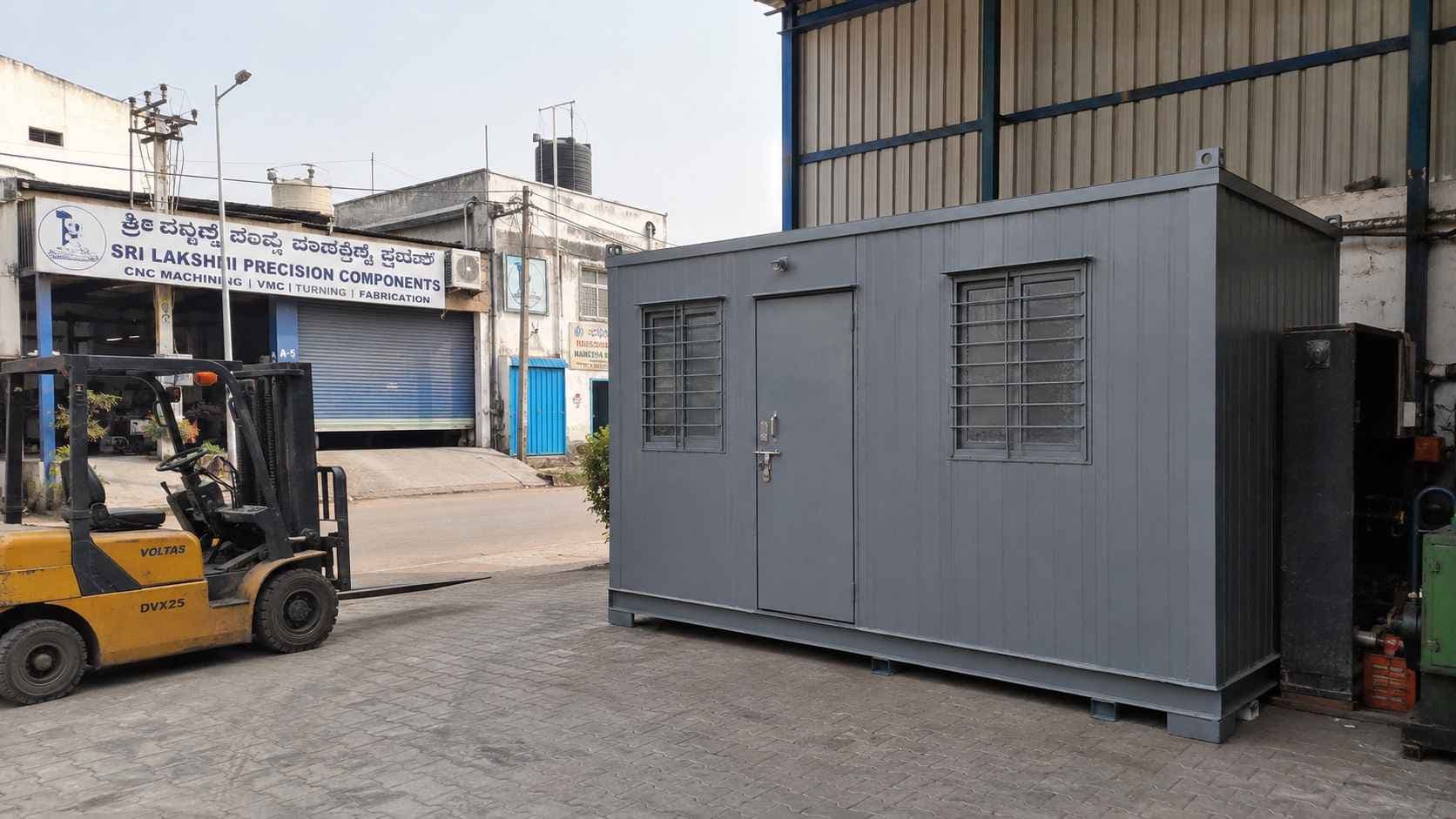
A porta cabin in Peenya is almost never a green-field construction-site cabin — it’s a working unit that has to live next to a shop floor, a forklift bay, or a factory gate inside one of Asia’s largest small-and-medium-industry clusters. SAMAN delivers factory-direct from its Gopasandra plant in Anekal Taluk, 35 km from Peenya by road. This page walks you through what spec fits each Peenya phase, what a unit honestly costs landed at site, and how delivery actually moves through Tumkur Road’s older industrial belt.
Peenya in Its Industrial Phases: Phase 1 to 4, 2nd Stage, and the Industrial Suburb — and the Cabin Each Phase Typically Buys
Peenya Industrial Area sits on the Tumkur Road industrial belt in north-west Bangalore and holds somewhere in the region of 10,000 small and medium-scale manufacturing units, spread across six zones. The zone you operate from changes which cabin specification actually fits.
Phase 1, the oldest core, is dense with sheet-metal fabricators, light-engineering job shops, and small machining units. Lanes are narrower here, shop frontages are tight, and the cabin almost always sits against an active work bay — which means dust ingress, forklift traffic adjacency, and noise. The spec stack that holds up: mild steel frame, reinforced floor section, dust-tight panel joints.
Phase 2 leans toward auto-component sub-assembly and small garment finishing units. Cabin requirement shifts — buyers ask more often for AC cut-outs, pre-fitted electrical wiring, and a slightly larger 15×10 to 20×10 ft footprint for supervisor seating plus QC station.
Phase 3 holds a heavier concentration of food-processing and plastic-moulding units. Hygiene-grade lining, sealed flooring, and a separate handwash provision matter here in a way they don’t in a sheet-metal context. Phase 4 — the newer SME pocket — runs mixed light engineering and electronics; specifications are closer to the Phase 2 standard with cleaner panel finish.
Peenya 2nd Stage and the Industrial Suburb hold the larger units — automobile-component tier-2 vendors, electronics assembly, mid-size mixed manufacturing. Cabin footprints here are bigger: 20×10 to 30×10 ft, frequently multi-room (supervisor cabin + meeting space + small toilet) or paired units side-by-side.
The table below maps it cleanly so our customizable porta cabins can be matched to your specific zone before you ask for a quote.
| Peenya phase / zone | Typical industry mix | Recommended cabin spec | Typical size |
|---|---|---|---|
| Phase 1 (older core) | Sheet metal · light engineering | MS frame + reinforced floor + dust-tight panel joints | 10×10 to 15×10 ft |
| Phase 2 | Auto-component · small garments | MS frame + AC cut-out + electrical wiring | 15×10 to 20×10 ft |
| Phase 3 | Food processing · plastic moulding | MS frame + hygiene-grade lining + sealed flooring | 12×10 to 20×10 ft |
| Phase 4 (newer SMEs) | Mixed light engineering · electronics | MS frame + standard finishing + AC | 10×10 to 20×10 ft |
| Peenya 2nd Stage | Automobile-component · electronics assembly | MS frame + multi-room layout + supervisor cabin | 20×10 to 30×10 ft |
| Industrial Suburb | Mid-size mixed manufacturing | MS frame + 2-room split + attached toilet (combo) | 20×10 to 24×10 ft |
The Right Spec for a Peenya Factory Floor: Why MS Frame, Reinforced Floor, and Tight Panel Joints Matter When the Cabin Sits Next to a Working Shop
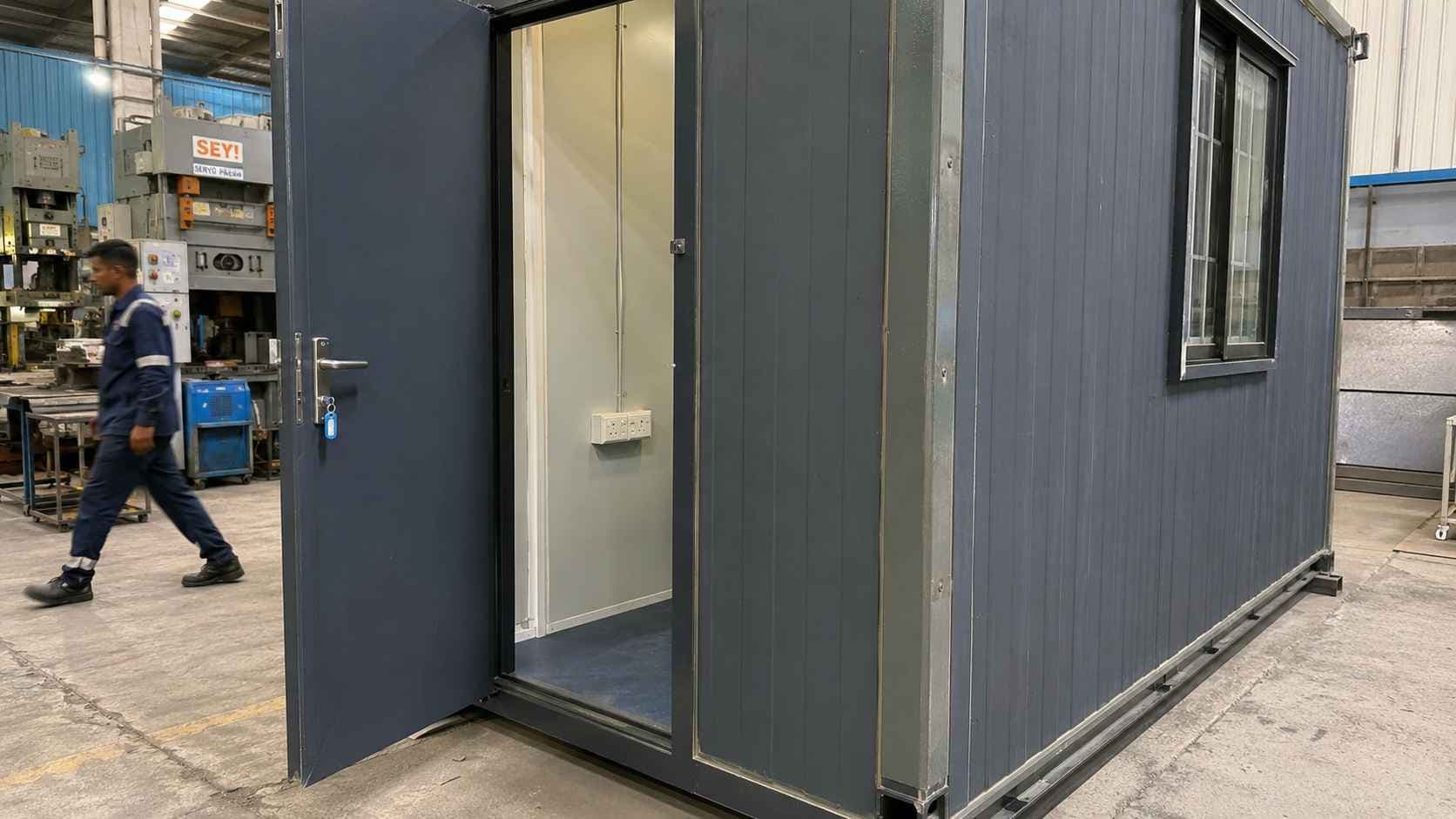
The first decision is the frame. A panel-only construction (sandwich panels held together without a steel base frame) is fine for a quiet office park, but it doesn’t last in a Peenya context. Forklifts pass within feet of the cabin, gantry cranes lift loads overhead, and vibration from press shops or moulding machines travels through the slab into the cabin floor. A heavy-gauge mild steel frame — typically IS 2062 grade hollow section — keeps the structure square through that wear. The MS porta cabin built on a heavy-gauge IS 2062 frame for shop-floor-adjacent industrial use is the right starting point for any Peenya light-engineering or sheet-metal site office cabin.
The second decision is the wall and roof panel. A 50 mm PUF insulation panel between two pre-coated steel skins is the working standard. It keeps interior temperature usable through Bangalore’s April–May peak (the cabin sits in direct sun for most of the working day in Peenya — ambient inside an uninsulated MS box reaches 45–50°C by 3 pm). It also dampens machinery noise from the adjacent bay. Tight panel joints with steel cover trims matter for dust control — Phase 1 grinding shops and Phase 3 plastic-moulding bays both throw fine particulate that gets through any loose seam.
The third decision is the floor. A standard wooden plywood + vinyl floor handles office foot traffic comfortably, but in a Peenya MS porta cabin in Bangalore context where the cabin door opens straight onto a working bay, you want a reinforced cement-fibre or compressed-board floor section. It takes pallet-jack wheels, tool-cart wheels, and operator boots without flexing.
The fourth decision is AC and electrical. A factory-fitted unit comes with AC cut-out (the wall opening sized for a standard 1.5-ton split AC outdoor unit), pre-routed electrical conduit, and Indian-standard sockets — meaning the cabin is ready for power-on within hours of placement, not days of post-delivery electrical work. For Phase 2 garments or Phase 3 food-processing buyers where production lines depend on uninterrupted supervisor presence, this is the spec that earns its price difference.
The fifth decision is door and window placement. Peenya’s older phases have narrow shop frontages. The door usually has to swing inward, not outward (outward swing blocks the lane). Windows go on the side facing the lane, not the shop floor, to keep dust and noise out while still letting natural light in.
Porta Cabin Price in Peenya: What ₹2,15,000 to ₹6,00,000 Actually Buys, Including GST and Transport from Gopasandra
This is the buyer question every Peenya site visit ends with, and the one most porta cabin price in Bangalore pages dodge. Here is an honest band.
A 10×10 ft MS-frame porta cabin delivered into Peenya from SAMAN’s Gopasandra factory typically costs ₹2,15,000 to ₹2,85,000 including 18% GST and standard transport. A 20×10 ft factory-fitted unit with AC cut-out, electrical wiring and lockable door runs ₹3,50,000 to ₹4,20,000. Configured multi-room or hygiene-grade units cost higher.
At the ₹2,15,000 entry point: you get a 10×10 ft MS-frame unit with PUF panel walls and roof, single door with standard lock, two windows with grills, plywood-over-MS floor, basic interior wiring with 4–5 sockets and overhead lighting, and one coat of factory paint. No AC, no flooring upgrade, no attached toilet. This is the right unit for a Phase 1 supervisor cabin, a Phase 4 gate-side post, or a small storage-cum-office combo.
At the ₹3,50,000–₹4,20,000 mid-band: 20×10 ft factory-fitted unit. PUF panel walls and roof at 50 mm, MS frame, AC cut-out provisioned, full electrical layout including AC point, light points, switchboard panel, and door-side lockable office layout. Floor upgraded to reinforced cement-fibre. This is the working unit for a Phase 2 auto-component QC office or a Peenya 2nd Stage tier-2 vendor supervisor cabin.
At the ₹4,80,000–₹6,00,000+ band: multi-room or configured units. Two-room split (cabin + small meeting room), attached toilet (a combo cabin-plus-toilet, not a standalone), hygiene-grade interior lining for food-processing or pharma use, premium finishing. This is the spec a Phase 3 food-processing unit or an Industrial Suburb mid-size manufacturer typically orders.
What’s in the price as standard: MS frame, panels (walls + roof), door, windows, basic electrical, factory paint, factory QC inspection, GST at 18%, and standard transport from Gopasandra. What’s extra: AC unit itself (the cut-out is included; the 1.5-ton split is not), premium flooring upgrade beyond reinforced board, finished interior cladding, attached toilet add-on, and any non-standard dimensions. Site lifting (crane charges where the lane width forces it) is also billed extra and quoted per site visit.
For the full spec-and-price grid covering every porta cabin variant — entry MS unit through multi-room configured layouts — see the SAMAN factory price sheet covering Peenya-side site offices and shop-floor cabins.
Delivery from Gopasandra to Peenya: NICE Road / ORR / Tumkur Road Route, Lead Time, and the Older-Phase Lane-Width Reality
SAMAN’s manufacturing unit is at Sy No 34/2, near India Oil petrol pump, Gopasandra, Bengaluru 560099 — in Anekal Taluk on the south-east edge of Bangalore. Distance to Peenya, depending on which phase you’re in, runs 32–38 km.
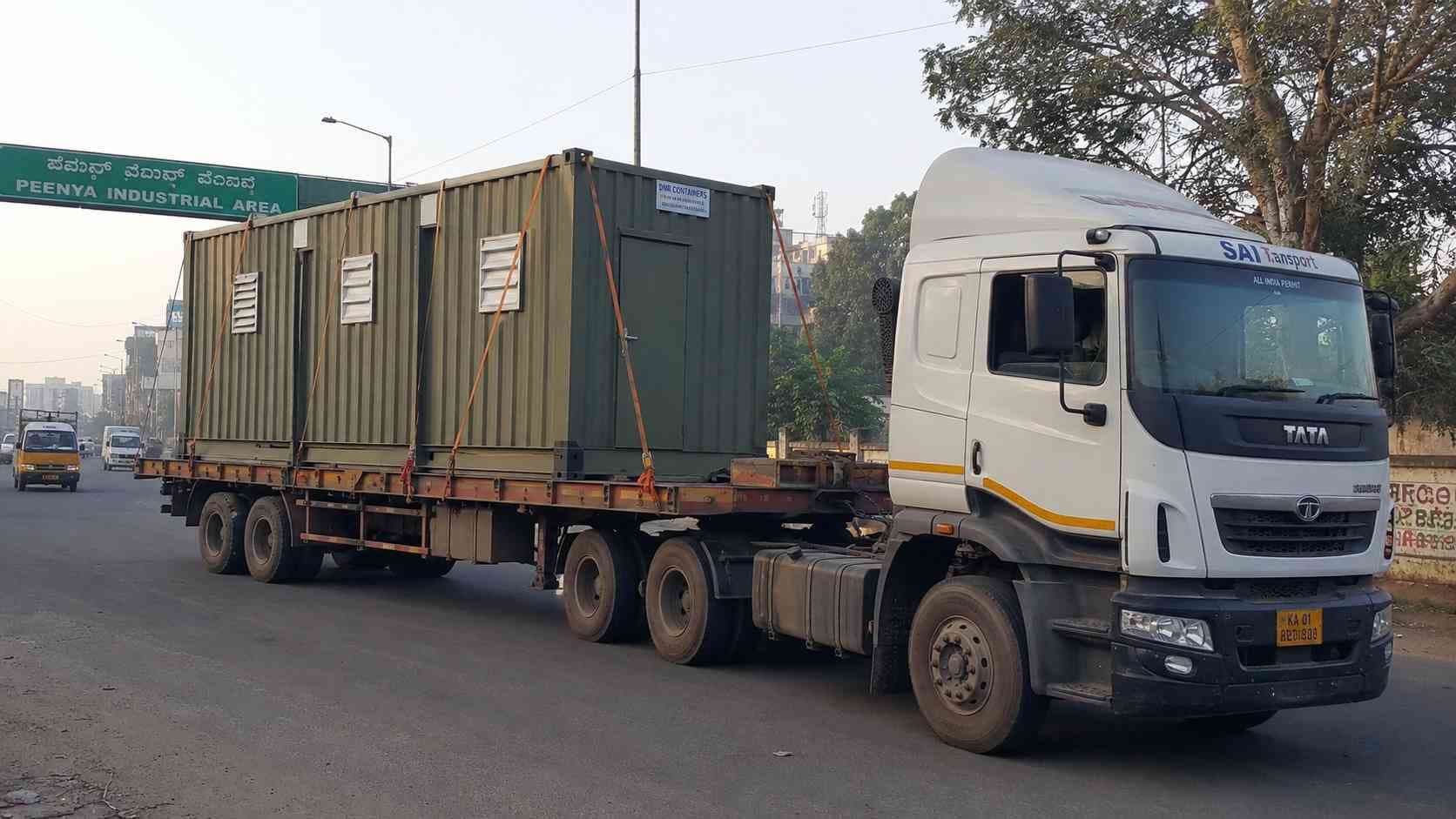
The usual route is NICE Road (Bangalore-Mysore Infrastructure Corridor) north, exit at the Tumkur Road / NH-48 junction, then along Tumkur Road into Peenya. Off-peak this is 75–90 minutes by car; for a porta cabin moving on a low-bed trailer it’s 4–6 hours start to gate, factoring in load-up, the NICE Road weighbridge stop, and the slower trailer speed limit through the Tumkur Road industrial belt.
Production lead time for a built-to-order MS-frame porta cabin runs 15 to 21 working days from confirmed order, per SAMAN’s standard production cycle. For an off-the-shelf 10×10 or 20×10 unit when stock is available, delivery can move faster — typically 7–10 days from booking. We confirm availability per order.
Two operational realities a porta cabin manufacturer in Peenya context must respect:
First, morning-window delivery into the older phases. Tumkur Road into Phase 1, Phase 2, and the Industrial Suburb is workable from 7 am to about 10:30 am. After that the SME shift change and inbound goods traffic build up, and a low-bed trailer becomes a serious obstruction for the whole lane. We dispatch from Gopasandra at 3 am for Peenya-bound delivery windows to land at site before the morning shift hits full intake.
Second, lane-width caveat in Phase 1 and the Industrial Suburb. Some of the older shop frontages on the inner lanes can’t take a 40-foot low-bed trailer right to the gate. The standard workaround is a crane lift at the nearest workable intersection, then the cabin is set onto its prepared base from there. We size up the access during pre-dispatch and quote the crane lift separately so the buyer is not surprised at site. Phase 3, Phase 4, Peenya 2nd Stage, and most of the Industrial Suburb’s outer roads take trailer delivery without crane lift.
Buy, Rent, or Used: Which Path Fits a Peenya SME’s Math
Three legitimate paths exist for a Peenya factory owner who needs a cabin on site within the next 30 days. Each has a math.
Buy new makes sense when the unit will be in continuous use for three years or more, when the factory expects to relocate or expand and wants to take the cabin along, or when the buyer wants the asset on the balance sheet. At the ₹2,15,000 entry, a 10×10 MS unit amortised over a five-year operational horizon costs about ₹3,600 a month before the depreciation tax shield — which is well below any meaningful site-office rental in Bangalore.
Rent makes sense for sub-12-month projects, for capex-constrained buyers, or for a temporary expansion you’re not sure will stick. A 10×10 ft rental within Bangalore typically runs ₹8,000–₹12,000 a month with a ₹1,00,000 refundable security deposit per SAMAN’s standard rental terms; a 20×10 ft rental sits higher. Minimum tenure is usually six months. Transportation in and out is the renter’s account. For a project under 18 months, renting often beats buying on landed cash; past that, buying takes over. The porta cabin rental options we maintain for short-project Bangalore sites walks through the full math, sizes, tenure structures, and deposit norms.
Used makes sense when the budget is under ₹1,50,000 and the buyer is comfortable inspecting frame condition and accepting a refurbishment grade. The trap with used units in Peenya: a cabin that’s been sitting on a previous industrial site for 8–10 years usually has frame corrosion at the floor-to-wall joint and panel sag at the roof — fixable, but you should know what you’re buying. A used unit is the right path only when the buyer can either inspect personally or trust the seller to disclose grade honestly.
For most Peenya SMEs — three-year-plus horizon, owning the asset, no patience for refurb risk — buying new is the cleanest math.
Frequently Asked Questions
How long does it take to manufacture and deliver a porta cabin to Peenya?
A built-to-order MS-frame porta cabin takes 15 to 21 working days to manufacture at SAMAN’s Gopasandra plant, then 4–6 hours by low-bed trailer to most Peenya sites. For standard sizes (10×10 or 20×10 ft) when factory stock is available, delivery can move faster — typically 7–10 days from confirmed order. The exact timeline is confirmed in writing at quote stage.
Can SAMAN deliver into Peenya Phase 1 or the Industrial Suburb where lanes are narrower?
Yes, with a small adjustment. Some of the older inner-lane shop frontages can’t take a 40-foot low-bed trailer right to the gate. The standard workaround is a crane lift at the nearest workable intersection — the cabin is offloaded there and set onto its prepared base by crane. We assess access during pre-dispatch and quote the crane lift line item separately so there’s no surprise at site. Phase 3, Phase 4, Peenya 2nd Stage, and the Industrial Suburb’s outer roads take trailer delivery directly without lift.
What warranty does SAMAN offer on a porta cabin in Peenya?
The structural frame and base carry a 5-year warranty against manufacturing defects. Finishing and fitted components — wiring, plumbing, painting, panels, doors, windows, locks, fixtures, and roof — carry a 1-year standard warranty, extendable to 2 years for buyers who decline the 1-year and want the extended cover. Engineered service life with reasonable maintenance is 20–25 years, but that’s separate from warranty terms.
Can the cabin be relocated within Peenya if the factory shifts to a new unit?
Yes. A panel-built MS-frame porta cabin can be relocated using a hydraulic-tail trailer or crane lift, typically two to three times on its existing frame before structural fatigue becomes a concern. Within Peenya — phase to phase or to the Industrial Suburb — relocation cost is a function of distance and crane requirement at both ends. Most relocations within the Peenya cluster sit in the ₹25,000–₹60,000 range depending on lift requirement.
What’s included in the price as standard, and what’s extra?
Standard: MS frame, PUF wall and roof panels, single door with lock, two windows with grills, plywood-over-MS floor, basic interior electrical (4–5 sockets, overhead lighting), factory paint, GST at 18%, and standard transport from Gopasandra to Peenya. Extra: the 1.5-ton split AC unit itself (the cut-out is included; the AC is not), premium flooring upgrade, finished interior cladding, attached toilet add-on, hygiene-grade lining, and site crane lift where lane width requires it. Every extra is itemised on the quote.
Talk to SAMAN About a Porta Cabin for Your Peenya Site
Tell us the phase, the intended use (supervisor cabin, QC office, shop-floor adjunct, gate post, multi-room split), and the footprint you can spare. We’ll quote a unit configured for that context — landed price including GST and transport from Gopasandra, with crane lift broken out separately if your lane width requires it.
📞 Call: +91 80886 85440
💬 WhatsApp: +91 88616 22859
🏭 Factory: Sy No 34/2, near India Oil petrol pump, Gopasandra, Bengaluru 560099