
Used Shipping Container Buying Guide for India: How to Inspect, Price, and Decide Between DIY and Pre-Built
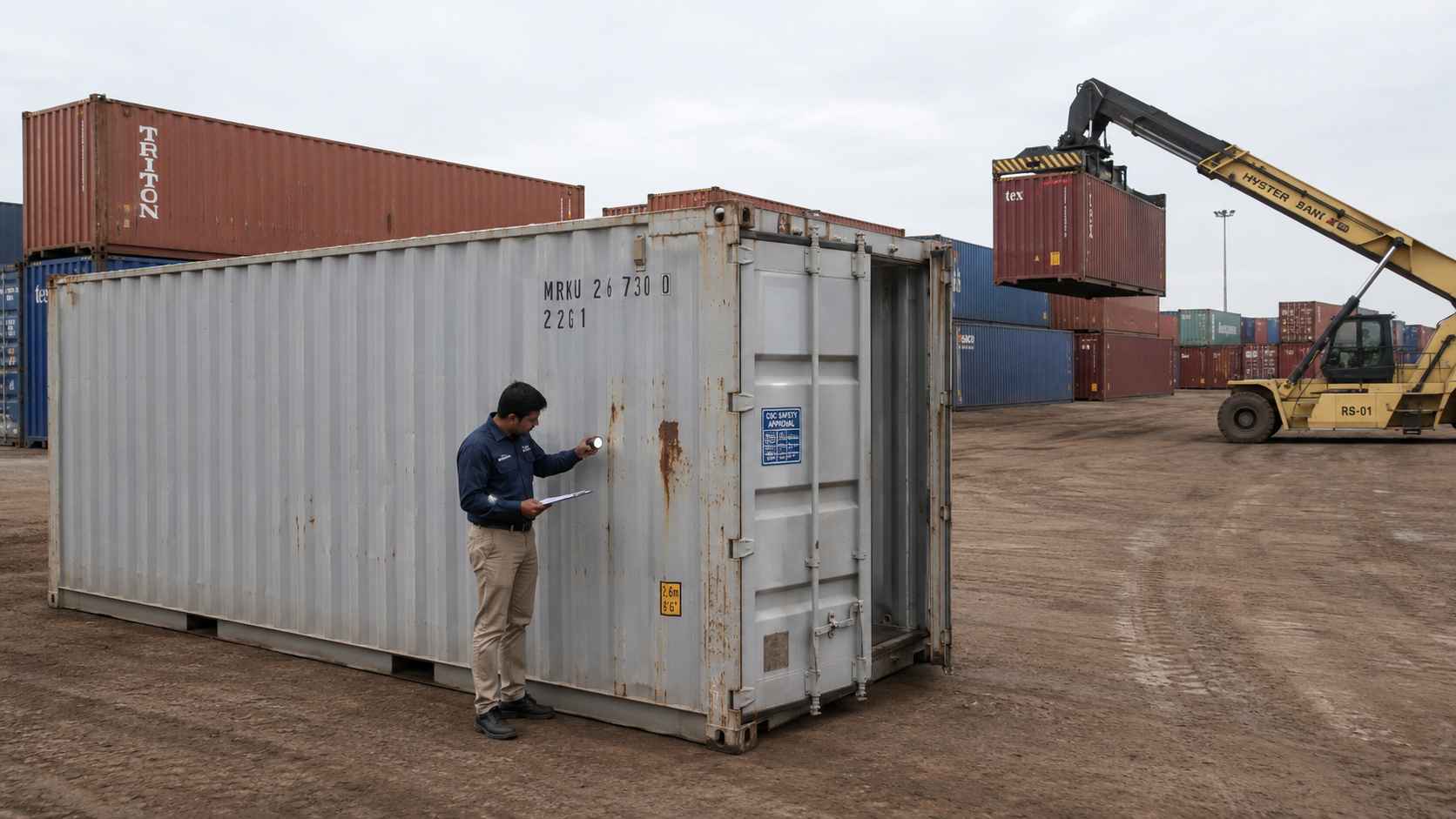
This used shipping container buying guide is built for Indian buyers — not US backyard projects. A used 20ft shipping container in India today costs roughly ₹1.2 lakh to ₹6 lakh, with a 40ft running ₹2 lakh to ₹10 lakh, depending on grade, age, and yard. That spread is wide on purpose: a Wind & Watertight unit sitting in a Mundra yard is a different product from a refurbished one-trip container delivered into a Bangalore plot. This guide is written from inside SAMAN’s Bangalore and Greater Noida factories, where we build container houses every week and watch buyers walk in confused about what they actually bought. Six things separate a sound purchase from an expensive mistake — and the order matters.
What “Used Shipping Container” Actually Means in India — Storage, Cargo, and One-Trip Grades
A used shipping container is a standard ISO steel container (20ft or 40ft, occasionally 10ft) sold after one or more ocean trips. Indian yards grade them by condition, not age: One-Trip (near-new), Cargo Worthy (CW — certified for shipping), Wind & Watertight (WWT — weatherproof for land use), or As-Is (sold without guarantee). Grade, not year, decides suitability.
Three terms get used almost interchangeably in the Indian market — storage container, cargo container, shipping container — and the distinction matters before you commit money. A storage container is a steel unit used for static, land-based storage: godowns, site material stores, warehouse overflow. It is built to ISO dimensions but is not certified for international sea-freight; some are decommissioned shipping containers retired from cargo service, others are manufactured fresh for the land-use market without dynamic-load certifications. A cargo container is the certified counterpart, built to ISO 1496-1 freight standards and carrying a valid CSC plate. A shipping container is the umbrella term covering both — which is why buyers searching either phrase land in the same yard inventory.
For most residential conversions, the storage-grade input is structurally adequate; we cover the disambiguation in depth on a SAMAN storage container house page. Coastal placement, multi-stack residential builds, or projects requiring certified documentation move buyers toward cargo-grade or one-trip units.
One-Trip (also called One-Trip Cargo Worthy or 1-Trip). The container has made a single ocean voyage from its manufacturing origin — typically China, Vietnam, or Korea — to an Indian port. Cosmetic condition is near-factory: minimal rust, intact paint, original flooring, tight door gaskets. These are the most expensive used units on the market but also the cleanest base for container home conversions.
Cargo Worthy (CW). The container carries a valid CSC plate (Convention for Safe Containers certification) confirming it meets dynamic-load standards for active intermodal shipping. CW units have multiple ocean crossings but remain certified for ongoing freight use. For static storage or conversion projects this certification is overkill — you’re paying for documentation you may not need — but for buyers planning active shipping use or who want regulatory paperwork, CW is the floor.
Wind and Watertight (WWT). A WWT container is inspected to confirm it is weatherproof — no active leaks, no rust-through holes, functional door seals — but is not necessarily certified for active shipping. WWT is the workhorse grade for storage, site offices, and basic residential conversions. Most Indian buyers who specify “good used condition” end up with a WWT unit.
As-Is. Sold without any condition guarantee. The buyer assumes all risk. As-Is units serve scrap, parts harvesting, deep-budget conversion projects, or applications where cosmetic and minor structural issues don’t matter.
Used Shipping Container Price in India — Real INR Ranges by Grade, Size, and Age
Price varies along three axes simultaneously: grade, size, and yard distance from your delivery site. The ranges below reflect ex-yard prices at major Indian ports (JNPT/Nhava Sheva, Mundra, Chennai, Tughlakabad ICD) as of early 2026 — before GST, transport, or modification. These are indicative market ranges — they reflect what used units typically list for across major Indian port yards and aggregator platforms such as IndiaMART and ExportersIndia. Yard pricing moves week to week, so treat them as a benchmark and confirm current quotes before you buy.
| Grade | 20ft INR range | 40ft INR range | Best for |
|---|---|---|---|
| One-Trip | ₹3.5L – ₹6L | ₹6L – ₹10L | Container home conversion, premium projects |
| Cargo Worthy (CW) | ₹1.5L – ₹2.5L | ₹2.5L – ₹4.5L | Active export, certified storage |
| Wind & Watertight | ₹1.2L – ₹1.8L | ₹2L – ₹3.2L | Site storage, basic residential conversion |
| Refurbished | ₹1.8L – ₹2.8L | ₹3L – ₹5L | Pre-painted, ready-to-place units |
| As-Is / Scrap | ₹40k – ₹90k | ₹70k – ₹1.5L | Parts, scrap, deep-budget conversion |
A few notes on reading the table. The One-Trip premium over WWT is roughly 200% — you are buying nearly a new container at that grade, and the price reflects it. The CW band sits above WWT by 20-40% because of the certification cost, not necessarily because the container is structurally better. As-Is pricing collapses to scrap-metal value plus a small handling margin; these are weight-priced units (₹35-₹45 per kilo of steel, roughly) rather than condition-priced.
Age affects price within each grade, but the relationship is non-linear. A 10-year-old WWT unit and a 15-year-old WWT unit can sit at the same price if both pass the wind-and-watertight inspection. What you are paying for is the inspection grade, not the manufacturing year. Always ask for the inspection report, not just the year stamped on the CSC plate.
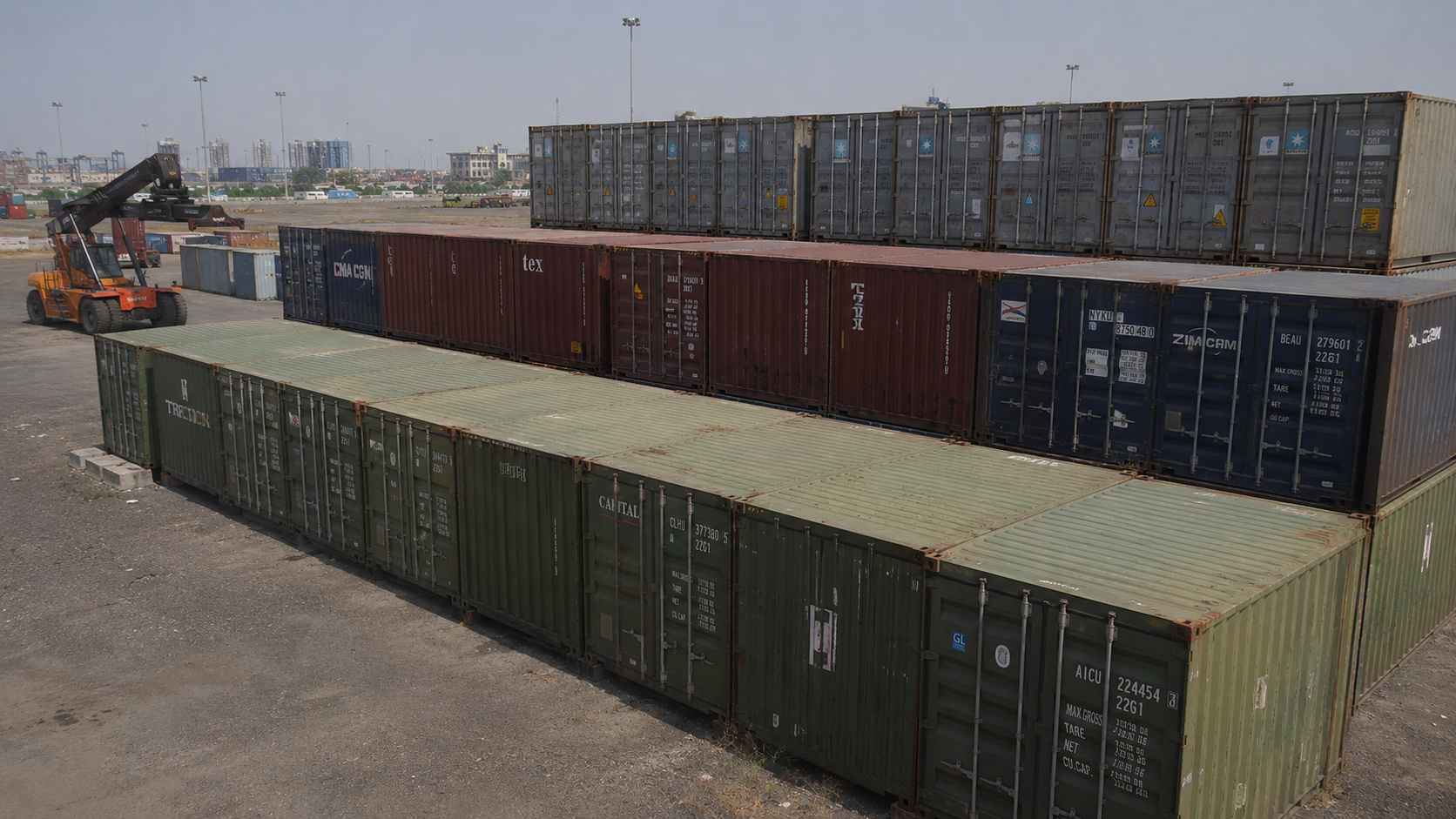
Size economics favour the 40ft. A 40ft container delivers roughly twice the floor area of a 20ft for ~1.7× the price. For storage or conversion projects that need the space, 40ft is the value choice. The exception is site access — if your plot is hard to reach by a 40ft trailer (narrow lane, tight gate, low overhead), the 20ft becomes the only viable option regardless of cost-per-sqft.
Where to Buy a Used Shipping Container in India — Ports, ICDs, and Aggregators
Indian buyers source used containers from four channel types, and each has its own pricing logic, inventory quality, and risk profile.
Port yards are the original source. Containers retired from active shipping by ocean carriers (Maersk, MSC, ONE, Hapag-Lloyd, COSCO and others) are sold off through depot operators at the major ports — JNPT (Nhava Sheva) in Maharashtra, Mundra Port in Gujarat, Chennai Port in Tamil Nadu, and Visakhapatnam in Andhra Pradesh. Port yards typically have the cleanest inventory because the chain of custody is short: ocean carrier → depot → buyer. Pricing is closer to fair-yard value because volume is high. The trade-off: you need to travel to the yard (or send an agent), and inland transport from port to your site adds significant cost.
Inland container depots (ICDs) are dry ports that handle containers moved off the coast for distribution. Tughlakabad ICD in Delhi NCR, Whitefield Goods Yard near Bangalore, ICD Garhi Harsaru in Gurgaon, and ICDs serving Pune, Hyderabad, and Ahmedabad operate as inland yards with container inventory available for sale. ICDs add a small price premium over port yards (~10-15%) but eliminate the long-haul transport problem if you are buying near your delivery city.
Aggregator marketplaces — IndiaMart, ExportersIndia, Tradeindia, and JustDial — list containers from dealers, brokers, and some direct yard operators. They are convenient for quote-shopping but the quality bar is lower: photos can be stock images, the seller may not own the container they list, and inspection promises often go unmet. Use aggregators to comparison-shop but never finalise a purchase without seeing the actual unit or its documented inspection.
Container dealers and brokers are intermediaries between yards and end buyers. A good dealer adds value by sourcing the right grade for your project, handling transport logistics, and absorbing yard-side hassles. A poor dealer simply marks up a yard price by 20-30% without adding service. Typical brokerage margin is ₹15,000-₹40,000 per container — fair if the service is real, unfair if you could have done the same in a day at the yard.
Three scam patterns to watch. First, water-damaged units sold as WWT: the floor channel and lower side panels rust quickest in monsoon-stored containers, and sellers paint over the damage. Insist on inspecting the unit with the doors open in daylight and check the corner-to-floor weld lines. Second, fake one-trip claims — any container older than three years cannot honestly carry that grade. Ask for the manufacturer’s plate (near the door frame) and the CSC plate to verify build year. Third, “buy now, deliver tomorrow” pressure: legitimate yards never push fast decisions on second hand container purchases. If a seller refuses to give you 48 hours to inspect, that’s the reason to buy shipping container inventory from established yard or dealer channels rather than aggregator listings.
Inspecting a Used Shipping Container in Indian Climate — 7 Checks Before You Pay
Most used-container inspection lists on the internet are written for US climate conditions — dry storage, low humidity, no monsoon. Indian buyers need a checklist ordered for failure modes that actually appear in this climate: monsoon-driven seam leaks, humidity-driven floor rot, salt-air corrosion on coastal placements, and condensation-driven interior mildew. Run these seven checks in this order.
- Roof condition. Climb up or use a step ladder. Look for rust-through holes (any pinhole becomes a leak under monsoon load), seam cracks along the long-side welds, and standing-water pooling areas. The roof is the most expensive panel to repair and the most exposed surface in Indian climate. A roof rated WWT in a dry-yard inspection can fail at the first monsoon if not properly verified.
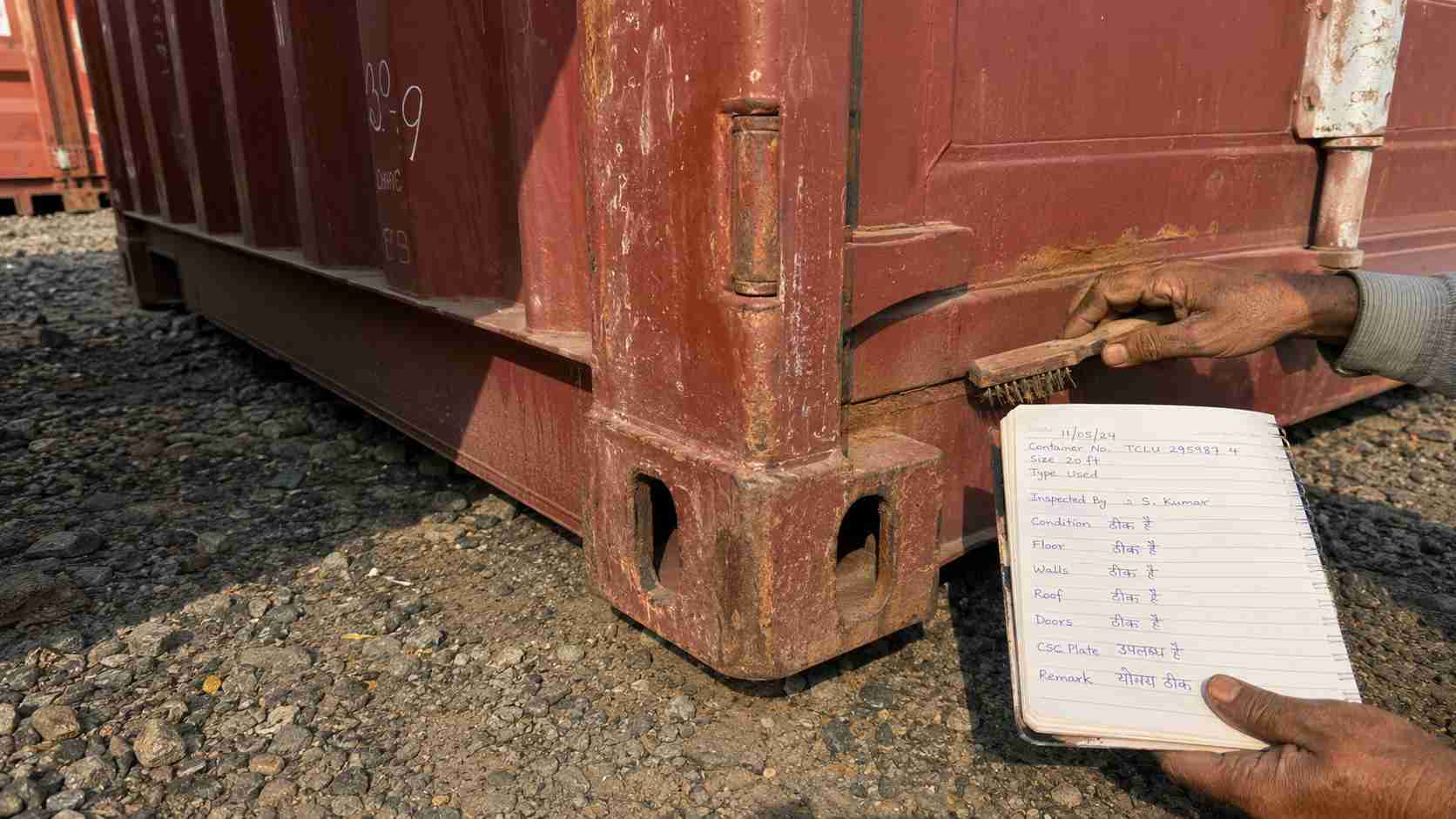
- Floor channel and lower side walls. The base channel is where moisture pools when containers are stored on uneven ground — Indian yard storage is rarely perfectly level. Tap the floor channel with a knuckle: solid metallic ring is healthy; dull thud indicates rust thinning. Check the lower six inches of side walls inside and outside for rust bubbles under the paint.
- Corner castings. The four top and four bottom corner castings carry every gram of structural load when the container is lifted or stacked. They must be crack-free with intact welds to the corner posts. Containers with damaged corner castings are not safe for stacking, transport, or any application where they will be moved more than once.
- Door gaskets and locking rods. Open and close both doors fully — they should swing without grinding. Check the rubber gaskets along the door edges for compression set (permanent flattening) or tears. Worn gaskets are the second most common leak point after roof seams. The four locking rods on each door should rotate cleanly into their cams; bent or jammed rods indicate frame twist or impact damage.
- Side wall straightness. Step back and sight along each side wall. The corrugated steel skin should be straight and uniform. Bowing inward indicates pressure damage from improper stacking; bowing outward indicates internal load damage. Either reduces structural integrity and resale value.
- Ventilation and interior airflow. Indian containers need functional vents to prevent condensation buildup — especially containers placed for residential or storage use in humid coastal zones. The two small vents on the upper side walls should be present and unobstructed. A container without functional vents will develop mildew on interior surfaces within one monsoon.
- CSC plate and ID stamps. The CSC plate (typically near a door) carries the manufacturing year, original maker, and last inspection date. The container’s BIC code (the 4-letter + 7-digit identifier) is stamped on the corrugated steel skin. Both should be present and legible. Missing or tampered plates indicate an unverified history — walk away unless the price reflects As-Is risk.
A complete inspection by an experienced eye takes 25-30 minutes per container. Do not let yard pressure shorten it.
The True Cost of a Used Shipping Container in India — Beyond the Sticker Price
The yard price you see on IndiaMart is roughly 60-70% of what the container will actually cost you delivered to site. The remaining 30-40% sits in tax, transport, handling, and compliance layers that most buyers underestimate. Run the math before you commit.
GST. Used shipping containers fall under HSN code 8609 and carry 18% GST on the sale value. For a ₹1.5 lakh WWT 20ft container, that’s ₹27,000 added at invoice. Some sellers quote prices “inclusive of GST” and others quote “plus taxes” — always clarify which before signing.
Port-to-site transport. Moving a 20ft container from Mundra to Bangalore costs roughly ₹35,000-₹50,000 via flat-bed trailer; a 40ft adds ~30%. Within the same metro area (JNPT to Mumbai, Tughlakabad to Delhi NCR) transport drops to ₹15,000-₹25,000. ICD-sourced containers near your delivery city are cheaper because the long haul is already absorbed in the ICD price.
Site offloading. Containers arrive on flat-bed trailers and need lifting off at site. A 20ft empty container weighs roughly 2.2 tonnes; a 40ft weighs 3.7 tonnes. You’ll need either a hydra crane (₹3,000-₹8,000 for an hour’s hire) or a tilt-bed trailer that lays the container down without external lifting (sometimes included in transport, sometimes ₹5,000 extra). Site access must be confirmed in advance — a hydra needs ~3 metres of working radius; a tilt-bed needs a straight 25-metre approach.
E-way bill and inter-state movement. Containers crossing state lines need a generated e-way bill (the seller usually handles this) and may face state-entry checkposts. For shipments above ₹50,000 this is standard and rarely causes issues. Disorganised aggregator sellers sometimes fumble the documentation, which is one more reason to stick with established yard or dealer channels.
A worked example. A 20ft WWT container sourced from Mundra and delivered to a site near Bangalore:
- Yard price (WWT, mid-range): ₹1,50,000
- GST at 18%: ₹27,000
- Trailer transport Mundra → Bangalore: ₹45,000
- Hydra crane offloading at site: ₹5,000
- E-way bill + handling: ₹2,000
Total landed cost: ₹2,29,000. That is the number to compare against any alternative — not the ₹1.5 lakh yard price. The same container sourced from Whitefield ICD (Bangalore) instead of Mundra drops transport to ~₹18,000, taking total landed cost to ~₹2,02,000.
DIY Conversion vs Factory-Built Container House — When the Math Stops Working
This is the question most used-container buyers don’t run carefully enough before they start: at what point does buying a finished container house from a manufacturer beat the DIY conversion you were planning?
Take the same ₹2.29 lakh landed WWT 20ft container from the example above. To turn that into a habitable residential unit, you’ll add the following:
- Anti-rust treatment and interior sealing: ₹15,000-₹25,000
- Cutting openings for door + 2-3 windows (with framing): ₹35,000-₹50,000
- 50mm PUF insulated panel installation on walls, roof, floor: ₹1,20,000-₹1,80,000
- Electrical rough-in and finish (8-10 points): ₹45,000-₹75,000
- Plumbing rough-in (wet-area inlet, waste, geyser point): ₹30,000-₹50,000
- Vinyl plank flooring over treated plywood substrate: ₹25,000-₹40,000
- Interior finishing (panel surfaces, paint, hardware): ₹40,000-₹70,000
- Exterior paint with anti-corrosion primer: ₹15,000-₹25,000
DIY conversion total: ₹5.54-₹7.44 lakh for a converted 20ft residential cabin (~160 sq ft built-up). That assumes you find competent fabricators, supervise the work, and absorb the time risk yourself. Add another 15-25% if you hire a contractor to project-manage.
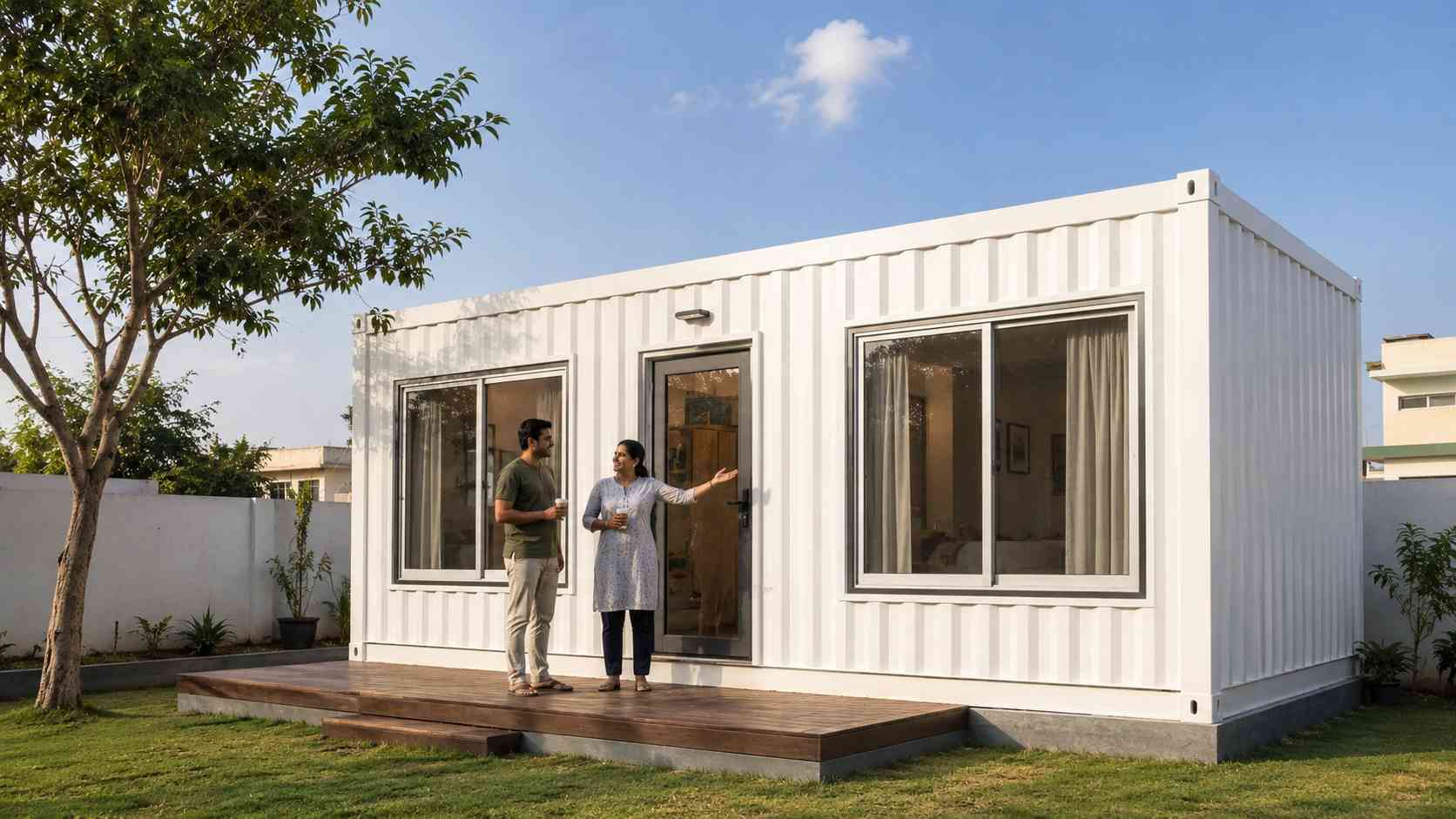
Now compare to a factory-built unit. SAMAN’s storage container house configuration is priced at ₹13.25 lakh and delivers 600 sq ft fully converted — roughly ₹2,200 per sq ft including 50mm PUF insulation, electricals, plumbing, vinyl flooring, and exterior paint. The cross-shop isn’t like-for-like on size — DIY gets you about 160 sq ft for ~₹5.5-7.4 lakh of layered cost, while the factory unit gives you 600 sq ft at a single known price — but on a price-per-square-foot basis, factory conversion sits at roughly ₹2,200/sq ft while DIY lands at ₹3,500-₹4,650/sq ft once you add up every layer.
Where DIY wins. If you have skilled fabrication labour in-house, a side project with no time pressure, or a non-standard design requirement that factory configurations don’t match, DIY can deliver lower per-square-foot cost at the smaller sizes. If you want a one-of-a-kind aesthetic the factory doesn’t offer, DIY gives full design control.
Where factory-built wins. If your project needs to be habitable in 30 working days, if you don’t have a fabrication team to supervise, if you want a single structural warranty on the unit (SAMAN covers structural frame and base for 5 years; finishing for 1-2 years depending on item), or if your conversion would scale past one container, factory wins on time, risk, and cost-per-square-foot.
For buyers who realise mid-research that DIY isn’t the path, our container house range covers single-unit residential builds, scaled colony configurations, and luxury villa-grade options.
Frequently Asked Questions
How much does a used shipping container cost in India?
Used 20ft containers range from ₹1.2 lakh for a Wind & Watertight unit to ₹6 lakh for a near-new One-Trip. Used 40ft containers range from ₹2 lakh to ₹10 lakh on the same grade scale. The full INR matrix by grade and size is in the price table above — and remember to add 18% GST, transport, and offloading to get your true landed cost.
What’s the difference between a second hand container and a one-trip container?
A second hand container is any unit sold after at least one ocean trip — that includes Cargo Worthy, Wind & Watertight, and refurbished grades. A One-Trip container has made exactly one voyage (usually from the manufacturing origin to the destination port) and is sold as near-new. One-Trip units cost 200-300% more than WWT but arrive in factory-clean condition.
What is the lifespan of a used shipping container in Indian climate?
A well-maintained used shipping container has a structural service life of 20-25 years in Indian climate, regardless of whether you bought it new or used. Cor-Ten steel resists corrosion, and proper anti-rust treatment plus repainting every 5-7 years keeps the structural envelope sound. Door gaskets, roof seams, and exterior paint are the maintenance items — none affect the steel frame.
Can a used shipping container be legally converted into a home in India?
Yes. The conversion is treated the same as any new residential construction on your land — you need a building plan sanction from your local municipal body (BBMP in Bangalore, MCD in Delhi, the relevant urban authority elsewhere), confirmation that your plot is approved for residential use, and a structural engineer’s certificate if you plan a multi-level configuration. There is no special restriction on container homes under the National Building Code; consult your local authority before committing to a site.
Where should I buy a used shipping container in India — port, ICD, or aggregator?
For buyers near a major port city (Mumbai, Chennai, Mundra/Kandla, Visakhapatnam), buy direct from a port yard — cleanest inventory at the best price. For buyers in Delhi NCR, Bangalore, Hyderabad, Pune, or Ahmedabad, source from the nearest ICD — same yard pricing logic but you skip the long-haul transport. Use aggregator platforms (IndiaMart, ExportersIndia, JustDial) to comparison-shop but never finalise a purchase without inspecting the actual unit on-site.
Ready to Decide?
Need help comparing a used shipping container conversion against a factory-built unit for your specific project?
Send Enquiry with your site and configuration, or reach us directly:
Bangalore (Karnataka and South India delivery):
Call: +91 88616 22859
WhatsApp: +91 88616 22859
Delhi NCR (North India delivery):
Call: +91 88616 22859
WhatsApp: +91 88616 22859
Our team manufactures container houses every week at our Bangalore and Greater Noida factories. Site assessment, custom configuration, and end-to-end delivery anywhere in India — quote within 24 hours.