
Container Office Design: Layouts, Sizes, Interiors and Cost Factors
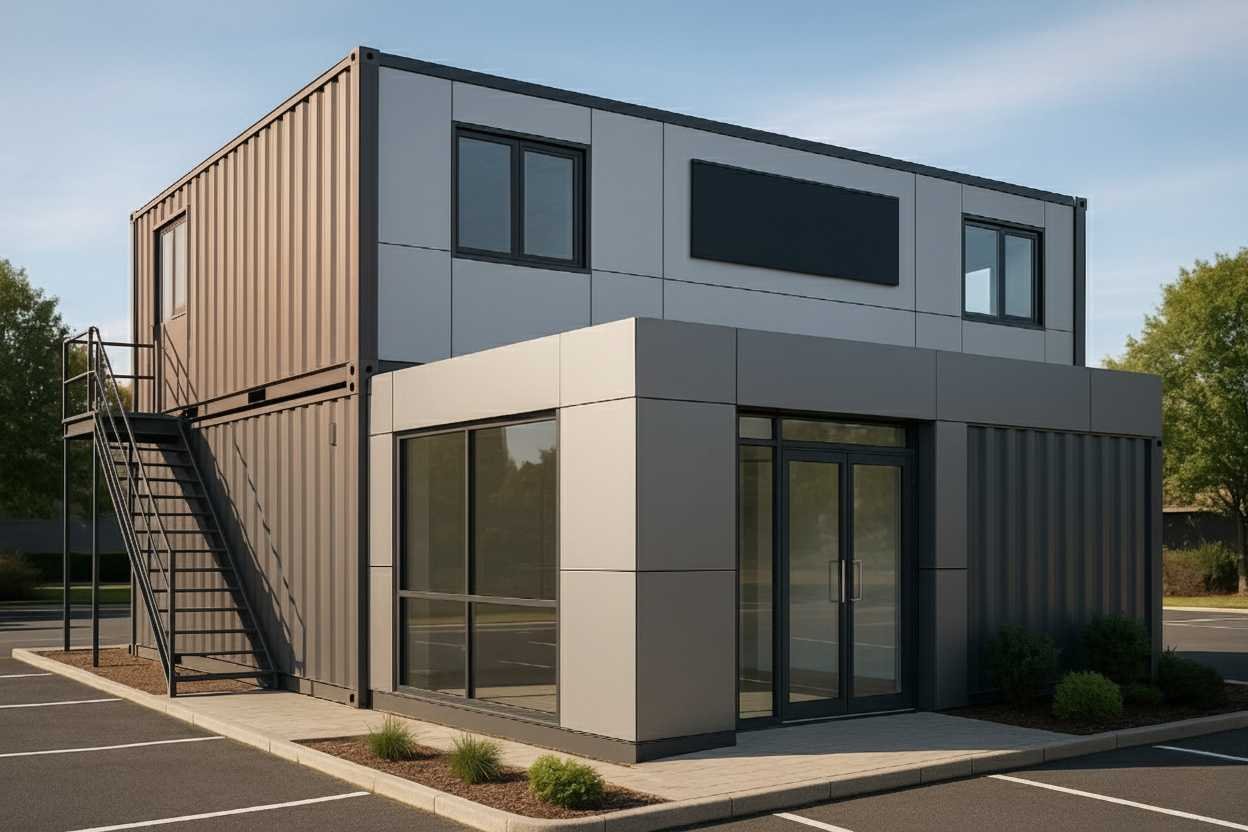
Container office design is the practical work of turning a steel container shell into a code-ready workplace — planning its size, insulation, ventilation, electricals, interiors and exterior finish as one system. Done well, a container office matches the comfort of a conventional cabin while installing far faster than conventional construction and moving between sites when a project shifts. This guide walks through the design decisions that actually matter for Indian buyers: sizes and layouts, materials and insulation, HVAC and electricals, interiors, use cases, compliance, the common mistakes to avoid, and what really drives cost. As a direct manufacturer (SAMAN Portable), we build container and portable office units to order from our own factories.
What container office design means
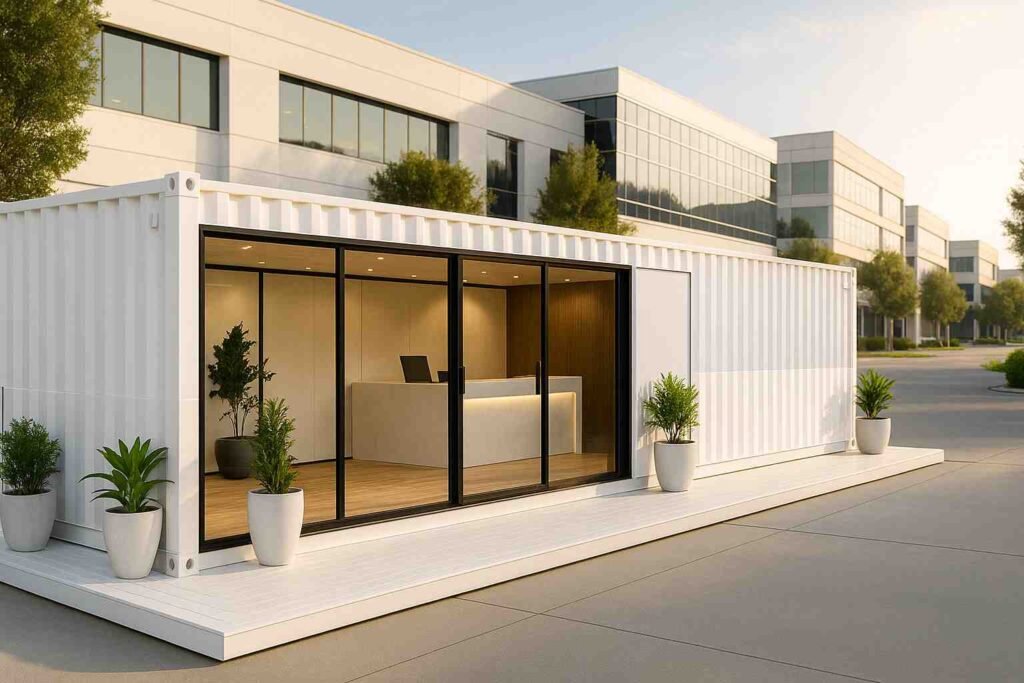
A container office converts a shipping-container-format steel structure into a finished room with insulation, power, lighting, ventilation, flooring and a usable layout. The design choices fall into a few groups: the footprint (how many units and how they join or stack), the envelope (frame, panels, insulation, glazing), the services (HVAC, electricals, data), and the finish (interiors and exterior cladding). Get these right together and the unit performs like a permanent office at a fraction of the build time.
This page covers the design and specification side of container offices. If you are ready to compare ready models, sizes and indicative pricing, see our container offices range and the types of container offices guide.
Container office sizes and layouts
Size is the first design decision. A 20-foot unit suits a one-to-two person site office, a guard or supervisor cabin, or a compact sales desk. A 40-foot unit gives room for a small team with a meeting corner. Beyond a single box, units are joined side-by-side or stacked to add floors, corridors and breakout space — so you can start small and expand as the team grows.
| Layout type | Description | Typical use |
| Single-unit (20ft / 40ft) | One container as a self-contained room | Site office, guard cabin, sales desk |
| Joined multi-unit | Two or more units joined to remove the centre wall | Team office, training room |
| Stacked / multi-level | Units stacked with stairs for floors | Larger site HQ, co-working hub |
| Partitioned | Internal walls create cabins and quiet rooms | Executive office, sales suite |
| Expandable | Side panels open to widen the floor | Events, camps, temporary clinics |
The standard container width is about 8 feet, so narrow single rooms feel tight for more than a few people. Joining or stacking units is the usual fix; plan corridors, storage walls and daylight early so the floor stays workable.
Materials and build quality
Build quality decides how long a container office lasts and how it holds up to weather. The points worth specifying:
- Structural frame: a steel frame and base built to IS 2062 structural-steel quality is the load-bearing core, especially for stacking.
- Wall and roof panels: insulated sandwich panels (PUF or rock-wool core) cut heat transfer and noise far better than bare single-skin steel.
- Glazing: single or double glazing depending on climate and noise; double glazing helps in hot or loud locations.
- Coatings: anti-rust treatment and a powder-coat or PU finish protect the steel, which matters in coastal and monsoon areas.
- Flooring: ply with vinyl or laminate for offices; chequered steel where it is a rough site cabin.
Because we manufacture directly, the frame grade, panel core, glazing and finish are specified per order rather than fixed. Units carry our standard warranty: 5 years on the structural frame and base, 1–2 years on finishing, and a 20–25 year engineered service life.
Insulation and HVAC
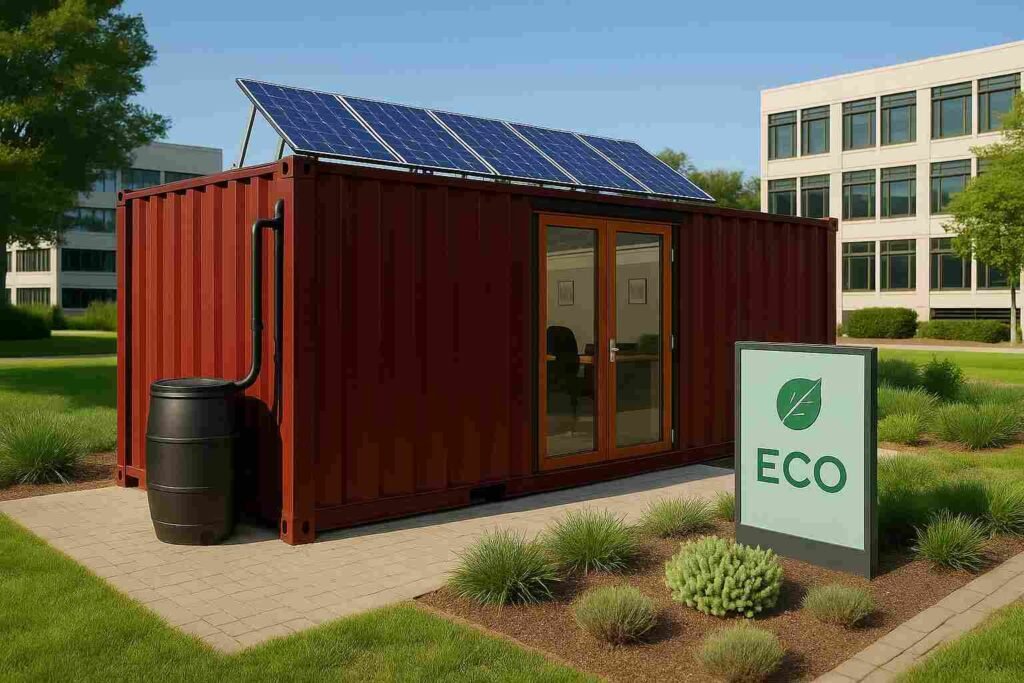
Steel heats and cools fast, so insulation plus the right cooling is the single most important comfort decision — particularly in Indian summers. Skimping here is the most common reason a container office becomes unusable in peak heat. Match the insulation and HVAC to the climate and unit size:
| Option | What it does | Best fit |
| PUF panels | High thermal resistance, light weight | Hot, dry regions |
| Rock wool | Fire- and sound-resistant | Industrial and noisy sites |
| Double glazing | Extra heat and noise control | Premium offices, loud areas |
| Split AC | Simple, zone-by-zone cooling | Single units, small offices |
| VRF / ducted system | Zoned control across many units | Stacked or multi-unit complexes |
Pair insulation with cross-ventilation — openable windows, vents or exhaust fans — so the space breathes when the AC is off. Well-insulated units run their cooling far less, which is where most of the running-cost saving comes from.
Electricals, ventilation and smart options
Plan the electrical layout before the unit is built, not after. Specify the distribution board, wiring rating, socket and light positions, and whether you need a dedicated line for AC and IT loads. Sensible additions: LED lighting on the right circuits, adequate sockets for workstations, and surge protection. For ventilation, combine wall vents or exhaust fans with the glazing so air moves through the room.
Optional "smart" extras — CCTV, access control or biometric locks, motion-sensor lighting and a solar/inverter backup — are genuinely useful on remote or unmanned sites, but they are add-ons to scope only if the use case needs them. They are not required for a standard office.
Interior design and finishes
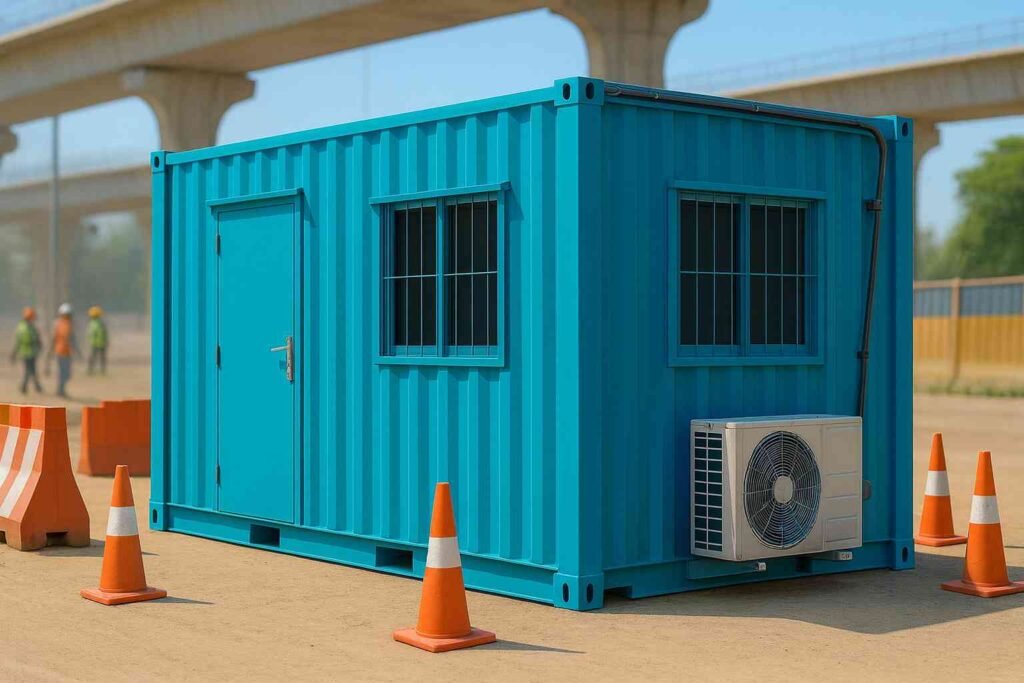
Interiors turn a steel box into a workplace people want to use. Common choices: built-in desks and storage to make the most of a narrow floor, vinyl or laminate flooring, glass partitions for cabins and quiet rooms, and light wall colours (white and beige) to make compact spaces feel larger. Furnished packages with desks, AC and lighting are available so the unit arrives ready to occupy. Keep the layout simple — a clear corridor, daylight near desks, and storage on the walls — and a 20- or 40-foot unit works harder than its footprint suggests.
Exterior finishes and branding
The exterior protects the steel and sets the first impression. Plain powder-coated steel is the durable, low-cost default for site cabins. ACP cladding gives a sleeker corporate look for sales and head-office use; glass façades read as premium; vinyl wraps carry branding and signage. Choose the finish for the role: a construction site office rarely needs ACP, while a customer-facing sales suite benefits from it.
| Finish | Advantage | Best use |
| Powder-coated steel | Durable, affordable, low-maintenance | Site and industrial cabins |
| ACP cladding | Modern, corporate look | Sales and head offices |
| Glass façade | Open, premium feel | Customer-facing suites |
| Vinyl wrap | Carries branding and signage | Marketing and event units |
Where container offices are used
The same design flexes across sectors. Typical applications include:
- Construction: site management and supervisor offices that relocate as the project moves.
- Sales and real estate: branded sales suites and booking offices on plots and project sites.
- IT and corporate: stacked or joined units as interim or overflow office space.
- Education and healthcare: insulated modular rooms used as classrooms or examination/clinic spaces.
- Events and remote sites: reception, control and worker cabins that install fast and move easily.
Safety and compliance
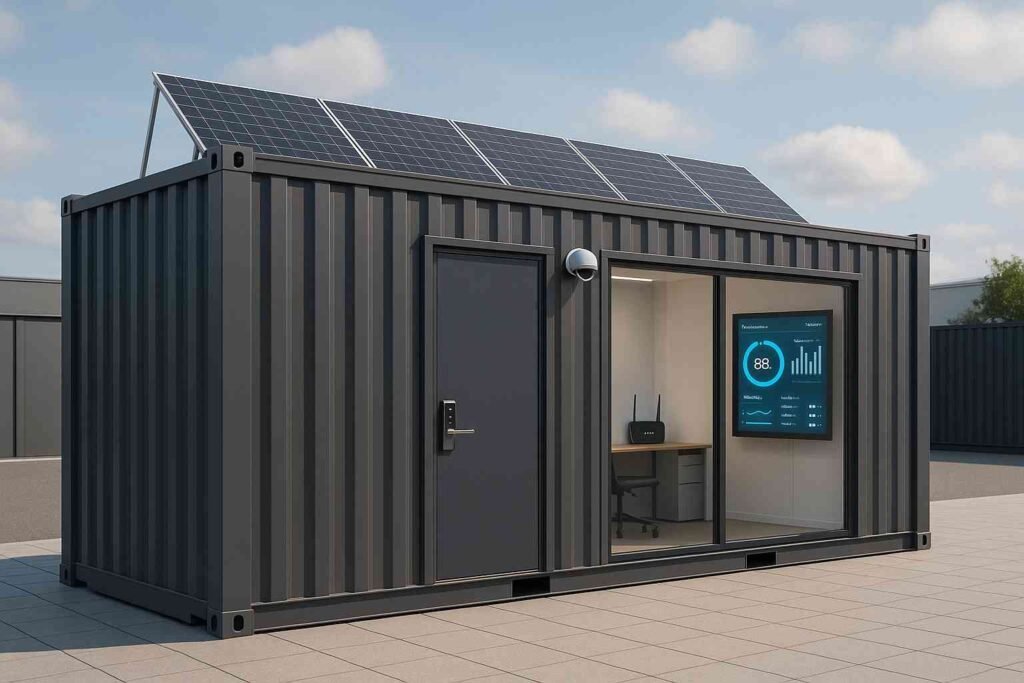
Container offices still have to meet local building, fire and accessibility rules — in India that means the National Building Code (NBC) for structure, fire and access, plus local zoning and land-use permissions. Skipping approvals risks stoppages and fines, so plan compliance in from the start rather than retrofitting it.
| Requirement | What to check |
| Structural integrity | Engineer-checked stacking and load-bearing design for multi-level units |
| Fire safety | Detectors, extinguishers and fire-rated panels for steel structures |
| Emergency exits | Clear, signed exits — and ladders/stairs for stacked units |
| Accessibility | Ramps, wider doors and accessible toilets where required |
| Ventilation | Cross-ventilation and fresh-air provision |
| Zoning & land use | Confirm the site permits a portable/temporary structure |
Common container office design mistakes
- Skipping insulation to save money up front — the unit then overheats and goes unused in summer.
- Ignoring ventilation — relying on AC alone makes the space stuffy and raises bills.
- Undersizing — packing too many people into one 8-foot-wide box instead of joining units.
- No electrical plan — sockets and the DB end up in the wrong places and need rework.
- Forgetting approvals — fire and zoning sign-offs left until after delivery cause delays.
- Wrong finish for the role — over-spending on ACP for a rough site cabin, or under-spending for a customer-facing suite.
How to design a container office: four steps
A simple sequence keeps a project on track:
Step 1 — Define the use. Site office, sales suite, classroom, clinic or executive cabin? The use sets size, finish and services.
Step 2 — Choose size and condition. 20- or 40-foot; new for longest life, or join multiple units for more floor area.
Step 3 — Plan zoning and services. Open plan vs partitions; mark insulation, HVAC, electricals, ventilation and daylight.
Step 4 — Confirm and approve. Lock the layout, confirm the electrical and HVAC scope, and clear fire and zoning approvals before fabrication.
What drives container office cost
There is no single price for a container office — it is built to spec, so the cost moves with the choices above. The main factors:
| Cost driver | Effect on price |
| Size & number of units | More floor area and stacking raise cost |
| Insulation & glazing | PUF/rock wool and double glazing add to the envelope cost |
| HVAC | Split AC is economical; VRF/ducted costs more |
| Interiors & finish | Furnished, ACP or glass finishes cost more than plain steel |
| Electricals & smart features | Extra circuits, CCTV, access control, solar add cost |
| Delivery distance & craneage | Transport and crane placement vary by site |
Against permanent RCC construction, a container office is generally far lower in cost and far faster to install, and units retain resale value because they can be relocated and reused. For indicative figures by configuration, see our container office price guide, or send us your requirement for a quote.
Design your container office with SAMAN
SAMAN POS India Private Limited (brand: SAMAN Portable) has served India since 2009, with manufacturing units in Bengaluru (560099) and Greater Noida (201308). We are ISO 9001:2015 certified and build container and portable offices to your size, insulation, HVAC and finish requirement — with our 5-year structural frame and base warranty.
Tell us your use case and site, and we will design a unit to suit.
📞 Call +91 62009 09435 · or use Send Enquiry on this page to share your requirement.
FAQs on Container Office Design
What is container office design?
It is the process of turning a steel container-format structure into a finished workplace — planning its size, insulation, ventilation, electricals, interiors and exterior finish together so it works like a conventional office but installs far faster than conventional construction and can be relocated.
What sizes do container offices come in?
The common single-unit sizes are 20-foot and 40-foot. For more space, units are joined side-by-side or stacked into multi-level layouts, so you can start with one box and expand later.
How much does a container office cost in India?
There is no fixed price because each unit is built to specification. Cost depends on size and number of units, insulation and glazing, HVAC, interiors and finish, electricals, and delivery distance. See our container office price guide for indicative figures, or send your requirement for a quote.
How do I keep a container office cool in Indian summers?
Insulate the walls and roof with PUF or rock-wool panels, add the right cooling (split AC for single units, VRF for clusters), use double glazing in very hot or noisy spots, and provide cross-ventilation so the space breathes. Insulation is the most important step — bare steel overheats quickly.
Do container offices need building approvals?
Yes. They still have to meet the National Building Code for structure, fire and accessibility, and local zoning/land-use rules for a portable structure. Plan fire safety and approvals before installation to avoid stoppages.
Are container offices suitable for classrooms or clinics?
Yes. Insulated, ventilated modular units are widely used as classrooms, examination rooms and field clinics, and expandable layouts add floor space for camps and events. Specify insulation, ventilation and accessibility for these uses.
Industry reference: Grand View Research — Modular Construction Market.